Research Article - (2026) Volume 10, Issue 2
Received: 31-Mar-2026, Manuscript No. cmcr-26-187249;
Editor assigned: 02-Apr-2026, Pre QC No. P-187249;
Reviewed: 15-Apr-2026, QC No. Q-187249;
Revised: 21-Apr-2026, Manuscript No. R-187249;
Published:
29-Apr-2026
, DOI: 10.37421/2684-4915.2026.10.423
Citation: Bone, Amanda Castro de, Ana Elisa Altoé Matielo, Debora Rocha Barboza de Azevedo, Júlia Gava Tolentino, Ramona Dutra Uliana and Antônio Chambô Filho, et al. “Fournier’s Gangrene in Diabetic Women: A Case Series.” Clin Med Case Rep 10 (2026): 423.
Copyright: © 2026 Bone ACD, et al. This is an open-access article distributed under the terms of the Creative Commons Attribution License, which permits
unrestricted use, distribution, and reproduction in any medium, provided the original author and source are credited.
Introduction: Fournier’s gangrene is a severe necrotizing infection involving the perineal and genital tissues. In women, comorbidities such as Diabetes Mellitus (DM) increase susceptibility to this infection and worsen clinical progression. This study aims to report a case series of Fournier’s gangrene in female patients with a prior diagnosis of DM, analyzing the influence of diabetic pathophysiology on disease severity, clinical course, and outcomes. Methods: This observational descriptive study was conducted as a case series. Data were collected after approval by the Research Ethics Committee and following the acquisition of written informed consent from all patients. Results: Three female patients with type 2 DM and inappropriate glycemic control were included. All patients initially presented with severe perineal pain, cardinal signs of inflammation, and foul-smelling purulent discharge, with rapid progression to necrotizing infection. Management included hospitalization, intravenous antibiotic therapy, and multiple surgical debridements, with microbiological cultures guiding treatment. After clinical stabilization, glycemic control, and improvement of lesions, all patients underwent surgical wound closure and were subsequently discharged with multidisciplinary outpatient follow-up. Conclusion: Diabetic patients present a higher risk and greater severity of Fournier’s gangrene, requiring early diagnosis, aggressive management, broad-spectrum antibiotic therapy, repeated debridements, and strict glycemic control to reduce complications and mortality. Furthermore, a structured discharge plan with multidisciplinary follow-up and optimized metabolic management is essential to prevent recurrence and improve prognosis.
Fournier’s gangrene • Diabetes mellitus • women
AGEs: Advanced Glycation End Products; CRP: C-reactive protein; DM: Diabetes Mellitus; ED: Emergency department; ICU: Intensive care uni; MRSA: Methicillin-resistant strains; RAGE: Receptor for Advanced Glycation End Products
Fournier’s gangrene is a rare, severe, and potentially fatal necrotizing fasciitis involving the softs tissues of the perineal, perianal, and genital regions, with involvement of the vulva in women. It is and acute polymicrobial necrotizing infection involving aerobics and anaerobic bacteria, including gram-positive organisms (such as Staphylococcus aureus, Methicillin-Resistant Strains – MRSA –, and Group A Streptococcus), and anaerobes (Peptostreptococcus and Bacteroides fragilis) [1]. It progresses rapidly, with progressive destruction of soft tissues and high mortality if not treated promptly and aggressively [2].
This condition was first described in 1883 by the French physician Jean Alfred Fournier in previously healthy young men. Currently, it is recognized that it may affect both sexes and different age groups, accounting for approximately 21% of cases of necrotizing fasciitis [3]. Although it is diagnosed predominantly in men, with an estimated male-to-female ratio ranging from 5:1 to 10:1, it is believed that there is underreporting in female cases [4].
Among the main predisposing factors are comorbidities such as Diabetes Mellitus (DM) and obesity [5]. Other risk factors include recent surgery, trauma, intravenous drug use, smoking, and alcohol misuse [6]. Clinical manifestations may begin acutely or insidiously and are characterized by severe pain, edema, and erythema, with rapid progression to necrosis. Systemic signs such as fever, tachycardia, and hypotension may also occur, and without early intervention, the condition may progress to septic shock and multiple organ failure [7]. The diagnosis is essentially clinical, complemented by imaging studies and microbiological cultures. Treatment requires immediate intervention with surgical debridement, broad-spectrum antibiotic therapy, and intensive supportive care [8].
We report a case series of Fournier’s gangrene in female patients with a previous diagnosis of DM, analyzing the influence of diabetes pathophysiology on disease severity, clinical course, and infection outcomes.
Data were collected through a retrospective review of electronic medical records. Clinical, laboratory, therapeutic, and hospital outcome data were obtained, organized, and analyzed descriptively. The inclusion criteria comprised female patients with a previous diagnosis of diabetes mellitus and a clinical presentation consistent with Fournier’s gangrene, admitted between March and October 2025 to a tertiary referral hospital specializing in gynecology, after obtaining written informed consent from all patients. The study was approved by the Research Ethics Committee of the institution under the number 7.930.992 (CAAE 92852225.6.0000.5065). All ethical principles regarding studies involving humans were followed, according to the Declaration of Helsinki, as recommended by the National Health Council Resolution 466/2012 of the Ministry of Health of Brazil, ensuring the anonymity and confidentiality of all data.
Case 1
A 49-year-old woman with obesity, hypertension, and poorly controlled type 2 diabetes mellitus was admitted to the gynecological Emergency Department (ED) with severe vulvar pain associated with a nodular lesion, as well as fever and malaise, with no response to prior antibiotic therapy with clindamycin and gentamicin. Physical examination revealed an extensive area of necrosis in the right perineal region, with foul-smelling purulent discharge and marked inflammatory signs involving the labia majora and inguinal region (Figure 1).
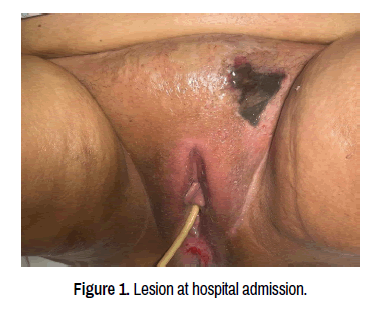
Figure 1. Lesion at hospital admission.
Hospital admission, surgical intervention, and initiation of empiric antibiotic therapy (ceftriaxone and clindamycin) were indicated. Laboratory tests showed leukocytosis, elevated C- Reactive Protein (CRP), and severe hyperglycemia, refractory to initial measures, prompting transfer to the Intensive Care Unit (ICU) for glycemic control with continuous insulin infusion.
Surgical debridement was performed, with drainage of an extensive abscess and excision of necrotic tissue. The infection progressed, extending to the suprapubic region, bilateral inguinal regions, and the proximal thigh, requiring multiple subsequent debridements and adjustments to broad-spectrum antibiotic therapy, including piperacillin-tazobactam, vancomycin, and meropenem, according to the clinical course and culture results. Culture of the collected material revealed growth of Escherichia coli, sensitive to piperacillin-tazobactam (Figure 2).
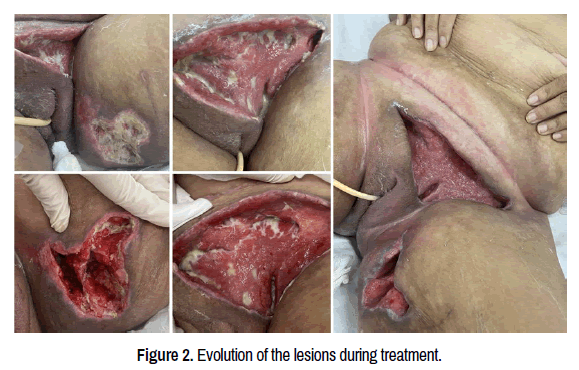
Figure 2. Evolution of the lesions during treatment.
The clinical course was marked by several complications, including glycemic lability, difficult-to-control hypertension, acute kidney injury, electrolyte disturbances – such as hyponatremia and hyperkalemia –, and complications related to prolonged immobilization and diabetic neuropathy, requiring multidisciplinary management. After clinical stabilization, strict glycemic control, and progressive improvement of the lesions, the patient underwent wound closure, with adequate tissue viability and satisfactory healing. She was discharged after a prolonged hospitalization, with referral for multidisciplinary outpatient follow-up (Figure 3 and Figure 4).
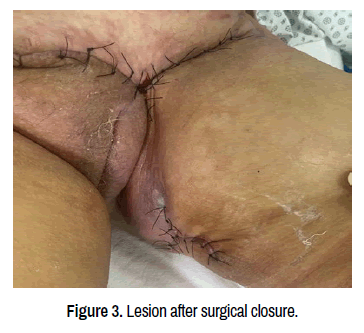
Figure 3. Lesion after surgical closure.
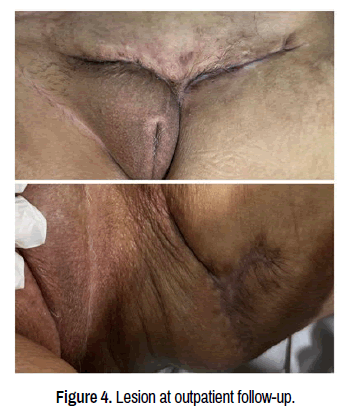
Figure 4. Lesion at outpatient follow-up.
Case 2
A 35-year-old woman with obesity, a history of smoking, and poorly controlled type 2 diabetes mellitus presented to the gynecology ED with a hyperemic nodular lesion in the perineal region, associated with local edema, severe pain, fever, and vomiting. She reported progressive worsening of both local and systemic symptoms, despite prior use of antibiotics prescribed at a primary care facility. Physical examination revealed a necrotic area in the left perineal region, with a fluctuant point and foul-smelling discharge, in addition to marked inflammatory signs extending from the mons pubis to the left perineal region. Laboratory tests showed leukocytosis, CRP > 160 mg/dL, and capillary blood glucose levels ranging from 190 to 319 mg/dL. Therefore, hospital admission was indicated for empiric antibiotic therapy with piperacillin-tazobactam, drainage, and surgical debridement. Despite strict glycemic control and broad-spectrum antibiotic therapy, there was rapid progression of the necrotic area and increased purulent discharge, associated with worsening pain. Repeated surgical debridement and wound cleansing were therefore indicated. A large amount of skin, subcutaneous tissue, and fascia was excised, with exposure of muscle and viable tissue in the pubic region, left labia majora, and left proximal thigh (Figure 5 and Figure 6).
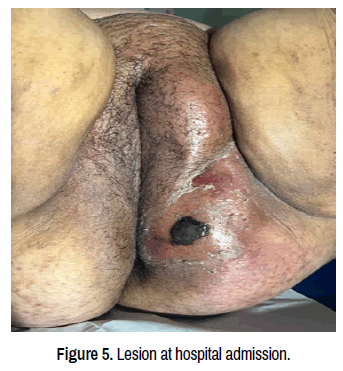
Figure 5. Lesion at hospital admission.

Figure 6. Lesion after the second surgical procedure.
The antibiotic regimen was adjusted and escalated according to the clinical course and culture results, which were positive for Proteus mirabilis, sensitive to the administered antibiotics, including linezolid, meropenem, and piperacillin-tazobactam. The patient developed complications, including hypertensive acute pulmonary edema and deep vein thrombosis, both of which resolved during hospitalization. Considering the significant improvement in pain, laboratory tests, clinical status, and wound appearance, antibiotic therapy was discontinued, and wound closure was performed. The patient was discharged thereafter, with a follow-up plan in the gynecology, endocrinology, and vascular surgery outpatient clinics (Figure 7 and Figure 8).
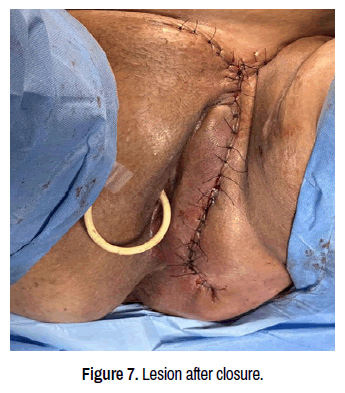
Figure 7. Lesion after closure.
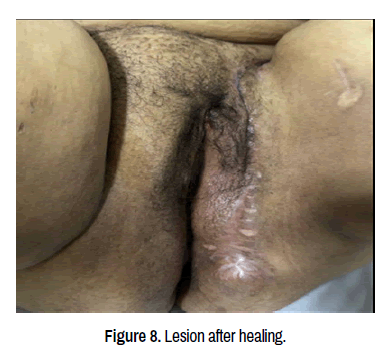
Figure 8. Lesion after healing.
Case 3
An 83-year-old woman with hypertension, dyslipidemia, and poorly controlled type 2 diabetes mellitus was admitted to the gynecological ED with vulvar pain associated with foul-smelling purulent discharge. On physical examination, there was an indurated, hyperemic, and tender area in the mons pubis, extending to the right labia majora, with a site of spontaneous drainage. Laboratory tests revealed leukocytosis with a left shift, elevated CRP, and abnormal capillary blood glucose levels. (Figure 9).
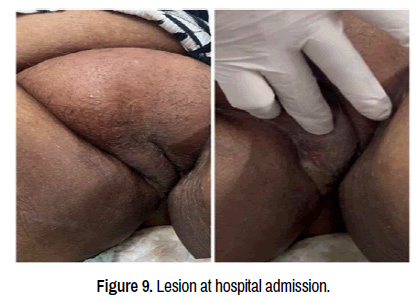
Figure 9. Lesion at hospital admission.
Hospital admission was indicated for empiric intravenous antibiotic therapy (Sulfamethoxazole-Trimethoprim), glycemic control, and surgical management. Glycated hemoglobin was 9%, indicating prior poor glycemic control. The patient underwent abscess drainage, debridement, and wound irrigation, with material collected for culture. Three surgical procedures were required during hospitalization. The patient showed progressive clinical and laboratory improvement, despite the need for adjustments to the insulin regimen, including initiation of NPH insulin (Figure 10 and Figure 11).
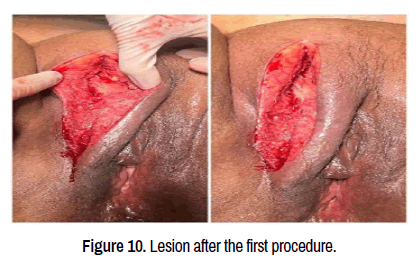
Figure 10. Lesion after the first procedure.

Figure 11. Lesion after the third procedure.
During hospitalization, antibiotic therapy was escalated to piperacillin-tazobactam after cultures were positive for Pseudomonas aeruginosa, which was sensitive to this antibiotic. After significant improvement in the clinical appearance of the lesion and in the local infectious process, operative wound closure was performed. The patient was subsequently discharged asymptomatic, with improving capillary blood glucose levels and laboratory tests, and was referred to the Gynecology outpatient clinic for postoperative wound follow-up and to the Endocrinology outpatient clinic for management of the underlying disease (type 2 diabetes mellitus).
Fournier’s gangrene is a severe polymicrobial infection of the perineal, genital, and anal regions, involving both aerobic and anaerobic bacteria. Factors such as trauma and surgical procedures may trigger the infection. It initially presents with edema, warmth, and severe pain, progressing to necrosis and sepsis [1]. The main risk factors include DM, obesity, chronic alcoholism, poor hygiene, and perineal trauma. Its association with DM is linked to a worse prognosis, especially in the presence of poor glycemic control [5]. This study highlights that all patients had type 2 diabetes mellitus and multiple comorbidities, which likely contributed to greater severity and rapid progression of the infection.
In patients with poorly controlled diabetes, chronic hyperglycemia impairs immune response and microcirculation [9]. Excess glucose promotes oxidative stress and the formation of Advanced Glycation End Products (AGEs), with activation of their Receptors (RAGE) on endothelial and immune cells, leading to endothelial dysfunction and persistent inflammation [10]. Consequently, there is increased blood viscosity, impaired microcirculation, and tissue hypoxia, with reduced diffusion of nutrients and reduced antibiotic delivery, favoring bacterial proliferation and delayed wound healing. Diabetes also facilitates bacterial biofilm formation, increasing microbial resistance [11]. These mechanisms help explain the extent of the affected areas and the difficulty in controlling infection observed in the patients included in the currently study.
In addition, hyperglycemia interferes with the innate immune system, especially neutrophil function, impairing chemotaxis, endothelial adhesion, phagocytosis, and microbicidal activity, thereby delaying the local inflammatory response and favoring progression of the infection [12]. The association of DM with peripheral neuropathy may further reduce pain perception, delay early recognition of infection, and favor skin injury, contributing to advanced clinical presentations [13].
The spread of infection in the vulvar region is facilitated by local anatomical characteristics, such as loose subcutaneous areolar tissue and continuity of the fascial planes with the groin and anterior abdominal wall [14]. The skin of the mons pubis and labia majora has a subcutaneous layer similar to that of the anterior abdominal wall, composed of Camper’s fascia (superficial) and Colles’ fascia (deep), the latter being continuous with Scarpa’s fascia, thereby demonstrating the structural continuity of these regions [15]. Colles’ fascia is attached laterally to the ischiopubic ramus and posteriorly to the perineal membrane, limiting spread to the thighs and the posterior perineal triangle. However, anteriorly, its continuity with the lower abdominal wall may allow the propagation of fluid, blood, or infection, favoring extension to the anterior abdominal wall, medial thigh, and ischiorectal fossa [15,14]. This feature was evident in Case 2, in which necrosis extended from the left iliac fossa to the left perineal and gluteal regions, as demonstrated by imaging studies, in accordance with the pattern of spread described in the literature and consistent with human anatomy.
In the initial diagnostic workup, collection of two sets of blood cultures, laboratory assessment, and computed tomography are recommended, with the presence of gas in the soft tissues being the most relevant finding [16]. In patients with hyperglycemia or DM, glycated hemoglobin should be measured and serial blood glucose monitoring should be performed. If blood glucose levels persist at ≥180 mg/dL, insulin therapy is indicated, with a target range of 140-180 mg/dL and individualized adjustment [17]. In the patients evaluated, the use of intensive insulin therapy reflected previous poor glycemic control and the metabolic response to severe infection. Management requires early and extensive surgical debridement to interrupt progression of the infection and reduce bacterial burden, and multiple surgical procedures may be necessary. Therefore, treatment should not be delayed for additional tests. Moreover, broad-spectrum intravenous antibiotic therapy should be initiated after blood culture collection, with coverage for gram-positive organisms, including MRSA, gram-negative organisms, and anaerobes [16, 18].
Therefore, in Fournier’s gangrene, especially in patients with diabetes, early diagnosis is crucial to reduce complications. Treatment includes glycemic control, early surgical debridement, and broad-spectrum antibiotic therapy, as well as a structured discharge plan with follow-up through primary care and endocrinology services, ensuring continuity of care and prevention of further decompensation.
Patients with diabetes should be considered immunocompromised, requiring an early and aggressive approach when facing severe infections such as Fournier’s gangrene. Timely intervention, including broad-spectrum intravenous antibiotic therapy, extensive and repeated surgical debridement when necessary, and strict glycaemic control, is essential to improve prognosis and reduce mortality. In addition to treating the infection, a structured hospital discharge plan is fundamental. This should include follow-up in primary care and specialized endocrinology care, as well as patient education on wound care, optimization of diabetes management, lifestyle modifications, and strategies to maintain glycaemic control, aiming to improve clinical outcomes and prevent recurrence.
Google scholar, Cross Ref, Indexed at
Google scholar, Cross Ref, Indexed at
Google scholar, Cross Ref, Indexed at
Google scholar, Cross Ref, Indexed at
Google scholar, Cross Ref, Indexed at
Google scholar, Cross Ref, Indexed at
Google scholar, Cross Ref, Indexed at
Google scholar, Cross Ref, Indexed at
Clinical and Medical Case Reports received 53 citations as per Google Scholar report