Research Article - (2025) Volume 11, Issue 2
Received: 01-Sep-2024, Manuscript No. JPNP-24-147081;
Editor assigned: 03-Sep-2024, Pre QC No. JPNP-24-147081 (PQ);
Reviewed: 17-Sep-2024, QC No. JPNP-24-147081;
Revised: 01-Apr-2025, Manuscript No. JPNP-24-147081 (R);
Published:
08-Apr-2025
, DOI: 10.37421/2472-0992.2025.11.350
Citation: Kakkad, Krishna, Chitaliya Sahil, Bhakhar Jay, and Thummar Shyam. "Formulation and Evaluation of Anti-Aging Herbal Cream from Aprajita." J Pharmacogn Nat Prod 11 (2025): 350.
Copyright: © 2025 Kakkad K, et al. This is an open-access article distributed under the terms of the creative commons attribution license which permits unrestricted use, distribution and reproduction in any medium, provided the original author and source are credited.
Aim of study to formulation and evaluation of multipurpose herbal skin cream. The outermost covering of the body is termed as skin. It is known as the largest organ of the body. It constitutes the first line of defense. A waterproof layer is formed by skin, which is mainly provided by its keratinized epithelium, which protects the deeper and more delicate structures. These creams, which serve as the primary treatment for numerous skin conditions or dermatomes, may either be medicated or unmediated. People use different types of creams including ayurveda, herbal or allopathic based on their individual needs and skin condition. They consist of thick liquids or semi-solid emulsions that come in either oil-in-water or water-in-oil forms and include herbal ingredients. Anti-aging creams are often moisturizer-based cosmeceuticals skin care items that claim to make users look younger by minimizing, concealing, or avoiding the indications of ageing skin. Here we were use the Aprajita plant for the preparation of cream it consists the major photo-constituents found in the plant are the pent acyclic triterpenoids such as taraxerol and taraxerone. Alkaloids, flavonoids, saponins, tannins, carbohydrates, proteins, resins, starch, taraxerol and taraxerone. Appearance of the cream was derived by its color, odor and texture prepared herbal cream was smooth, bluer after application of the prepared herbal cream on a particular area it gave good emolliency and soothes the skin.
Multipurpose cream • Skin • Ayurveda • Herbal • Semisolid • Emulsion • Anti-aging • Aprajita plant • Taraxerol • Good emolliency
UV: Ultraviolet; OTC: Over the Counter; O/w: Oil in water; W/o: Water in oil; cm: centimeter; gm: gram; Q.s: Quantity sufficient; ml: milliliter; rpm: rotation per minute; pH: Potential of hydrogen; L: Length; Sq: Square; Mp: Melting point; Sec: Second; Cps: Centi poise system; Temp: Temperature
Now-a-days herbal extracts are used in the cosmetic preparations for augmenting beauty and attractiveness. Herbal cosmetics are classified on the basis of dosage form like cream, powder, soaps, solutions, etc. and according to part or organ of the body to be applied for like; cosmetics for skin, hair, nail, teeth and mouth etc. [1-4].
Physiology of human skin
The outermost covering of the body is termed as skin. It is known as the largest organ of the body. It constitutes the first line of defence. Many cells and structures are present in the skin. It is divided into two main layers; the epidermis which covers the dermis. Between the skin and underlying structures is a subcutaneous layer which is composed of areolar and adipose (fat) tissue.
Epidermis
• Most superficial layer which is composed of stratified keratinized squamous epithelium.
• Outermost layer which varies in thickness in different regions of the body. It provides a waterproof barrier and create our skin tone. Epidermis is subdivided into different sub layers.
• The stratum basal called keratinocytes is a cell that manufactures and stores the protein keratin. Keratin is known as a fibrous protein that is responsible for hardness and water resistance property of hair, nails and skin.
• Markel cell are responsible for stimulation of sensory nerves.
• Melanocytes produce the pigment known as melanin which is responsible for skin color, protection of living cells of epidermis from ultraviolet radiation.
• Stratum spinosum is spiny in appearance due to the cell processes that join the cells via structure called desmosomes.
• Stratum lucidum is a smooth, translucent layer of epidermis. Stratum corneum is the most superficial layer and exposes to the outside environment. Dermis • Tough and elastic. Formed from connective tissue and the matrix containing collagen
• Fibers interlaced with elastic fibers.
• Rupture of elastic fibers occurs when skin is overstretched resulting to permanent
• Stretch marks which may be found in pregnancy and obesity.
• Collagen fibers bind with water and skin gets its tensile strength, but as this ability
• Declines with age, development of wrinkles occur.
• The main cells found in the dermis are fibroblasts, macrophages and mast cells.
• The deepest layer in the dermis is the subcutaneous layer which contains areolar tissue
• Varying amount of adipose (fat) tissue. Hypodermis
• It supports epidermis and dermis. It is the deeper layer.
• This layer helps to provide mechanical protection, support the nutrients and also helps. In regulating temperature (Figuer 1).
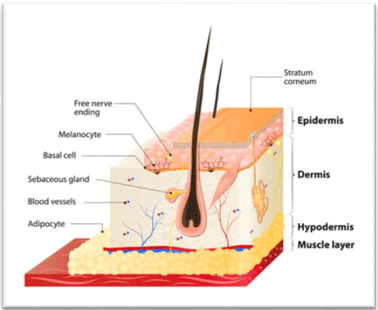
Figure 1. Structure of skin.
Functions of skin
Protection: A waterproof layer is formed by skin, which is mainly provided by its keratinized epithelium, which protects the deeper and more delicate structures.
Cutaneous sensation: Ensory receptors are nerve endings in the dermis which are sensitive to touch, pressure, temperature or pain. Stimulation generates nerve impulses in sensory nerves that are transmitted to the cerebral cortex. Some areas have more sensory receptors than others causing them to be especially sensitive, e.g., lips and fingertips.
Heat regulation: The skin contains a blood supply far greater than its requirements which allows precise control of energy loss by radiation, convection and conduction. Dilated blood vessels increase perfusion and heat loss, while constricted vessels greatly reduce cutaneous blood flow and conserve heat.
Control of evaporation: The skin provides a relatively dry and semi-impermeable barrier to fluid loss. Loss of this function contributes to the massive fluid loss in burns.
Absorption of vitamin D: 7-dehydrocholesterol a lipid-based substance in the skin which is converted to vitamin D by sunlight. This vitamin is used with calcium and phosphate for the formation and maintenance of bones.
Storage and synthesis: Act as a strange center for lipid and water, as well as a means of synthesis of vitamin D by action of UV on certain parts of the skin.
Absorption: A limited property but the substances which can be absorbed include; some drugs in transdermal patches, e.g., hormone replacement therapy during menopause, nicotine as an aid for smoking cessation; some toxic chemicals like mercury.
Excretion: Skin is a minor secretory organ for some substances which involves; sodium chloride in sweat (hyponatremia), urea (especially when kidney function is impaired), aromatic substances e.g., garlic.
• Organ of social interaction.
• Barrier to loss or absorption of fluid and molecules.
• Barrier to infection.
• Protection against UV and other radiations.
• Temperature control.
• Reaction to infection, cancer and foreign substances!
Problems associated with the skin
Maintaining healthy skin is problematic due to continuous exposure to various environmental stresses (UV radiation, pollution, chemicals, etc.), which can lead to skin issues that affect the overall complexion of the skin. The effect of damaging factors crop up the skin associated problems like wrinkles, impartment of collagens, and dryness of skin, abnormal pigmentation and artifacts of harmful oxidative molecules which may become more evident with age. There is a common belief for chemical based cosmetics that they are harmful to the skin and awareness for herbal products increased among the consumers which activated the demand for natural products and natural extracts in cosmetics preparation, due to the mild action and non-toxic nature of them [5-7].
Skin type and skin care
To have better skin, it is very important to understand how our skin functions and take proper care to maintain it. The skin classified into 4 types and for each type of appropriate ingredients are used to maintain its natural functionality (Table 1).
| Skin type | Characteristics | Suitable skin care |
| Normal skin | Has even tone, soft, smooth, no visible pores. No greasy patches or flaky areas. Has clear, fine, supple and smooth surface which is neither oily nor dry. | Herbal: Pomegranate leaves juice, gingili oil. Essential oils: Chamomile, lavender, lemon. |
| Dry skin | Low level of sebum and prone to sensitivity. Has parched look, feels tight. Chapping sign cracking of dehydrated and extremely dry skin. | Herbal: Calendula, olive oil, aloe vera. Essential oils: Fennel rose oil, almond oil, sandal wood, avocado. |
| Oily skin | Shiny, thick, and dull complexion. Oily skin has coarse pores and pimples and Other embarrassing blemishes. Prone to black heads. | Herbal: Rose buds, oat straw, thyme, chamomile, aloevera, lemon grass. Essential oils: Juniper, lemon, lavender, sage. |
| Combination skin | Some parts of face are dry or flaky, while the center part of face, nose, chin and forehead is oily. | Herbals: Menthol, turmeric, sweet flag, aloe vera. Essential oils: Citrus oil, jasmine, sandal wood oil. |
Table 1. Types of skin with suitable skin care.
Herbal creams in skin care
Creams are primarily classified as pharmaceuticals because they are created using methods established in the pharmaceutical sector. These creams, which serve as the primary treatment for numerous skin conditions or dermatomes, may either be medicated or unmediated. People use different types of creams including ayurveda, herbal or allopathic based on their individual needs and skin condition. One or multiple drug substances are dispersed or dissolved in a suitable base within them [8,9].
Herbal creams, also known as topical preparations, are applied to the skin. They consist of thick liquids or semi-solid emulsions that come in either oil-in-water or water-in-oil forms and include herbal ingredients. Their purpose is mainly cosmetic such as cleansing, enhancing appearance, and serving as protective or therapeutic agents. Essential properties for fundamental skin care include the following three factors.
Cleansing: The act of cleansing holds significance as it helps to rid the skin of impurities such as dirt, dead skin cells, and pollutants that clog up the pores. If you neglect this fundamental step, you'll have more skin problems. Eliminating dirt and pollutants is accomplished through the use of herbal cleansers. The application of aloe vera is prevalent in various skin care products. When glycerin is added to it, it performs effectively as a cleaning agent. The cleansing power of camphor is enhanced by its cooling and invigorating qualities. It removes makeup and impurities completely.
Toning: Timbers are help to tight the skin and protect skin from toxins which are floating in the air or other pollutants. Grape seed oil is use astringent, which is useful for skin toning and tightening, Fresh lemon juice is use as toner. Lemon peel oil acts as natural astringent.
Moisturizing: The moisturizer is use for skin to smooth and supple. Moisturizer also show glow and less prone to aging. Rose water and rose infusion of petals refreshes and hydrate the skin. Roses are suitable for all skin type. Violet is slightly astringent; leaf and flower of violet is juicy and moisturizing. Violets are anti-inflammatory and helps in heal cuts and wound.
Types of herbal creams
In the practice of pharmacy the term "cream" can refer to viscous emulsions or semi-solid preparations that are designed for application to the skin or the eyes and contain solutions or dispersions of one or more medications in a suitable basis. Plant mucous membrane, the creams according to the type of emulsions arc: Water-in-0il (W/0) type and Oil-in-Water (O/W) type.
Water-in-Oil type (W/O) and Oil-in-Water type (or W/O): Oil-inwater creams are more comfortable and cosmetically acceptable as they are less greasy and more easily washed off using water. Waterin-oil creams are more difficult to handle but many drugs which are incorporated into creams are hydrophobic and will be released more readily from a water-in-oil cream than an oil-in-water cream. Water-inoil creams are also more moisturizing as they provide an oily barrier which reduces water loss from the stratum cornea, the outermost layer of the skin [10-14].
By incorporating various herbal ingredients, it can be classified according to their functions as below:
• Vanishing cream
• Anti-aging cream
• Cold cream
• Face cream
• Multipurpose cream
• Anti-acne cream
• Moisturizing cream
Vanishing cream: Since they appear to vanish when we massage disappearing lotions on our skin, hence the name. They are the o/w based emulsion medicines that combine oil and water. They are the stearic acid-based formulations. It creates a residue film on the skin after application that is dry but sticky and has a drying effect. They are utilized mostly in hot climates where the skin perspires for this reason.
Anti-aging cream: Anti-aging creams are often moisturizer-based cosmeceutical skin care items that claim to make users look younger by minimizing, concealing, or avoiding the indications of ageing skin.
Cold cream: The four main components of cold cream are typically water, oil, an emulsifier, and a thickening agent. The cream can reach the outer layer of skin without being absorbed as deeply into your skin as water-based treatments because water and oil are mixed in roughly equal amounts. As a result, when used as a nighttime skin treatment, it feels more like an overnight mask than a moisturizer.
Face cream: Face creams are usually water-based, so they assist in making the pores occur skin tinier. This in turn, makes your skin firmer, giving it an extremely supply texture.
Multipurpose cream: These types creams are somehow oily but non-f greasy. They Can be spread on the skin easily. They can be used as night creams, nourishing creams, protective creams for prevention of sunburns or also for the treatment of skin areas which have become rough.
Anti-acne cream: Acne products work in different ways, depending on their active Ingredients. Some OTC acne products work by killing the bacteria that cause acne Inflammation. Others remove excess oil from the skin or speed up the growth of new skin cells and the removal of dead skin cells.
Moisturizing cream: Moisturizers improves skin hydration and increases stratum cornea water content by directly providing water to the skin from their water phase and increasing occlusion to reduce trans-epidermal water loss, it also covers small skin fissures, provides soothing protective film and protects skin from friction.
Anti-aging
Reactive Oxygen Species (ROS) are ions or very small molecules, such as oxygen ions, produced as normal products of cellular metabolism. Equipped with a number of defense mechanisms, ROS are designed to provide physical and biochemical protection. Because O2 has unpaired electrons, it plays a main role in the formation of ROS, which include superoxide, hydrogen peroxide, and hydroxyl radicals generated by the reduction phase from O2.
Antioxidant is a molecule that inhibits the oxidation of other molecules. It reduces the effect of dangerous oxidant by binding with harmful molecules, decreasing their destructive power.
Ageing is a complex process that is manifested within organisms at genetics, molecular, cellular, organ, and system levels. According to the oxidative stress theory, key contributors to the process of aging in cell and tissues are oxidative stress caused by ROS. The induction of oxidative stress by ROS plays a direct or indirect role in many conditions such as vascular disease, neurodegeneration, ischemia, aging, cell death, inflammatory responses, and even cancer (Figuer 2).
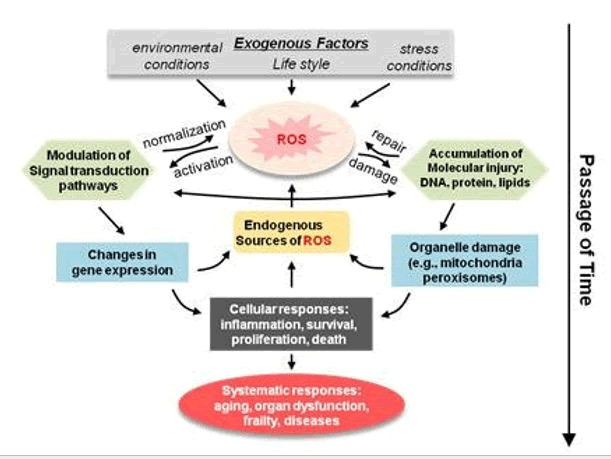
Figure 2. Mechanism of aging caused by Reactive Oxygen Species (ROS).
Plant profile
Synonyms: Asian pigeonwings, Bluebellvine, Blue pea, Butterfly pea, Cordofan pea or Darwn pea (Figure 3).
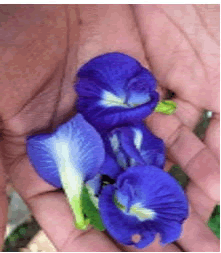
Figure 3. Aprajita flower.
Common names
• Arabic: Mazerion Hidi, Baslat el-Zuhoor Bengali, Aprajita
• Chinese: Die dou
• English: Blue-pea Bluebellvine, Butterfly-pea, Cordofan-pea, Darwin-pea
• French: Honte
• German: Blaue Klitorie Hindi: Aprajita
• Portuguese: Clitoria-azul, Clitoria Punjabi: Koyal
• Sanskrit: Girikarnika, Vishnukranta
• Spanish: Conchitas papito, Azulejo, Zapatico de la reina, Zapotillo
• Swedish: Himmelsart
• Tamil: Kakkanam and Telugu: Dintena
• Biological source: It consist from flowers of Clitoria ternatea Linn.
• Family: Fabaceae
• Geographical source: The plant originated from tropical Asia and later was distributed widely to Africa, Australia, Asia, Northwestern Pacific, and Southern America.
Morphological characteristics
• Colour: Deep blue
• Odour: Odour less
• Taste: Slightly bitter
• Length: 4 cm
• Wide: 3 cm
Chemical constituents
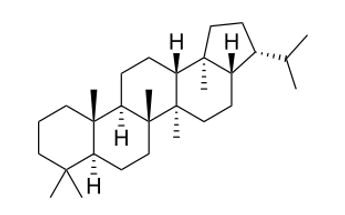
The major phyto-constituents found in the plant are the pentacyclic triterpenoids such as taraxerol and taraxerone. Ethanol extract of Clitoria ternatea shows presence of terpenoid, flavonoid, tannin and steroid which may act as antioxidant. The major phytoconstituents found in Clitoria ternatea are the pentacyclic triterpenoids such as taraxerol and taraxerone. Phytochemical screening of the roots shows the presence of ternatins, alkaloids, flavonoids, saponins, tannins, carbohydrates, proteins, resins, starch, taraxerol and taraxerone.
Triterpenoids
Uses
• Antioxidant
• Anti-aging
• Anti-inflammatory
• Weight loss
• Regulation diabetes
• Brain health
• Lower the risk of cancer
• Reduce the blood pressure
• Aid digestion
• Good for eyes
• Boost hair growth
• Natural food colorant
• Wound healing effect
Table 2 shows different types of cream and their ingredients.
| Sr. no | Title | Ingredients |
| 1 | Herbal cream | Kachora plant |
| Long pepper | ||
| Nutmeg | ||
| Linseed | ||
| Wheat grain | ||
| Turmeric | ||
| 2 | Herbal cream | Cinnamon powder |
| Turmeric | ||
| Nutmeg seed powder | ||
| Azadirechta indica | ||
| C. officinalis | ||
| Tulshi | ||
| Clove | ||
| 3 | Herbal cream | Turmeric |
| Azadirechta indica | ||
| Calendula | ||
| Nutmeg seed powder | ||
| Cinnamon bark | ||
| 4 | Polyherbal vanishing plus cream | Neem leaves |
| Turmeric | ||
| Orange pea | ||
| Peppermint leaves powder | ||
| Honey | ||
| Almond seed | ||
| Ginger rhizome powder | ||
| Mustard seed powder | ||
| Gram flour | ||
| 5 | Polyherbal vanishing cream | Turmeric |
| Green tea | ||
| Nutmeg seed powder | ||
| Linseed powder | ||
| Wheat grains | ||
| Clove bud powder | ||
| Ginger rhizome | ||
| Mustard seed powder | ||
| Cinnamon bark powder | ||
| Cumin seed powder | ||
| Derumstick bark powder | ||
| Liquoric | ||
| Piperment leaves powder | ||
| 6 | Vanishing cream | Turmeric |
| Cinnamon powder | ||
| Nutmeg seed powder | ||
| Azadirechta indica | ||
| Clove | ||
| Tulshi | ||
| Calendula officinalis | ||
| 7 | Herbal vanishing cream | Neem |
| Turmeric | ||
| 8 | Herbal cream | Alovera |
| 9 | Herbal cream | Bosewlia oli |
| 10 | Herbal cream | Curcumin |
Table 2. Table of review of literature.
Aim
• In recent years there has been tremendous increase in demand for herbal drugs because of its safety, efficacy and better therapeutic results.
• The main aim of our work is to develop an herbal cream which gives multipurpose effect like moisturization, reduce acne and skin irritation, dry skin, wrinkle, rashes, etc.
• Aim of study to formulation and evaluation of herbal cream.
Objectives
• Formulation of herbal cream.
• Evaluation of herbal cream.
• Evaluation parameters.
Plan of work
In Figures 4-8 it is shows how to prepare cream in various steps (Tables 3 and 4).
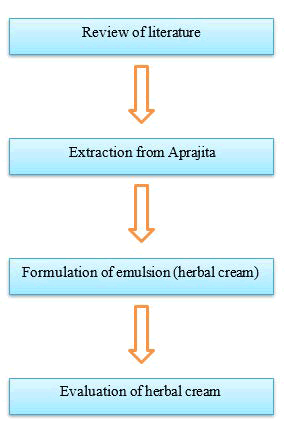
Figure 4. Plan of work.
| Sr no. | Ingredients | Quantity | |||
| F1 | F2 | F3 | F4 | ||
| 1 | Aprajita (butterfly pea) | 8.5 ml | 8.5 ml | 8.5 ml | 8.5 ml |
| 2 | Stearic acid | 3 gm | 4 gm | 5 gm | 6 gm |
| 3 | Cetyl alcohol | 2.5 gm | 3.5 gm | 4.5 gm | 5.5 gm |
| 4 | Zinc oxide | 1 gm | 1 gm | 1 gm | 1 gm |
| 5 | SLS | 1 gm | 1 gm | 1 gm | 1 gm |
| 6 | Glycerol | 2 ml | 3 ml | 4 ml | 5 ml |
| 7 | Almond oil | 15 ml | 13 ml | 11 ml | 9 ml |
| 8 | Water | q.s | q.s | q.s | q.s |
| 9 | Rose oil | 6 drop | 6 drop | 6 drop | 6 drop |
Table 3. Ingredients name and its quantity for 100 gm.
| Sr no. | Ingredients | Roles |
| 1 | Aprajita (butterfly pea) | Anti-ageing |
| 2 | Stearic acid | Emulsifier agent |
| 3 | Cetyl alcohol | Stabilizer, soothing agent |
| 4 | Zinc oxide | Astringent |
| 5 | SLS | Thinking agent |
| 6 | Glycerin | Humectants |
| 7 | Almond oil | Protracting |
| 8 | Rose oil | Flavour |
| 9 | Water | Vehicle |
Table 4. Roles of Ingredients.
Preparation of vanishing cream
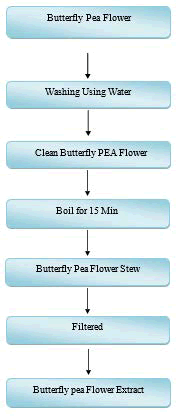
Figure 5. Preparation off natural extract.
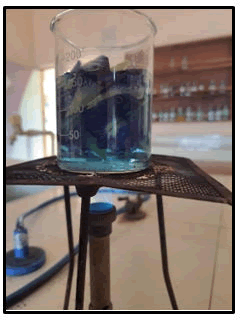
Figure 6. Extraction of Aprajit.
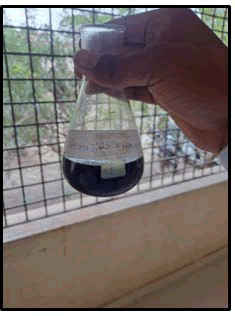
Figure 7. Extract of Aprajita.
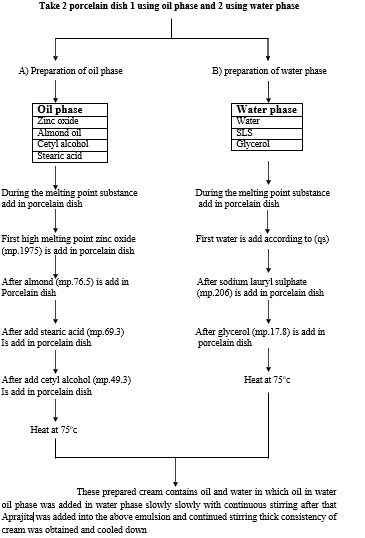
Figure 8. Procedure.
Evaluation parameters
Organoleptic properties: The properties of the formulation which were used in creams were deliberated by quality, visual appearance, and characteristics. Thus, the cream was observed for color. Odor, and appearances. The cover lid was opened and immediately the appearance and smell of cream were examined simultaneously.
• Appearance: Appearance of cream was judged by its color, pearlescence and roughness.
• After feel: Emolliency, slipperiness, and amount of residue left after the application of certain amount of cream was checked.
Ease of removal: The case of removal of the cream applied were examined by washing the applied part with tap water. After cream is applied, the type of film or smear formed on the skin were checked.
Viscosity of the cream: Viscosity of the cream was determined using Brookfield's Viscometer, at 20 rpm speed, using spindle no. 64 at 25°C temperature and different shear rates.
pH of the cream: The pH meter was calibrated with the help of standard buffer solution. 0.5 g of cream was weighed and then dissolved in 50.0 ml of distilled water and its pH was measured with the help of digital pH meter at 27°C [15-17].
Spredability test: About 2 gm of sample was taken and applied between two glass slides and were pressed together in order to obtain a film of uniform thickness by placing 100 gm of weight for 5 minutes. After that a weight of about 10 gm was added to the pan and the top plate was subjected to pull with the help of string attached to the hook. The time in which the upper glass slide moves over the lower plate to cover a distance of 10 cm is noted. Spread ability (S) can be calculated by the formula.
Spread ability=m × (l/t)
Where, m=Standard weight which is tied to or placed over the upper slide (30 gm)
l=Length of a glass slide (5 cm)
t=Time taken in seconds.
Irritancy test: An area of like 1 cm. sq, was marked on the skin (left hand dorsal surface) and the cream was applied on that specified area and the time was noted. Irritancy, erythema, edemas checked if any for regular interval up to 24 hours and reported.
Wash ability: The removal of the cream applied on skin was done by washing under tap water with minimal force to remove the cream.
Test for microbial: Formulated cream was inoculated on the plate containing, agar media with the help of streak plate method. Then the plates were placed in an incubator and were incubated at 37°C for 24 hours. The plates were taken out after the incubation period and the microbial growth was checked.
Saponification value: 2 g of substance was taken and was refluxed with 25 ml of 0.5 N alcoholic KOH for 30 minutes. Then 0.1 ml of phenolphthalein was added as an indicator and titrated with 05 N HCL.
Saponification value=(b-a) × 28.05/w
Acid value: 10 gm of cream was taken and accurately weighed then dissolved in 50 ml mixture which contain equal volume of alcohol and solvent ether. Then the flask was attached with the condenser and refluxed with slow heating until the sample completely got dissolved: Then 1 ml of phenolphthalein is added and titrated with 0.1 N NaOH till faint pink color appeared after shaking in 20 seconds.
Acid value=n × 5.61/w
Dye test: A particular type of dye (amaranth dye) was mixed with the cream. A drop of the cream was placed on a microscopic slide then covered with a cover slip and examined under a microscope. Result was noted according to the colour of the dispersed globules and ground.
Homogeneity: Here the formulation was tested for homogeneity by visual appearance and touch.
Smear type: The test was conducted after the application of cream on the skin the smear formed was oily or aqueous in nature.
Physical stability study: The samples of formulated cream were kept both at room temperature and elevated temperature (40°C ±1 ° C) for 20 days and observations were taken on 0°, 5°, 10, 15, and 20th days for any kind of changes in physical properties, pH, homogeneity etc. (Figures 9-13).
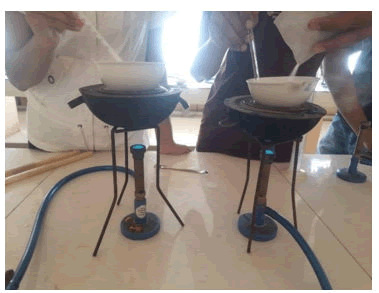
Figure 9. Preparation of emulsion.
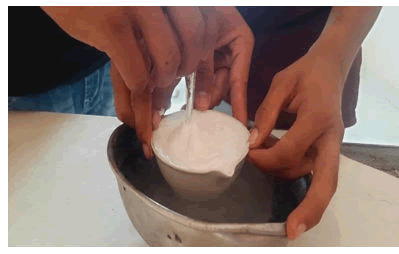
Figure 10. Stirring of emulsion.
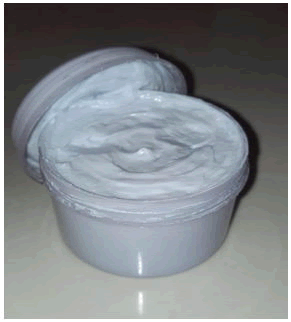
Figure 11. Cream.
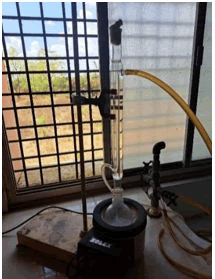
Figure 12. Reflux.
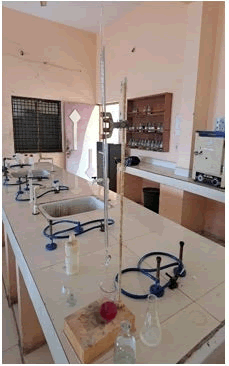
Figure 13. Titration.
Organoleptic evaluation
The organoleptic properties of the prepared Herbal cream were judged by its appearance, after feel, removal.
• Appearance of the cream was derived by its colour, odour and texture: Prepared herbal cream was smooth.
• After application of the prepared herbal cream on a particular area it gave good emolliency and soothes the skin.
Ease of removal: After the application of prepared Herbal cream on particular area, its removal was easy when that particular area was washed with the tap water.
Type of smear: After application, the type of smear formed on the skin were non greasy.
pH of the cream: The pH of the prepared herbal cream was found to be 6.88 which is good for the skin pH.
Homogeneity: The homogeneity of the formulation was tested by its appearance and touch. The appearance and touch of the formulation were found to be good [18].
Spredability test: Spread ability is an important criterion for semisolid dosage forms. The reason is the therapeutic effectiveness of these type of formulations mainly depends on their spreading value. Here the prepared Herbal cream showed the spredability of 21 gm.cm/sec. which indicates good spreading property [19,20].
Irritancy test: Any kind of redness, edema, irritation and inflammation was not shown by the prepared herbal cream when applied on the skin. Thus it is safe to use.
Saponification value: The saponification value of the prepared herbal cream was found to be 21.04 and it showed the satisfactory result.
Acid value: Acid value of the prepared Herbal cream was found to be 6.34. It showed Satisfactory result (Tables 5 and 6).
| Sr no. | Parameters | Result (F2) |
| 1 | pH | 6.88 ± 0.02 |
| 2 | Colour | Slightly blue |
| 3 | Spredability | 21 gm × cm/sec |
| 4 | Odour | Characteristic |
| 5 | Greasiness | Non greasy |
| 6 | Washability | Easily and washable |
| 7 | Viscosity(cps) | 27050 ± 0.2 cps |
| 8 | Acid value | 6.36 |
| 9 | Saponification value | 22.08 |
| 10 | Dye test | O/w type of emulsion |
| 11 | Texture | Smooth |
| 12 | Irritancy | No Irritancy |
| 13 | Homogeneity | Good |
| 14 | After feel | Good |
| 15 | Remove | Easily remove |
Table5. Result.
| Days | Temp | Parameters | ||||||
| pH | Homogeneity y | Appearance | Spared ability | After feel | Smear | Removal | ||
| 0th | Room temp | 6.88 | Good | No change | Good | Emollient | No greasy | easy |
| 40οC | 6.76 | Good | No change | Good | Emollient | No greasy | Easy | |
| 5th | Room temp | 6.63 | Good | No change | Good | Emollient | No greasy | Easy |
| 40οC | 6.2 | Good | No change | Good | Emollient | No greasy | Easy | |
| 10th | Room temp | 6.81 | Good | No change | Good | Emollient | No greasy | Easy |
| 40οC | 6.72 | Good | No change | Good | Emollient | No greasy | Easy | |
| 15th | Room temp | 6.62 | Good | No change | Good | Emollient | No greasy | Easy |
| 40οC | 6.56 | Good | No change | Good | Emollient | No greasy | Easy | |
| 20th | Room temp | 6.85 | Good | No change | Good | Emollient | No greasy | Easy |
| 40οC | 6.75 | Good | No change | Good | Emollient | No greasy | Easy | |
Table 6. Physical stability of the prepared herbal cream.
Formulation of herbal cream for anti-aging was successfully developed that met the relevant pharmaceutical characteristics the prepared formulations showed good Spread ability no avidance of phase separation and good consistency during the study period. Stability parameter like visual appearance, nature, viscosity and pH. Of the formulation showed that the rewash no significant variation during the study period, the prepared formulation showed the study period. The prepared formulation showed prepare ph. range that is approximately pH 6.8 is confirms the capability of the formulation with skin. The cream was found to be stable study it can be used as the provision of a barrier for skin. Aprajita contain anti-oxidant property. Anti-aging property of formulated herbal skin cream hay yet to be experiment and will be done in future.
[Crossref] [Google Scholar] [PubMed]
[Crossref] [Google Scholar] [PubMed]
Journal of Pharmacognosy & Natural Products received 606 citations as per Google Scholar report