Perspective - (127) Volume 14, Issue 2
Received: 02-Mar-2025, Manuscript No. VTE-26-180072;
Editor assigned: 04-Mar-2025, Pre QC No. P-180072;
Reviewed: 18-Mar-2025, QC No. Q-180072;
Revised: 24-Mar-2025, Manuscript No. R-180072;
Published:
30-Mar-2025
, DOI: 10.37421/2376-1318.2025.14.362
Citation: Clarke, Hannah. ”Fat-Soluble Vitamins: Key To Immune Health.” Vitam Miner 14 (2025):362.
Copyright: © 2025 Clarke H. This is an open-access article distributed under the terms of the Creative Commons Attribution License, which permits unrestricted use, distribution and reproduction in any medium, provided the original author and source are credited.
Fat-soluble vitamins, encompassing A, D, E, and K, are indispensable for the intricate development and robust functioning of the immune system. Vitamin A is critically important for the differentiation and maturation of key immune cells, particularly T cells and B cells, thereby shaping adaptive immunity [1].
Vitamin D exerts a significant influence on immune responses by modulating both innate and adaptive immunity. It actively promotes the production of antimicrobial peptides and meticulously regulates inflammatory cytokines, contributing to immune homeostasis [2].
Vitamin E functions as a potent antioxidant, a vital role in shielding immune cells from oxidative damage, and has been shown to enhance T cell activity, thereby bolstering cellular immunity [3].
Vitamin K, while traditionally known for its role in blood coagulation, is increasingly recognized for its involvement in immune signaling pathways and has been linked to a reduction in inflammatory processes [4].
The interplay between these fat-soluble vitamins and the immune system is a complex and multifaceted relationship. Maintaining adequate levels of vitamins A, D, E, and K is paramount for the proper development and effective functioning of a diverse array of immune cell types and for the precise orchestration of immune responses [5].
Deficiencies in these essential micronutrients can compromise the body's natural defenses, potentially leading to an increased susceptibility to infectious agents and a dysregulated immune system [6].
Emerging research continues to elucidate the specific mechanisms by which vitamin D exerts its influence on the immune system. This includes its impact on dendritic cells, T helper cells, and regulatory T cells, mediated through the vitamin D receptor (VDR) which is expressed on numerous immune cells [7].
Vitamin E's potent antioxidant properties are crucial for protecting immune cells from the damaging effects of reactive oxygen species that are generated during active immune responses. Studies have indicated that vitamin E supplementation can enhance cellular immunity, particularly T cell function, and may offer benefits in conditions characterized by oxidative stress and immune dysfunction [8].
The role of vitamin K in immunity is indeed multifaceted. Beyond its well-established role in blood coagulation, vitamin K is actively involved in cell signaling processes and has been linked to the regulation of inflammatory pathways and the activation of various immune cells. Ongoing research is dedicated to fully understanding its comprehensive impact on both innate and adaptive immune responses [9].
Furthermore, potential synergistic effects between different fat-soluble vitamins may also play a significant role in achieving optimal immune function. For instance, the absorption and overall function of vitamin D are known to be influenced by vitamin K, and these two vitamins work in concert to regulate calcium metabolism, a process essential for numerous cellular functions, including critical immune cell signaling [10].
Fat-soluble vitamins A, D, E, and K are fundamental to the intricate development and effective functioning of the immune system. Vitamin A is indispensable for the differentiation and maturation of immune cells, particularly T cells and B cells, which are central to adaptive immunity [1].
Vitamin D plays a crucial role in modulating immune responses, influencing both innate and adaptive immunity through the promotion of antimicrobial peptide production and the regulation of inflammatory cytokines [2].
Vitamin E acts as a potent antioxidant, protecting immune cells from oxidative stress and enhancing T cell activity, thereby contributing to cellular immunity [3].
Vitamin K is involved in immune signaling pathways and has been associated with a reduction in inflammation, highlighting its emerging role in immune regulation [4].
The relationship between fat-soluble vitamins and the immune system is complex, with adequate levels of vitamins A, D, E, and K being essential for the proper development and functioning of diverse immune cell types and the effective orchestration of immune responses [5].
Deficiencies in these vitamins can weaken immune defenses, increasing susceptibility to infections and leading to immune dysregulation [6].
Recent scientific investigations are uncovering the specific ways in which vitamin D influences the immune system, including its effects on dendritic cells, T helper cells, and regulatory T cells, mediated by the vitamin D receptor (VDR) found on many immune cells [7].
The antioxidant capabilities of vitamin E are vital for protecting immune cells from damage by reactive oxygen species generated during immune responses. Research suggests that vitamin E supplementation can boost cellular immunity, particularly T cell function, and may be beneficial in managing conditions marked by oxidative stress and immune dysfunction [8].
The immunological functions of vitamin K extend beyond blood coagulation; it is implicated in cell signaling, the regulation of inflammatory processes, and the activation of immune cells, with ongoing research aimed at fully characterizing its influence on innate and adaptive immunity [9].
Additionally, synergistic interactions among different fat-soluble vitamins are recognized as important for optimal immune function. For example, vitamin K influences vitamin D absorption and function, and together they regulate calcium metabolism, a critical process for immune cell signaling [10].
Fat-soluble vitamins A, D, E, and K are essential for immune system development and function. Vitamin A is crucial for immune cell maturation, while vitamin D modulates innate and adaptive immunity by controlling inflammation and antimicrobial peptide production. Vitamin E acts as an antioxidant, protecting immune cells and enhancing T cell activity. Vitamin K is involved in immune signaling and inflammation regulation. Maintaining adequate levels of these vitamins is vital for robust immune defenses, as deficiencies can lead to increased susceptibility to infections and immune dysregulation. Their interplay, including potential synergistic effects, ensures proper immune responses.
None
None
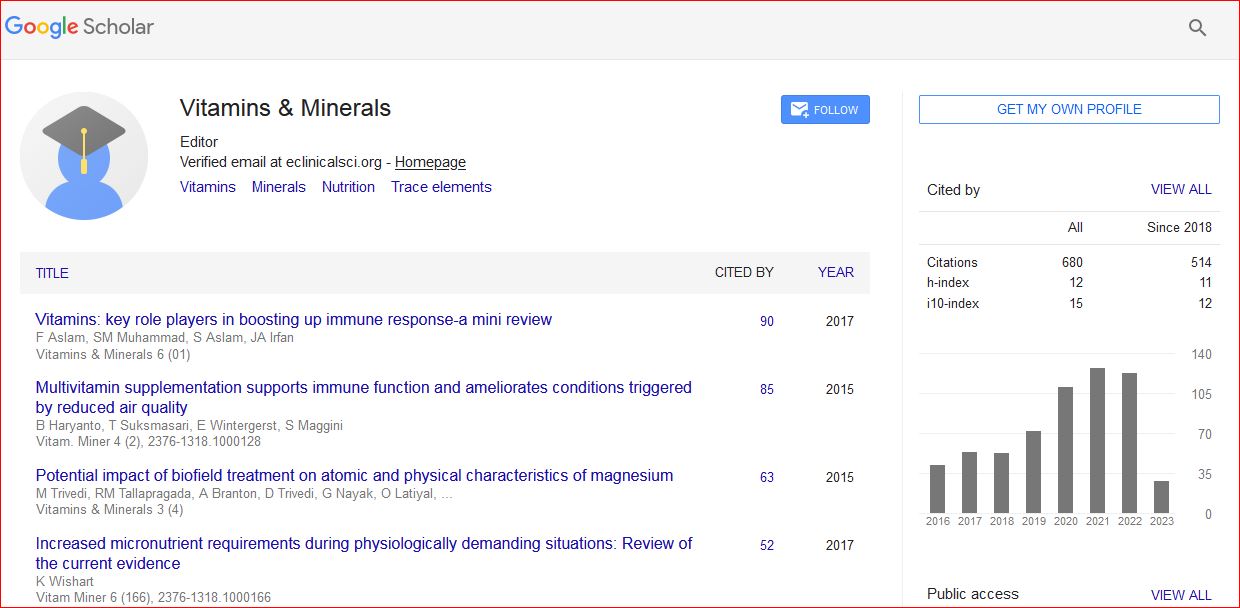
Vitamins & Minerals received 790 citations as per Google Scholar report