Short Communication - (2025) Volume 13, Issue 6
Received: 01-Dec-2025, Manuscript No. JGPR-26-190237;
Editor assigned: 03-Dec-2025, Pre QC No. P-190237;
Reviewed: 17-Dec-2025, QC No. Q-190237;
Revised: 22-Dec-2025, Manuscript No. R-190237;
Published:
29-Dec-2025
, DOI: 10.37421/2329-9126.2025.13.647
Citation: Patel, Arjun. ”Family Physicians: Pillars of Comprehensive Child Care.” J Gen Pract 13 (2025):647.
Copyright: © 2025 Patel A. This is an open-access article distributed under the terms of the Creative Commons Attribution License, which permits unrestricted use, distribution and reproduction in any medium, provided the original author and source are credited.
Family physicians serve as the cornerstone of comprehensive pediatric primary care, offering a wide spectrum of services essential for child development and well-being. Their role extends beyond mere treatment to encompass a holistic approach that recognizes the child within their family and community context. This involves fostering robust patient-provider relationships built on trust and continuity of care, which is crucial for understanding the multifaceted needs of children and their families. A primary focus is placed on delivering preventive services, effectively managing both acute and chronic illnesses, and facilitating the early detection of developmental issues, all of which contribute to better long-term health outcomes for young patients. The importance of promoting healthy lifestyles, addressing behavioral challenges, and ensuring timely vaccinations are integral to this comprehensive care model. Furthermore, family physicians are instrumental in guiding parents and caregivers through crucial developmental stages and health concerns, ensuring they are well-informed and involved in their child's care. Effective communication with parents and caregivers is paramount, not only for ensuring adherence to treatment plans but also for engaging in shared decision-making processes that respect the family's values and preferences. The integration of behavioral health into pediatric primary care settings is a growing necessity, given the increasing prevalence of mental health conditions among children and adolescents. This integrated approach allows for early identification and intervention, thereby improving overall child well-being and reducing the burden of untreated mental health issues. Developmental surveillance and screening are fundamental components of pediatric care, enabling family physicians to identify potential delays or disorders at an early stage. Regular assessments using validated tools are vital for tracking a child's progress across various developmental domains, ensuring timely interventions when necessary. Adolescent healthcare within family medicine demands a sensitive and responsive approach, acknowledging the unique physical, psychological, and social transitions characteristic of this age group. Building rapport, ensuring confidentiality, and openly addressing sensitive topics are key to fostering trust and promoting positive health behaviors during these critical years. Preventive care delivered by family physicians is foundational to lifelong health, encompassing immunizations, anticipatory guidance on nutrition and safety, and regular well-child visits. This proactive approach helps prevent diseases and mitigate risk factors, ultimately reducing the long-term burden of chronic conditions. Managing common pediatric infectious diseases is a routine yet critical aspect of family medicine practice, requiring up-to-date knowledge of diagnosis, treatment, and prevention strategies. Family physicians are key in differentiating viral from bacterial infections, promoting appropriate antibiotic stewardship, and educating families on infection control. The family physician's role in addressing childhood obesity is multifaceted, emphasizing education, counseling, and collaborative goal-setting with families. This involves promoting healthy eating habits, encouraging physical activity, and addressing environmental and behavioral factors. Continuity of care in pediatric family medicine is highly valued for its ability to foster strong relationships, leading to improved health outcomes and enhanced patient satisfaction. The longitudinal perspective gained from caring for a child over time is invaluable for early detection of chronic conditions and the development of personalized management plans. Immunization remains a cornerstone of pediatric preventive care, with family physicians playing a pivotal role in ensuring high vaccination rates through education and addressing parental concerns. Robust immunization programs are essential for preventing outbreaks of vaccine-preventable diseases. Caring for children with chronic illnesses within family medicine necessitates a patient-centered, multidisciplinary approach. Family physicians coordinate care, provide ongoing management, and support families in navigating the complexities of chronic conditions, empowering them for effective self-management and optimizing the child's quality of life [1].
Family physicians are central to providing comprehensive pediatric care, encompassing preventive services, management of acute and chronic illnesses, and early detection of developmental issues. A key approach involves fostering strong patient-provider relationships built on trust and continuity of care, enabling a holistic understanding of the child within their family and community context. This includes promoting healthy lifestyles, addressing behavioral challenges, and ensuring timely vaccinations. Furthermore, effective communication with parents and caregivers is paramount for adherence to treatment plans and shared decision-making [2].
Integrating behavioral health into pediatric primary care within family medicine settings is crucial for addressing the growing prevalence of mental health conditions in children and adolescents. This approach involves screening for common disorders, providing brief interventions, and facilitating referrals to specialized services when needed. Collaborative care models, where behavioral health specialists work alongside family physicians, enhance access and improve outcomes. Early identification and management of issues like anxiety, depression, and ADHD are vital for long-term well-being [3].
Developmental surveillance and screening are fundamental components of pediatric care in family medicine, allowing for early identification of potential delays or disorders. Regular assessment using validated tools helps family physicians track a child's progress across various domains, including gross and fine motor skills, language, social-emotional development, and cognitive abilities. Prompt intervention based on screening results can significantly improve a child's long-term developmental trajectory and reduce the burden on families and healthcare systems [4].
Adolescent health care presents unique challenges and opportunities within family medicine. Approaches need to be sensitive to the physical, psychological, and social transitions of this age group. Building rapport, ensuring privacy, and addressing sensitive topics like sexual health, substance use, and mental well-being are crucial. Empowering adolescents to participate in their own healthcare decisions promotes autonomy and adherence [5].
Preventive care in pediatrics, as delivered by family physicians, is foundational to lifelong health. This encompasses a wide range of services, including immunizations, anticipatory guidance on nutrition and safety, and regular well-child visits. Focusing on early intervention and health promotion helps prevent disease and mitigate risk factors, ultimately reducing the burden of chronic conditions later in life [6].
Managing common pediatric infectious diseases in family medicine requires up-to-date knowledge of diagnosis, treatment, and prevention. Family physicians play a key role in differentiating viral from bacterial infections, appropriate antibiotic stewardship, and educating families on infection control measures. This includes timely diagnosis and management of conditions like otitis media, pharyngitis, and bronchiolitis [7].
The family physician's role in addressing childhood obesity involves a multi-faceted approach, emphasizing education, counseling, and collaborative goal-setting with families. This includes promoting healthy eating habits, encouraging regular physical activity, and addressing environmental and behavioral factors contributing to weight gain. Early intervention is critical to prevent long-term health complications [8].
Continuity of care in pediatric family medicine fosters strong relationships, leading to better health outcomes and patient satisfaction. Family physicians, by providing care across different stages of a child's life, develop a deep understanding of the child's medical history, family dynamics, and social determinants of health. This longitudinal perspective is invaluable for early detection of chronic conditions and personalized management plans [9].
Immunization is a cornerstone of pediatric preventive care, and family physicians are at the forefront of ensuring high vaccination rates. This involves educating parents about vaccine safety and efficacy, addressing vaccine hesitancy, and adhering to recommended immunization schedules. Robust immunization programs are essential for preventing outbreaks of vaccine-preventable diseases [10].
Caring for children with chronic illnesses within family medicine requires a patient-centered, multidisciplinary approach. Family physicians coordinate care, provide ongoing management, and support families in navigating the complexities of chronic conditions such as asthma, diabetes, and epilepsy. Emphasis is placed on empowering families with knowledge and skills for effective self-management and ensuring the child's optimal quality of life [11].
Family physicians are integral to the delivery of comprehensive pediatric care, covering a broad spectrum of services that promote the health and development of children. Their practice encompasses vital preventive services, adept management of acute and chronic illnesses, and the crucial early detection of developmental concerns. A cornerstone of their approach is the cultivation of strong, trust-based patient-provider relationships, facilitated by continuity of care. This enables a comprehensive understanding of each child within their unique family and community context, promoting healthy lifestyles, addressing behavioral issues, and ensuring timely immunizations. Clear and consistent communication with parents and caregivers is essential for treatment adherence and shared decision-making, thereby optimizing the child's health trajectory [1].
The integration of behavioral health services into pediatric primary care within family medicine settings is increasingly recognized as critical. This is driven by the rising incidence of mental health conditions among children and adolescents. Such integration facilitates the screening for common disorders, the provision of brief interventions, and the arrangement of referrals to specialized care when necessary. Collaborative care models, where behavioral health specialists and family physicians work in tandem, are vital for improving access to care and enhancing patient outcomes. The early identification and management of conditions like anxiety, depression, and ADHD are paramount for fostering long-term well-being in children [2].
Developmental surveillance and screening represent fundamental elements of pediatric care provided by family physicians. These practices enable the early identification of potential developmental delays or disorders, allowing for timely intervention. By regularly employing validated assessment tools, family physicians can meticulously track a child's progress across key developmental domains, including motor skills, language acquisition, social-emotional development, and cognitive abilities. Prompt interventions guided by screening results can significantly improve a child's long-term developmental trajectory and alleviate the burden on both families and the healthcare system [3].
Adolescent healthcare within the family medicine framework presents a unique set of challenges and opportunities. The approach must be sensitive to the multifaceted physical, psychological, and social transitions that characterize this developmental stage. Cultivating strong rapport, ensuring patient privacy, and facilitating open discussions about sensitive topics such as sexual health, substance use, and mental well-being are crucial. Empowering adolescents to actively participate in their healthcare decisions is essential for fostering autonomy and promoting adherence to health recommendations [4].
Preventive care is a foundational pillar of pediatric primary care, and family physicians are at its forefront. This comprehensive approach includes a wide array of services, such as routine immunizations, anticipatory guidance related to nutrition and safety, and regular well-child visits. The emphasis on early intervention and health promotion is key to preventing diseases and mitigating risk factors, ultimately reducing the long-term incidence and impact of chronic conditions [5].
The management of common pediatric infectious diseases in family medicine requires continuous updates in knowledge regarding diagnosis, treatment, and preventive strategies. Family physicians play a pivotal role in distinguishing between viral and bacterial infections, promoting judicious antibiotic use (stewardship), and educating families on effective infection control measures. This involves the timely and accurate diagnosis and management of prevalent conditions like otitis media, pharyngitis, and bronchiolitis [6].
In addressing childhood obesity, family physicians adopt a multifaceted strategy. This approach emphasizes patient and family education, personalized counseling, and the collaborative establishment of achievable goals. Key components include promoting healthy dietary patterns, encouraging consistent physical activity, and identifying and addressing environmental and behavioral factors that contribute to excessive weight gain. Early intervention is particularly critical to prevent the onset of long-term health complications associated with obesity [7].
Continuity of care within pediatric family medicine is highly conducive to developing strong, enduring patient-provider relationships. This continuity leads to demonstrably better health outcomes and increased patient satisfaction. By providing care throughout a child's developmental stages, family physicians gain an in-depth understanding of their medical history, family dynamics, and the social determinants influencing their health. This longitudinal perspective is invaluable for the early identification of chronic conditions and the tailoring of personalized management plans [8].
Immunization stands as a critical component of pediatric preventive care, and family physicians are central to achieving and maintaining high vaccination rates. Their role involves educating parents on vaccine safety and efficacy, effectively addressing concerns about vaccine hesitancy, and diligently adhering to recommended immunization schedules. Strong immunization programs are indispensable for preventing the widespread occurrence of vaccine-preventable diseases [9].
The care of children with chronic illnesses within the family medicine context necessitates a patient-centered and multidisciplinary approach. Family physicians are responsible for coordinating care, providing consistent ongoing management, and offering essential support to families navigating the complexities of chronic conditions such as asthma, diabetes, and epilepsy. A significant focus is placed on empowering families with the knowledge and skills required for effective self-management, thereby ensuring the child achieves an optimal quality of life [10].
Family physicians play a vital role in comprehensive pediatric care, offering a broad range of services including preventive care, management of acute and chronic illnesses, and early detection of developmental issues. They emphasize building strong patient-provider relationships through continuity of care, fostering a holistic understanding of the child within their family and community. Key aspects of their practice include promoting healthy lifestyles, addressing behavioral health concerns, ensuring timely vaccinations, and effective communication with caregivers. For adolescents, care is tailored to their unique developmental stage, prioritizing rapport, privacy, and open communication on sensitive topics. Managing common pediatric infections and childhood obesity requires up-to-date knowledge and a multifaceted approach involving education and counseling. Continuity of care enhances health outcomes and patient satisfaction, while immunization remains a cornerstone of preventive strategies. Caring for children with chronic illnesses demands a patient-centered, multidisciplinary approach focused on empowering families and optimizing quality of life.
None
None
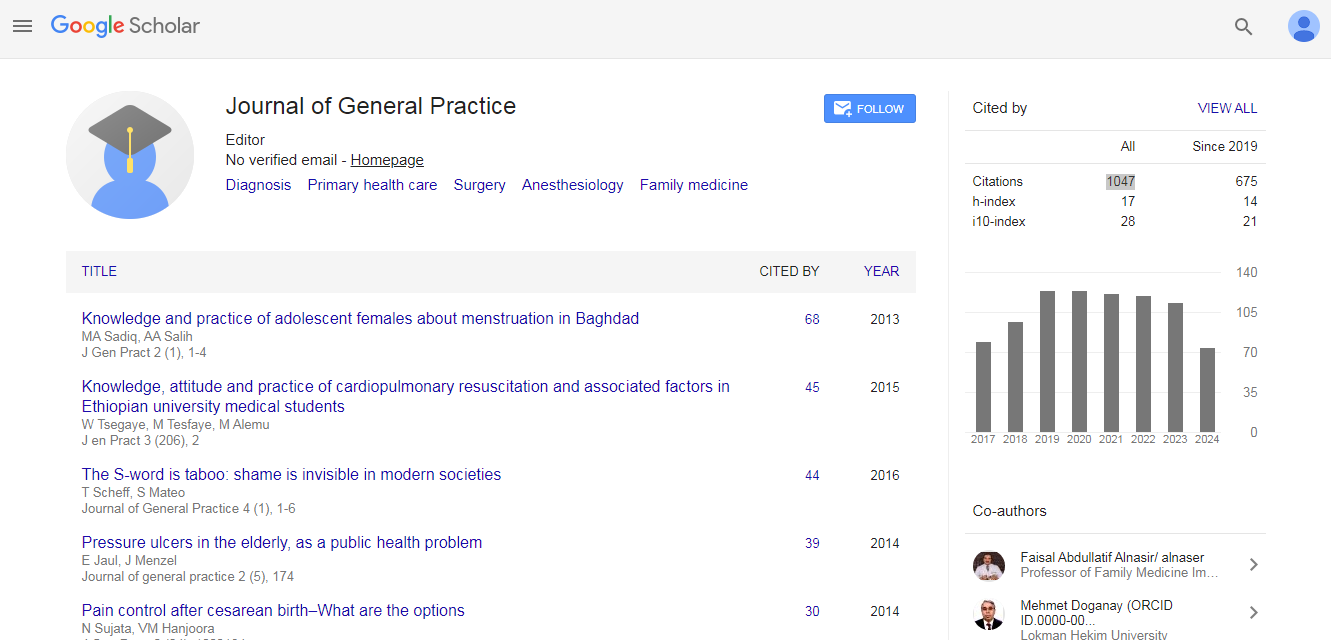
Journal of General Practice received 1047 citations as per Google Scholar report