Commentary - (2025) Volume 11, Issue 5
Received: 01-Sep-2025, Manuscript No. aso-25-184656;
Editor assigned: 03-Sep-2025, Pre QC No. P-184656;
Reviewed: 17-Sep-2025, QC No. Q-184656;
Revised: 22-Sep-2025, Manuscript No. R-184656;
Published:
29-Sep-2025
, DOI: 10.37421/2471-2671.2025.11.189
Citation: Mehta, Arjun. ”Evolving Cancer Surgery: Personalized,
Minimally Invasive, Multidisciplinary Care.” Arch Surg Oncol 11 (2025):189.
Copyright: © 2025 Mehta A. This is an open-access article distributed under the terms of the Creative Commons Attribution License, which permits unrestricted use, distribution
and reproduction in any medium, provided the original author and source are credited.
Cancer surgery has undergone a profound transformation, evolving from a standalone intervention to an integral element of comprehensive, multidisciplinary patient care. This evolution is characterized by a growing emphasis on personalized treatment strategies, meticulously shaped by ongoing advancements in diagnostic imaging, pathological evaluation, and the development of sophisticated adjuvant therapies. The contemporary approach to cancer surgery is increasingly focused on organ preservation, employing minimally invasive techniques such as laparoscopy and robotic-assisted procedures to reduce patient morbidity and improve functional outcomes. A cornerstone of this modern paradigm is the patient-centered philosophy, which ensures that oncologic efficacy, reconstructive considerations, and essential supportive care are seamlessly integrated throughout the entire patient journey, from the initial diagnosis through the critical survivorship phase. The overarching objective is to optimize oncologic results while simultaneously minimizing any residual functional impairments or cosmetic deficits, thereby enhancing the patient's overall quality of life post-treatment [1].
Minimally invasive surgical techniques, encompassing both laparoscopic and robotic surgery, have firmly established themselves as indispensable components of contemporary cancer management. These advanced surgical modalities provide patients with substantial advantages, including significantly reduced postoperative pain, shorter durations of hospital stays, and accelerated recovery timelines when contrasted with conventional open surgical procedures. The widespread adoption of these techniques has been greatly facilitated by rapid technological progress and the accumulation of a robust body of evidence that consistently demonstrates their oncologic effectiveness, often proving equivalent to open procedures across a wide spectrum of cancer types and anatomical locations. This evidence base continues to grow, further solidifying their role in oncologic surgery [2].
The strategic integration of neoadjuvant and adjuvant therapies has fundamentally reshaped the landscape of surgical decision-making in oncology. Systemic treatments administered prior to surgical intervention, known as neoadjuvant therapies, possess the remarkable capacity to downstage tumors, thereby enabling the selection of less radical surgical resections and potentially improving overall cure rates for many patients. Following surgery, the administration of adjuvant therapies serves to further reduce the risk of disease recurrence, offering a critical layer of protection against metastatic spread. This intricate and dynamic interplay between surgical intervention and systemic therapeutic regimens necessitates exceptionally close and ongoing collaboration among medical oncologists, surgical specialists, and pathologists to ensure optimal patient management [3].
Precision medicine, propelled by sophisticated molecular profiling and in-depth genetic analysis of tumors, is increasingly serving as a guiding force in the development of surgical strategies. A detailed understanding of the specific molecular characteristics and genetic makeup of an individual patient's tumor allows for the meticulous tailoring of treatment plans. This personalized approach extends to the selection of the most appropriate surgical techniques and the identification of targeted therapies that are most likely to be effective against the unique biological profile of the cancer. The ultimate aim of this individualized strategy is to maximize therapeutic efficacy while simultaneously minimizing the potential for treatment-related toxicities [4].
The multidisciplinary tumor board has emerged as the indispensable central hub for the rigorous discussion and management of complex cancer cases. This critical forum convenes a diverse array of specialists, including surgeons, medical oncologists, radiation oncologists, pathologists, radiologists, and other allied health professionals, to collectively review individual patient cases. Through these discussions, a consensus-driven treatment plan is formulated, ensuring that all relevant diagnostic, therapeutic, and supportive perspectives are thoroughly considered. This highly collaborative environment is paramount in ensuring that patient care is both comprehensive and maximally effective, reflecting the intricate nature of modern cancer treatment [5].
Reconstructive surgery plays an absolutely critical role in the holistic recovery of cancer patients, focusing on the restoration of both physical function and the overall quality of life following oncologic resection. Significant advancements in reconstructive techniques, which now include highly sophisticated methods like microsurgery and innovative tissue engineering approaches, enable surgeons to achieve more complex and aesthetically pleasing outcomes. These efforts are vital in addressing the profound physical and psychological impact that cancer surgery can have on patients, contributing significantly to their post-treatment well-being [6].
The application of cutting-edge advanced imaging technologies is actively transforming the precision and safety of cancer surgery. Innovations such as artificial intelligence-driven image analysis and sophisticated intraoperative navigation systems are providing surgeons with real-time guidance during procedures. These tools significantly enhance the visualization of critical anatomical structures, facilitate more accurate delineation of tumor margins, and contribute directly to improved surgical safety and overall efficacy, leading to better patient outcomes [7].
A dedicated focus on survivorship care has become an indispensable component of the modern multidisciplinary approach to cancer management. This vital aspect of care encompasses comprehensive long-term follow-up protocols, effective management of treatment-related side effects that may persist or emerge, robust psychosocial support systems, and tailored rehabilitation programs. The ultimate goal of this integrated survivorship care is to empower patients to achieve the best possible quality of life throughout their post-cancer journey, ensuring their continued well-being and functional recovery [8].
The increasing integration of artificial intelligence (AI) and machine learning (ML) technologies within the field of surgical oncology holds immense promise for further enhancing clinical practice. These powerful computational tools are expected to significantly improve diagnostic accuracy, enable more precise prediction of patient responses to various treatments, and optimize the complex process of surgical planning. Ultimately, these advanced technologies are poised to play a pivotal role in further personalizing cancer care and substantially improving overall patient outcomes [9].
The global healthcare landscape is witnessing a significant paradigm shift towards value-based care, a movement that is profoundly influencing the practice of cancer surgery. This transition necessitates a deliberate emphasis on maximizing patient outcomes while simultaneously ensuring cost-effectiveness. Consequently, there is a heightened focus on evidence-based practices, the efficient utilization of healthcare resources, and the strategic development of integrated care pathways designed to deliver consistently high-quality patient care without compromising financial sustainability. This evolving model seeks to optimize both clinical results and economic efficiency [10].
Cancer surgery has undergone a profound transformation, evolving from a standalone intervention to an integral element of comprehensive, multidisciplinary patient care. This evolution is characterized by a growing emphasis on personalized treatment strategies, meticulously shaped by ongoing advancements in diagnostic imaging, pathological evaluation, and the development of sophisticated adjuvant therapies. The contemporary approach to cancer surgery is increasingly focused on organ preservation, employing minimally invasive techniques such as laparoscopy and robotic-assisted procedures to reduce patient morbidity and improve functional outcomes. A cornerstone of this modern paradigm is the patient-centered philosophy, which ensures that oncologic efficacy, reconstructive considerations, and essential supportive care are seamlessly integrated throughout the entire patient journey, from the initial diagnosis through the critical survivorship phase. The overarching objective is to optimize oncologic results while simultaneously minimizing any residual functional impairments or cosmetic deficits, thereby enhancing the patient's overall quality of life post-treatment [1].
Minimally invasive surgical techniques, encompassing both laparoscopic and robotic surgery, have firmly established themselves as indispensable components of contemporary cancer management. These advanced surgical modalities provide patients with substantial advantages, including significantly reduced postoperative pain, shorter durations of hospital stays, and accelerated recovery timelines when contrasted with conventional open surgical procedures. The widespread adoption of these techniques has been greatly facilitated by rapid technological progress and the accumulation of a robust body of evidence that consistently demonstrates their oncologic effectiveness, often proving equivalent to open procedures across a wide spectrum of cancer types and anatomical locations. This evidence base continues to grow, further solidifying their role in oncologic surgery [2].
The strategic integration of neoadjuvant and adjuvant therapies has fundamentally reshaped the landscape of surgical decision-making in oncology. Systemic treatments administered prior to surgical intervention, known as neoadjuvant therapies, possess the remarkable capacity to downstage tumors, thereby enabling the selection of less radical surgical resections and potentially improving overall cure rates for many patients. Following surgery, the administration of adjuvant therapies serves to further reduce the risk of disease recurrence, offering a critical layer of protection against metastatic spread. This intricate and dynamic interplay between surgical intervention and systemic therapeutic regimens necessitates exceptionally close and ongoing collaboration among medical oncologists, surgical specialists, and pathologists to ensure optimal patient management [3].
Precision medicine, propelled by sophisticated molecular profiling and in-depth genetic analysis of tumors, is increasingly serving as a guiding force in the development of surgical strategies. A detailed understanding of the specific molecular characteristics and genetic makeup of an individual patient's tumor allows for the meticulous tailoring of treatment plans. This personalized approach extends to the selection of the most appropriate surgical techniques and the identification of targeted therapies that are most likely to be effective against the unique biological profile of the cancer. The ultimate aim of this individualized strategy is to maximize therapeutic efficacy while simultaneously minimizing the potential for treatment-related toxicities [4].
The multidisciplinary tumor board has emerged as the indispensable central hub for the rigorous discussion and management of complex cancer cases. This critical forum convenes a diverse array of specialists, including surgeons, medical oncologists, radiation oncologists, pathologists, radiologists, and other allied health professionals, to collectively review individual patient cases. Through these discussions, a consensus-driven treatment plan is formulated, ensuring that all relevant diagnostic, therapeutic, and supportive perspectives are thoroughly considered. This highly collaborative environment is paramount in ensuring that patient care is both comprehensive and maximally effective, reflecting the intricate nature of modern cancer treatment [5].
Reconstructive surgery plays an absolutely critical role in the holistic recovery of cancer patients, focusing on the restoration of both physical function and the overall quality of life following oncologic resection. Significant advancements in reconstructive techniques, which now include highly sophisticated methods like microsurgery and innovative tissue engineering approaches, enable surgeons to achieve more complex and aesthetically pleasing outcomes. These efforts are vital in addressing the profound physical and psychological impact that cancer surgery can have on patients, contributing significantly to their post-treatment well-being [6].
The application of cutting-edge advanced imaging technologies is actively transforming the precision and safety of cancer surgery. Innovations such as artificial intelligence-driven image analysis and sophisticated intraoperative navigation systems are providing surgeons with real-time guidance during procedures. These tools significantly enhance the visualization of critical anatomical structures, facilitate more accurate delineation of tumor margins, and contribute directly to improved surgical safety and overall efficacy, leading to better patient outcomes [7].
A dedicated focus on survivorship care has become an indispensable component of the modern multidisciplinary approach to cancer management. This vital aspect of care encompasses comprehensive long-term follow-up protocols, effective management of treatment-related side effects that may persist or emerge, robust psychosocial support systems, and tailored rehabilitation programs. The ultimate goal of this integrated survivorship care is to empower patients to achieve the best possible quality of life throughout their post-cancer journey, ensuring their continued well-being and functional recovery [8].
The increasing integration of artificial intelligence (AI) and machine learning (ML) technologies within the field of surgical oncology holds immense promise for further enhancing clinical practice. These powerful computational tools are expected to significantly improve diagnostic accuracy, enable more precise prediction of patient responses to various treatments, and optimize the complex process of surgical planning. Ultimately, these advanced technologies are poised to play a pivotal role in further personalizing cancer care and substantially improving overall patient outcomes [9].
The global healthcare landscape is witnessing a significant paradigm shift towards value-based care, a movement that is profoundly influencing the practice of cancer surgery. This transition necessitates a deliberate emphasis on maximizing patient outcomes while simultaneously ensuring cost-effectiveness. Consequently, there is a heightened focus on evidence-based practices, the efficient utilization of healthcare resources, and the strategic development of integrated care pathways designed to deliver consistently high-quality patient care without compromising financial sustainability. This evolving model seeks to optimize both clinical results and economic efficiency [10].
Cancer surgery has evolved into a multidisciplinary endeavor, emphasizing personalized treatments driven by advances in imaging, diagnostics, and adjuvant therapies. The modern approach prioritizes organ preservation, minimally invasive techniques like laparoscopy and robotics, and a patient-centered strategy. This includes integrating oncologic, reconstructive, and supportive care from diagnosis through survivorship to optimize outcomes and minimize deficits. Minimally invasive approaches offer benefits such as reduced pain and faster recovery. Neoadjuvant and adjuvant therapies reshape surgical decisions by downstaging tumors and reducing recurrence risk, requiring close collaboration among specialists. Precision medicine uses molecular profiling to tailor surgical strategies and targeted therapies for maximized efficacy and minimized toxicity. Multidisciplinary tumor boards are central to discussing complex cases and formulating consensus-driven plans. Reconstructive surgery is vital for restoring function and quality of life post-resection. Advanced imaging technologies like AI-driven analysis enhance surgical precision and safety. Survivorship care is integral, focusing on long-term follow-up, side effect management, and psychosocial support. AI and machine learning are poised to improve diagnostics, treatment prediction, and surgical planning. The shift to value-based care emphasizes outcomes and cost-effectiveness through evidence-based practices and integrated care pathways.
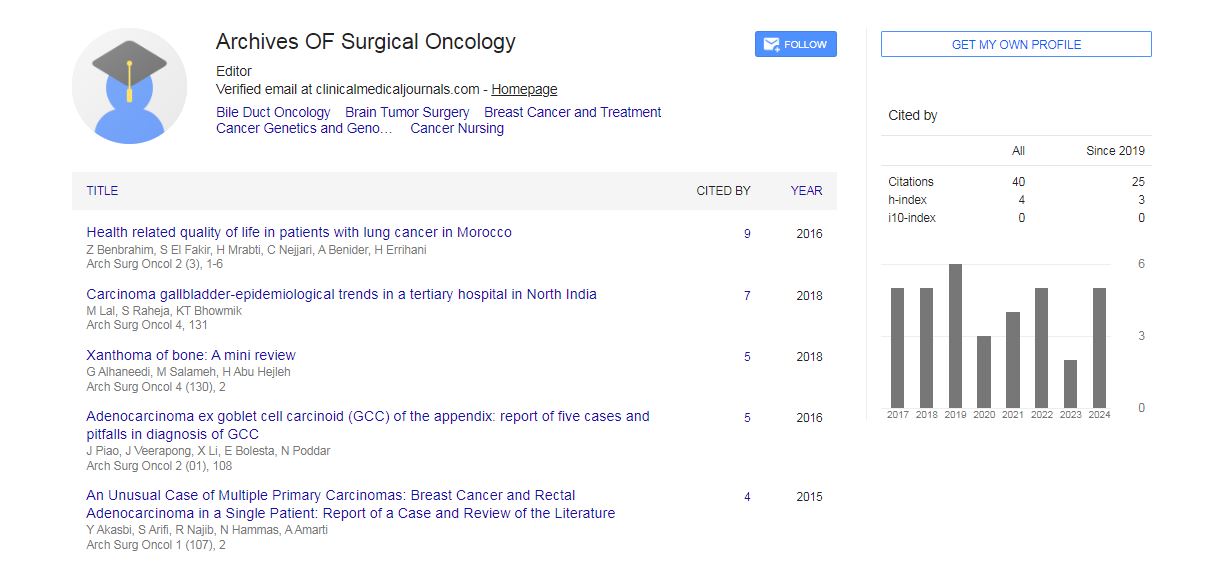
Archives of Surgical Oncology received 37 citations as per Google Scholar report