Research Article - (2025) Volume 16, Issue 2
Received: 26-Sep-2024, Manuscript No. JHMI-24-148929;
Editor assigned: 30-Sep-2024, Pre QC No. JHMI-24-148929 (PQ);
Reviewed: 15-Oct-2024, QC No. JHMI-24-148929;
Revised: 17-Apr-2025, Manuscript No. JHMI-24-148929 (R);
Published:
24-Apr-2025
, DOI: 10.37421/2157-7420.2025.16.578
Citation: Yassin, Elmi Saleban, Ali Yahyaoui, and Fatima Ezzahra Ben Bouazaz. "Early Identification of Chronic Renal Failure and Enhanced Assistance with Medical Diagnosis." J Health Med Informat 16 (2025): 578.
Copyright: © 2025 Yassin ES, et al. This is an open-access article distributed under the terms of the creative commons attribution license which permits unrestricted use, distribution and reproduction in any medium, provided the original author and source are credited.
Chronic Kidney Disease (CKD) is a progressive and irreversible deterioration in renal function, characterized by a fall in Glomerular Filtration Rate (GFR). It may result from chronic kidney disease or incomplete recovery from acute kidney injury. CKD is a major public health problem, with a worldwide prevalence estimated at between 8% and 16%, mainly affecting the elderly in developed countries, where vascular nephropathy is the main cause. In sub-Saharan Africa, CKD affects more young adults, with a variety of causes. The integration of Artificial Intelligence (AI) into CKD diagnosis and management represents a significant opportunity to improve early detection and patient follow-up. AI algorithms can analyze ultrasound data and other biomarkers to identify signs of CKD before the onset of clinical symptoms, enabling earlier and more personalized interventions. In addition, AI can help predict disease progression and optimize treatment plans, contributing to better management of CKD patients.
Chronic kidney disease • Algorithm • Naïve Bayes classifier
Chronic renal failure is defined as the irreversible reduction in glomerular filtration rate. It results either from the evolution of Chronic Kidney Disease (CKD), or from failure to recover from acute kidney injury. Chronic Kidney Disease (CKD) is defined as a decrease in glomerular filtration rate below 60 ml/min/1.73 m2 for more than three months, or a glomerular filtration rate above 60 ml/min/1.73 m2 associated with one or more markers of renal damage.
Chronic renal failure is a major public health problem. Its prevalence is estimated at between 8% and 16% worldwide, although medical literature varies in its assessment. In the United States, the prevalence of CKD rose from 10% in 1988-1994 to over 13.3% in 1999-2004.
In Africa, the prevalence and incidence of CKD are variable, and few studies have been carried out on the general population. However, work on hospital series has been reported in various countries. In Senegal, it was estimated at 4.9% in the general population in 2012.
CKD affects elderly subjects in developed countries. The main etiology of this disease in developed countries was vascular nephropathy, accounting for 43% of cases in France.
In sub-Saharan Africa, it affects young subjects between the ages of 20 and 50, and the etiologies of chronic kidney disease vary from country to country. In Côte d'Ivoire, it was dominated by vascular nephropathy in 59.9% of cases, followed by chronic glomerulonepritis in 25%, HIV infection in 9.1% and diabetes in 4.8% [1].
End-stage CKD patients require renal replacement therapy. There are two methods of kidney function replacement, renal transplantation and dialysis (hemodialysis and peritoneal dialysis). In France, CKD affects more than 50,000 patients, or nearly 1%, 60% of whom are on dialysis and 40% of whom have a functional renal graft.
In Africa, suppletive therapy is not common practice. In Madagascar, 98.74% of patients received conservative treatment. Three patients (1.26%) had benefited from hemodialysis treatment, and no patient was able to undergo renal transplantation [2].
Hemodialysis has been available in Djibouti for over 10 years, and many patients with end-stage chronic renal failure are currently on hemodialysis. However, no studies have been carried out in the context of non-dialyzed chronic renal failure.
The aims of our study were to improve diagnostic assistance using the computerized system:
• Clinical, diagnostic, therapeutic and evolutionary aspects of nondialyzed chronic kidney disease based on imaging.
• Cardiovascular risk factors associated with chronic insufficiency.
Study framework
The study was carried out in the nephrology and hemodialysis department of the Centre Hospitalize Universities de Djibouti, and in particular at the Hospital General Peltier de Djibouti, which is the busiest of the five other hospitals that make up the Centre Hospitalize Universities de Djibouti. It is a level 3 national reference public health establishment. The hospital has 15 surgical and medical departments, including nephrology and hemodialysis.
The latter comprises two sectors: An inpatient unit for patients with chronic or acute kidney disease, and a hemodialysis unit.
Inpatient unit features and staff:
• 12 large hospital wards, 6 on the women's side and 6 on the men's side.
• A capacity of 30 beds spread over 12 large rooms.
• Five nephrologists: Three from Djibouti, one of whom is also an internist, and two from the Cuban cooperation.
• Twelve state-qualified nurses.
Type of study
This was a retrospective descriptive and analytical study conducted over a six-month period from February 01, 2024 to July 31, 2024.
Study population
Inclusion criteria
All patients hospitalized during the study period with chronic renal failure for more than 3 months and on dialysis were included in the study.
Non-inclusion criteria
Not included in the study:
• All patients with unconfirmed CKD on hemodialysis.
• Patients with acute renal failure.
• Patients with confirmed renal failure with incomplete or unusable records.
• Patients with chronic renal failure hospitalized outside the study period.
Data collection tool
Data were collected using a reprinted survey form (appendix), based on medical records from the nephrology department archive and statistical data from Peltier General Hospital [3,4].
For each patient included, the following parameters were studied: They were of order
Epidemiological: Patient identity, gender, age, profession, address, nationality, marital status, level of education, socioeconomic status, department.
Anamnestic
• Reason and date of hospitalization.
• Medical history: Diabetes, hypertension, dyslipidemia.
• Uro-nephrological history: Renal lithiasis, urinary tract infection, BPH.
• Surgical and gynecological history and toxic habits.
• Family history: Chronic kidney disease, diabetes, hypertension
Clinical which included general signs, physical signs, functional signs.
Organic considering
Complete Blood Count (CBC): Used to diagnose anemia and define its characteristics, as well as to look for other abnormalities in the hemogram. Anemia is diagnosed in chronic renal failure patients when the Hemoglobin level is below 11.5 g/dl, as are its specific characteristics and other abnormalities of the blood count. To quote:
Normochromia (32%<MHCC<36%)/Hypochromia (MHCC<32%)
The data collected was entered and analyzed using Python software (version 3) in two stages.
• Data cleansing and pre-processing
• Data set division
• Model drive
• Descriptive study: Quantitative variables were expressed as averages, median, standard deviation and mini-max. We calculated absolute frequencies and percentages for categorical variables.
• Analytical study: Comparisons of more than two means were carried out by the Kruskal-Wallis H test for non-parametric analysis of variance. Comparisons of 2 means on independent series were performed using the non-parametric Mann-Whitney test. Comparisons of percentages on independent series were carried out using Pearson's chi-square test, and in the event of significance in the chi-square test and non-validity of this test and comparison of 2 percentages, using Fisher's two-tailed exact test. In all statistical tests, the significance level (p) was set at 0.05.
Descriptive results epidemiological data prevalence
In our study, we collated 500 cases over a 6-month period, from 1 erja 2017 to December 31, 2018. Among them, we identified 357 CKD cases that met the inclusion criteria (Table 1).
|
|
age |
bp |
sg |
al |
su |
bgr |
|
count |
376 |
376 |
341 |
342 |
340 |
343 |
|
mean |
51.36436 |
76.30319 |
1.017595 |
0.98538 |
0.464706 |
148.1808 |
|
std |
16.96075 |
13.65884 |
0.005669 |
1.340686 |
1.11384 |
80.23494 |
|
min |
2 |
50 |
1.005 |
0 |
0 |
22 |
|
25% |
41.75 |
70 |
1.015 |
0 |
0 |
99.5 |
|
50% |
54 |
80 |
1.02 |
0 |
0 |
121 |
|
75% |
64 |
80 |
1.02 |
2 |
0 |
162.5 |
|
max |
90 |
180 |
1.025 |
5 |
5 |
490 |
|
|
bu |
SC |
sod |
pot |
hemo |
pcv |
|
count |
367 |
369 |
304 |
303 |
338 |
320 |
|
mean |
57.42016 |
3.09607 |
137.6003 |
4.633333 |
12.55503 |
38.9375 |
|
std |
50.99236 |
5.834599 |
10.50439 |
3.239284 |
2.936204 |
9.063128 |
|
min |
1.5 |
0.4 |
4.5 |
2.5 |
3.1 |
9 |
|
25% |
27 |
0.9 |
135 |
3.8 |
10.4 |
32 |
|
50% |
41 |
1.2 |
138 |
4.4 |
12.75 |
40.5 |
|
75% |
66 |
2.8 |
142 |
4.9 |
15 |
45.25 |
|
max |
391 |
76 |
163 |
47 |
17.8 |
54 |
|
|
WC |
rc |
||||
|
count |
286 |
263 |
||||
|
mean |
8416.783 |
4.706464 |
||||
|
std |
2956.04 |
1.005555 |
||||
|
min |
2200 |
2.1 |
||||
|
25% |
6500 |
3.9 |
||||
|
50% |
8000 |
4.8 |
||||
|
75% |
9800 |
5.4 |
||||
|
max |
26400 |
6.5 |
||||
Table 1. Descriptive results epidemiological data prevalence.
During this period, 1100 patients were admitted to the HGP nephrology department. The prevalence of CKD was 32.4%.
Annual incidence varied from year to year. It was 156 cases in 2017 and 201 cases in 2018, an average of 178.5 new cases/year.
The mean age of patients was 54.51 years, with extremes of 12 and 90 years.
The 51 to 60 age group was the largest (26.7% of cases) (Figure 1).
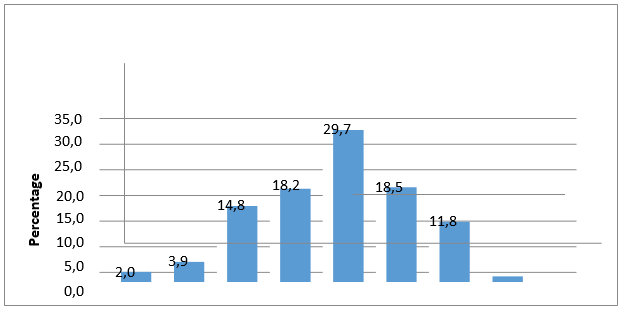
Figure 1. Patient distribution by age group.
CKD was diagnosed in 188 men and 169 women, for a sex ratio (M/F) of 1.11 (Figure 2).
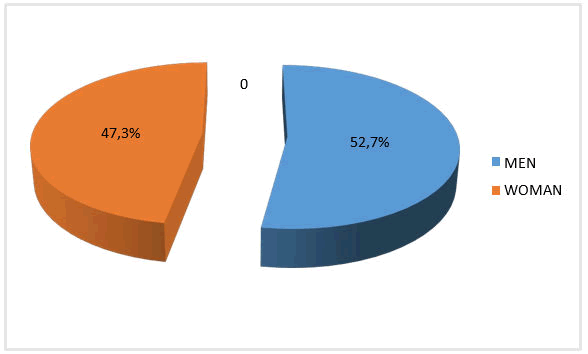
Figure 2. Distribution of patients by gender.
Recall is the ratio of correct positive predictions (true positives) to the set of true positive examples (true positives and false negatives). It measures the model's ability to identify positive examples (Figure 3).
• For class "0": The recall is 1.00, meaning that 100% of the examples in class "0" have been correctly identified.
• For class "1": The recall is also 1.00, which means that 100% of the examples in class "1" have been correctly identified (Table 2).
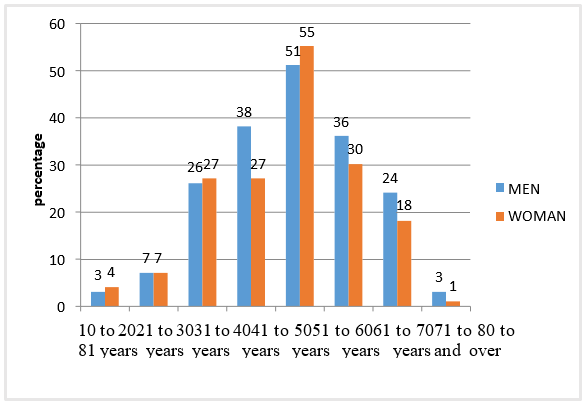
Figure 3. Age groups by gender.
| Naive bayes classifier: Accuracy: 1.00 Confusion matrix: [[28 0] [0 52]] Classification report: |
||||
| Precision | Recall | f1-score | Support | |
| 0 | 1.00 | 1.00 | 1.00 | 28 |
| 1 | 1.00 | 1.00 | 1.00 | 52 |
| Accuracy | 1.00 | 80 | ||
| Macro avg | 1.00 | 1.00 | 1.00 | 80 |
| Weighted avg | 1.00 | 1.00 | 1.00 | 80 |
Table 2. Naive bayes classifier.
Marital status
Analysis of our sample showed that 60 patients (16.81%) were married. Eighteen patients (5.04%) were single, and for 272 patients (76.19%), the marital status was not mentioned in the files. Figure 4 shows the distribution of patients by marital status [5,6].
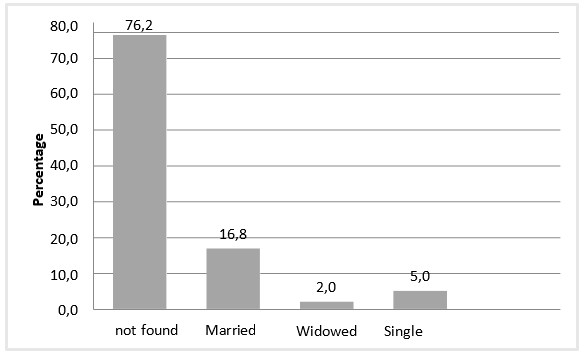
Figure 4. Patients by marital status.
Place of residence
The most populous commune was Balbala, with 187 out of 357 patients (52.4%). One hundred and thirty-seven patients (37.8%) came from the city center (ras-dika and boulaose communes) (Figure 5).
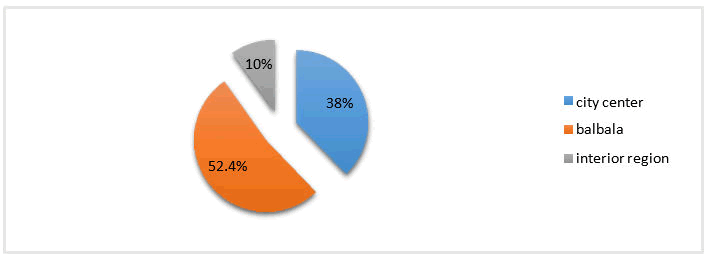
Figure 5. Distribution of patients by place of residence.
Referral service
Two hundred and thirty patients (64.4%) came from the HGP emergency department. Fifty-five patients (15.4%) came from the Balbala "Cheiko" hospital emergency department (Table 3).
| Service | Workforce | Percentage |
| HGP emergency | 230 | 64.4 |
| Balbala emergency | 55 | 15.4 |
| CNSS | 39 | 10.9 |
| Regional hospital | 20 | 5.6 |
| Private hospital | 7 | 2 |
| Military hospital | 6 | 1.7 |
| Total | 357 | 100 |
Table 3. Distribution of patients by referral service.
Clinical data Reasons for hospitalization
Eighty-seven patients (24.4%) were admitted for high creatinine levels. Other reasons for admission are shown in Figure 6.
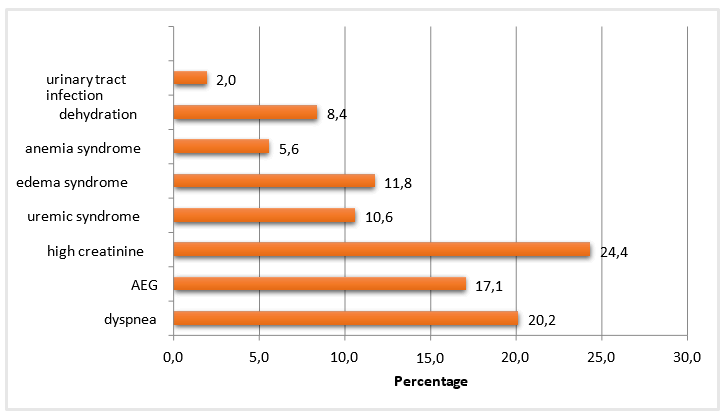
Figure 6: Breakdown of patients by reason for hospitalization.
History and co-morbidities
One hundred and thirty-eight patients had known hypertension (38.7%). Ninety-nine patients were diabetic, including four patients (1.1%) with type 1 diabetes and 95 patients (26.6%) with type 2 diabetes. 3 patients had heart failure. Khat consumption concerned 54 patients (15.1%). Cigarettes were the most commonly smoked tobacco, with 51 patients (14.3%) having been active smokers in the past.
The presence of at least one comorbidity was noted in 142 patients (39.7%). The number of comorbidities was two to three in 108 patients (30.2%).
Prevalence
In our study, the hospital prevalence of chronic renal failure was 32.4%. Its annual incidence at Peltier General Hospital was around 178.5 cases/year. In the literature, this incidence varies considerably between different countries. In our series, it was much higher than in other series. It was respectively 50.4 cases/year, 60 cases/year and 79.6 cases/year in Côte d'Ivoire, in the Democratic Republic of the Congo and Madagascar [7,8]. These variations from one study to another could be explained by the existence of several nephrology departments in these countries, the recruitment method and the duration of the study (Table 4).
| Country names | Studies number of cases | Incidence |
| Iran | 1200/4 years | 300/year |
| Ivory Coast | 252/5 years | 50.4/year |
| DRC | 60/year | 60/year |
| Madagascar | 239/3 years | 79.6/year |
| Mali | 312/3 years | 104/year |
| Our series | 357/2 years | 178.5/year |
Table 4. Annual incidence rates in the literature.
n our series, the mean age was 54.51 years, with extremes of 12 and 90 years. The 51 to 60 age group was the most represented, accounting for 26.7% of cases, and it is clear that this pathology can occur at any age. The high frequency in this age group could be explained by the role played by environmental factors, notably the use of traditional treatments and the preponderance of metabolic diseases. As for the prevalence of CKD, it was highest in patients aged under 60 (68.6% of cases). This age group represents the active and productive segment of the population, hence the importance of a policy of prevention and screening.
The average age of onset of CKD also varies from country to country, and is relatively young in developing countries such as the Democratic Republic of Congo (53.9 years), Senegal (48.78 years) and Ethiopia (40.1 years). This could be due to the young age of the populations in most developing countries in general, and in subSaharan Africa in particular. In the USA, the average age of CKD patients was 58 in 1999 and 62 in 1998. In China, it was higher among patients over 70. This could be explained by the easier access medical care, rising life expectancy and an ageing population in these countries.
In our study, men outnumbered women 52.7% to 47.3%. the sex ratio was 1.11, with a male dominance found in other African series: 1.9 in Togo, 1.34 in Cameroon and 1.55 in Kenya.
High blood pressure was the most common medical condition, accounting for 38.7% of our patients. Diabetes ranked second with 27.7% of cases. The number of comorbidities was two to three for 108 patients (30.2% of cases). Uro-nephrological history was found in 11.2% of patients.
In developing countries, hypertension predominated, with 36.5% in Ethiopia, 39.1% in Senegal and 28.9% in Nigeria. This could be explained by the consumption of high-salt diets in these countries.
In developed countries, however, diabetes predominated, with 43.8% in the USA and 31% in France.
In the United States, the incidence rate of T2DM in people with CKD is significantly higher than in the general population.
Clinical data
Ninety-seven patients (24.4%) were admitted with elevated creatinine levels. Seventy-two patients (20.2%) were admitted with kusmall dyspnea.
In Nigeria, the most common symptoms were oedema, vomiting, oliguria and dyspnoea presented respectively by 118 patients (77.1% of cases), 96 (62.7% of cases), 89 (58.2% of cases) and 87 (56.9% of cases).
In Senegal, hypertension is the most frequent reason for hospitalization, accounting for 85.6% of cases, followed by anemia (83.9%) and anorexia (61.73%).
This would account for the delayed diagnosis of CKD, supported by the polymorphous, confusing and even neglected nature of CKD symptomatology.
In our series, mean systolic and diastolic blood pressures were 130.46 mmHg and 70.52 mmHg respectively. Our results were close to those found in Ethiopia, with mean systolic and diastolic blood pressures of 136.6 ± 15.7 mmHg and 85 ± 8.9 mmHg respectively.
Biological data
The mean hemoglobin level was 8.6 g/dl, with extremes of 3.3 and 14.8 g/dl. Three hundred and twenty-two patients (91.3% of cases) had anemia with Hb<11.5 g/dl according to KDIGO 2012.
In the USA, the prevalence of anemia in CKD was 15.4%
In Japan, anemia was estimated to occur in around 32% of patients with stage 3 to 5 chronic kidney disease.
Our results were similar to those from Côte d'Ivoire, with a mean hemoglobin of 7.6 g/dl. This low hemoglobin level in African patients could be explained by the delayed diagnosis of chronic kidney disease, the absence of an initial referral work-up for any anemic syndrome and/or previous nephrology follow-up, and the lack of access to EPO treatment in CKD patients.
Disturbances in kalemia were also frequent in our patients.
One hundred and five patients had hyperkalemia, i.e., 29.5% of cases, with a mean kalemia of 3.4 mmol/l. The latter was lower than in Nigeria and Madagascar, with mean kalemia of 4.7 and 5.12 mmol/ l respectively. This could be explained by non-adherence to treatment, lack of knowledge of hygienic and dietary measures, and the absence of preventive hypokalemic drugs.
In addition, other biological abnormalities were noted, such as phosphocalcic disorders. In our study, one hundred and ninety-one patients had hypocalcemia, i.e., 53.5% of cases. The mean calcemia was 77.9 mg/l, while hyperphosphatemia was found in one hundred and twenty-two patients, i.e., 34.2% of cases. In Côte d'Ivoire, hypocalcemia was present in 87.12% of cases and hyperphosphatemia in 51.43%. These phosphocalcic disorders are frequently observed, reflecting the osteopathy of CKD.
HIV serology was positive in five patients (1.4%) in our series. In Djibouti, this was recognized by the rapid screening test due to the lack of PCR. In Côte d'Ivoire, the rate of HIV-positive CKD patients was 9.1%. In Uganda, 9.7% of patients were infected with HIV, and in Cameroon, a study showed that the rate of HIV infection in patients with CKD was higher than in the general population.
Prevalence of CKD was high in HIV-positive patients. Similarly, HBV was positive in 7.3% of our patients. Hepatitis B infection was associated with an increased risk of GFR decline in the general population, but no association was noted between HBV-positive status and the frequency of chronic kidney disease. This could be explained by contamination from one patient to another during dialysis sessions, hence the importance of having specific machines for HIV-positive patients in every dialysis unit.
Investigating the etiology of chronic renal failure is a difficult stage in the management process in our country. Renal biopsies are rarely performed, as are immunological tests or specific investigations. This difficulty may largely explain the significant rate of undetermined causes of chronic renal failure.
40.3% of cases in our study. In Senegal, the origin of renal disease is often undetermined: 89 cases (34.23%).
Vascular nephropathy accounted for 23.2% of cases, the 2nd leading cause of CKD in our study. On the other hand, diabetic nephropathy was found in 21.8% of cases, i.e., the 3rd cause.
In India, the most frequent cause was diabetes mellitus in 42.2% of cases, followed by chronic glomerulonephritis in 21.4% and arterial hypertension in 19.5%.
Awad found in their study that the most common etiologies of CKD were diabetes mellitus (33% of cases) and hypertension (22.6% of cases), followed in order by obstructive uropathy in 17.3% of cases, undetermined causes in 14% of cases, chronic pyelonephritis in 4.7% of cases, chronic glomerulonephritis in 4.3% of cases and polycystic kidney disease in 3.9% of cases.
Alam reported in their study that the most common etiology of CKD was diabetes mellitus in 40% of cases, followed by arterial hypertension in 35% of cases, chronic glomerulonephritis in 12% of cases, obstructive uropathy in 3% of cases, polycystic kidney disease in 2% of cases and chronic tubulointerstitial nephritis in 1% of cases.
Chronic Kidney Disease (CKD) is a long-standing silent disease. It is defined by a lasting reduction in glomerular filtration rate, associated with a permanent and definitive reduction in the number of functional nephrons.
It progresses through 5 stages, the last of which, the end stage, requires suppletive treatment by dialysis (peritoneal or hemodialysis) or kidney transplantation. To achieve this
It is a real public health burden in developing countries, due to its heavy, long-lasting and costly management.
The incidence of CKD in Africa has long been little-known. It is high, and mainly affects young, active and socioeconomically precarious populations.
In Djibouti, there have been no previous studies of patients with non-dialyzed CKD. We therefore undertook this study to determine the epidemiological, clinical, paraclinical, etiological, therapeutic and evolutionary profile of non-dialyzed CKD. In the nephrology and hemodialysis department of Peltier General Hospital, 357 patients admitted during the months of February 2024 to July 2024 and 2018, were included. The results obtained were as follows:
Of 1100 patients admitted to the department over a two-year period, 357 were included in our study, establishing a hospital prevalence of 32.4%.
Among this collective, 156 CKD patients were hospitalized in 2017 and 201 in 2018. The average annual incidence w a s around 178.5 cases/year.
The mean age was 54.51 years, with a high frequency in the 51-60 age group (26.7%). A slight male predominance (52.7%) was noted, with an M/F sex ratio of 1.11.
Ultrasound, combined with artificial intelligence, can revolutionize the early detection of chronic kidney disease by improving the accuracy and speed of diagnosis. This will require concerted efforts to develop robust AI tools, train clinicians in their use, and validate these models in real clinical settings.
[Crossref] [Google Scholar] [PubMed]
[Crossref] [Google Scholar] [PubMed]
[Crossref] [Google Scholar] [PubMed]
[Crossref] [Google Scholar] [PubMed]
[Crossref] [Google Scholar] [PubMed]
[Crossref] [Google Scholar] [PubMed]
[Crossref] [Google Scholar] [PubMed]
Journal of Health & Medical Informatics received 2700 citations as per Google Scholar report