Brief Report - (2025) Volume 11, Issue 3
Received: 02-Jun-2025, Manuscript No. cdp-26-185455;
Editor assigned: 04-Jun-2025, Pre QC No. P-185455;
Reviewed: 18-Jun-2025, QC No. Q-185455;
Revised: 23-Jun-2025, Manuscript No. R-185455;
Published:
30-Jun-2025
, DOI: 10.37421/2572-0791.2025.11.176
Citation: Tanaka, Aiko. ”Depression: A Multifaceted Brain and Body Disorder.” Clin Depress 11 (2025):176.
Copyright: © 2025 Tanaka A. This is an open-access article distributed under the terms of the Creative Commons Attribution License, which permits unrestricted use, distribution and reproduction in any medium, provided the original author and source are credited.
Clinical depression is a pervasive mental health condition that profoundly impacts cognitive functions, including attention, memory, and decision-making. It frequently manifests through persistent sadness, anhedonia, and feelings of worthlessness, significantly disrupting an individual's life. Physically, depression can manifest as considerable changes in sleep patterns, appetite disturbances, persistent fatigue, and various somatic complaints such as pain. The intricate interplay between psychological distress and physiological changes in depression is highly complex, involving significant neurochemical imbalances and altered brain activity, particularly within critical regions like the prefrontal cortex and the hippocampus [1].
Depression exerts substantial effects on the brain, leading to both structural and functional alterations that underscore its neurobiological basis. Neuroimaging studies have consistently revealed a reduction in gray matter volume, particularly in areas such as the hippocampus and prefrontal cortex. Furthermore, dysregulation of the hypothalamic-pituitary-adrenal (HPA) axis is a common finding, often resulting in elevated cortisol levels. These neurobiological changes collectively contribute to the characteristic emotional and cognitive symptoms of depression, including impaired learning and memory recall [2].
The somatic manifestations of depression are notably significant and frequently present as the primary complaints that prompt individuals to seek medical attention. Chronic pain, pervasive fatigue, and various gastrointestinal disturbances are among the most common physical symptoms reported. It is crucial to understand that these physical symptoms are not merely psychosomatic but are often mediated by shared neurobiological pathways, prominently involving inflammatory processes and neurotransmitter systems, thereby underscoring the profound mind-body connection inherent in depression [3].
Sleep disturbances, encompassing both insomnia and hypersomnia, are recognized as hallmark symptoms of depression, reflecting a significant disruption in the body's natural sleep-wake cycles. This compromised sleep quality further exacerbates existing cognitive deficits and emotional dysregulation, creating a detrimental feedback loop. The bidirectional relationship observed between sleep and depression strongly suggests that interventions aimed at improving sleep quality can serve as a crucial therapeutic target for effectively managing the complex constellation of depressive symptoms [4].
Significant alterations in appetite and weight are common physiological consequences directly linked to depression. This can manifest in two distinct ways: some individuals experience a notable increase in appetite and subsequent weight gain, while others present with a profound loss of appetite and significant weight reduction. These observed changes are closely associated with alterations in the regulation of appetite-controlling hormones and neurotransmitters, including key substances like serotonin and dopamine [5].
Fatigue and psychomotor retardation or agitation represent prominent physical symptoms that are frequently observed in individuals experiencing depression. A profound and pervasive lack of energy, coupled with slowed movements, can significantly impair an individual's ability to perform daily activities. Conversely, some individuals may exhibit restlessness and purposeless movements, illustrating the broad spectrum of physical presentations that can characterize depression [6].
Depression is consistently associated with an increased risk of developing cardiovascular disease, highlighting the systemic impact of mental health on physical well-being. The chronic stress and inflammation frequently present in depressed individuals contribute to the development of endothelial dysfunction and promote atherogenesis. This connection underscores the critical importance of addressing mental health for overall physical health outcomes [7].
The immune system also demonstrates significant alterations in the presence of depression. Elevated levels of pro-inflammatory cytokines are commonly observed, which contribute not only to mood disturbances but also to physical symptoms such as fatigue and pain. This complex neuro-immune interaction is increasingly recognized as playing a critical role in the underlying pathophysiology of depression [8].
Cognitive Behavioral Therapy (CBT) and pharmacotherapy stand as the primary treatment modalities for depression, effectively addressing both the psychological and biological dimensions of the disorder. These therapies are designed to modify maladaptive negative thought patterns and behaviors, while medications work to restore the delicate balance of neurotransmitters in the brain. Integrating these approaches is often associated with superior therapeutic outcomes [9].
The gut-brain axis is now widely recognized as a crucial player in the pathogenesis and experience of depression. Emerging evidence suggests that alterations within the gut microbiome can profoundly influence mood and behavior through intricate signaling pathways involving both the immune and neural systems. Consequently, therapeutic interventions specifically targeting the microbiome are gaining traction as potential adjuncts for enhancing the management of depression [10].
Clinical depression is characterized by profound impacts on cognitive functions, including attention, memory, and decision-making, often presenting with persistent sadness, anhedonia, and feelings of worthlessness. Its physical manifestations are equally significant, encompassing changes in sleep, appetite disturbances, fatigue, and somatic complaints like pain. This complex interplay between psychological and physiological factors involves neurochemical imbalances and altered brain activity, particularly in the prefrontal cortex and hippocampus [1].
The effects of depression on the brain are extensive, involving both structural and functional alterations. Neuroimaging studies consistently show reduced gray matter volume in key areas like the hippocampus and prefrontal cortex. Additionally, the hypothalamic-pituitary-adrenal (HPA) axis is often dysregulated, leading to elevated cortisol levels, which contribute to the emotional and cognitive symptoms of depression, such as impaired learning and memory recall [2].
The somatic symptoms of depression are a critical aspect of the disorder and frequently present as the primary reason for seeking medical care. Chronic pain, fatigue, and gastrointestinal issues are common. These physical symptoms are not merely psychosomatic; they are often mediated by shared neurobiological pathways involving inflammation and neurotransmitter systems, highlighting the interconnectedness of the mind and body in depression [3].
Sleep disturbances, including insomnia and hypersomnia, are considered hallmark symptoms of depression. Disrupted sleep not only exacerbates cognitive deficits but also intensifies emotional dysregulation. The bidirectional relationship between sleep and depression indicates that improving sleep quality can be a significant therapeutic target for managing depressive symptoms effectively [4].
Appetite and weight changes are common physiological consequences of depression. Some individuals experience increased appetite and weight gain, while others face a loss of appetite and significant weight loss. These changes are closely linked to alterations in appetite-regulating hormones and neurotransmitters, such as serotonin and dopamine [5].
Fatigue and psychomotor changes, including retardation or agitation, are prominent physical symptoms of depression. A profound lack of energy and slowed movements can severely impair daily functioning. Conversely, some individuals may exhibit restlessness and purposeless movements, demonstrating the wide range of physical presentations in depression [6].
Depression is associated with an increased risk of cardiovascular disease, reflecting the systemic impact of mental health on physical well-being. Chronic stress and inflammation, common in depression, contribute to endothelial dysfunction and the development of atherosclerosis, underscoring the need for integrated care [7].
The immune system is significantly affected by depression, with elevated pro-inflammatory cytokines often observed. These cytokines contribute to both mood disturbances and physical symptoms like fatigue and pain. This complex neuro-immune interaction plays a crucial role in the pathophysiology of depression [8].
Cognitive behavioral therapy (CBT) and pharmacotherapy are established as primary treatments for depression, targeting both psychological and biological aspects. Therapies aim to alter negative thought patterns and behaviors, while medications work to rebalance neurotransmitter levels. The integration of these approaches often leads to improved treatment outcomes [9].
The gut-brain axis is increasingly recognized for its role in depression. Alterations in the gut microbiome can influence mood and behavior via complex signaling pathways involving immune and neural systems. Consequently, therapeutic interventions targeting the microbiome are emerging as potential complementary treatments for depression [10].
Depression is a multifaceted disorder significantly affecting cognitive functions, mood, and physical well-being. It is characterized by changes in attention, memory, and decision-making, alongside persistent sadness and loss of interest. Physically, depression can lead to sleep disturbances, appetite and weight changes, fatigue, pain, and psychomotor alterations. These symptoms stem from complex neurobiological mechanisms involving altered brain structure and function, neurochemical imbalances, and dysregulation of systems like the HPA axis and the immune system. The gut-brain axis also plays a crucial role in the manifestation and potential treatment of depression. Established treatments include cognitive behavioral therapy and pharmacotherapy, often used in combination for optimal outcomes.
None
None
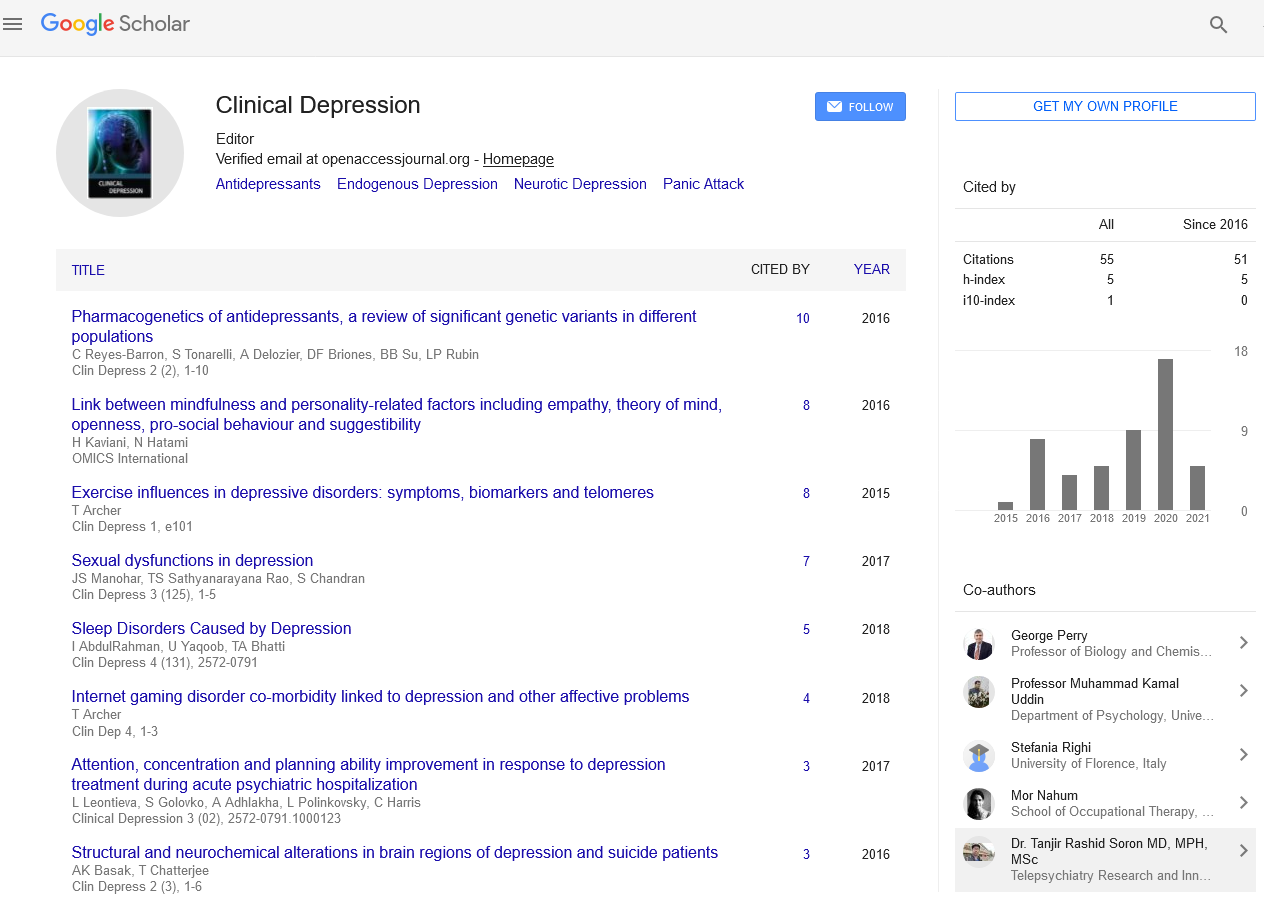
Clinical Depression received 89 citations as per Google Scholar report