Commentary - (2025) Volume 14, Issue 3
Received: 02-Jun-2025, Manuscript No. jees-26-187799;
Editor assigned: 04-Jun-2025, Pre QC No. P-187799;
Reviewed: 18-Jun-2025, QC No. Q-187799;
Revised: 23-Jun-2025, Manuscript No. R-187799;
Published:
30-Jun-2025
, DOI: 10.37421/2332-0796.2025.14.176
Citation: Svensson, Greta. ”DC-DC Converter Technologies:
Efficiency, Control, and Applications.” J Electr Electron Syst 14 (2025):176.
Copyright: © 2025 Svensson G. This is an open-access article distributed under the terms of the Creative Commons Attribution License, which permits unrestricted use,
distribution and reproduction in any medium, provided the original author and source are credited.
The field of DC-DC converters has seen significant advancements, driven by the ever-increasing demands of modern electronic systems for efficiency, power density, and thermal performance. Recent research has focused on comprehensive performance analysis across various topologies and control strategies, highlighting their impact under diverse load conditions [1].
Furthermore, the investigation into parasitic elements has become crucial, particularly for high-frequency converters where miniaturization can exacerbate these challenges through careful PCB layout and component selection [2].
Addressing the complexities of multi-output converters, novel control strategies have been developed to ensure simultaneous regulation of all outputs and improve cross-regulation, which is vital for systems requiring multiple independent voltage rails [3].
Thermal management remains a critical aspect, with in-depth analyses using techniques like finite element analysis to predict temperature distribution and identify hot spots, leading to design modifications that enhance reliability and lifespan [4].
For renewable energy applications, efficiency optimization of interleaved multi-phase DC-DC converters is paramount, with adaptive control schemes proposed to maximize energy extraction and improve performance in grid-tied and off-grid systems [5].
In high-voltage applications, the reliability and failure modes of DC-DC converters are thoroughly examined, with a focus on enhancing fault tolerance and reducing failure rates through robust design methodologies [6].
The integration of machine learning techniques is also transforming converter diagnostics, enabling real-time performance monitoring and fault prediction through neural networks, paving the way for proactive maintenance [7].
The exploration of wide bandgap semiconductors such as SiC and GaN continues to offer superior performance characteristics compared to traditional silicon devices, especially in high-frequency and high-efficiency applications [8].
Digital control strategies for DC-DC converters are also advancing, with analyses focusing on transient response and stability, ensuring robust voltage regulation through model-based design approaches [9].
Finally, the development of advanced magnetic materials and design techniques is crucial for reducing core losses and increasing power density, enabling greater miniaturization and higher efficiency in power electronics [10].
The performance analysis of DC-DC converters, particularly those based on wide bandgap semiconductors for electric vehicle applications, has been a significant area of research, encompassing efficiency, power density, and thermal management, with various topologies and control strategies being examined for their impact under different load conditions [1].
Moreover, the intricate influence of parasitic elements on the efficiency and electromagnetic interference (EMI) of high-frequency DC-DC converters is being meticulously investigated, with methodologies for modeling and mitigation through precise PCB layout and component selection detailed, especially pertinent for space-constrained miniaturized power supplies [2].
The challenge of achieving simultaneous regulation of all outputs in multi-output DC-DC converters under varying load conditions has led to the development of advanced control strategies, including novel predictive algorithms designed to enhance dynamic response and stability by addressing cross-regulation issues, offering significant implications for systems demanding multiple independent voltage rails [3].
A detailed thermal analysis of power modules within high-power DC-DC converters is being conducted, employing finite element analysis (FEA) to predict temperature distribution and pinpoint hot spots, thereby proposing design modifications aimed at improving heat dissipation, which is essential for bolstering reliability and extending the operational lifespan of the converter, particularly in demanding environments [4].
The optimization of efficiency for interleaved multi-phase DC-DC converters utilized in renewable energy systems is another key research focus, investigating the effects of phase shift and current sharing on overall efficiency, and introducing adaptive control schemes to maximize energy extraction, which is vital for enhancing the performance of grid-tied and off-grid power conversion systems [5].
Furthermore, an in-depth reliability analysis and failure mode investigation of high-voltage DC-DC converters are being undertaken, examining the impact of transient stresses and component aging on converter lifespan, and consequently proposing a robust design methodology to bolster fault tolerance and reduce failure rates, a critical consideration for essential infrastructure and industrial applications where downtime incurs substantial costs [6].
The application of machine learning techniques for real-time performance monitoring and fault diagnosis in DC-DC converters is also gaining traction, with research exploring the utilization of neural networks to predict efficiency degradation and identify incipient faults, thereby enabling proactive maintenance strategies and minimizing unexpected failures, a promising avenue for intelligent power management systems [7].
The comparative performance analysis of wide bandgap semiconductors, specifically SiC and GaN, against traditional silicon devices in next-generation DC-DC converters is being carried out, assessing their switching losses, thermal performance, and power density to highlight their advantages for high-frequency and high-efficiency power conversion applications [8].
The transient response and stability of digital-controlled DC-DC converters are under thorough examination, with analyses focusing on the effects of sampling frequency and quantization errors on dynamic performance, and the proposal of model-based design approaches to ensure robust stability, a prerequisite for applications demanding rapid and accurate voltage regulation [9].
Finally, research into advanced magnetic materials and design techniques for high-performance DC-DC converters is exploring the application of amorphous and nanocrystalline materials for inductors and transformers to reduce core losses and increase power density, which is fundamental to achieving miniaturization and higher efficiency in power electronics [10].
This collection of research explores various aspects of DC-DC converter technology. Key areas include performance analysis, efficiency optimization, and thermal management, particularly in the context of wide bandgap semiconductors and applications like electric vehicles and renewable energy systems. The impact of parasitic elements on high-frequency converters and strategies for their mitigation are discussed. Research also covers advanced control techniques for multi-output converters, reliability and failure mode analysis for high-voltage converters, and the application of machine learning for fault diagnosis. Furthermore, comparisons of SiC and GaN devices, digital control strategies, and advancements in magnetic materials for improved power density and efficiency are presented.
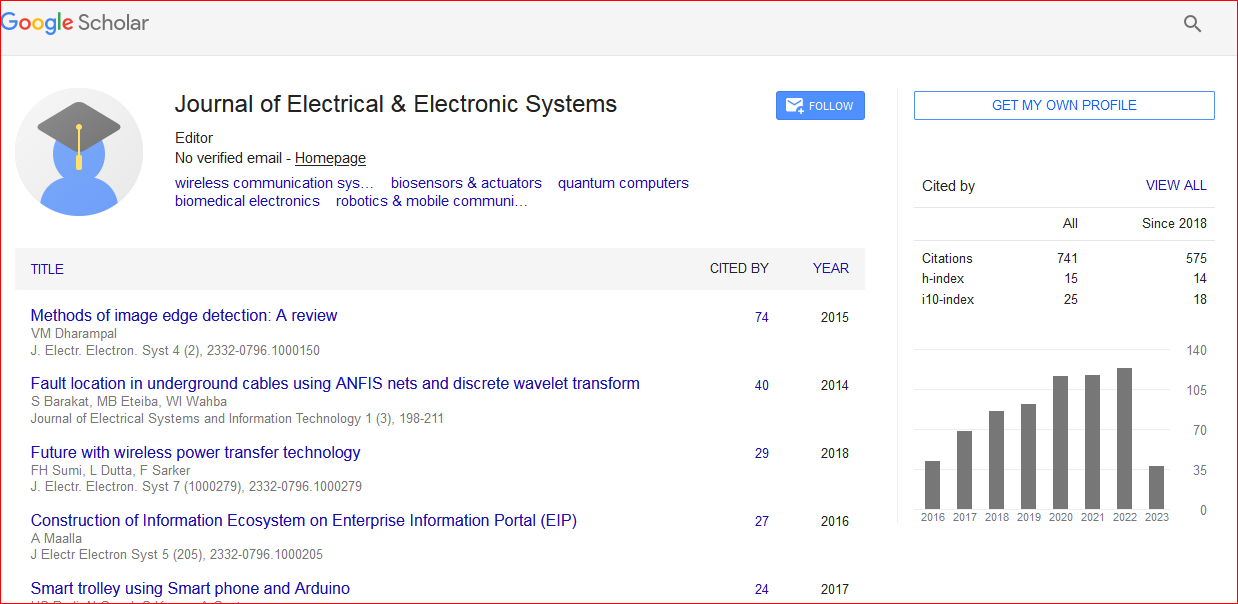
Journal of Electrical & Electronic Systems received 733 citations as per Google Scholar report