Short Communication - (2025) Volume 16, Issue 6
Received: 01-Dec-2025, Manuscript No. jar-25-177638;
Editor assigned: 03-Dec-2025, Pre QC No. P-177638;
Reviewed: 17-Dec-2025, QC No. Q-177638;
Revised: 22-Dec-2025, Manuscript No. R-177638;
Published:
29-Dec-2025
, DOI: 10.37421/2155-6113.2025.16.1100
Citation: Ricci, Sabrina. ”Combating Fungal Threats in HIV:
Diagnosis, Therapy.” J AIDS Clin Res 16 (2025):1100.
Copyright: © 2025 Ricci S. This is an open-access article distributed under the terms of the Creative Commons Attribution License, which permits unrestricted use, distribution
and reproduction in any medium, provided the original author and source are credited.
Fungal infections represent a persistent and significant challenge for individuals living with Human Immunodeficiency Virus (HIV), frequently contributing to high rates of mortality and morbidity due to compromised immune systems. The landscape of these infections is constantly evolving, demanding continuous vigilance and advancements in diagnostic and therapeutic strategies across the globe. Cryptococcal meningitis, for example, remains a leading cause of mortality among people living with HIV, especially in sub-Saharan Africa. Here's the thing, improvements in diagnostic methods such as lateral flow assays, alongside advancements in treatment strategies, are vital. The emphasis on early diagnosis and rapid initiation of antifungal therapy is paramount for reducing fatalities, alongside the necessity for more accessible screening programs and effective public health interventions. These efforts are crucial for improving patient outcomes in this vulnerable population[1].
Even with the widespread availability of antiretroviral therapy (ART), Pneumocystis jirovecii Pneumonia (PJP) continues to be a significant opportunistic infection in HIV-positive individuals. This particular challenge necessitates a deep dive into the evolving epidemiology of PJP, focusing on risk factors in those already on ART. Optimal diagnostic approaches, including molecular methods, and current guidelines for its management and prophylaxis are also critical discussions. What this really means is that a high clinical suspicion is essential to overcome diagnostic challenges[2].
Oral candidiasis, one of the most common fungal infections affecting HIV-infected individuals, often serves as an early indicator of immune deterioration. A detailed understanding of the predisposing factors, varied clinical presentations, and effective diagnostic techniques for oral candidiasis in this population is therefore very important. Reviewing current antifungal treatments and strategies for preventing recurrence, while acknowledging the significant impact of ART on its prevalence and severity, guides better patient care[3].
Systemic fungal infections like Histoplasmosis also present substantial diagnostic and therapeutic challenges, particularly for people living with HIV in endemic regions worldwide. Gaining a global perspective on its epidemiology, diverse clinical manifestations, and stressing the importance of timely and accurate diagnosis using both conventional and rapid methods is crucial. Furthermore, reviewing current treatment guidelines and emphasizing the need for accessible antifungal medications is key to effective management[4].
Moving to Talaromycosis, caused by Talaromyces marneffei, this is an endemic mycosis primarily affecting immunocompromised individuals, notably those with HIV in Southeast Asia. Retrospective studies elucidating the clinical characteristics, treatment patterns, and outcomes of HIV-infected patients with talaromycosis clearly highlight the critical role of early diagnosis and effective antifungal therapy in improving patient prognosis. This really tells us that regional specificities matter greatly[5].
Invasive aspergillosis, while less common compared to other fungal infections in HIV-positive individuals, carries a high mortality rate, especially in those with severe immunosuppression. Analyzing clinical features, risk factors, and outcomes of invasive aspergillosis in this patient group suggests that while specific risk factors might differ from non-HIV immunocompromised patients, prompt diagnosis and aggressive antifungal treatment are undeniably crucial for survival[6].
Mucormycosis, a rare but frequently fatal invasive fungal infection, is increasingly a concern for severely immunocompromised individuals, including those with advanced HIV. Systematic reviews synthesizing available data on mucormycosis in people living with HIV are vital for detailing its epidemiology, clinical manifestations, risk factors, and outcomes. These reviews consistently underscore significant diagnostic challenges and the need for early recognition and multimodal therapy to improve prognosis[7].
Coccidioidomycosis, an endemic mycosis prevalent in specific arid regions, can manifest severely in HIV-infected individuals, often progressing to disseminated disease. Examining the clinical characteristics and outcomes of coccidioidomycosis in people living with HIV emphasizes the importance of considering this diagnosis in at-risk populations. It also highlights the need for effective antifungal treatment strategies and, in some instances, lifelong suppressive therapy[8].
Paracoccidioidomycosis, another systemic mycosis endemic to Latin America, can cause severe and disseminated disease in HIV-infected patients due to profound immunosuppression. Comprehensive overviews through systematic reviews and meta-analyses of HIV-paracoccidioidomycosis coinfection are invaluable. They shed light on epidemiological, clinical, and laboratory features, thereby guiding clinicians in diagnosis and management to improve outcomes for this challenging coinfection[9].
Overall, what these examples illustrate is that fungal infections, whether emerging or re-emerging, remain a major threat to immunocompromised patients, including those with HIV. This consistent threat necessitates a discussion on shifts in their epidemiology, the inherent challenges in diagnosis due to non-specific symptoms, and the evolving landscape of antifungal treatments. A continuous need for vigilance, improved diagnostics, and novel therapeutic approaches is essential to effectively combat these life-threatening infections, ensuring better health outcomes for people living with HIV[10].
Fungal infections present a complex and evolving landscape of challenges for individuals living with Human Immunodeficiency Virus (HIV), contributing significantly to morbidity and mortality globally. These opportunistic infections thrive in the context of immunosuppression, demanding focused attention on their epidemiology, diagnosis, and management.
One major concern is Cryptococcal meningitis, which continues to be a primary cause of mortality among people living with HIV, particularly evident in regions like sub-Saharan Africa. The good news is that there have been improvements in diagnostic methods, specifically lateral flow assays, and advancements in treatment strategies. These developments highlight the crucial importance of early diagnosis and the rapid initiation of antifungal therapy to reduce fatalities. To really make a difference, there's a strong need for more accessible screening programs and robust public health interventions[1]. Similarly, Pneumocystis jirovecii Pneumonia (PJP) persists as a significant opportunistic infection in HIV-positive individuals, even with widespread antiretroviral therapy (ART). Understanding its evolving epidemiology, identifying risk factors in those on ART, and employing optimal diagnostic approachesâ??including molecular methodsâ??are central to effective care. The current guidelines for PJP management and prophylaxis consistently underscore the challenges in diagnosis and the necessity for high clinical suspicion[2]. Another common affliction is Oral candidiasis, which remains one of the most frequently reported fungal infections among HIV-infected individuals, often serving as a clinical signal of immune deterioration. Comprehensive reviews explore the predisposing factors, typical clinical presentations, and established diagnostic techniques for this population. What's also covered are current antifungal treatments and strategies for preventing recurrence, highlighting how ART impacts its prevalence and severity[3].
Beyond these prevalent infections, several systemic mycoses pose distinct challenges. Histoplasmosis, for instance, is a systemic fungal infection that presents significant diagnostic and therapeutic hurdles for people living with HIV, especially in endemic regions. This calls for a global perspective on its epidemiology and diverse clinical manifestations. Timely and accurate diagnosis, utilizing both conventional and rapid diagnostic methods, is paramount. Furthermore, current treatment guidelines emphasize the critical need for improved access to antifungal medications[4]. Talaromycosis, caused by Talaromyces marneffei, is another endemic mycosis predominantly impacting immunocompromised individuals, particularly those with HIV in Southeast Asia. Retrospective studies offer valuable insights into the clinical characteristics, treatment patterns, and patient outcomes for HIV-infected individuals with talaromycosis. These findings consistently stress the critical role of early diagnosis and effective antifungal therapy in significantly improving patient prognosis[5].
Less common, but equally concerning due to their high mortality, are invasive aspergillosis and mucormycosis. Invasive aspergillosis, while not as frequent as other fungal infections in HIV-positive individuals, carries a high mortality rate, especially in those with severe immunosuppression. Retrospective analyses exploring its clinical features, risk factors, and outcomes in HIV-infected patients suggest that while specific risk factors may differ from non-HIV immunocompromised patients, prompt diagnosis and aggressive antifungal treatment are crucial for survival[6]. Mucormycosis, a rare yet often fatal invasive fungal infection, is a growing concern in severely immunocompromised individuals, including those with advanced HIV. Systematic reviews detail its epidemiology, clinical manifestations, risk factors, and outcomes, underscoring pronounced diagnostic challenges. The review highlights the urgent need for early recognition and multimodal therapy to improve prognosis for this devastating infection[7].
Finally, geographically specific mycoses like Coccidioidomycosis and Paracoccidioidomycosis also demand attention. Coccidioidomycosis, an endemic mycosis prevalent in specific arid regions, can manifest severely in HIV-infected individuals, leading to disseminated disease. Research in this area examines the clinical characteristics and outcomes, emphasizing the importance of considering this diagnosis in at-risk populations. It also highlights the need for effective antifungal treatment strategies, which in some cases, may include lifelong suppressive therapy[8]. Paracoccidioidomycosis, a systemic mycosis endemic to Latin America, can cause severe and disseminated disease in HIV-infected patients due to profound immunosuppression. Systematic reviews and meta-analyses provide a comprehensive overview of HIV-paracoccidioidomycosis coinfection, shedding light on its epidemiological, clinical, and laboratory features, all aimed at guiding clinicians towards improved diagnosis and management for this challenging coinfection[9]. In essence, across the spectrum of fungal infections, there's a clear, continuous need for vigilance, improved diagnostic tools, and novel therapeutic approaches to combat these life-threatening pathogens in HIV-infected individuals, acknowledging shifts in epidemiology and diagnostic complexities[10].
Fungal infections continue to pose a significant threat to individuals living with Human Immunodeficiency Virus (HIV), often leading to severe morbidity and mortality, particularly in immunocompromised patients. Cryptococcal meningitis remains a major cause of death, underscoring the importance of improved diagnostic methods, like lateral flow assays, and the rapid initiation of antifungal therapy to reduce fatalities. Pneumocystis jirovecii Pneumonia (PJP) persists as a key opportunistic infection in HIV-positive individuals, even with widespread antiretroviral therapy (ART), necessitating a focus on evolving epidemiology, risk factors, optimal diagnostic approaches, and current management and prophylaxis guidelines. Oral candidiasis, a frequently observed fungal infection, often signals immune deterioration, requiring an understanding of its predisposing factors, clinical presentations, and effective antifungal treatments, as well as the impact of ART on its prevalence. Systemic mycoses such as Histoplasmosis and Talaromycosis present substantial diagnostic and therapeutic challenges for people with HIV, particularly in endemic regions. Global perspectives on their epidemiology, diverse clinical manifestations, and the critical role of timely and accurate diagnosis, alongside access to effective antifungal medications, are vital. Furthermore, other less common but highly fatal infections like invasive aspergillosis, mucormycosis, coccidioidomycosis, and paracoccidioidomycosis are significant concerns. These infections demand high clinical suspicion, prompt diagnosis, and aggressive multimodal or lifelong suppressive antifungal treatment strategies due to their high mortality rates and severe disseminated disease potential. Collectively, these various fungal infections highlight the continuous need for enhanced vigilance, improved diagnostic capabilities, and innovative therapeutic approaches to effectively combat these life-threatening pathogens within the complex context of HIV infection, addressing their shifting epidemiology and diagnostic complexities.
Indexed at, Google Scholar, Crossref
Indexed at, Google Scholar, Crossref
Indexed at, Google Scholar, Crossref
Indexed at, Google Scholar, Crossref
Indexed at, Google Scholar, Crossref
Indexed at, Google Scholar, Crossref
Indexed at, Google Scholar, Crossref
Indexed at, Google Scholar, Crossref
Indexed at, Google Scholar, Crossref
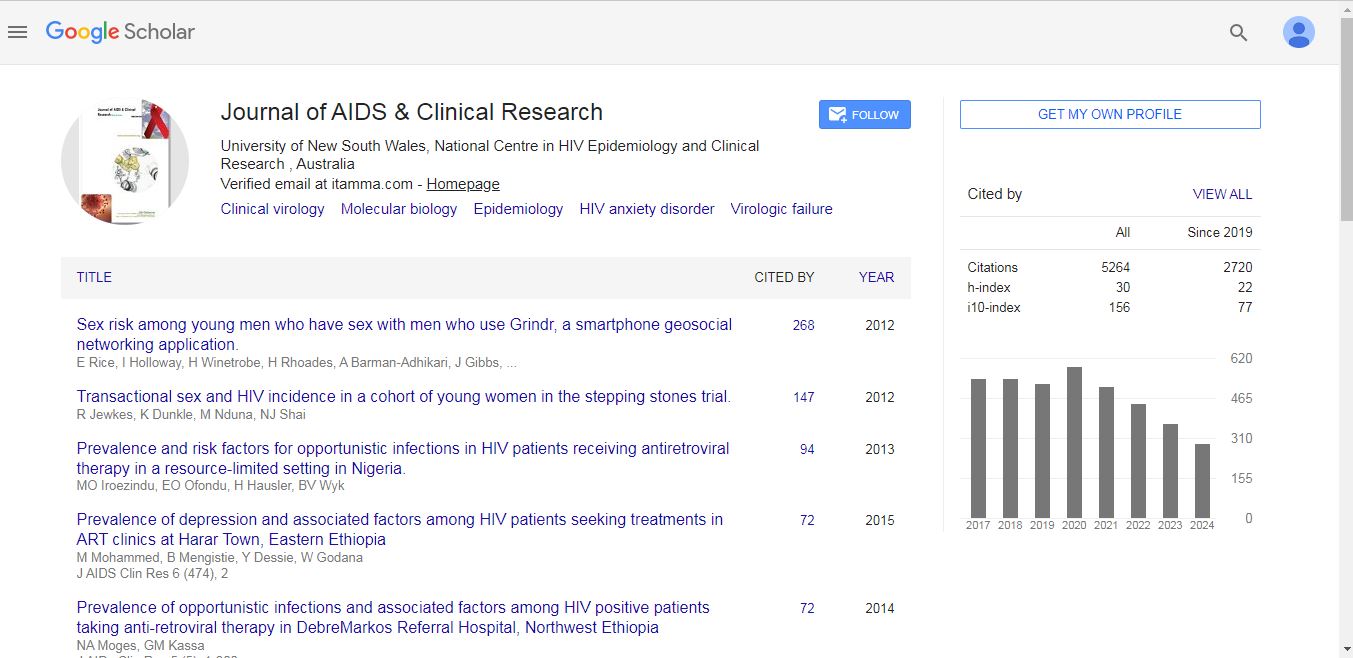
Journal of AIDS & Clinical Research received 5264 citations as per Google Scholar report