Short Communication - (2025) Volume 15, Issue 5
Received: 02-Oct-2025, Manuscript No. jeat-26-188646;
Editor assigned: 06-Oct-2025, Pre QC No. P-188646;
Reviewed: 20-Oct-2025, QC No. Q-188646;
Revised: 23-Oct-2025, Manuscript No. R-188646;
Published:
30-Oct-2025
, DOI: 10.37421/2161-0525.2025.15.866
Citation: Mahmoud, Rania. ”Coastal Ecosystems Threatened: A
Pollution Crisis.” J Environ Anal Toxicol 15 (2025):866.
Copyright: © 2025 Mahmoud R. This is an open-access article distributed under the terms of the Creative Commons Attribution License, which permits unrestricted use,
distribution and reproduction in any medium, provided the original author and source are credited.
Coastal marine environments are increasingly threatened by a diverse array of pollutants, necessitating a comprehensive understanding of their sources, pathways, and ecological impacts. Among the significant contaminants, heavy metals represent a persistent concern due to their toxicity and tendency to bioaccumulate in marine organisms. Studies have identified lead and cadmium as key culprits in the Arabian Gulf, where their presence in sediments and biota triggers detrimental physiological responses such as oxidative stress and genotoxicity, underscoring the need for stricter discharge regulations [1].
Beyond metals, persistent organic pollutants (POPs) pose a long-term ecological risk. Research in industrialized coastal zones has revealed the detrimental effects of POPs like PCBs and organochlorine pesticides on seabird populations. These compounds accumulate in eggs and tissues, leading to reduced hatching success and developmental abnormalities in chicks, highlighting the importance of monitoring their environmental persistence [2].
Mangrove ecosystems, vital nurseries for marine life, are also susceptible to emerging pollutants. Microplastic pollution, in particular, has been shown to be ingested by benthic invertebrates, causing physiological stress including impaired feeding, inflammation, and alterations in gut microbiota composition. This points to the pervasive threat of microplastics and the necessity for source reduction strategies [3].
Oil spills release polycyclic aromatic hydrocarbons (PAHs) that can severely impact foundational coastal habitats like seagrass beds. PAHs interfere with essential processes such as photosynthesis, reduce growth rates, and induce oxidative stress in seagrass, compromising the habitats critical for numerous marine species. This emphasizes the importance of swift remediation efforts following spills [4].
Emerging contaminants such as pharmaceuticals and personal care products (PPCPs) present a growing challenge. Their presence in treated wastewater discharged into coastal waters has been linked to endocrine disruption in marine organisms, including reproductive abnormalities and altered hormone levels in fish. Improved wastewater treatment is crucial to mitigate these risks [5].
Compounding the effects of chemical pollutants, thermal pollution from industrial activities like power plants can exacerbate toxicity. Elevated temperatures, combined with chemical contaminants, have been observed to increase coral bleaching, reduce calcification, and elevate mortality rates in coral reefs, indicating synergistic negative impacts that demand integrated management [6].
Per- and polyfluoroalkyl substances (PFAS), widely used in industrial applications and firefighting foams, are another class of persistent contaminants. Their bioaccumulation in coastal fish species, particularly in the liver and muscle, has been demonstrated, leading to oxidative stress and immunotoxicity, raising concerns about their pervasive presence in marine ecosystems [7].
Agricultural runoff introduces a cocktail of pesticides and fertilizers into estuarine ecosystems, significantly impacting phytoplankton communities. Nutrient enrichment can trigger harmful algal blooms, while pesticide residues can inhibit photosynthesis and induce oxidative stress in phytoplankton, demonstrating a direct link between land-based practices and coastal water quality [8].
Even smaller plastic particles, nanoplastics, pose a significant threat. Studies on marine filter feeders like mussels have shown that nanoplastics are readily ingested, causing inflammatory responses, depleting energy reserves, and impairing vital filtration functions. This highlights the emerging risks posed by the smallest plastic fractions [9].
Organophosphate pesticides from agricultural sources are also a concern in coastal waters, impacting fish populations. Their bioaccumulation in demersal fish has been linked to reduced reproductive success, including decreased egg production and larval survival. Controlling agricultural pesticide use is therefore critical for safeguarding fish populations [10].
The investigation into heavy metal contamination in the Arabian Gulf reveals the insidious presence of lead and cadmium in coastal sediments and biota. These metals are shown to accumulate within organisms such as bivalves and fish, eliciting toxic effects including oxidative stress, genotoxicity, and disruptions to reproductive functions. The findings strongly advocate for the implementation of more stringent regulations governing industrial and urban wastewater discharge to safeguard these vulnerable marine ecosystems [1].
Persistent organic pollutants (POPs), encompassing compounds like PCBs and organochlorine pesticides, have been examined for their impact on seabird populations inhabiting a highly industrialized coastal region. The study meticulously details the bioaccumulation of these hazardous substances within the eggs and tissues of seabirds. A direct correlation is established between elevated POP concentrations and a decline in hatching success, alongside the emergence of developmental abnormalities in chicks, thereby underscoring the long-term ecological hazards posed by POPs and the imperative of continuous environmental monitoring [2].
Microplastic pollution has been a focal point in research concerning mangrove ecosystems, with particular attention paid to its ingestion by benthic invertebrates and the subsequent physiological stress induced. Experimental exposures have conclusively demonstrated that microplastics can significantly impair feeding rates, incite inflammatory responses, and disrupt the composition of gut microbiota in key species. This research illuminates both the physical and chemical detrimental impacts of microplastics, championing source reduction strategies to mitigate their pervasive threat to coastal food webs [3].
The ecotoxicological effects of polycyclic aromatic hydrocarbons (PAHs) stemming from oil spills on seagrass beds have been meticulously investigated. The study elucidates how PAHs adversely affect photosynthesis, curtail growth rates, and intensify oxidative stress within seagrass species, which are critical habitats supporting a vast array of marine life. The research emphatically stresses the necessity for prompt response and effective remediation measures following oil spills to minimize enduring damage to these indispensable coastal ecosystems [4].
The endocrine-disrupting potential of pharmaceuticals and personal care products (PPCPs) present in treated wastewater, which is subsequently discharged into coastal waters, has been systematically assessed. The study reveals the widespread presence of several PPCPs within marine organisms, leading to observable reproductive abnormalities and significant alterations in hormone levels in fish. These findings serve as a critical call for the enhancement of wastewater treatment technologies to effectively remove these emerging contaminants and thereby protect aquatic life [5].
This research delves into the combined detrimental effects of thermal pollution, originating from power plants, and chemical contaminants on the resilience of coral reefs. The study provides compelling evidence that elevated water temperatures significantly exacerbate the toxicity of heavy metals and other pollutants. This synergistic effect results in increased instances of coral bleaching, diminished calcification rates, and a higher incidence of mortality among coral populations. The findings highlight the complex, intertwined nature of these stressors, emphasizing the need for integrated management approaches for effective coastal zone protection [6].
The bioaccumulation patterns and toxicokinetic behavior of per- and polyfluoroalkyl substances (PFAS) within coastal fish species have been thoroughly examined. The study illustrates that these ubiquitous PFAS compounds, frequently found in industrial effluents and firefighting foams, tend to accumulate in fish tissues, with a notable concentration in the liver and muscle. This accumulation has been linked to the induction of oxidative stress and immunotoxicity, underscoring the growing apprehension surrounding PFAS as persistent and potentially harmful contaminants in marine environments [7].
The impact of agricultural runoff, characterized by the presence of pesticides and fertilizers, on estuarine phytoplankton communities has been rigorously studied. The research demonstrates that nutrient enrichment can precipitate harmful algal blooms (HABs), while pesticide residues can actively inhibit photosynthesis and induce oxidative stress in non-target phytoplankton species. This work clearly establishes a critical linkage between land-based agricultural activities and the overall health and quality of coastal waters [8].
The ecotoxicity of nanoplastics on marine filter feeders, specifically mussels, has been explored. The findings indicate that nanoplastics are readily ingested by these organisms, triggering inflammatory responses, reducing their energy reserves, and compromising their essential filtration capabilities. This research brings critical attention to the escalating threat posed by the smallest plastic particles and their profound potential to disrupt fundamental physiological processes within coastal invertebrate populations [9].
An analysis of organophosphate pesticides in coastal waters has revealed their significant impact on the reproductive success of demersal fish. The study highlights the process of bioaccumulation of these pesticides within fish tissues and establishes a correlation between higher pesticide concentrations and detrimental effects such as reduced egg production and lower larval survival rates. These findings underscore the critical need to regulate and control the use of agricultural pesticides to effectively protect commercially and ecologically valuable fish populations [10].
This collection of research highlights the pervasive threats to coastal ecosystems from various pollutants. Heavy metals like lead and cadmium contaminate sediments and biota, causing physiological damage. Persistent organic pollutants (POPs) harm seabird populations by affecting reproduction. Microplastics and nanoplastics disrupt marine invertebrates, impairing their functions. Oil spill-derived PAHs damage vital seagrass habitats. Emerging contaminants such as PPCPs cause endocrine disruption in fish. Thermal pollution exacerbates chemical toxicity in coral reefs. PFAS accumulate in fish, leading to stress. Agricultural runoff pollutes waters with pesticides and fertilizers, impacting phytoplankton and causing harmful algal blooms. Organophosphate pesticides further threaten fish reproduction. These studies collectively emphasize the urgent need for pollution control, improved wastewater treatment, and integrated management strategies to protect marine biodiversity and ecosystem health.
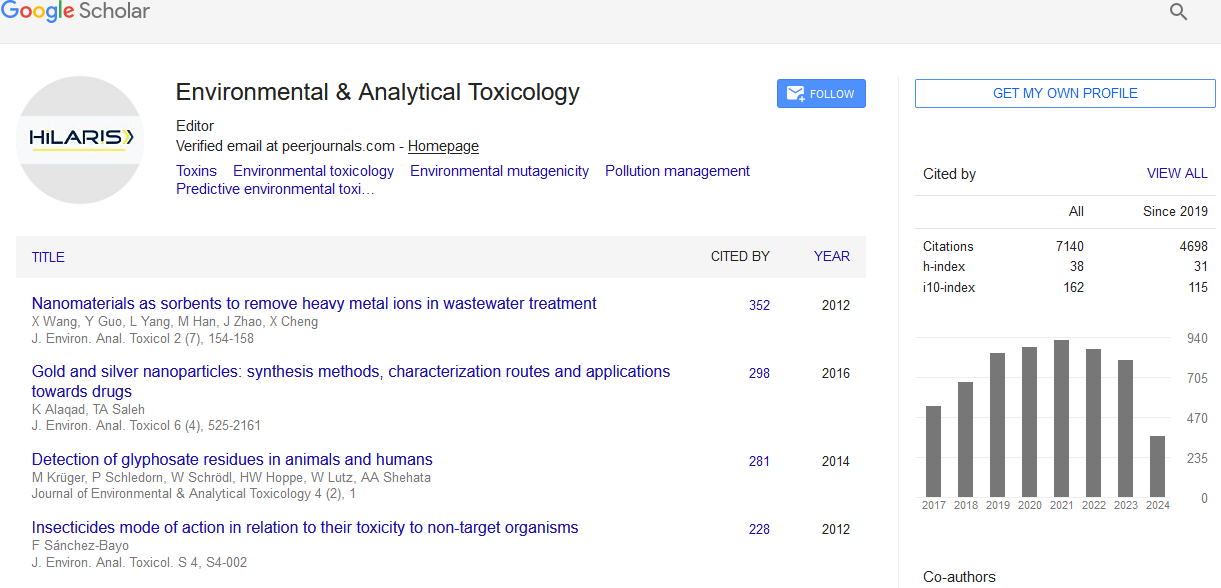
Environmental & Analytical Toxicology received 6818 citations as per Google Scholar report