Brief Report - (2025) Volume 9, Issue 5
Received: 01-Sep-2025, Manuscript No. jchd-26-185705;
Editor assigned: 03-Sep-2025, Pre QC No. P-185705;
Reviewed: 17-Sep-2025, QC No. Q-185705;
Revised: 22-Sep-2025, Manuscript No. R-185705;
Published:
29-Sep-2025
, DOI: 10.37421/2684-6020.2024.9.261
Citation: Schmidt, Anja. ”Beyond Narrowing: Plaque, Inflammation,
and Imaging.” J Coron Heart Dis 09 (2025):261.
Copyright: © 2025 Schmidt A. This is an open-access article distributed under the terms of the Creative Commons Attribution License, which permits unrestricted use,
distribution and reproduction in any medium, provided the original author and source are credited.
Coronary heart disease (CHD) mechanisms are complex and extend far beyond simple luminal blockage, involving intricate processes that contribute to its development and progression. Atherosclerotic plaque instability, a critical aspect of CHD, is driven by a confluence of factors including inflammation and endothelial dysfunction, which often manifest and exert their influence even before significant luminal narrowing occurs [1].
Endothelial dysfunction represents a fundamental and early event in the pathogenesis of atherosclerosis. This dysfunction impairs the blood vessel's ability to regulate tone through vasodilation, fosters an inflammatory environment within the vessel wall, and actively contributes to the formation and eventual instability of atherosclerotic plaques. Key instigators of this endothelial damage include oxidative stress, the presence of dyslipidemia, and sustained hypertension [2].
Inflammation is not merely a passive consequence of plaque rupture but rather an active participant that drives the development and progression of atherosclerotic lesions. Chronic, low-grade systemic inflammation plays a significant role in initiating and exacerbating endothelial dysfunction and the oxidation of low-density lipoprotein (LDL) particles, both of which are pivotal early steps in the process of atherogenesis [3].
Plaque vulnerability is recognized as a critical determinant of acute coronary syndromes (ACS), which are the clinical manifestations of plaque rupture or erosion. Vulnerable plaques are characterized by specific pathological features such as a thin fibrous cap, a large lipid-rich necrotic core, and significant inflammatory infiltration. These characteristics render them highly prone to rupture or erosion, initiating the cascade that leads to thrombus formation [4].
Advanced imaging modalities are increasingly crucial for the comprehensive assessment of atherosclerotic plaques, moving beyond the simple evaluation of luminal obstruction to characterize plaque burden and composition. Techniques such as coronary CT angiography (CCTA) provide detailed anatomical information, enabling the assessment of plaque volume and its specific characteristics, like low attenuation non-calcified plaque, which can predict future cardiovascular events [5].
Intraplaque hemorrhage (IPH) has emerged as a significant contributor to both the progression and the inherent instability of atherosclerotic plaques. This hemorrhage can originate from the growth of new blood vessels within the plaque wall (neovascularization) or from a rupture of the plaque's fibrous cap. The presence of IPH amplifies plaque inflammation and promotes the oxidation of lipids within the plaque, ultimately creating a pro-thrombotic surface that increases the risk of clot formation [6].
The mechanical forces exerted on atherosclerotic plaques, including factors such as shear stress from blood flow and the intrinsic mechanical stresses within the plaque itself, profoundly influence their progression and overall stability. Regions experiencing low shear stress are more susceptible to plaque accumulation, while high shear stress can lead to endothelial damage. Furthermore, mechanical stress within the plaque structure can promote thinning of the fibrous cap and precipitate rupture [7].
Genetic predisposition plays a substantial role in determining an individual's susceptibility to the development and progression of coronary artery disease. A multitude of genetic variants have been identified that impact crucial biological pathways involved in lipid metabolism, inflammatory responses, endothelial function, and blood coagulation, all of which directly affect an individual's atherosclerotic risk profile [8].
The intricate interplay between the gut microbiome and overall cardiovascular health is a rapidly evolving area of research pertinent to coronary heart disease. Specific metabolites produced by gut bacteria, such as trimethylamine N-oxide (TMAO), have been demonstrably linked to an elevated risk of atherosclerosis and poorer cardiovascular outcomes. An imbalance in the composition of the gut microbiota, known as dysbiosis, may contribute to systemic inflammation and adversely alter lipid metabolism [9].
Novel imaging biomarkers are indispensable for refining the prediction of cardiovascular risk beyond the capabilities of traditional risk factors and purely anatomical assessments of stenosis. These advanced biomarkers encompass markers of inflammation, such as the rate of progression of coronary artery calcification, detailed plaque characterization using modalities like CCTA and optical coherence tomography (OCT) to identify vulnerable plaque features, and functional parameters like myocardial perfusion, all contributing to a more precise diagnostic and therapeutic approach [10].
The understanding of coronary heart disease (CHD) has evolved significantly, revealing that its mechanisms extend beyond simple luminal blockage to encompass complex plaque dynamics. Atherosclerotic plaque instability, a major driver of cardiovascular events, is intimately linked to inflammation and endothelial dysfunction, processes that can precede significant stenosis and are critical for assessing plaque characteristics beyond the degree of obstruction [1].
Endothelial dysfunction stands as a fundamental, early event in the development of atherosclerosis, contributing to impaired vasodilation, increased inflammation, and the formation of atherosclerotic plaques. This dysfunction is driven by factors such as oxidative stress, dyslipidemia, and hypertension, highlighting the importance of therapies targeting endothelial health for improved outcomes, with ongoing research exploring novel biomarkers and therapeutic targets [2].
Inflammation is an active participant in the pathogenesis of atherosclerosis, contributing not only to plaque rupture but also to plaque development and progression. Chronic low-grade systemic inflammation fuels endothelial dysfunction and LDL oxidation, crucial early steps in atherogenesis. Inflammatory cells and mediators are involved in plaque growth, destabilization, and rupture, making targeted anti-inflammatory therapies a promising future direction for CHD treatment [3].
Plaque vulnerability is a key determinant of acute coronary syndromes, with vulnerable plaques being characterized by a thin fibrous cap, a large lipid-rich necrotic core, and inflammatory infiltration, all predisposing them to rupture or erosion and subsequent thrombus formation. Advanced imaging techniques are essential for visualizing these features, though identifying and managing vulnerable plaques remains a clinical challenge [4].
Advanced imaging techniques are revolutionizing the assessment of plaque burden and composition in atherosclerosis. Coronary CT angiography (CCTA) offers detailed anatomical information, including plaque volume and characterization such as low attenuation non-calcified plaque, with advanced analysis capable of predicting future events. Cardiac MRI provides complementary insights into plaque inflammation and tissue characteristics, forming part of a comprehensive diagnostic strategy [5].
Intraplaque hemorrhage (IPH) significantly contributes to plaque progression and instability, arising from neovascularization or cap rupture. IPH exacerbates plaque inflammation and lipid oxidation, creating a pro-thrombotic milieu. Emerging advanced MRI techniques are proving effective in detecting IPH, offering a novel target for risk assessment and therapeutic intervention in atherosclerotic disease [6].
Biomechanical factors, including shear stress and plaque stress, play a critical role in the progression and stability of atherosclerotic plaques. Low shear stress promotes plaque accumulation, while high shear stress can damage the endothelium. Mechanical forces within the plaque can lead to cap thinning and rupture, with computational modeling techniques like CFD and FEA increasingly used to analyze these complex interactions [7].
Genetic predisposition is a significant factor in the development and progression of coronary artery disease, with numerous identified genetic variants influencing lipid metabolism, inflammation, endothelial function, and coagulation. Advances in genomics and proteomics are paving the way for personalized CHD risk assessment and prevention strategies tailored to an individual's genetic makeup [8].
The gut microbiome's influence on cardiovascular health is a growing area of CHD research, with specific microbial metabolites like TMAO linked to increased atherosclerotic risk. Gut dysbiosis can promote inflammation and alter lipid metabolism, suggesting that modulating the gut microbiota may offer future therapeutic avenues for CHD prevention and treatment [9].
Novel imaging biomarkers are crucial for enhancing CHD risk prediction beyond traditional factors and anatomical stenosis. These include markers of inflammation, plaque characterization (e.g., vulnerable plaque features), and functional parameters, all of which, when integrated, can lead to more precise diagnoses and tailored treatment strategies for patients with atherosclerotic cardiovascular disease [10].
Coronary heart disease (CHD) involves complex mechanisms beyond arterial narrowing, including plaque instability, inflammation, and endothelial dysfunction, which are crucial for risk stratification and intervention. Advanced imaging techniques play a vital role in assessing plaque characteristics, identifying vulnerable features such as thin fibrous caps, large lipid cores, and intraplaque hemorrhage, which contribute to thrombotic events. Endothelial dysfunction, driven by factors like oxidative stress and hypertension, impairs vasodilation and promotes inflammation. Inflammation is an active participant in atherogenesis, mediating plaque growth and destabilization. Plaque vulnerability, characterized by specific pathological features, predicts acute coronary syndromes. Imaging modalities like CCTA and cardiac MRI provide detailed plaque characterization. Intraplaque hemorrhage exacerbates plaque instability. Biomechanical forces and genetic predisposition also significantly influence CHD development. The gut microbiome and its metabolites are emerging as contributors to cardiovascular risk. Novel imaging biomarkers are essential for refining risk prediction and guiding personalized treatment strategies.
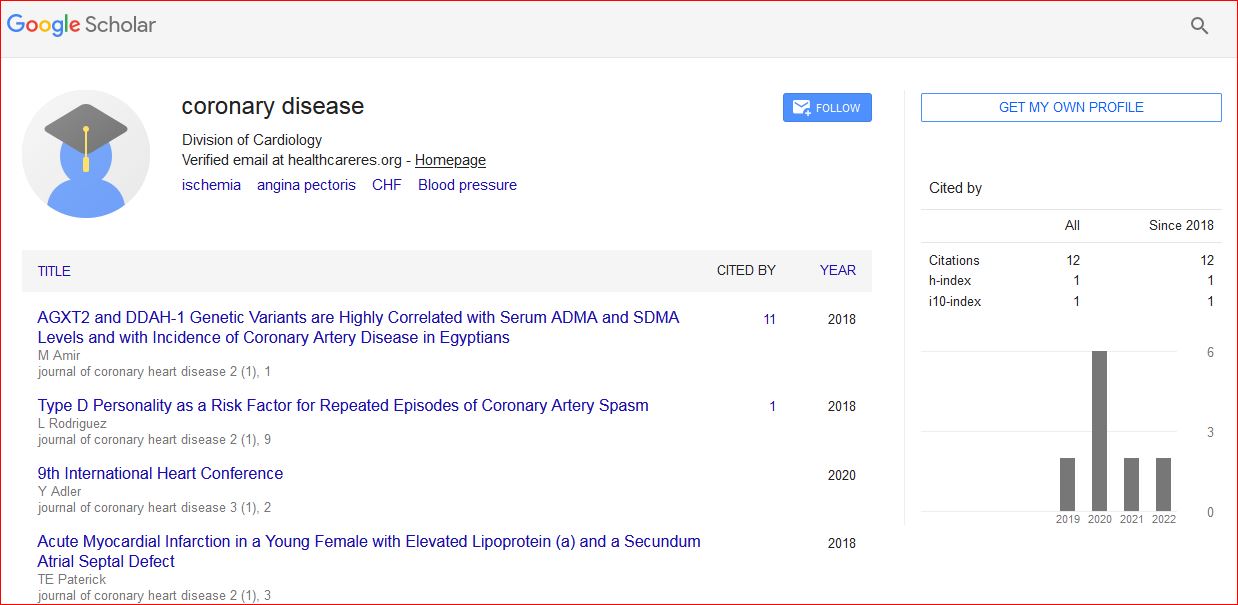
Journal of Coronary Heart Diseases received 15 citations as per Google Scholar report