Commentary - (2025) Volume 9, Issue 3
Received: 01-May-2025, Manuscript No. hps-26-184447;
Editor assigned: 05-May-2025, Pre QC No. P-184447;
Reviewed: 19-May-2025, QC No. Q-184447;
Revised: 22-May-2025, Manuscript No. R-184447;
Published:
29-May-2025
, DOI: 10.37421/2573-4563.2025.9.345
Citation: Alvarez, Mateo L.. ”Autophagy: Key to Liver Health and Disease.” J Hepatol Pancreat Sci 09 (2025):345.
Copyright: © 2025 Alvarez L. Mateo This is an open-access article distributed under the terms of the Creative Commons Attribution License, which permits unrestricted use, distribution and reproduction in any medium, provided the original author and source are credited.
Autophagy plays a critical role in maintaining liver homeostasis, particularly during the dynamic process of regeneration. This cellular mechanism is essential for clearing damaged organelles and aggregated proteins, thereby supplying vital building blocks and energy for the proliferation of hepatocytes. The proper functioning of autophagy is fundamental for the liver's ability to repair and adapt to various challenges. Consequently, disruptions in autophagic pathways are increasingly linked to the pathogenesis and progression of a wide spectrum of liver diseases, underscoring its central importance in hepatocyte health and function [1].
The efficient clearance of damaged mitochondria, a process specifically known as mitophagy, is a crucial aspect of autophagy's role in liver health. In scenarios involving liver injury and subsequent regeneration, maintaining high-quality control over mitochondria through mitophagy is paramount for the survival and sustained function of hepatocytes. When mitophagy is compromised, it can lead to an increase in oxidative stress and trigger inflammatory responses, ultimately exacerbating the severity of liver disease. The intricate relationship between autophagy and lipid metabolism is a cornerstone in understanding the pathogenesis of non-alcoholic fatty liver disease (NAFLD). Autophagy actively participates in regulating the turnover of lipid droplets and the functional integrity of peroxisomes within hepatocytes. Any impairment in autophagic function can directly contribute to the development of steatosis and facilitate the progression towards more severe liver conditions like steatohepatitis and fibrosis, suggesting that modulating autophagy could be a viable therapeutic strategy for NAFLD [3].
During liver regeneration, there is a significant upregulation of autophagy to meet the heightened metabolic demands imposed by rapidly proliferating cells. This enhanced autophagic activity allows for the recycling of essential cellular components, which is indispensable for the rapid growth and structural remodeling of liver tissue following injury. Studies have shown that genetic or pharmacological inhibition of autophagy severely impairs the liver's regenerative capacity [4].
Alcohol-induced liver injury is frequently characterized by impaired autophagic flux, leading to the accumulation of damaged organelles and misfolded proteins within hepatocytes. This cellular buildup is a significant contributor to hepatocyte death and chronic inflammation, thereby driving the progression of alcoholic liver disease from simple fatty liver to more severe forms like alcoholic hepatitis and cirrhosis. Consequently, strategies aimed at enhancing autophagy may hold promise as a protective measure against alcohol-induced liver damage [5].
Autophagy exhibits a dualistic role in the context of liver cancer, specifically hepatocellular carcinoma (HCC). In the early stages, it can act as a tumor suppressor by facilitating the removal of damaged cells and maintaining genomic stability. However, in established tumors, autophagy can paradoxically promote cancer cell survival under stressful conditions by providing essential nutrients and eliminating damaged cellular components. A nuanced understanding of this context-dependent behavior is vital for designing effective therapeutic interventions that target autophagy in HCC [6].
Liver fibrosis, characterized by the excessive deposition of extracellular matrix proteins, can be influenced by autophagic activity. Autophagy plays a role in modulating the activation of hepatic stellate cells, which are key players in fibrogenesis, and in the clearance of accumulated collagen. Dysregulation of autophagy can lead to persistent fibrogenesis, positioning it as a potential therapeutic target for developing antifibrotic treatments [7].
The interplay between autophagy and inflammation is a critical factor in the pathogenesis and progression of various liver diseases. Autophagy can effectively modulate inflammatory responses by promoting the degradation of inflammasome components and clearing inflammatory mediators. Conversely, aberrant autophagic activity can foster chronic inflammation, which serves as a significant driver of liver damage and disease advancement [8].
Autophagy-mediated degradation of damaged organelles, particularly the endoplasmic reticulum (ER) and mitochondria, is indispensable for preserving cellular health during liver regeneration. ER stress and mitochondrial dysfunction are frequently observed hallmarks of liver diseases. Therefore, autophagy's capacity to clear these compromised organelles is of profound importance for therapeutic interventions aimed at ameliorating liver damage [9].
The complex signaling pathways that orchestrate autophagy, such as the mTOR and AMPK pathways, are deeply integrated with the cellular processes underlying liver regeneration and disease development. The strategic targeting of these regulatory pathways presents promising avenues for modulating autophagic activity and subsequently influencing disease outcomes in liver conditions [10].
Autophagy's critical role in maintaining liver homeostasis, especially during regeneration, is well-established. It facilitates the removal of damaged organelles and aggregated proteins, crucial for providing building blocks and energy for proliferating hepatocytes. Dysregulation of this process is implicated in numerous liver diseases, including NAFLD, ALD, fibrosis, and HCC, often worsening their progression. Understanding these nuances can highlight potential therapeutic targets for liver regeneration and disease management [1].
A key function of autophagy is the efficient clearance of damaged mitochondria through a process known as mitophagy. In the context of liver injury and regeneration, maintaining mitochondrial quality control via mitophagy is essential for hepatocyte survival and optimal function. Impairment of this process can lead to increased oxidative stress and inflammation, thereby aggravating liver disease severity [2].
The intricate connection between autophagy and lipid metabolism is central to the pathogenesis of NAFLD. Autophagy aids in regulating lipid droplet turnover and peroxisome function. Its dysfunction can result in steatosis and accelerate the progression to more severe liver conditions like steatohepatitis and fibrosis, indicating that modulating autophagy is a potential therapeutic strategy for NAFLD [3].
During liver regeneration, autophagy is significantly upregulated to support the increased metabolic demands of proliferating cells by recycling cellular components. This enhanced autophagic activity is vital for the rapid growth and remodeling of liver tissue following injury. Experimental evidence shows that inhibiting autophagy, either genetically or pharmacologically, severely impairs the liver's regenerative capacity [4].
Alcohol-induced liver injury is often associated with impaired autophagic processes, leading to the accumulation of damaged organelles and misfolded proteins within hepatocytes. This accumulation contributes to hepatocyte death and triggers inflammation, driving the progression from alcoholic fatty liver to more severe stages such as alcoholic hepatitis and cirrhosis. Therefore, enhancing autophagy could serve as a protective strategy against alcoholic liver disease [5].
Autophagy plays a dual role in hepatocellular carcinoma (HCC). Initially, it can act as a tumor suppressor by clearing damaged cells and maintaining genomic stability. However, in established tumors, autophagy can support cancer cell survival under stress by supplying nutrients and removing damaged components. Understanding this context-dependent role is crucial for developing effective therapies targeting autophagy in HCC [6].
Liver fibrosis involves the excessive accumulation of extracellular matrix. Autophagy can influence this process by modulating hepatic stellate cell activation and facilitating the clearance of collagen. A dysfunctional autophagic system can contribute to sustained fibrogenesis, making it a promising target for antifibrotic therapies [7].
The relationship between autophagy and inflammation in liver disease is complex and critical. Autophagy can modulate inflammatory responses by degrading inflammasome components and clearing inflammatory mediators. Conversely, aberrant autophagy can promote chronic inflammation, a key factor in liver damage and disease progression [8].
The autophagic degradation of damaged organelles, such as the endoplasmic reticulum (ER) and mitochondria, is vital for cellular health during liver regeneration. ER stress and mitochondrial dysfunction are common in liver diseases, highlighting the importance of autophagy's role in clearing these compromised components for therapeutic intervention [9].
The signaling pathways governing autophagy, including mTOR and AMPK, are intricately linked with cellular processes driving liver regeneration and disease. Targeting these pathways offers promising strategies to modulate autophagy and positively impact disease outcomes in the liver [10].
Autophagy is essential for liver health, playing a critical role in regeneration by removing damaged cellular components and providing energy for proliferating hepatocytes. Its dysregulation is linked to various liver diseases, including NAFLD, ALD, fibrosis, and HCC. Mitophagy, the clearance of damaged mitochondria, is vital for hepatocyte survival and preventing oxidative stress. Autophagy's intricate relationship with lipid metabolism impacts NAFLD pathogenesis, while its dual role in cancer can either suppress or promote tumor growth depending on the stage. Impaired autophagy contributes to alcohol-induced liver injury and fibrosis, whereas its modulation offers therapeutic potential for these conditions. Autophagy also influences inflammatory responses, and its ability to clear damaged organelles like ER and mitochondria is crucial for regeneration. Signaling pathways like mTOR and AMPK regulate autophagy and present targets for therapeutic intervention in liver diseases.
None
None
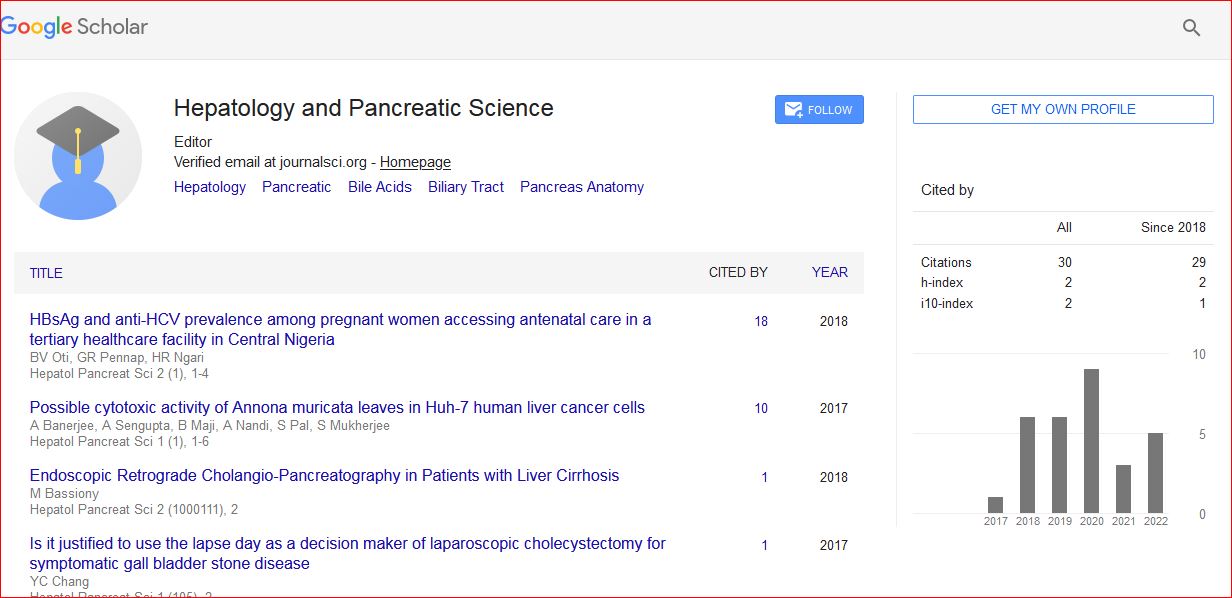
Hepatology and Pancreatic Science received 34 citations as per Google Scholar report