Short Communication - (2025) Volume 14, Issue 2
Received: 02-Mar-2025, Manuscript No. VTE-26-180079;
Editor assigned: 04-Mar-2025, Pre QC No. p-180079;
Reviewed: 18-Mar-2025, QC No. Q-180079;
Revised: 24-Mar-2025, Manuscript No. R-180079;
Published:
30-Mar-2025
, DOI: 10.37421/2376-1318.2025.14.367
Citation: Chen, Mei. ”Antioxidant Vitamins C and E: Disease Prevention.” Vitam Miner 14 (2025):367.
Copyright: © 2025 Chen M. This is an open-access article distributed under the terms of the Creative Commons Attribution License, which permits unrestricted use, distribution and reproduction in any medium, provided the original author and source are credited.
This article delves into the critical role of antioxidant vitamins, such as vitamins C and E, in mitigating oxidative stress. It highlights how these micronutrients neutralize reactive oxygen species (ROS), thereby protecting cellular structures from damage and supporting overall health. The review also touches upon the synergistic effects of various antioxidants and their implications in preventing chronic diseases [1].
Exploring the intricate mechanisms by which vitamin C combats oxidative stress, this study emphasizes its ability to regenerate other antioxidants like vitamin E and its direct scavenging of free radicals. It also discusses the impact of vitamin C deficiency on cellular defense systems and its potential link to various inflammatory conditions [2].
This research focuses on the fat-soluble antioxidant, vitamin E, and its protective actions against lipid peroxidation in cell membranes. The article details how alpha-tocopherol, the most biologically active form of vitamin E, effectively prevents oxidative damage to polyunsaturated fatty acids, thereby maintaining membrane integrity and function [3].
The synergistic interaction between various antioxidant vitamins and minerals is examined in this paper. It highlights how compounds like selenium and vitamin E work together to enhance the body's antioxidant defense system, leading to more robust protection against oxidative stress compared to individual components [4].
This review explores the role of antioxidant vitamins in modulating inflammatory pathways, which are often exacerbated by oxidative stress. It explains how these vitamins can attenuate pro-inflammatory responses by inhibiting signaling molecules that contribute to chronic inflammation [5].
The impact of dietary patterns on oxidative stress and the efficacy of antioxidant vitamins is investigated here. It suggests that a diet rich in fruits, vegetables, and whole grains, which are natural sources of antioxidant vitamins, can significantly reduce systemic oxidative burden [6].
This study delves into the specific mechanisms of how vitamin C aids in the regeneration of other antioxidants, particularly vitamin E, within biological systems. It provides molecular insights into the electron transfer processes that facilitate this crucial recycling, enhancing overall antioxidant capacity [7].
The article examines the role of vitamin E, specifically tocopherols and tocotrienols, in protecting against neurodegenerative diseases linked to oxidative stress. It details how these compounds can cross the blood-brain barrier and exert protective effects on neuronal cells [8].
This research investigates the impact of oxidative stress on cellular aging and the potential of antioxidant vitamins to counteract these effects. It explores how vitamins C and E can help maintain telomere length and reduce cellular senescence markers, thus contributing to healthy aging [9].
The article provides an overview of the current understanding of how antioxidant vitamins contribute to the regulation of oxidative stress in the context of various chronic diseases, including cardiovascular disease and cancer. It emphasizes the importance of adequate vitamin intake for maintaining cellular homeostasis and preventing disease onset [10].
The critical role of antioxidant vitamins, specifically vitamins C and E, in combating oxidative stress is extensively reviewed. These essential micronutrients function by neutralizing reactive oxygen species (ROS), thereby safeguarding cellular components from oxidative damage and promoting general well-being. Furthermore, the synergistic interactions among different antioxidants and their collective impact on preventing the development of chronic diseases are discussed [1].
Vitamin C's multifaceted approach to combating oxidative stress is explored, emphasizing its capacity to rejuvenate other antioxidants, such as vitamin E, and its direct action in scavenging free radicals. The study also addresses the consequences of vitamin C deficiency on cellular defense mechanisms and its potential association with various inflammatory conditions [2].
This research specifically examines vitamin E, a fat-soluble antioxidant, and its protective functions against lipid peroxidation within cellular membranes. It elaborates on how alpha-tocopherol, recognized as the most biologically active form of vitamin E, effectively inhibits oxidative damage to polyunsaturated fatty acids, thereby preserving the integrity and functionality of cell membranes [3].
The paper investigates the synergistic interplay between diverse antioxidant vitamins and essential minerals. It highlights how the combined action of compounds like selenium and vitamin E amplifies the body's antioxidant defense capabilities, offering superior protection against oxidative stress than individual components alone [4].
This review focuses on the capacity of antioxidant vitamins to modulate inflammatory pathways, which are frequently amplified by oxidative stress. The article details how these vitamins can mitigate pro-inflammatory responses by suppressing the activity of signaling molecules implicated in chronic inflammation [5].
The influence of dietary habits on oxidative stress and the effectiveness of antioxidant vitamins are scrutinized. It is suggested that dietary patterns rich in fruits, vegetables, and whole grains, which are natural reservoirs of antioxidant vitamins, can significantly diminish the overall systemic oxidative burden [6].
This study provides a detailed examination of the mechanisms through which vitamin C facilitates the regeneration of other antioxidants, particularly vitamin E, within biological systems. It offers molecular insights into the electron transfer processes responsible for this vital recycling, thereby boosting overall antioxidant capacity [7].
The article analyzes the specific role of vitamin E, encompassing tocopherols and tocotrienols, in providing protection against neurodegenerative diseases that are linked to oxidative stress. It explains how these compounds are capable of traversing the blood-brain barrier to exert protective effects on neuronal cells [8].
This research investigates the relationship between oxidative stress and cellular aging, exploring the potential of antioxidant vitamins to counteract these age-related effects. It examines how vitamins C and E contribute to the maintenance of telomere length and the reduction of cellular senescence markers, thereby promoting healthy aging [9].
This article offers a comprehensive overview of the current scientific understanding regarding the contribution of antioxidant vitamins to the regulation of oxidative stress in the context of several chronic diseases, such as cardiovascular disease and cancer. It underscores the critical importance of sufficient vitamin intake for preserving cellular homeostasis and averting disease initiation [10].
This collection of articles explores the crucial roles of antioxidant vitamins, particularly vitamins C and E, in combating oxidative stress and preventing chronic diseases. It details their mechanisms of action, including neutralizing reactive oxygen species, protecting cellular membranes, and regenerating other antioxidants. The synergistic effects of these vitamins with minerals, their impact on inflammation and cellular aging, and the influence of dietary patterns are also discussed. The research highlights their neuroprotective potential and their contribution to overall cellular health and disease prevention. Emphasis is placed on the importance of adequate vitamin intake for maintaining homeostasis and warding off oxidative damage, which is linked to various chronic conditions.
None
None
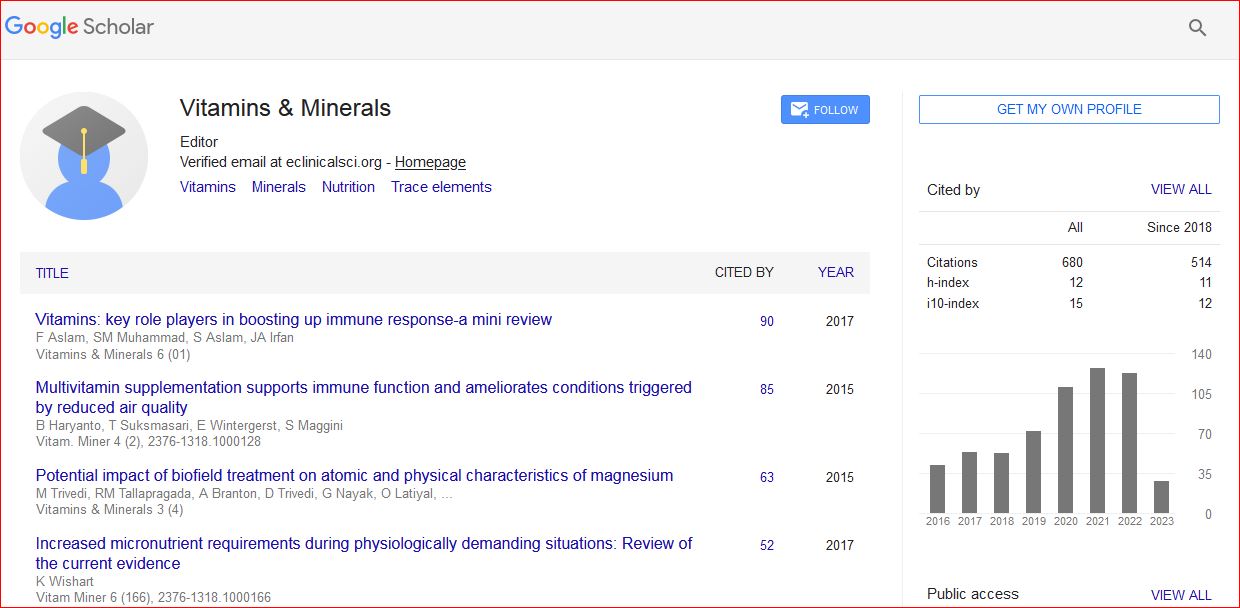
Vitamins & Minerals received 790 citations as per Google Scholar report