Research Article - (2026) Volume 10, Issue 1
Received: 04-Oct-2024, Manuscript No. VCRH-24-149576;
Editor assigned: 07-Oct-2025, Pre QC No. VCRH-24-149576;
Reviewed: 22-Oct-2024, QC No. VCRH-24-149576;
Revised: 10-Feb-2026, Manuscript No. VCRH-24-149576;
Published:
17-Mar-2026
, DOI: 10.37421/2736-657X.2026.10.292
Citation: Suresh, Shobith, Aniket Angira, VK Baranwal, and Nandlal Choudhary. "Recognizing Significant Research Findings Woven throughout the History of Plant Viruses, Particularly the Tobacco Mosaic Virus." Virol Curr Res 10 (2026): 292.
Since the discovery of plant virus, it has great impact on plant sciences and human society. Therefore, to understand this new pathogen it was characterized at biochemical, structural, and molecular level. Many analytical research techniques were developed over the period to reveal the mystery of plant viruses. In this review, we presented the development of plant virus research in different phases. The 1st or early phase of research described the discovery of plant viruses as a new pathogens, 2nd biological phase described the mode of virus spread and its relation with the vector, 3rd biochemical and biophysical phase described how to purify and characterize the plant viruses, 4th molecular biology phases described the heredity and other functions at molecular level, 5th molecular genetics described the position and function of individual genes of viral genome, gene cloning and gene silencing methods and finally, 6th diagnostics and management phases described the modern techniques for specific detection of plant viruses and their prophylaxis, genetic resistance and control of plant
Tobacco mosaic virus • Plant virus • History • Molecular genetics • Molecular mechanism • Diagnostics • Management
• Presented the historical landmarks of plant virology since 1800’s.
• Describe the story how the plant virus was discovered and identified.
• Described the techniques utilized to unfold the mystery about viruses.
• Briefly outlined the characterization of plant viruses.
• Outlined the diagnostics and detection methods for the plant viruses.
A virus refers to an ultramicroscopic nucleoprotein entity that becomes active only when it enters living host cells. Plant viruses or phytoviruses are those viruses that are present within the plant systems. The areas of study that encompasses plant viruses and their attributes is broadly termed as plant virology. Plant viruses causes the diseases on the plant species including cultivated cereals, pulses, vegetables, flowers, fibres, and fruits which impact the yield and quality of production worldwide [1]. The increasing global trade, insect vector movement and plant diversity has resulted to the spread of viruses across the planet. The rapid growth of the human population coupled with climate change also has a massive effect on evolution of viruses and their vectors, and interaction with the host plants. The evolution of plant viruses is a continuous process that led to evolve new viruses. These new viruses may cause the unexpected yield loss. The complete understanding of viruses with their plant host is still a challenge. Every stage and every plant parts are susceptible to the virus infection. So, the viral disease may become a challenge to meet the food demands. There, it is advisable to investigate the plant viral diseases, their interaction with the host plant, improve the detection methods and develop efficient management strategies [2].
The birth of plant virology as a scientific discipline was established after discovery of plant virus by Mayer, Ivanowski and Beijernick [3]. Viral disease was initially understood only with the appeared visible symptoms on the plant which were transmitting from an infected plant to a healthy plant by various abiotic and biotic agents. The biotic agents as insect vectors were found to be the most common [4]. For many years, scientists were studying the different viruses based on the only visible symptoms on the plants. However, this proved to be a tedious task as it was hard to predict because of similar symptom were produced due to other pathogens or also due to nutrient deficiencies [5]. Tobacco Mosaic Virus (TMV) was the first plant viruses which were crystallized by Stanley. The study of TMV becomes a model to understand the biochemical, genetic and molecular aspects including the life cycle of other viruses [6]. The outcome of these studies was utilized to develop the diagnosis and detection methods for the plant virus. The routine viral diagnosis methods were developed like enzyme-linked immunosorbent assays and polymerase chain reaction and advanced methods. Some advanced methods were also developed which offers precise detection such as loop-mediated isothermal amplification, recombination polymerase amplification, biosensor based, microarray-based technique, and next-generation sequencing methods. The next-generation sequencing has become the most remarkable because it is capable to provide information on virus variants too [7]. The early and accurate diagnosis of plant viral diseases are critical for management of plant viruses to minimize the yield loss. So far, no potent cure is known for plant viruses; however, losses can be minimized by practicing the precautions like methodological cultural practices, or use of virus-resistant seeds. Recently developed technique, CRISPR-based genome editing and RNA silencing are very useful which promises to generate the virusresistant crop plants [8].
The knowledge of plant-virus-vector interactions and viral diseases are required to understand the plant virus biology. This may help to develop the virus-specific detection methods and to implement the correct management strategy. This review is unique of its kind where the various ages of research in plant virology are presented along with the techniques developed for plant virus research in chronological order. The review also includes the biochemical, molecular biology and genetic aspects to understand the plant viruses and the associated host.
Milestone of plant virology
We present the milestones of plant virology in order along with developed research tools, methods of each age such as traces of plant viral diseases, discovery of the causative agents, discerning the biology of new agent, purification and characterization of viruses, unravelment of the molecular nature and mechanisms of viruses, understanding of molecular genetics of viruses, and development of modern diagnostic techniques and viral disease management strategies.
The proto-scientific era-earliest traces of plant viral diseases
The viral diseases in plants had existed from centuries, however, only in the late 19th century, viruses were proposed as a causative agent. Later by the 20th century, the nature of viral pathogen was established. The typical yellowing symptoms on leaves of Eupatorium lindleyanum was the oldest reference that mentioned in a poem dated back 752 A.D, written by a Japanese Empress named Koken. Later, it was translated in English by T. Inoye [9]. In the 16th century, colourbreaking symptoms on tulips flower were reported as an ornamental beauty in Western Europe. In 1576, a Flemish botanist, Carlos Clausius has become the first scientific person to describe variegations/striping symptoms on the coloured tulip petals. The tulip petal break disease a viral disease had documented in Holland. Thanks to the Tulipomania that existed in the 17th century, which led to an exorbitantly high price for striped bulbs and their paintings. This art and documentation preserve later paved the way for history. In 1692, yellow stripe disease of Jasmine (now known to be caused by Jasminium mottle virus) was reported, a one of the earliest documents on an experimental transmission of a virus. In 1714, Lawrence had described that this stripping could be inherited via the grafting of jasmine plants on sap exchange. A severe potato leaf roll outbreak and peach yellows were seen in Great Britain and USA in 1770 and 1791, respectively. In 1869, ablution leaf variegation was seen in France and Belgium. In 19th century, the sereh disease was found in sugarcane in Java. All these mentioned diseases are known to be caused by plant viruses.
Discovery of the causative agent for the suspected symptoms (1882-1900)
The plant virology era began precisely in late 1870’s, with the Tobacco Mosaic Virus (TMV) and their disease being studied in tobacco plants. This disease was prevalent in Holland and was responsible for severe growth retardation and huge yield losses that render extremely bitter taste to the tobacco also. The Dutch farmers approached the Adolf Eduard Mayer (1843-1942), a German chemist and director of the Agricultural Experiment Station at Wageningen, Netherlands (since 1879) and requested to find a cure for this disease. He immediately started an investigation whose etiological agent was unclear at that time. Mayer described that leaf curling is an early and characteristic symptom that make tobacco unsuitable for the cigarette manufacturing. Mayer named this disease Mosaik Krankheit/tobacco mosaic disease because of characteristic appearance like light and dark green pattern on the leaf lamina of tobacco [10].
Mayer prepared juice extract from an infected tobacco plants and rubbed on healthy tobacco plants and observed the similar mosaic symptoms [11]. He hypothesized that symptoms of the disease are experimentally transmissible. Later, he injected juice extract into the leaf vein of a healthy tobacco, and after 10 days he observed a characteristic mosaic pattern on the youngest leaves rather than on inoculated leaves, and then in a few days the disease spread to the entire plant.
Mayer performed the Koch’s postulates to find out the agent causing for the tobacco mosaic through an optical microscope but failed to identify the agent. Mayer then heat the sap at 80°C and injected into the plants and examined for the presence of pathogen. He observed no fungal structure under light microscope and infectivity was lost, so based on this, he concluded that a small bacterium might be responsible for the diseases [12]. In 1891, Dmitri Ivanovsky, a Russian botanist had used an unglazed porcelain filter of 0.1 to 1 micron pore size, which can exclude bacteria to characterize the unknown agent [13]. The juice extract of infectious plant was passed through porcelain filter and inoculate the healthy plant but still found infectious, therefore he concluded that the agent might be a toxin because it appeared to be soluble [14]. In 1898, Martinus Beijerinck, a Dutch soil microbiologist at Delft Technical University, Netherlands repeated the filtration experiments and agreed with Ivanovsky finding. In the experiments, he used porcelain filter and an agar to check the filterability of the agent. He layered juice extracted from infected tobacco on top of a thick agar layer and after 10 days the deeper agar layers were checked for pathogenicity by injecting into healthy tobacco plants. He observed the characteristic mosaic symptoms. Beijerinck concluded that the agent causing mosaic disease was not fixed or particulate state but rather a fluid since it diffused through agar. The agar can retain the bacteria, thus predicted it to be smaller agent than bacteria [15]. The infectious extract was found to be stable up to 3 months’ even if dried or heat inactivated at 90°C. Beijerinck described the agent as contagium vivum fluidum or infectious living fluid based on the property of infectivity, filterable nature, ability to multiply, and gave the new term virus [16]. The tobacco mosaic virus popularized as the first virus that causes the tobacco mosaic disease. This experiment led scientists to conclude that new agent was a soluble entity, not visible under microscope, smaller in size than bacteria, not culturable on artificial medium, and the first pathogen to disprove the Koch’s postulates.
Discerning the biology of new agent (biological age 1900-1950’s)
Scientists were enthusiastic to decipher the identity of new agent employing a variety of methods like the recreation of disease symptoms through sap inoculation, grafting, early characterized ultrafiltration study to exclude the possibility of bacterial or fungal pathogen and a standard light microscope to identify inclusion bodies. Many studies were performed to reveal the nature of viral diseases with mosaic and mosaic-like symptoms. These studies were including as follow, examination for altered phenotypic changes, symptom analysis by microscope, physiological changes on tobacco and on other crops producing similar mosaic symptoms (Figure 1).
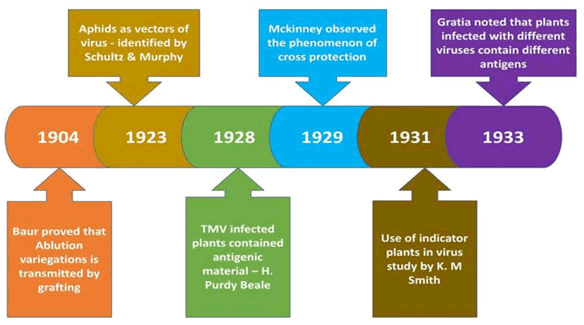
Figure 1. A series of findings made in the biological age to reveal knowledge on new agent/virus.
Historical records of disease transmission: How the plant viral diseases transmitted from one plant to another was another unanswered mystery. In early 1901, it was revealed that insects play a crucial role in plant virus transmission and epidemiology. Hashimoto from Japan had demonstrated the relationship between the plant virus causing rice dwarf disease and an insect leafhopper Nephotettix apicalis. It was shown that leafhopper Eutettix tenella from an infected plant when fed onto a healthy plant for 5 min. then the disease would develop [17]. Very soon the leafhoppers, aphids, beetles, thrips, whiteflies, and mites, were identified which transmit the plant vial disease. Later, the transmission of plant viruses was also reported from seed, propagative materials, and pollen [18].
Discovery of cross-protection: The principle of cross-protection was introduced by McKinney. He observed that tobacco plants failed to reproduce the characteristic yellow mosaic symptoms upon challenging with plant extract sap containing tobacco yellow mosaics [19]. Tobacco plant if initially inoculated with a mild strain of potato virus X then plant observed resistant from subsequent inoculations with severe strains of PVX.
The development of biological assays for a plant virus: The more than one virus can infect the same host and can produce the same disease symptoms. In 1925, James Johnson demonstrated that young tobacco leaves showed as apparent symptoms when inoculate with the sap prepared from healthy potato plants. Thus, James concluded that a virus can also be carried within its host without producing any symptoms. The researcher, Holmes injected the sap prepared from an infected pathogen to tobacco leaves and observed that lesions were developed as per virus concentration [20]. In 1931, Smith inoculated the Potato Virus X (PVX) on tobacco which showed the potato mosaic disease symptoms, so he named tobacco crop as indicator/differential host. With this study, tobacco was becoming the first and ideal host candidate for PVX. He also demonstrated that infection with two different potatoes virus’s X and Y, in combination could result in severe viral diseases. In another experiment, Smith inoculate the leaves of datura (Datura stramonium) plant with mixed potato virus X and Y and observed that only virus Y were identified in young growing leaves. Smith called such crops a filter plant which can filter the virus Y from virus X as it travels faster to the growing points. Smith studied the selective multiplication property of vector for separating virus Y from virus X because virus Y is only transmissible through the insect vector aphid Myzus persicae vector but not the virus X.
Vector-mediated plant virus transmission: The concepts of virusvector interaction for transmission of virus in persistent and nonpersistent manner was introduced by Watson and Roberts. Four hypothetical mechanisms such as through mechanical, biological, salivary apparatus, and regurgitation was suggested for transmission of viruses by aphid vector in nonpersistent manner. The Myzus persicae and a vectors takes only 1–2 minutes for transfer the virus. Nematode as vector for virus transmission was also discovered which transmit the soil-borne plant virus.
The vector-mediated transmission of viruses was studied as below:
• The retention test: Usually, the stylets of an aphid shed during the moulting stage and then replaced by new ones with each advancing instar, therefore, the viruses cannot be transmitted. This test was carried with aphid Myzus persicae with beet yellow net virus on the turnip plants.
• Artificial stylet wetting test: The stylets of aphids dipped into a concentrated TMV solution and allow them to feed on test plants. The absence of virus symptoms was evidence that viruses not transmitted via the stylet.
Testing biological transmission of plant viruses
Electron micrographs analysis provided the first logical evidence for the multiplication of rice stunt virus in an arthropod insect vector tissue. Subsequently, Herold published electron micrographs that show the virus-like particles arranged in a regular array of microcrystal size of 242 × 48 microns in length and width concentrated in the cytoplasm in vicinity of the nucleus of maize leaves cells. The leafhopper Agallia constricta species was shown to potentially transmitting the two unrelated plant virus, wound tumour virus and potato dwarf virus. The leafhopper Dalbulus maidis a vector for corn-stunt virus, exhibited a property of survival for only 4 days on healthy asters but longer periods on infected asters. In the case of nonpersistent, viruses don’t pass through the interior of the vector but gets associated with anterior portion of the feeding canal, thus become noncirculative or stylet borne. The mouth part of vector aphid interacts non-structural protein known as Helper Component Protein (HC-Pro) of potyvirus, which must require for virus transmission. The HC-Pro P2, and P3 of Caulimovirus bind to aphid mouthparts and persist for several hours and transmit virus by an attachment mechanism. for transmission. The 2b protein tobraviruses was required to interact with trichodorid nematode. Other stylet-borne viruses such as Cucumoviruses require only the viral coat protein for aphid mediated nonpersistent transmission. Tospovirus of the Bunyaviridae family can replicate in thrips vector, which propagate in vector and transmit the virus. The luteovirus persists for long period in aphid vector but without replication, as circulative non-propagative transmission.
Later, Sylvester had recognized a semipersistent form of virus transmission. The persistent virus passes through the insect gut wall and hemocoel to accumulate in the salivary glands of the vector, thus become circulative. Circulative viruses are of two types, one who can replicate in the insect vector (termed as propagative) and the other that don’t replicate within the insect vector (termed as nonpropagative).
The plant host, vector, and the virus form the complex triad and develop the typical virus-disease in different crops. The generalised cycle infection of plant virus starts with the inoculation of the virus into the plant by a suitable vector or mechanical. Then, virus uncoat to release the nucleic acids which undergoes transcription and translation for replication and multiplication process using the plant host resources. Once the necessary proteins for replication build up, the viral nucleic acid now replicates. The progeny viral nucleic acids can be transported intercellularly to nearby locations or to distant sites by long distance transport. Once the viral coat proteins form, progeny viruses get assembled and matured. Finally, the vector again acquires the progeny viruses while feeding and the cycle thus continues.
Purification and characterization of the virus-biophysical/ biochemical age (1930-1968)
This age started in the 1930’s and was marked the virus purification and characterization at biochemical level. The methods for virus purification became available that helped to study the size and structure of the virus more precisely. TMV was first time precipitated from crude sap of infected tobacco with specific salts, such as lead acetate and safranin with acetone by the Vinson and Peter, at Philadelphia Boyce Thompson Institute. The acetone helped to concentrate the virus and safranin and other salts improved the procedures to obtain pure form of virus, and amyl alcohol to elute the virus. In 1931, when virus was purified with acetic acid and acetone, they resulted some infective crystals which failed to retain the infectivity when crystallized. The precipitate obtained showed the properties of a protein when moved under an electric field. Purdy Beale, from Philadelphia Boyce Thompson institute successfully raised antibody against TMV in rabbits, thus reaffirming the proteinaceous nature.
Crystallization of TMV: Stanley experiments with TMV in 1933 and soon in 1934 showed that TMV infectivity was lost in the presence of pepsin (freshly crystallized by Northop) reference thus re-confirming the proteinaceous nature of virus. He had also incubated the infected tobacco juice with wide range of pH and recorded that its inactivation rates followed the inactivation of regular proteins. In 1935, Stanley, for the first time, precipitated the TMV in crystal form (resembling needles) from highly concentrated juice prepared from diseased tobacco leaves by adding ammonium sulphate. These crystals were observed to be about 0.03 mm in length under a magnification of 400X of the light microscope. Svedberg Working University of Uppsala, Sweden obtained the crystalline TMV samples from Stanley and studied about the molecular weight of virus protein in an analytical ultracentrifuge.
Wycoff and Corey performed X-ray diffraction analysis with the TMV samples generously given by Bawden and Pirie and concluded that TMV was made of repeated structures and resembled the morphology of a rod shaped (reference missing). In 1941, Bernal and Fankuchen, through their improved X-ray diffraction analysis, discerned the diameter of TMV rods to be approx. 15 nm and a length roughly ten times its width. Further experiments on TMV showed that particles present within the suspension had a significantly long asymmetry constant. Thus, Bawden and Pirie voted for TMV crystalline suspension to be of nucleoprotein nature with rod or cigarshaped constituent particles. A similar result had also speculated in the first X-ray analysis of TMV by Bernal and Fankuchen in 1937. Bernal and Fankuchen also suggested that the Stanley crystals were regular only in the two dimensions and thus described them as paracrystals. In 1938, Bawden and Pirie, with the help of Bernal and Fankuchen successfully crystallized and obtained the first actual 3D image of tomato bushy stunt virus-a spherical virus.
In 1950, the X-ray studies was undertaken by James Watson made him believe that TMV was probably helical. He reported this result in 1954, but he failed to accurately discern the number of subunits per each turn of the spiral structure. In 1956, Rosalind Franklin using repolymerized nucleic acid-free TMV particles, obtained a high-quality x-ray crystallography image from which the first true picture of TMV quaternary structure could be deduced. In the same year, Franklin and Caspar provided evidence that the structure of TMV was exactly a helix as hypothesized by Watson. In addition to that, they also proved that the helix was hollow rather than a solid one. It was also found out that the RNA of TMV was single-stranded and spiralled along the inner surface of the hollow cylinder made by protein capsid with an analogy to a ‘thread spiralling inside a donut hole.
Blow to the nature of TMV: Stanley had performed the biuret test and reported positive for protein and Fehling and Molisch test negative for carbohydrate with TMV. He found approx 20% nitrogen in the crystals and immediately declared to the world that the precipitate was indeed a protein. He also showed that the crystals if redissolved in the suspension form (up to a billionth dilution) rubbed onto healthy plants they and produced the disease symptoms. Thus disprove the earlier notion of the virus being a living soluble liquid. Stanley postulated that viral agents was an autocatalytic protein/ enzyme capable of multiplying in living cells. The Stanley studied proteinaceous nature of TMV crystal was become vogue very soon. Because the Bawden and Pirie at UK Rothamsted Institute, showed the invariable presence of 2.5% carbohydrate and 0.5% phosphorous besides protein, enation and Aucuba strains of TMV. Both also demonstrated that the carbohydrate and phosphorus components of TMV could be separated by heat denaturation. Despite several efforts, Bawden and Pirie could never obtain a phosphorous free fully active virus preparation. The presence of phosphorous in purified virus precipitate indicated the presence of nucleic acid as an integral component of TMV. The spectrophotometric analysis was showed an absorption maximum corresponding to nucleic acid. In 1939, Max Lauffer, along with Stanley, successfully separated the protein and nucleic acid constituents of TMV. Thereafter, H.S Loring, a post-doctoral student of Stanley, characterized this nucleic acid to be RNA by treating TMV with ribonuclease enzyme and showing a decrease of TMV infectivity.
Investigation of TMV by electron microscope: In 1951, density gradient centrifugation pioneered by K. Brakke became a very critical technique for the isolation of plant viruses. This technique involved layering of crude infectious plant extract on the top of a gradient of varying concentrations prepared of high-density salts like cesium/ lithium chloride and centrifuge it at high speed approx. 50,000 rpm. The virus particles get localized in the tube at a position where its density matches with salt, and the same was withdrawn using a needle syringe.
E. Ruska and von Borris an employ of Siemens company at Berlin, designed an electron microscope having a resolution of 10 nm and magnification up to 1 lakh, that made possible the direct visualization of TMV. In 1939, the first electron microscopic image of TMV came, which supported the rod-like morphology of TMV. In 1944, Williams and Wycoff obtained a high-resolution image of TMV under an electron microscope following a specimen preparation technique called shadow casting. The shadow casting technique employs the vaporization of heavy metals like lead, gold, or palladium and their deposition on the particle, thus resulting in a shadow of the particle. These electron microscopic images also confirmed TMV to be of rod shape with a diameter of 15 nm and length of 300 nm (Figure 2).
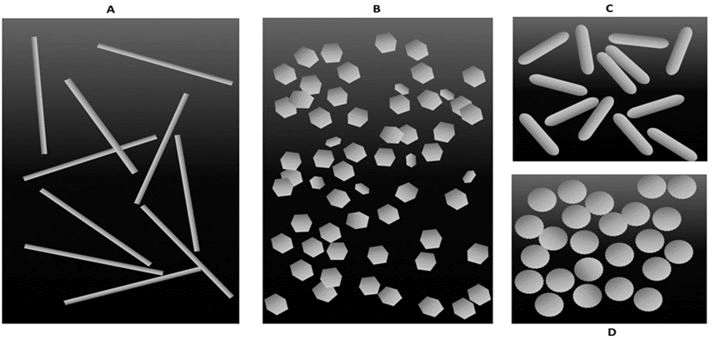
Figure 2. The sketch represents the different plant viruses appear under the electron microscope. A) Tobacco mosaic virus B) Luteovirus C) Banana streak virus D) Tomato spotted wilt virus.
Morphology of plant viruses: In 1932, Takahashi and Rawlins at University of California, Berkeley, carried the biophysical experiment and provided the earliest information on the shape of TMV by allowing the TMV-rich crude extract juice sample to flow between cross Nicol prisms. Flowing TMV extract bestowed the double refraction pattern that predicted only rod-like particles to be present, as reported earlier by Freundlich.
The electron microscope and X-Ray diffraction methods enabled to study the size, shape, and architecture of several plant viruses. The size of plant viruses was ranged from 17 nm (alfalfa mosaic virus) to 1250 × 40 nm (Beet yellow virus) as per characteristic of their species. Under an electron microscope, they were observed as spherical (e.g., Tomato spotted wilt virus), rod-shaped (e.g., Tobacco mosaic virus), and bacilliform (e.g., Banana streak virus). Based on the architecture/ symmetry of capsid, the plant viruses were classified into helical (cylindrical or elongate) and cuboidal (rounded or polyhedral). Helical forms are anisometric, whereas cuboidal forms are isometric in nature. The elongated viruses were further differentiated into rigid rods (e.g., Tobacco rattle virus), flexuous rods (e.g., Potato virus X) and filamentous rods (e.g., Rice stripe virus). Capsid protein, a protective coat outside the nucleic acid core, was shown to be made up of subunits called capsomeres. Capsomeres were known to arrange in either helical or geometric forms. Most of the plant viruses were naked in nature (without a viral envelope) with an exception bunyaviruses and rhabdoviruses (Figure 3).
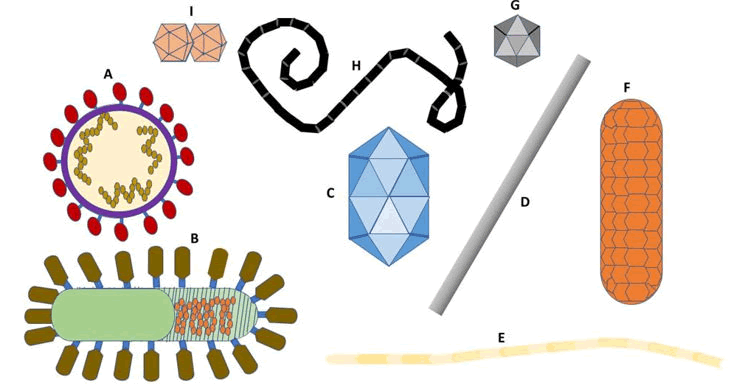
Figure 3. The sketch represents the morphology of plant viruses: A) Tomato spotted wilt virus, B) Rhabdoviruses, C) Alfamovirus, D) Tobacco mosaic virus, E) Potyvirus, F) Badnavirus, G) Partitiviridae, Bromoviridae, Caulimovirus H) Tenuivirus I) Geminiviridae.
Unravelment of the molecular nature and mechanisms (molecular age) (1943-1995)
The molecular age was most crucial ages in the history of plant virology. After knowing the constituents of TMV, scientists worked on decoding the basis of viral infectivity. It was essential to understand whether it was the nucleic acid that dictates the protein or vice-versa.
Splitting and reconstitution of two TMV strain: The biological differences between the different strains of TMV were initially attributed to the differences in their nucleic acid. In 1943, Schramm did a simple experiment to find out which component of TMV required for reproduction. He first split TMV into pieces with slightly alkaline solution, and then pH moved back to an acidic condition. He observed that disrupted TMV pieces reassembled back to their original form. Schramm reported that disrupted pieces incapable to produce new TMV, but the reaggregated forms could produce new TMV rods. Further, Schramm prepared an RNA-free TMV protein by treating it with nucleosidase enzyme from the calf intestine. He further recorded that even though the virus remained crystallizable, it had lost its infectivity. Thus, he asserted RNA being the genetic molecule present within the TMV (Figure 4).
The year 1949 marked the isolation and crystallization of turnip yellow mosaic virus by Roy Markham and K. Smith. Even though the crystallized virus exhibited homogeneity in migration under regular electrophoresis, the sedimentation studies using an analytical ultracentrifuge indicated the presence of two components within twolayered fractions. The heavier fraction comprised 70-80% of total material was thicker containing nucleoproteins that consisted of 37% RNA, while the lighter fraction was solely proteins. Experimenting further, they proved that only the RNA containing fraction was infectious. Although this was a breakthrough, but they weren’t much decisive on the fact that RNA alone was sufficient for infection.
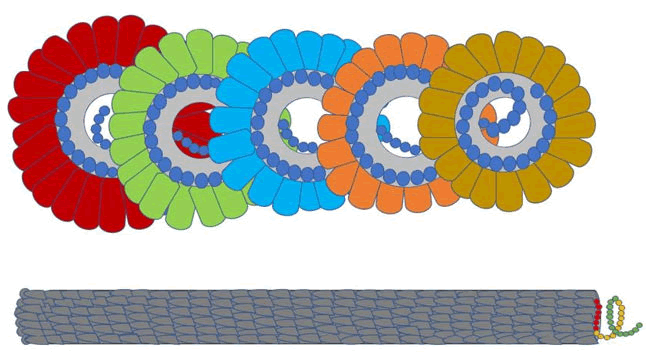
Figure 4. A sketch represents the detailed picture of the tobacco mosaic virus depicting the helical capsid architecture.
In 1957, F. Conrat and B. Singer performed reconstitution experiments with 2 different strains of TMV, first TMV strain produces the green mosaics and second TMV strain produces the ring spot lesions. They first split the two viruses; isolated RNA and protein component by SDS disruption and alkali/acetic acid treatment, respectively, and then reconstituted a hybrid virus using RNA and protein of each other. These chimeric viruses were then used to infect tobacco leaves separately. The progeny analysis revealed that daughter viruses’ phenotype and genotype were identical to the parent strain from which RNAs had been obtained. Thus, it was reemphasized that the specificity of viral proteins was determined by RNA only, and proteins do not contribute to any of the genetic information.
Experiments with TMV give a breakthrough: Harris and Knight, in 1952, had devised a new experiment wherein they first developed a dethronized TMV by treating TMV with carboxypeptidase (thus removing the C-terminal threonine of TMV coat protein). Experiments showed that these coat proteins variant TMV possessed identical infectivity with that of original TMV; therefore, there was no loss of infectivity. Further, dethronized TMV, when inoculated to the plant, produced progeny of the usual type (those with C terminal threonine). This experiment gave an idea that viral RNA controlled the specify of the viral protein.
A pure RNA and pure protein fractions of TMV was obtained by detergent and alkali treatment, respectively. Each fraction, when individually tested for infectivity, was found to be non-infectious. However, on mixing both RNA and protein fractions, an infectious nucleoprotein with the properties of TMV was created. This claimed to be the first artificial creation of the virus by associating two kinds of molecules.
Having the doubts still unresolved, Alfred Gierer and Gerhard Schram in 1956 had efficiently separated RNA from protein from TMV using water-saturated phenol solution where RNA remains in the upper phase, while the protein precipitate with phenol. TMV treated with acid or alkali also yielded the viral protein in its native form. When RNA and protein constituents were inoculated separately into the tobacco leaf, only RNA was found to produce the characteristic lesions but with lower strength/index of infectivity than that of intact TMV. This result indicated that RNA was labile when alone, and RNase treated RNA also failed to produce any lesions. Further, no loss of infectivity was observed for RNA even after treatment with antiserum or by undertaking ultracentrifugation (to confirm exclusion of TMV particles). However, RNase-treated intact TMV particles showed the local lesion upon inoculation. Thus, Gierer and Schram stated that infectivity was not created de novo by the mixing of 2 different components as reported by Fraenkel and Conrat instead, it was solely the inherent function of the labile RNA, which when associated with protein, protects it from inactivation. Thus, they concluded that the viral genome of TMV must be comprised of RNA.
In 1961, Sugiyama and Frankel Conrat developed techniques to understand the base composition of TMV RNA. TMV RNA genome was first digested by the ribonuclease T1 enzyme and then treated with phosphodiesterase and generated the several unique oligonucleotides. They determined that 3' end of RNA was made up of unphosphorylated adenosine residues and 7-methyl guanosine cap at the 5' end. In 1966, this observation was later confirmed by Stein Schneider. In another experiment, TMV RNA was treated with phosphodiesterase enzyme which hydrolyse the 5' cap, and this TMV RNA without the cap lost the infectivity.
In 1972, Jackson had purified the polyribosome from TMV infected tobacco tissue and observed that small TMV RNA were attached with it. This study indicated the participation of TMV RNA in the translation process in vivo. And this attached TMV RNA found expressing the Coat Protein (CP) in in vitro study which indicated the presence of a sub-genomic RNA. This RNA was characterized to had 5' end capped same as genomic RNA. In 1976, wheat germ extract was used as an in vitro translation system to study the protein synthesis from the TMV RNA genome. It encoded only two proteins of molecular weights of 130 kDa and 180 kDa, thus suggesting their presence towards the 5' end of TMV RNA. Both protein was suspected to be involved to play a role in the TMV life cycle. However, despite several efforts, the CP translation not achieved. It was hence concluded that only full-length TMV RNA was not an efficient template for CP translation. In 1977, Beachy and Zaitlin were reported the discovery of RNAs of discrete weights like 0.9-1.6 MDa (termed as I-1 RNA/intermediate RNA-1) and 0.68 MDa (termed as I-2 RNA /intermediate-length RNA-2). The purified I-2 RNA, when translated in in vitro, encode protein of molecular weight 30 kDa that confirmed that sub-genomic mRNA encodes CP of TMV.
In 1962, Nirenberg, Conrat, and A. Tsugita introduced the purified genomic RNA of TMV and added it into the cell-free translational system and observed a 75-fold increase in protein production. The supernatant was shown to precipitate with TMV antiserum, thus indicating the synthesis of the TMV coat protein within the cell-free translation system. This experiment also concluded that the singlestranded genome of TMV was (+) sense messenger RNA and revealed the universal nature of codon biology because viral RNA got translated within a bacterial system. The viral genetic code was also verified with the help of TMV coat protein mutants, i.e., by comparing and contrasting the amino acid changes in the mutant and regular TMV.
Development of plant protoplast system to study proteins of TMV: In 1969, sequencing of coat protein of TMV was completed by two group independently, Frankel Conrat and Tsugita Berkeley at the Virus Laboratory, University of California, and H. G Wittmann at the Max Planck Institute of Biology, Tubingen. Wittmann and Braunitzer had first separated the tryptic peptides of coat protein using ion-exchange chromatography and determined the amino acid composition of each peptide, whereas Conrat and Tsugita had used an automatic amino acid analyser machine. Interestingly, both groups concluded that 158 amino acid sequence was the coat protein of TMV strain.
In 1971, Takabe and associates developed tobacco protoplast systems as a live cell model to study the one-step growth curve of plant virus. TMV infected protoplasts was studied first time that showed the proteins of 130 kDa and 180 kDa to be present within them. Upon closer examination, it was found that synthesis of 130 kDa predominates that of 180 kDa. The 180 kDa was expressed because of a read-through skipping of the termination codon of 130 kDa. After the nuclease treatment of whole TMV RNA followed by electrophoresis, the shortest RNA obtained was sequenced to give information on the last 1000 nucleotides from 3' end of TMV RNA. This cistron of 1000 bp coded for the coat protein. Subsequently, the 30 kDa protein was also detected from TMV-infected protoplasts. The proteins of molecular weight 130 kDa and 180 kDa were hypothesized to play a role in TMV replication because they showed significant homology with known RNA-dependent RNA polymerases (RdRp). In 1986, Ishikawa successfully created mutations at the amber (UAG) stop codon of the gene coding for 130 kDa protein. This mutant produced 130 kDa but not 180 kDa and wasn’t infectious, whereas mutants with only 180 kDa retained low levels of infectivity. Thus, a balanced expression of both the genes was found to be necessary for the efficient replication of TMV RNA. Finally, Osman and Buck in 1977, had isolated the TMV RNA polymerase complex and showed that 130 kDa and 180 kDa were its constituents.
A temperature-sensitive mutant of TMV called Ls1 was used to study the function performed by the 30 kDa protein. Ls1 mutant of TMV replicated and assembled at 32°C in the protoplast as usual but failed to spread from one cell to another in leaves. The intracellular movement of this mutant virus was possible only at 20°C and not at higher temperatures. The mutation when analysed was pointed towards a change in the 154th position of the 30 kDa protein from serine to proline. This experiment suggested that regular 30 kDa protein was required for cell-to-cell movement. To further prove the same, transgenic tobacco expressing the wild type 30 kDa protein was used to see if its presence would help/complement the Ls1 mutant to spread cell-to-cell systemically at non-permissive temperatures. The numerous frameshift mutations within the 30 kDa gene was also undertaken and the phenotype of the protein was noticed. Both the experiments invariantly proved the 30 kDa protein had a role in virus movement; thus, later, it was known as the Movement Protein (MP). MP was found to accumulate in large numbers in the infected leaf plasmodesmata. In 1989, Wolf reported that the molecular size exclusion limit for intercellular transport was about ten times higher in transgenic tobacco than tobacco controls. In 1992, Citovsky deciphered that MP binds to single-stranded nucleic acid and form an elongated structure. Finally, Heinlein and McLean, in 1995, reported the direct association of MP with the microtubules of TMV infected protoplasts.
Nature of plant viral genomes: The ds RNA genome within plant viruses was first found in wound tumour virus, which resolved into 12 fragments on a 7.5% polyacrylamide gel of 16 mega Daltons. The two sizes described as long and short rods of tobacco rattle virus (a bi/ multipartite virus) was discovered with sucrose density fractionation in contrast to TMV, where only one size of RNA molecule was found. Both long and short rods were required to facilitate normal infection and subsequent progeny generation. Other examples include cowpea mosaic virus (bipartite) and alfalfa mosaic virus (tripartite).
Shepherd had first reported the DNA genome in cauliflower mosaic virus while working with the purification of CaMV. He observed that the nucleic acid wasn’t hydrolysed by weak acid/alkali treatment (indicated the absence of an RNA genome) and gave a positive diphenylamine test for the DNA. Further, the purified virus, when treated with pancreatic ribonuclease, retained its infectivity, whereas DNase treatment completely abolished the same. Goodman first reported the occurrence of single-stranded DNA genome in Geminivirus through an experiment with exonucleases which showed them to remain insensitive, thus proving that the Geminivirus is composed of a single-stranded DNA with circular (=non-linear) topology.
Since the discovery of types of genomes for plant viruses, it was found out that plant viruses can have only one nucleic acid, RNA, or DNA but never both. Later, based on the nature of the virus genome, plant viruses got divided into DNA viruses and RNA viruses. The DNA viruses further were split into single-stranded DNA viruses, double-stranded DNA viruses, circular DNA viruses, and linear DNA viruses. Similarly, the RNA viruses were also classified into doublestranded and single-stranded RNA viruses, viruses with a positive sense strand or a negative-sense strand. Within the capsid, the genetic material was shown to be present as a single continuous strand/ non-segmented form or as multiple genome segments. In some plant viruses, the genome existed as different segments in more than one virus particle, which was termed as split genome viruses (Figure 5).
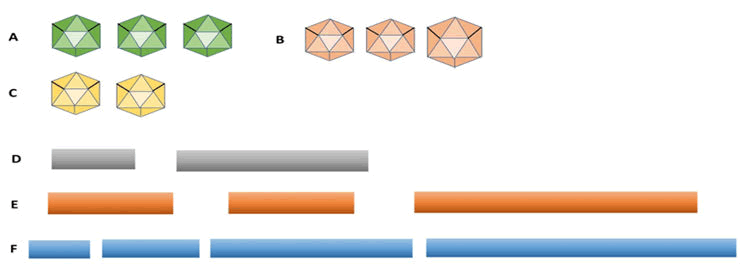
Figure 5. Sketch represents the multipartite viruses. A) Cucumovirus and Bromovirus B) Ilarvirus C) Comovirus D) Tobravirus E) Pomovirus F) Benyvirus.
Satellite RNA: Basil Kassanis had often observed very small virus particles within the cultures of large Tobacco Necrosis Virus (TNV) 30 nm size. It was almost spherical, with the size of roughly 17 nm, and was able to replicate only in the presence of the large TNV virions (which acted as a helper virus) and thus got termed as satellite viruses. In 1971, Schneider found another subviral agent, i.e., naked RNAs, in close association with preparations of numerous other viruses and termed them as satellite RNAs. The satellite RNA doesn’t code a capsid of its own.
Viroid: Viroid (Potato Spindle Tuber Viroid) was discovered while examining the cause of the famous Potato spindle tuber disease as a free RNA molecule (without a capsid) of smaller genome size and molecular weight between 25-110 KDa. After a year when citrus exocortis disease was studied, its causative agent was found to exhibit similar properties to that of Potato Spindle Tuber Viroid.
Replication of plant viruses: In 1963, the first viral RNA-dependent RNA polymerase (RdRp) protein of 34.5 kDa was identified and characterized from Brome Mosaic Virus, which infects barley seedlings. To understand the recruitment of RdRp to the RNA, the DNA templates were generated wherein it was shown that the presence of one additional nucleotide at the 3'end had to be an initiation nucleotide. On the other hand, as reported by Collomer, ds RNAs of CMV and its satellite had unpaired terminal guanosine, which, together with other proximal downstream elements, were mandatory for its RdRp recognition.
Plant viruses can have either dsDNA or ssDNA genomes. The replication of CaMV requires a reverse transcriptase encoded by ORF-V of the circular dsDNA genome wherein the full-length RNA transcript behaves as an RNA intermediate. On the other hand, the geminivirus ssDNA genome undergoes a rolling circle mechanism for replication with the help of just a single viral encoded replication initiator protein (Rep) (Figure 6).
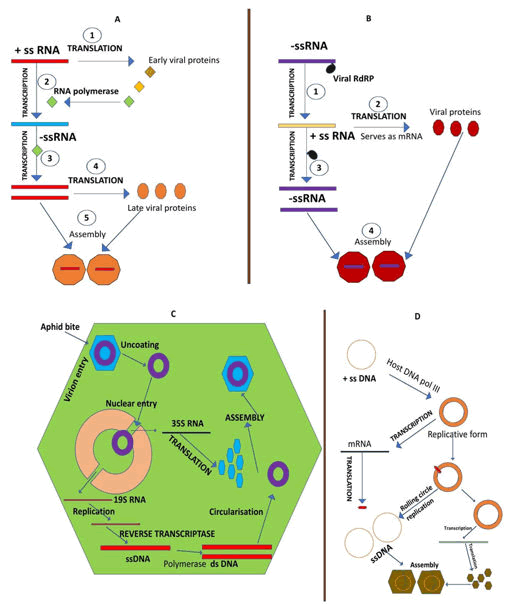
Figure 6. A generalized diagram drawn to show the replication cycle of different plant viruses; A) replication cycle of positive-sense single-stranded RNA viruses. B) Replication cycle of negative-sense single-stranded RNA viruses. C) Replication of double-stranded DNA RT viruses/Caulimoviridae family. D) Replication cycle of singlestranded DNA viruses.
Age of viral molecular genetics (1980–2000)
Cloning and sequencing of TMV RNA: In the 1970’s, Baltimore, Temin and Mizutani discovered the reverse transcriptase enzyme and demonstrated that RNA could act as a template to synthesize complementary DNA; thus, it paved the way for the cloning. During this period, the restriction endonuclease enzymes were also isolated and characterized, which enabled to undertake desired modifications with the DNA. The discovery of reverse transcriptase and restriction enzymes helped to clone the complete TMV RNA (Vulgare strain) into the M13 bacteriophage vector. Later, the nucleotides of inserted TMV DNA were sequenced by sanger sequencing. The sequence was analyzed using bioinformatics tools and determined to be of 6395 nucleotides. The ORFs region coding for protein was also determined on genome organization of TMV.
The TMV genome was shown to consist of a cap structure at 5' end and an untranslated leader sequence of 68 nucleotides that follows the first ORF, which codes for 130 kDa protein. The stop codon of ORF coding for 130 kDa protein was leaky and read through nucleotide kDa protein. The stop codon of the second ORF was further found to overlap with that of the third ORF that code for the 30 kDa protein. The fourth ORF encodes the 17 kDa coat protein and is located towards the 3' end of the TMV genome. Hence, it was established that the RNA genome of TMV common strain encodes four gene products. A sequence of 200 nucleotides of a non-coding region was found at the 3' end, which could fold into a tRNA-like structure. Next, the complete genome sequence of the Tomato Mosaic Virus strain (ToMV) was made available. In 1984, Wilson had initially proposed a co-translational disassembly hypothesis that predicted the release of coat protein first from the 5’ end of the TMV genome. The hypothesis was later proved with fresh TMV virus-infected plant cells, wherein the release of coat protein was followed by immediate ribosome binding to exposed ORF1 to start translation.
Reverse genetics enters the arena: The complete amino acid sequences of TMV coded proteins were discerned by bioinformatic tools but the functions of proteins other than the coat protein remained obscure as pure proteins from infected cells could not be obtained in high concentrations. The only solution to this problem was to create a system in which a gene could be manipulated by artificially inducing changes at the genotype level and then analyzing the phenotype. First time an RNA manipulation system with Brome Mosaic Virus was established wherein the infectious RNAs of BMV were transcribed in vitro from their cDNA clones. This method was later employed successfully to TMV, and an infectious TMV RNA was synthesized using a full-length genome. Initially, infectious RNA was obtained using the E. coli RNA polymerase, which later got substituted with T7 RNA polymerase. Manipulation of genomic RNA can be achieved by deletion/insertion (indels) or substitution of nucleotides of cDNA clones which will then be used to study the function of virus-coded proteins.
Multifaceted roles of coat protein: The function of the virus Coat Protein (CP) was to protect the RNA genome, but the multifunctional role of the CP was also established by reverse genetics. A TMV mutant was created lacking the CP gene was found to be defective in systemic movement and long-distance movement. Powel Abel and co-workers in 1986 showed that viral coat protein genes, when transferred into plant nuclear DNA, could confer virus resistance. Transgenic tobacco expressing CP sense RNA showed a remarkable time lag for symptom development after virus inoculation. Later, the transgene resistance mechanism was explored, and the papaya plant resistant to papaya ringspot virus in Hawaii could be developed and commercialized.
Virus-induced changes in a plant
Plant viruses-induced disease symptoms within plants can be of external, internal, or physiological nature. It is important to give an idea of the same as they aid in the preliminary diagnosis of viral infections (Table 1).
| Symptom | Description |
| External symptoms | |
| Stunting | Reduction in growth of different plant parts |
| Mosaic | Alternate light and dark green patches on leaves and floral parts |
| Vein banding | dark green lines on either side of leaf vein |
| Stripes (monocots) and Streaks (dicots) | Long narrow yellow, brown or dark bands on leaf lamina, yellow spots |
| Variegation | A pattern of white patches on leaves |
| Curling | Abnormal shoot and leaf bending |
| Enation | Outgrowth from lower surface of leaf vein |
| Blisters | Dark green convex raised spots |
| Shoestrings/filiforms | Leaf elongation into needle shape |
| Witche’s Broom | Short internodes and small leaves densely packed together without spreading |
| Fruit abnormalities | Concentric rings and mottling |
| Tumerous root outgrowths | Bulged out root (hairy or non-hairy) |
| Internal symptoms | |
| Hyperplasia | Internal symptoms arise because of histological changes and can be diagnosed only by laboratory examination. |
| Hypoplasia | |
| Internal necrosis | |
| Lignification | |
| Inclusion bodies | |
| Tyloses (xylem tube outgrowths) | |
| Physiological symptoms | |
| Decreased photosynthetic activity | Physiological changes are those changes that has been found only in virus infected plants but not healthy plants. |
| Increased respiration rate | |
| Increased phenol oxidase activity | |
| Decreased activity of growth hormones | |
| Increased accumulation of amides | |
Table 1. Common disease symptoms induced by virus.
Age of virus diagnosis
In 1927, Dvorak prepared the sap from mosaic virus infected potato plants and injected into experimental animals, which subsequently developed the antibodies. Purdy Beale also obtained similar results with diseased tobacco plants. He concluded that sap of infected plants must contains serologically active component which has antigen like property. The two significant breakthroughs in the field of virus diagnostics came with the discovery of serological assays in Enzyme-Linked Immunosorbent Assay (ELISA) form and nucleic acid-based assays in Polymerase Chain Reaction (PCR) form. Some of the diagnostic and detection methods developed for plant viruses as follows:
• Direct and indirect ELISA had evolved as preferred methods to diagnose plant viral diseases. ELISA can be used to differentiate closely related viruses and their strains through virus/strain-specific antibodies. Double Antibody Sandwich–ELISA format is the most used type of ELISA for virus diagnosis. ELISA is also used for the screening of infections within imported plant materials or germplasm.
• A lateral flow assay is a simplified form of ELISA for detecting plant viruses was optimized the first time for CMV and TMV. LFAbased diagnostic kits are now used for routine diagnosis for plant viruses.
• In 1984, Karry Mullis discovered the PCR technique, which got optimized to be used for specific and sensitive detection of plant viruses. Multiplex PCRs were then developed, where few viruses can be diagnosed together in a single reaction. For RNA plant viruses, the reverse transcription–PCR was standardized, which required a preliminary step of reverse transcription required for cDNA synthesis from the template RNA and then PCR. In the same year, Ahmed Hadidi showed that viroid and satellite RNAs from pome fruits or temperate fruits can be used for easy detection by RT-PCR. The real-time quantitative PCR method was also optimized for detecting plant viruses like Citrus tristeza virus and Citrus yellow vein clearing virus.
• In 2000, Loop-Mediated Isothermal Amplification (LAMP) was described by Notomi. This technique required only primers and enzyme reaction mix to amplify the target sequence at constant temperature without the use of an expensive thermal cycle machine. LAMP has now been standardized to diagnose many plant viruses infecting apples, citrus, banana, grapes and other crops. Reverse transcription-based loop-mediated isothermal amplification was also optimized for plant RNA virus diagnosis.
• In 1995, Fire and Xu originally described the Rolling Circle Amplification (RCA) method to generate single-stranded circular DNA products from circular or linear DNA at a constant temperature. For plant viruses, multi-primed RCA was applied for bipartite Gemini viruses to amplify their DNA B component. RCA followed immediately by RFLP was used to detect small ss circular DNA genomes to diagnose Gemini viruses.
• In 2004, Vincent developed Helicase-Dependent Amplification (HDA), which is now extensively employed to rapidly detect plant viruses and viroids. HDA method required a DNA helicase, singlestranded binding protein, and endonuclease to create ssDNA as a target template for annealing and extension with two primers at a constant temperature.
• In 2006, Recombinant Polymerase Assays (RPA) were a breakthrough for the rapid detection of plant virus members of Bromoviridae, Luteoviridae, Potyviridae Reoviridae, Virgoviridae, Closteroviridae, Caulimoviridae, Geminiviridae and Nanoviridae. In 2016, the first-time detection of viroids by RPA was also reported.
• The microarray technique was used for the first time for a plant RNA virus detection in 2003 and for viroid detection in 2012.
• In 2009, Next-Generation Sequencing (NGS) was first used for plant virus detection. It has accelerated the hypothesis for viral detection at a reduced cost for large-scale surveys. The pepper virome (multiple viral infections from pepper plants) has been reported using the Illumina HiSeq NGS platform. In 2014, Smith used NGS for the first time to sequence the genome of barley stripe mosaic virus isolated from barley grains of approx. 750 years old. Nowadays, metagenomic samples like soil are analyzed by NGS technology to know about the evolutionary history of plant viruses.
• Deep sequencing on siRNAs isolated from the virus-infected plant samples are done in order to detect many plant viral infections within the fruits and vegetable crops.
Methods for viral disease management
Many different conventional, chemical, molecular methods and integrated methods were developed for the management of plant viral diseases. Some of the practices described below have been used to control the viral diseases in crop plants.
Exclusion and eradication
Exclusion of plant viruses involved precautionary measure to protect the viral disease in the new crops from the already established crop areas. Quarantine or phytosanitary regulations are the legal requirements necessary for the regulation of exclusion. Elimination of various plant viruses is currently achieved by using techniques like thermotherapy, cold therapy, meristem tissue culture, chemotherapy, micrografting, or a combination of methods. A phytosanitary certification protocol is strictly followed at national or international borders to confirm that the plants samples were free from pests and disease. European and Mediterranean Plant Protection Organization (EPPO) developed a system that provides a certificate for the commercialization of pathogen and pests-free healthy plants, sterile planting material, and genetic accuracy. Eradication involves the removal of an already virus-infected plant from the cultivable areas; for example, removal of weed crops which are known reservoirs for viruses.
Vector control
The insect vectors such as aphids, whiteflies, leafhoppers, mealy bugs, beetles, grasshoppers, thrips, treehoppers, and other vectors were identified which spread the plant viruses within field crops. This must be managed efficiently to control viral diseases. Some of the strategies used to control the vector population are described below:
• Barrier crops: Some crops were grown around the main crops; these act as a barrier to the vector and restricts the virus's spread. Such practice was done in the case of ornamental shrubs and sugar beet seedlings to avoid insects.
• Reflective surfaces: Bright colours like yellow, orange, and green attract the insect vectors, especially aphids, whereas colours like black, grey, and white repel them. This compartment of the vectors was used by introducing counter-coloured sheets over the crops like lilies, cucumber, lettuce.
• Insecticides/pesticides: The viruses, unlike other pathogens, cannot be controlled chemically, but their insect vectors can be eliminated or killed by the spraying of organic or chemical insecticides/pesticides to prevent the spread of viruses.
Generating virus-resistant crops
A long-term management strategy was to generate a resistant crop cultivar which can be resistant to the virus. The conventional breeding program was an excellent method to develop resistant cultivars; however, it takes longer. After the advent of recombinant DNA technology, the development of virus resistance has become fast, efficient, and more reliable. In this approach, the desired gene, even from different organisms, can be stably introduced into plants to make resistant to viruses. Some of the approach as follows:
• Pathogen derived resistance: The concept of Pathogen-Derived Resistance (PDR) was developed by Sanford and Johnston in 1985 for the generation of virus-resistant transgenic plants through the expression of virus-derived genes like Coat Protein (CP) gene of TMV, movement protein of Potato Virus X (PVX) CP gene of Alfalfa Mosaic Virus (AMV) and defective-interfering RNA (or DNA) mediators of Geminivirus.
• RNA interference: In 1993, gene silencing was discovered in host plants as a method to regulate the virus replication process. Subsequently, some virus-derived RNA molecules were found, which typically encode for suppressor protein that interferes in host-mediated virus gene silencing, thus helping in successfully establishes infection. RNA interference is an antiviral defence that enables the host plant to cleave the intermediate dsRNA of viruses into small RNA duplexes through the aid of host expressed dicer endonuclease. One of the two strands of dsRNA (typically of 21 to 24 nucleotides) incorporates into RNA Induced Silencing Complex (RISC) that cleaves the cognate target RNAs in a sequence-specific manner with the aid of argonaut protein. RNAi mechanism can be induced/triggered in vitro using the transformation technique of integrating viral genomes into plant DNA constructs, generating viral ds RNAs or ss RNA that activates RNA silencing in plants. Some of the plants have been developed resistant using RNAi approach presented in Table 2.
| Virus | Resistant crop |
| Tobacco Mosaic Virus (TMV) | Tobacco |
| Potato Virus Y (PVY) | Potato |
| Prunus Necrotic Ringspot Virus (PNRV) | Cherry |
| Barley Yellow Dwarf Virus (BYDV) | Wheat |
| African Cassava Mosaic Virus (AFMV) | Cassava |
| Cotton Leaf Curl Virus (CFLV) | Tobacco |
| Mung-Bean Yellow Mosaic India Virus (MYMIV) | Black gram plants |
| Turnip Yellow Mosaic Virus (TYMV) | Turnip |
| Tomato Yellow Leaf Curl Sardinia Virus (TYLCSV) | Tomato |
| Mungbean Yellow Mosaic Virus (MYMV) | Soybean |
| Watermelon Mosaic Virus (WMV) | Pumpkins |
| Rice Black-Streaked Dwarf Virus (RBSDV) | Rice |
Table 2. List of transgenic resistant crops to viruses generated using the RNAi approach.
Genome editing
Genome editing, the most promising techniques which edit the nucleotides within the genome of crops to achieve the desired traits. It involves digestion and ligation of DNA molecules at specific sites for beneficial hereditary changes in the genome. Earlier, the Zinc Finger Nucleases (ZFN’s) were the only genome editing tool for the sitespecific restriction of DNA. Further, the introduction of unique Transcription Activator-Like Effector Nucleases (TALENs) and Oligonucleotide-Directed Mutagenesis (ODM) methods enabled more efficient and selective manipulation of target genomic DNA. Recently, the Clustered Regularly Interspaced Palindromic Repeats (CRISPR)/ associated with Cas9 has emerged as a simple and highly efficient genome editing tool to alter the plant genome with resistance genes that make plants resistant to viruses. CRISPR is a DNA sequence that recognizes complementary DNA sequences of the pathogens, and cas9 is a CRISPR-associated protein that cleaves the specific DNA strand. It has become prevalent in genetic engineering, functional genomics, and applied biology due to its wide range of DNA targeting abilities (Table 3).
| Plant(s) | Genome/editing location | Viruses | Outcomes |
| N. benthamiana | Virus DNA, Rep, IR, and CP | Beet curly top virus, Merremia mosaic virus, Tomato yellow leaf curl virus | Indels in viral genome |
| N. benthamiana | Virus DNA, Rep A/Rep and LIR | Bean yellow dwarf virus | Resistant |
| Arabidopsis N. benthamiana | Virus DNA, Rep, IR, and CP | Beet severe curly top virus | Resistant |
| N. benthamiana | Virus DNA and satellite sequences | Cotton leaf curl Kokhran virus, Tomato yellow leaf curl virus, Merremia mosaic virus, BCTV-Logan, BCTV-Worland | Indels in viral genome |
| Arabidopsis | eIF4E | Turnip mosaic virus | Resistant |
| Cucumber | eIF4E | Cucumber vein yellowing virus (Ipomovirus), Zucchini yellow mosaic virus, and Papaya ring spot mosaic virus-W (Potyviruses) | Resistant |
| Arabidopsis | Virus RNA genome | Turnip mosaic virus | Indels in viral genome |
| N. benthamiana | Virus RNA genome | Turnip mosaic virus | Indels in viral genome |
| Arabidopsis N. benthamiana | Virus RNA genome | Cucumber mosaic virus, Tobacco mosaic virus | Reduce the virus severity |
| Tomato N. benthamiana | Virus DNA Rep, IR, and CP | Tomato yellow leaf curl virus | Resistant |
| Rice | Eif4g | Rice tungro spherical virus | Resistant |
| Rice N. benthamiana | Virus RNA genome | Southern rice black streaked dwarf virus, Tobacco mosaic virus | Reduce the virus severity |
| N. benthamiana | Multiplex editing at Rep and IR | Cotton leaf curl Multan virus | Reduce the virus severity |
| Cassava | AC2 and AC3 | African cassava mosaic virus | Indels in viral genome |
| Cassava | nCBP-1, nCBP-2 | Cassava brown streak disease | Disease symptoms are suppressed |
| Banana | Virus sequences in the host plantain genome | Endogenous banana streak virus | Most of the infected plants are asymptomatic |
| Banana | Eif4e1 | Clover yellow vein virus | Virus accumulation rate is very low |
| N. benthamiana | Multiplex editing at virus DNA Rep, IR, and CP | Chilly leaf curl virus | Significantly low virus accumulation and decreased disease symptoms |
Table 3. List of gene edited virus resistant crops.
Strategy used by plants to encounter plant viruses
Dominant resistance: Dominant R genes within plants trigger a hypersensitive response against viruses through unknown mechanisms. The formation of this kind of pathogenic resistance requires just a single copy of a functional gene.
Recessive resistance: Plants can also achieve virus resistance because of lack of susceptibility factors. This means that due to lack of host factors the virus fails to complete its life cycle within the host.
RNA silencing: RNA silencing antiviral mechanisms against both ds RNA and ss RNA viruses is one of the best strategies used by plant systems. This mechanism works by suppressing the translation of viral RNA.
Virology as a discipline of science had its evolution through the discovery of a new plant pathogens which was different from the existing pathogens. The ‘virus concept’ elucidated as this pathogen didn’t obey Koch’s postulate. In the early days, the nature of disease symptoms caused by virus infection in plants was investigated, and many new viruses were characterized soon. Then the mode of transmission of the virus was investigated in much detail wherein insect vectors, and other materials were found to function as carriers. Purification and crystallization of the virus revealed the exact nature of the virus to be discerned at biochemical and molecular levels. Next, various serological and molecular techniques were developed for the accurate diagnosis and detection of virus in the symptomatic plant samples. The detection methods enabled the growers to screen the large number of plant viral infected disease samples and also implement the integrated disease management strategy to prevent the spread of infectious viruses from diseased to the healthy plants in the field. Understanding the genetics of plant viruses was the next immediate breakthrough that helped to understand the nature of virus-vector-plant host interactions and viral pathogenesis in much detail. The plant breeding and genetic engineering technologies also helped to develop resistant crops via the use of a foreign gene or gene editing within the host plants. The understanding of plant viruses is also necessary as it finds applications in the fields of biotechnology, molecular biology, and genome engineering. Integrated research on plant viruses must be emphasized in the coming years, mainly because it enables a better understanding of genetics and protein functions and aids the development of robust management strategies that aim to increase quality food production.
The authors declare that they have no competing financial interest or personal relationships, that could have appeared to influence the work reported in this paper.
We are grateful to DST-SERB-New Delhi for funding this research project.
[Crossref] [Google Scholar] [PubMed]
[Crossref] [Google Scholar] [PubMed]
[Crossref] [Google Scholar] [PubMed]
[Crossref] [Google Scholar] [PubMed]
[Crossref] [Google Scholar] [PubMed]
[Crossref] [Google Scholar] [PubMed]
[Crossref] [Google Scholar] [PubMed]
[Crossref] [Google Scholar] [PubMed]
[Crossref] [Google Scholar] [PubMed]
[Crossref] [Google Scholar] [PubMed]
[Crossref] [Google Scholar] [PubMed]
[Crossref] [Google Scholar] [PubMed]
[Crossref] [Google Scholar] [PubMed]
[Crossref] [Google Scholar] [PubMed]
[Crossref] [Google Scholar] [PubMed]
[Crossref] [Google Scholar] [PubMed]
Virology: Current Research received 187 citations as per Google Scholar report