Commentary - (127) Volume 11, Issue 4
Received: 01-Aug-2025, Manuscript No. cdp-26-185469;
Editor assigned: 04-Aug-2025, Pre QC No. P-185469;
Reviewed: 18-Aug-2025, QC No. Q-185469;
Revised: 24-Aug-2025, Manuscript No. R-185469;
Published:
30-Aug-2025
, DOI: 10.37421/2572-0791.2025.11.186
Citation: Thompson, James. ”Whole-Person Mental Health: Integrate, Thrive, and Flourish.” Clin Depress 11 (2025):186.
Copyright: © 2025 Thompson J. This is an open-access article distributed under the terms of the Creative Commons Attribution License, which permits unrestricted use, distribution and reproduction in any medium, provided the original author and source are credited.
The contemporary understanding of mental health is increasingly shifting towards a more comprehensive and integrated approach, moving beyond merely addressing symptoms to fostering overall well-being. This paradigm shift emphasizes the interconnectedness of psychological, social, and lifestyle factors, advocating for interventions that consider the whole person. The integration of psychological, social, and lifestyle factors is highlighted as a crucial component of effective mental health strategies, promoting resilience and proactive prevention [1].
The concept of 'whole-person' care is gaining prominence, particularly in managing chronic conditions such as depression. This holistic model recognizes the interplay of physical, mental, emotional, and spiritual dimensions, aiming for more sustainable recovery and improved quality of life. It underscores the importance of patient empowerment and shared decision-making in tailoring treatment plans to individual needs [2].
Mindfulness-based interventions have emerged as a significant area of research, demonstrating efficacy in stress reduction and emotional regulation for individuals experiencing depressive symptoms. Regular mindfulness practice has been shown to significantly enhance mood, decrease rumination, and bolster psychological well-being, positioning it as a valuable complementary therapeutic tool [3].
The critical role of social support networks and community engagement in building mental resilience is a growing area of focus. Robust social connections and active participation in community activities serve as vital protective factors against the onset of mental health disorders and are instrumental in the recovery process [4].
Furthermore, the integration of lifestyle modifications, including prudent diet and regular exercise, into comprehensive mental health treatment plans is proving to be highly beneficial. Evidence suggests that such nutritional and physical activity interventions can profoundly influence mood, energy levels, and cognitive function, thereby contributing to a more holistic management of depression [5].
Self-compassion is increasingly recognized as a cornerstone for developing emotional resilience and mitigating the impact of psychological distress. Cultivating self-kindness, acknowledging common humanity, and practicing mindfulness contribute to enhanced self-esteem and more adaptive responses to life's adversities, making it a core element of holistic mental health support [6].
Nature-based therapies are also being explored for their potential to support mental well-being. Engagement with natural environments has been observed to reduce symptoms of anxiety and depression, elevate mood, and foster a sense of connection, offering a complementary avenue to conventional interventions [7].
The integration of complementary and alternative medicine (CAM) practices into mainstream mental healthcare settings is a subject of ongoing investigation. Practices such as acupuncture and yoga are being reviewed for their adjunctive benefits, particularly for individuals with mood disorders when used in conjunction with standard treatments [8].
The fundamental importance of sleep hygiene and its direct correlation with mental health, especially in managing depression, cannot be overstated. Establishing effective strategies for improving sleep quality and duration is essential for overall psychological well-being and successful recovery [9].
Finally, the concept of emotional intelligence and its practical application in the self-management of mental health is being increasingly appreciated. Developing the capacity to understand and manage one's own emotions, as well as to recognize and influence the emotions of others, serves as a potent tool for enhancing resilience and navigating complex life circumstances [10].
The evolving landscape of mental health care is characterized by a significant move towards a more integrated and holistic approach, extending beyond the mere treatment of symptoms to the active cultivation of overall well-being. This paradigm shift recognizes the profound influence of psychological, social, and lifestyle factors, advocating for interventions that address the individual in their entirety. The integration of these multifaceted elements is deemed essential for developing robust mental health strategies that promote resilience and facilitate effective prevention [1].
A key development in this area is the growing acceptance of 'whole-person' care models, particularly relevant for managing chronic health issues like depression. This holistic framework acknowledges the intricate interplay between an individual's physical, mental, emotional, and spiritual states, aiming to achieve more enduring recovery and a higher quality of life. A crucial aspect of this model is the empowerment of patients and their active participation in shared decision-making processes concerning their treatment [2].
Within the realm of therapeutic interventions, mindfulness-based practices have demonstrated considerable effectiveness in alleviating stress and enhancing emotional regulation among individuals experiencing depressive symptoms. Consistent engagement in mindfulness exercises has been correlated with significant improvements in mood, a reduction in recurrent negative thought patterns (rumination), and an overall enhancement of psychological well-being, establishing it as a valuable supplementary approach [3].
The significance of social support systems and active community involvement as foundational elements for mental resilience is increasingly being underscored. Strong social connections and meaningful participation in community activities act as crucial protective mechanisms against the development of mental health disorders and play a vital role in the journey of recovery [4].
Moreover, the incorporation of lifestyle adjustments, such as adopting a balanced diet and engaging in regular physical activity, into established mental health treatment plans is proving to be highly impactful. There is growing evidence to suggest that targeted nutritional interventions and consistent exercise can substantially improve mood, boost energy levels, and enhance cognitive function, thereby contributing to a more comprehensive approach to managing depression [5].
Self-compassion is emerging as a vital component in fostering emotional resilience and mitigating the adverse effects of psychological distress. The practice of cultivating self-kindness, recognizing shared human experiences, and integrating mindfulness can lead to improved self-esteem and a more adaptive approach to overcoming challenges, thus serving as a core tenet of holistic mental health support [6].
Nature-based therapeutic interventions are also being recognized for their supportive role in enhancing mental health. Studies indicate that spending time in natural environments can lead to a reduction in symptoms associated with anxiety and depression, contribute to mood improvement, and foster a sense of connection with the wider world, presenting a complementary strategy to traditional treatment methods [7].
The potential for complementary and alternative medicine (CAM) practices to be integrated into conventional mental healthcare is a subject of ongoing research and discussion. Evidence supporting the use of modalities like acupuncture and yoga suggests they can provide additional benefits for individuals suffering from mood disorders when utilized alongside standard medical treatments [8].
Fundamental to mental health management is the critical role of sleep hygiene and its direct impact on psychological well-being, particularly in the context of depression. The implementation of practical strategies aimed at improving sleep quality and duration is essential for promoting overall mental health and supporting the recovery process [9].
Finally, the concept of emotional intelligence and its application in the effective self-management of mental health is gaining considerable attention. The ability to accurately perceive, understand, and manage one's own emotions, as well as to recognize and positively influence the emotions of others, is a powerful asset for building resilience and navigating the complexities of life [10].
This collection of research explores a holistic approach to mental health, emphasizing the integration of psychological, social, and lifestyle factors. It highlights the importance of 'whole-person' care, moving beyond symptom management to foster overall well-being. Key interventions discussed include mindfulness-based practices for stress reduction and emotional regulation, the role of social support and community engagement in building resilience, and the benefits of lifestyle modifications like diet and exercise. Self-compassion, nature-based therapies, and complementary medicine are also presented as valuable adjunctive approaches. The foundational importance of sleep hygiene and the application of emotional intelligence in self-management are further emphasized as critical components of effective mental health strategies.
None
None
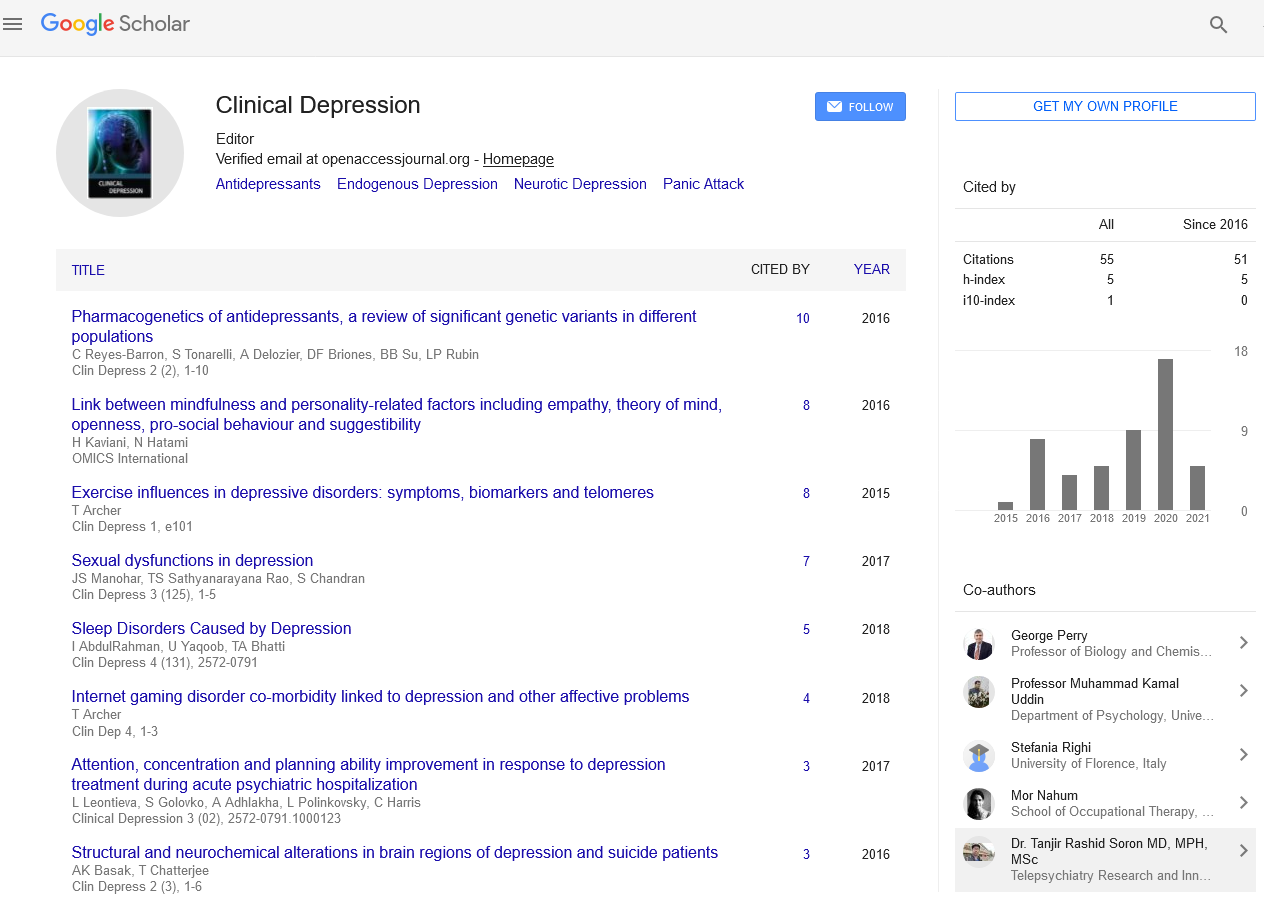
Clinical Depression received 89 citations as per Google Scholar report