Perspective - (2025) Volume 15, Issue 6
Received: 02-Dec-2025, Manuscript No. jeat-26-188663;
Editor assigned: 04-Dec-2025, Pre QC No. P-188663;
Reviewed: 18-Dec-2025, QC No. Q-188663;
Revised: 23-Dec-2025, Manuscript No. R-188663;
Published:
30-Dec-2025
, DOI: 10.37421/2161-0525.2025.15.883
Citation: Smith, John. ”Wastewater Pollution: Devastating
Aquatic Ecosystems and Organisms.” J Environ Anal Toxicol 15 (2025):883.
Copyright: © 2025 Smith J. This is an open-access article distributed under the terms of the Creative Commons Attribution License, which permits unrestricted use, distribution
and reproduction in any medium, provided the original author and source are credited.
The ecological integrity of aquatic ecosystems is increasingly threatened by anthropogenic activities, with wastewater discharge emerging as a significant source of pollution. This pollution introduces a complex array of substances that can profoundly impact the health and functioning of aquatic life. This introduction aims to synthesize findings from recent research that illuminate the multifaceted effects of various wastewater contaminants on different components of aquatic environments. Early investigations have highlighted the pervasive toxic effects of common wastewater contaminants, specifically heavy metals and pharmaceuticals, on various aquatic organisms. These studies underscore how chronic exposure to these substances disrupts physiological processes, impacts reproduction, and can lead to population declines in sensitive species. The research thus emphasizes the critical need for improved wastewater treatment strategies to mitigate these ecological risks [1].
Further research has focused on the bioaccumulation of microplastics and associated chemical pollutants in fish from urban rivers that receive treated and untreated wastewater. These studies demonstrate a significant correlation between the concentration of microplastics found in fish tissues and the level of pollution present in the receiving waters. This observation raises serious concerns regarding food web contamination and the potential ramifications for human health [2].
Another critical area of investigation involves the ecotoxicological impact of pharmaceutical residues, particularly antibiotics and analgesics, on primary producers such as algae and cyanobacteria. Findings reveal that even at low, environmentally relevant concentrations, these compounds can impair essential processes like photosynthesis and growth. This impairment can potentially disrupt the very base of the aquatic food web. The studies also frequently note the alarming development of antibiotic resistance within microbial communities exposed to these residues [3].
Compounding the issue, research has examined the synergistic toxicity of heavy metals, specifically cadmium and lead, when combined with emerging contaminants like endocrine-disrupting chemicals (EDCs). This co-exposure has been shown to lead to amplified adverse effects on the reproductive systems and developmental processes of aquatic organisms. These findings strongly suggest that the combined impact of multiple pollutants poses a greater ecological threat than individual contaminants acting in isolation [4].
The impact of treated versus untreated wastewater discharge on benthic macroinvertebrate communities in receiving rivers has also been a subject of significant study. Results consistently indicate a notable reduction in species diversity and abundance in areas that receive untreated effluent. This highlights the effectiveness of wastewater treatment in preserving ecosystem health, although it also identifies residual impacts even from treated water [5].
Studies exploring the genotoxic and mutagenic effects of complex wastewater mixtures on aquatic organisms have provided alarming insights. Specifically, research focusing on DNA damage in fish liver cells has shown a dose-dependent increase in genotoxicity. This indicates that the combined effect of various pollutants present in wastewater is capable of causing not only acute harm but also potentially heritable damage to aquatic populations [6].
The impact of nitrogen and phosphorus compounds, originating from wastewater, on algal blooms and subsequent oxygen depletion in lake ecosystems has been thoroughly evaluated. These studies demonstrate how elevated nutrient levels, a common characteristic of inadequately treated wastewater, directly lead to eutrophication. This process significantly affects dissolved oxygen levels, thereby threatening the survival of fish and other aquatic life [7].
Furthermore, the effects of chronic exposure to mixtures of pesticides, frequently found in agricultural runoff and wastewater, on amphibians have been examined. This research identifies a range of adverse outcomes, including developmental abnormalities, reduced immune function, and increased susceptibility to diseases. These findings underscore the particular vulnerability of amphibians to complex chemical pollution found in aquatic environments [8].
Investigations into the impact of thermally polluted wastewater on the metabolic rates and oxygen consumption of fish have revealed significant stress on aquatic organisms. Elevated water temperatures resulting from industrial and domestic wastewater discharge increase metabolic demand, which can lead to reduced growth and increased mortality, particularly when this thermal stress is combined with other contaminants [9].
Finally, the behavioral and foraging responses of zooplankton to elevated levels of dissolved organic matter and suspended solids in wastewater have been studied. These studies show that high turbidity and the presence of organic pollutants can impair visual cues, reduce feeding rates, and alter predator-prey interactions. Such disruptions can significantly impact the overall structure of zooplankton communities, which form a crucial part of the aquatic food web [10].
The pervasive contamination of aquatic ecosystems by wastewater effluent necessitates a thorough understanding of the specific pollutants and their diverse impacts on aquatic organisms. Research has consistently identified heavy metals and pharmaceuticals as key toxic components within common wastewater discharges. These substances exert detrimental effects through chronic exposure, disrupting vital physiological processes, impairing reproductive capabilities, and ultimately leading to declines in populations of sensitive species, emphasizing the urgent need for enhanced wastewater treatment technologies to mitigate these escalating ecological risks [1].
Beyond traditional chemical pollutants, the growing issue of microplastic pollution, often exacerbated by wastewater, is a significant concern. Studies focusing on microplastic accumulation in fish from urban rivers reveal a direct correlation between the presence of these particles in fish tissues and the level of wastewater contamination in their habitat. This bioaccumulation pathway raises alarms about the potential for widespread food web contamination and subsequent risks to human health through the consumption of contaminated seafood [2].
Pharmaceutical residues, including antibiotics and analgesics, present another insidious threat, particularly to the foundational elements of aquatic food webs. Research demonstrates that even at concentrations typically found in the environment, these compounds can significantly inhibit photosynthesis and growth in primary producers like algae and cyanobacteria. This disruption at the producer level has cascading effects throughout the ecosystem, coupled with the concerning emergence of antibiotic resistance in microbial populations exposed to these residues [3].
In many instances, aquatic organisms are not exposed to single pollutants but to complex mixtures. The synergistic toxicity observed when heavy metals like cadmium and lead are combined with emerging contaminants such as endocrine-disrupting chemicals (EDCs) is particularly alarming. Such co-exposures amplify adverse effects on reproductive health and developmental processes, indicating that the combined burden of pollution is often more damaging than the sum of its individual parts [4].
The distinction between treated and untreated wastewater discharge is crucial for understanding ecosystem health. Studies comparing benthic macroinvertebrate communities have consistently shown a marked decrease in species diversity and abundance in areas receiving untreated effluent. While treated wastewater demonstrates a significant improvement in mitigating these impacts, residual effects from treated water still warrant attention and further investigation [5].
Beyond direct toxicity, wastewater mixtures can induce genotoxic and mutagenic effects. Research using fish liver cells has documented a dose-dependent increase in DNA damage when exposed to complex wastewater pollutants. This highlights the potential for wastewater to cause not only immediate harm but also to introduce heritable genetic damage into aquatic populations, with long-term evolutionary implications [6].
The consequences of nutrient enrichment from wastewater, specifically nitrogen and phosphorus, are profoundly evident in lake ecosystems. The resulting eutrophication leads to excessive algal blooms, which in turn cause severe oxygen depletion. This reduction in dissolved oxygen critically threatens the survival of fish and other oxygen-dependent aquatic organisms, fundamentally altering ecosystem dynamics [7].
Amphibians, with their permeable skin and reliance on aquatic environments, are particularly susceptible to the chronic effects of pollutants found in wastewater. Mixtures of pesticides commonly present in wastewater have been linked to significant developmental abnormalities, compromised immune function, and increased disease susceptibility in amphibian populations, underscoring their vulnerability to complex chemical mixtures [8].
Thermal pollution from wastewater discharge, whether industrial or domestic, adds another layer of stress to aquatic life. Elevated water temperatures increase the metabolic demands of fish, potentially leading to reduced growth rates and increased mortality. This thermal stress can be particularly devastating when it co-occurs with other chemical contaminants present in the wastewater [9].
Finally, the physical characteristics of wastewater, such as dissolved organic matter and suspended solids, can also disrupt aquatic ecosystems. High turbidity and the presence of organic pollutants can impair the ability of zooplankton to detect prey or avoid predators, leading to reduced feeding efficiency and altered community structures. These physical and chemical impacts at the zooplankton level can have ripple effects throughout the entire aquatic food web [10].
Recent research has highlighted the significant ecological risks posed by wastewater discharge into aquatic environments. Studies reveal that common contaminants like heavy metals, pharmaceuticals, and microplastics cause physiological disruptions, reproductive issues, and population declines in various aquatic organisms. Pharmaceutical residues impair primary producers and contribute to antibiotic resistance, while mixtures of pollutants, including heavy metals and endocrine disruptors, exhibit synergistic toxicity. untreated wastewater severely impacts benthic communities, and complex mixtures can cause genotoxic damage. Nutrient enrichment leads to eutrophication and oxygen depletion, threatening fish survival. Amphibians are particularly vulnerable to pesticide mixtures, showing developmental and immune impairments. Thermal pollution from wastewater increases metabolic stress in fish. Additionally, dissolved organic matter and suspended solids affect zooplankton behavior and foraging, impacting food web dynamics. These findings collectively underscore the urgent need for advanced wastewater treatment to protect aquatic ecosystem health.
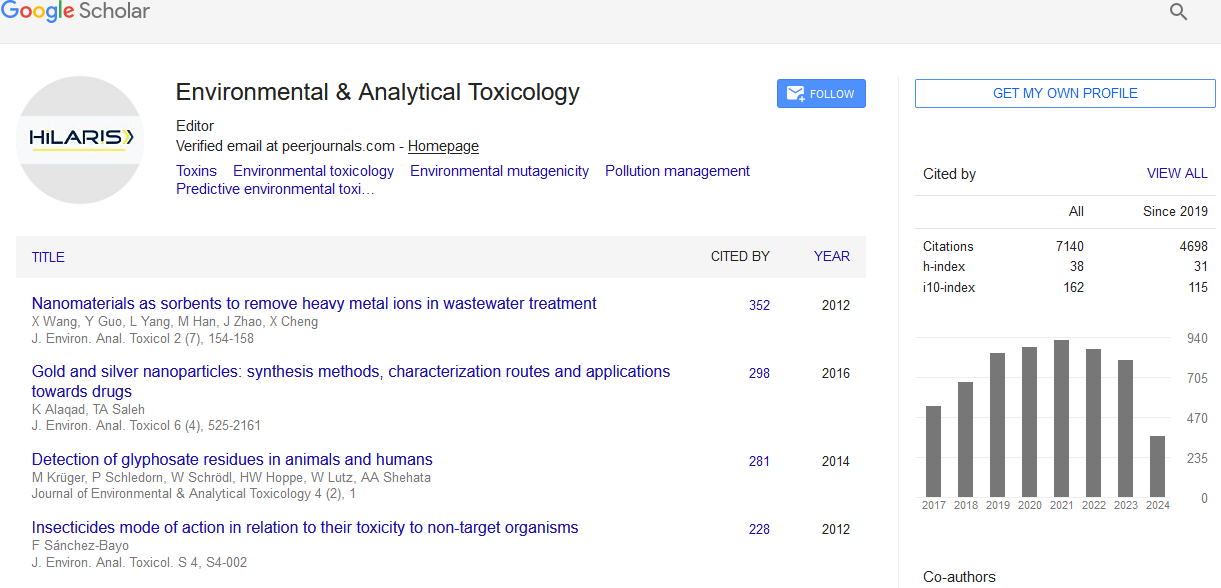
Environmental & Analytical Toxicology received 6818 citations as per Google Scholar report