Commentary - (2025) Volume 16, Issue 5
Received: 01-Oct-2025, Manuscript No. jvst-26-188134;
Editor assigned: 03-Oct-2025, Pre QC No. P-188134;
Reviewed: 17-Oct-2025, QC No. Q-188134;
Revised: 22-Oct-2025, Manuscript No. R-188134;
Published:
29-Oct-2025
, DOI: 10.37421/2157-7579.2025.16.326
Citation: Bello, Ibrahim. ”Veterinary Medicine Advances: Enhancing
Animal Health.” J Vet Sci Techno 16 (2025):326.
Copyright: © 2025 Bello I. This is an open-access article distributed under the terms of the Creative Commons Attribution License, which permits unrestricted use, distribution
and reproduction in any medium, provided the original author and source are credited.
The field of veterinary medicine is continuously evolving, driven by a commitment to improving animal health and welfare. This progress is underpinned by dedicated research into a wide array of animal species and their specific health challenges. Recent advancements in diagnostic techniques are significantly enhancing our ability to detect and manage diseases in companion animals, utilizing molecular diagnostics and artificial intelligence for early detection and accurate identification of pathogens [1].
Feline infectious peritonitis (FIP) remains a significant concern for cat owners and veterinarians worldwide. Ongoing research is focused on discovering novel therapeutic strategies that can effectively combat this devastating disease. Studies are exploring the efficacy of new antiviral compounds and immunomodulatory agents, offering hope for improved treatment outcomes [2].
In livestock production, tick-borne diseases pose a substantial threat to animal health and economic productivity. Understanding the epidemiology and geographical distribution of these diseases is crucial for developing effective control measures. Integrated pest management strategies are being refined to combat tick infestations and prevent disease transmission [3].
Canine inflammatory bowel disease (IBD) is a complex gastrointestinal disorder characterized by chronic inflammation of the intestines. The role of the gut microbiota in the pathogenesis of IBD is an area of intense investigation. Elucidating the intricate interactions between the gut microbiome, host immune system, and intestinal barrier function is key to developing targeted therapies [4].
Avian influenza virus continues to be a major concern for the poultry industry, with significant economic implications. The development of effective vaccines is paramount in controlling outbreaks and preventing viral spread. Research into novel vaccine candidates focuses on their immunogenicity and ability to reduce viral shedding and disease severity [5].
Managing chronic pain in companion animals is a growing area of focus within veterinary medicine. Improving the quality of life for animals suffering from persistent pain requires a comprehensive approach. This involves reviewing and advancing both pharmacological and non-pharmacological pain management strategies, including new analgesics and rehabilitation techniques [6].
Antimicrobial resistance (AMR) presents a formidable challenge across all sectors of medicine, including veterinary practice. The responsible use of antimicrobials is essential to slow the development and spread of resistance. Understanding the current AMR landscape and exploring alternative strategies are critical for preserving the efficacy of antimicrobial drugs in animal health [7].
In response to the escalating threat of multidrug-resistant bacterial infections in animals, research into alternative therapies is gaining momentum. Bacteriophage therapy is emerging as a promising alternative to conventional antibiotics. Studies are investigating the efficacy of bacteriophages in overcoming resistance mechanisms and clearing infections [8].
Veterinary anesthesiology plays a vital role in ensuring the safety and successful outcome of surgical procedures. Advancements in anesthetic protocols and monitoring techniques are particularly important for critically ill animals. The integration of multimodal analgesia and sophisticated monitoring devices aims to optimize patient care and recovery [9].
Aquaculture is a rapidly growing industry, and disease management is a key factor in its sustainability. Understanding the genetic basis of disease resistance in farmed fish is crucial for developing resilient populations. Identifying genes associated with immunity and disease resilience can inform selective breeding programs to enhance disease management strategies [10].
The landscape of veterinary diagnostics is rapidly advancing, with a significant emphasis on companion animal health. Novel molecular diagnostic techniques are proving instrumental in the early detection of diseases and the precise identification of pathogens, further augmented by the integration of artificial intelligence for data interpretation to enhance accuracy and efficiency [1].
Feline infectious peritonitis (FIP) continues to be a critical area of research, with a strong focus on developing effective therapeutic interventions. Investigations into novel antiviral compounds and immunomodulatory agents are yielding promising results, potentially opening new avenues for managing this severe feline illness and improving the prognosis for affected cats [2].
In the realm of livestock, the control and understanding of tick-borne diseases remain paramount. Current research is dedicated to providing up-to-date epidemiological data on the prevalence of such diseases across various regions. The development and implementation of integrated pest management strategies are central to effective tick control and subsequent disease prevention efforts [3].
The intricate relationship between the gut microbiota and canine inflammatory bowel disease (IBD) is a subject of ongoing scientific inquiry. This research delves into the complex interplay among the gut microbiome, the host's immune system, and the integrity of the intestinal barrier in the development of IBD. The exploration of potential therapeutic interventions that target the gut microbiota is a key aspect of this work [4].
The development of effective vaccines against economically significant diseases, such as avian influenza virus, is a priority in poultry health. Studies are reporting on the creation and validation of new vaccine formulations, detailing their immunogenicity and efficacy in preventing viral spread and mitigating disease severity in poultry populations [5].
Veterinary pain management, especially for chronic conditions in companion animals, is an area experiencing significant advancements. The review of current pharmacological and non-pharmacological approaches, including novel analgesics and rehabilitation techniques, aims to enhance the quality of life for animals experiencing persistent pain [6].
The growing concern of antimicrobial resistance (AMR) in veterinary settings necessitates a comprehensive understanding of its contributing factors and consequences. This research underscores the importance of promoting responsible antimicrobial use and exploring alternative strategies to effectively combat the spread of AMR in animal populations [7].
As an alternative to traditional antibiotics, bacteriophage therapy is being explored for its potential to treat multidrug-resistant bacterial infections in animals. Research in this area presents data on the efficacy of phages in overcoming resistance mechanisms and successfully clearing infections, offering a promising new therapeutic option [8].
Innovations in veterinary anesthesiology are crucial for enhancing patient safety during surgical procedures, particularly for critically ill animals. Advancements in anesthetic protocols, multimodal analgesia, and the utilization of sophisticated monitoring devices are central to improving outcomes and recovery [9].
For the aquaculture industry, understanding the genetic underpinnings of disease resistance in farmed fish is essential for sustainability. This research identifies key genes associated with immunity and resilience, providing valuable insights for selective breeding programs aimed at improving disease management in fish populations [10].
Recent advancements in veterinary medicine are enhancing animal health across various species. In companion animals, novel diagnostic techniques, including molecular methods and AI, are improving disease detection and pathogen identification. Therapeutic research is yielding new approaches for conditions like feline infectious peritonitis, while the role of gut microbiota in canine IBD is being elucidated. For livestock, epidemiology and control of tick-borne diseases are key, alongside the development of vaccines for avian influenza. Pain management in companion animals is improving with new pharmacological and non-pharmacological strategies. The critical issues of antimicrobial resistance and the exploration of bacteriophage therapy offer alternatives to antibiotics. Advancements in veterinary anesthesiology focus on patient safety in critically ill animals. Finally, genomic approaches are being used to enhance disease resistance in farmed fish, contributing to sustainable aquaculture.
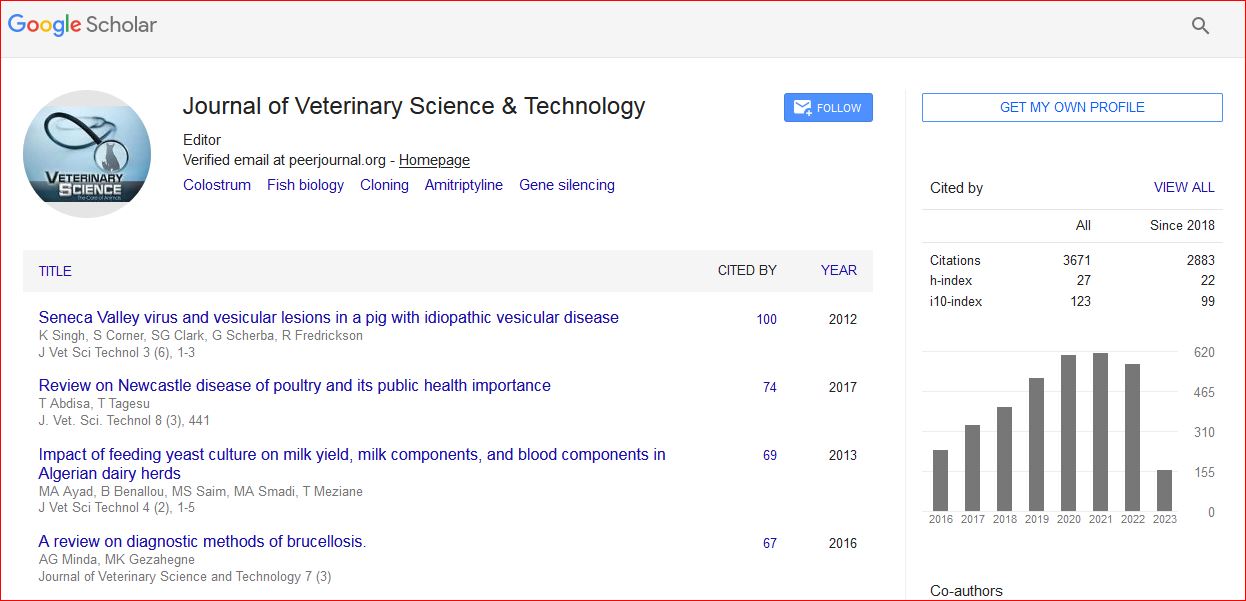
Veterinary Science & Technology received 4472 citations as per Google Scholar report