Brief Report - (2025) Volume 14, Issue 4
Received: 01-Dec-2025, Manuscript No. jms-25-177887;
Editor assigned: 03-Dec-2025, Pre QC No. P-177887;
Reviewed: 17-Dec-2025, QC No. Q-177887;
Revised: 22-Dec-2025, Manuscript No. R-177887;
Published:
29-Dec-2025
, DOI: 10.37421/2167-0943.2024.13.422
Citation: Mabuza, Lerato. ”Understanding Insulin Resistance: Multifactorial Causes and Treatments.” J Metabolic Synd 14 (2025):422.
Copyright: © 2025 Mabuza L. This is an open-access article distributed under the terms of the Creative Commons Attribution License, which permits unrestricted use, distribution and reproduction in any medium, provided the original author and source are credited.
This article offers a comprehensive overview of insulin resistance, delving into its molecular underpinnings like impaired insulin signaling, mitochondrial dysfunction, and endoplasmic reticulum stress. It highlights current and emerging therapeutic avenues, including lifestyle modifications, pharmacological interventions, and novel molecular targets, emphasizing the multifactorial nature of the condition and the need for personalized treatment strategies [1].
Here's the thing: chronic low-grade inflammation, especially in the context of obesity, significantly contributes to the development of insulin resistance and type 2 diabetes. This review explores the intricate crosstalk between immune cells, adipose tissue, and insulin signaling pathways, illustrating how inflammatory mediators impair insulin action. It also discusses how lifestyle interventions can mitigate this inflammatory burden, offering a pathway to improved metabolic health [2].
Insulin resistance, often seen as a precursor to type 2 diabetes, involves a complex interplay of genetic and environmental factors. This piece explores various pathophysiological mechanisms, from defects in insulin receptor signaling to systemic inflammation and oxidative stress. It also touches on current and prospective therapeutic approaches aimed at restoring insulin sensitivity, underscoring the broad impact of this metabolic disorder on overall health [3].
What this really means is that lifestyle interventions remain a cornerstone in managing and preventing insulin resistance. This review examines recent advancements in dietary patterns, physical activity recommendations, and behavioral strategies that effectively improve insulin sensitivity. It emphasizes personalized approaches, recognizing that individual responses to lifestyle changes can vary significantly, pushing for more tailored intervention strategies [4].
Let's break it down: the gut microbiota plays a surprisingly significant role in the development and progression of insulin resistance. This article explores the mechanisms by which gut dysbiosisâ??imbalances in gut microbial communitiesâ??can influence host metabolism, affecting everything from inflammatory responses to short-chain fatty acid production. Understanding this intricate link opens new avenues for therapeutic interventions targeting the gut microbiome to improve insulin sensitivity [5].
Here's the thing about insulin resistance: it's not just about what you eat or how much you move; genetics and epigenetics also play a major role. This paper dives into how inherited predispositions and environmental modifications of gene expression contribute to an individual's susceptibility to insulin resistance and type 2 diabetes. It highlights the potential for personalized medicine approaches based on an individual's genetic and epigenetic profile [6].
It's clear that mitochondrial dysfunction is a key player in the pathogenesis of insulin resistance. This review critically assesses how impaired mitochondrial biogenesis, altered oxidative phosphorylation, and increased reactive oxygen species production contribute to the cellular inability to respond effectively to insulin. It suggests that therapeutic strategies aimed at improving mitochondrial health could offer new ways to combat insulin resistance [7].
Let's focus on skeletal muscle, a primary site of glucose disposal. When it becomes insulin resistant, it significantly impacts systemic glucose homeostasis. This article explores the specific molecular mechanisms underlying skeletal muscle insulin resistance, including impairments in glucose transport and glycogen synthesis. It also identifies potential therapeutic targets within muscle tissue, from exercise mimetics to novel pharmacological agents, to improve whole-body insulin sensitivity [8].
Adipose tissue, often just thought of as fat storage, is actually a crucial endocrine organ. Here's the thing: when it dysfunctions, it's a major contributor to insulin resistance and type 2 diabetes. This piece delves into how unhealthy adipose tissue expansion, chronic inflammation, and altered adipokine secretion impair insulin signaling in other tissues, highlighting its central role in metabolic health and disease [9].
Endoplasmic reticulum (ER) stress is a significant, yet often overlooked, contributor to insulin resistance. This review explains how disruptions in ER homeostasis activate the unfolded protein response (UPR), leading to impaired insulin signaling and reduced glucose uptake in various tissues. Understanding this cellular stress pathway provides another layer of insight into the complex etiology of insulin resistance and potential targets for intervention [10].
Insulin resistance stands as a pervasive metabolic disorder, often seen as a precursor to type 2 diabetes. It involves a complex interplay of genetic and environmental factors, encompassing various pathophysiological mechanisms from defects in insulin receptor signaling to systemic inflammation and oxidative stress [3]. This condition delves into its molecular underpinnings like impaired insulin signaling, mitochondrial dysfunction, and endoplasmic reticulum stress. It highlights current and emerging therapeutic avenues, including lifestyle modifications, pharmacological interventions, and novel molecular targets, emphasizing the multifactorial nature of the condition and the need for personalized treatment strategies [1]. The broad impact of this metabolic disorder on overall health is significant, underscoring the critical need for effective therapeutic approaches aimed at restoring insulin sensitivity [3].
Here's the thing: chronic low-grade inflammation, especially in the context of obesity, significantly contributes to the development of insulin resistance and type 2 diabetes [2]. This intricate crosstalk between immune cells, adipose tissue, and insulin signaling pathways illustrates how inflammatory mediators impair insulin action [2]. Adipose tissue, often just thought of as fat storage, is actually a crucial endocrine organ, and when it dysfunctions, it's a major contributor to insulin resistance and type 2 diabetes [9]. Unhealthy adipose tissue expansion, chronic inflammation, and altered adipokine secretion all impair insulin signaling in other tissues, highlighting its central role in metabolic health and disease [9]. Additionally, endoplasmic reticulum (ER) stress is a significant, yet often overlooked, contributor to insulin resistance [10]. Disruptions in ER homeostasis activate the unfolded protein response (UPR), which then leads to impaired insulin signaling and reduced glucose uptake in various tissues. Understanding this cellular stress pathway provides another layer of insight into the complex etiology of insulin resistance and potential targets for intervention [10].
It's clear that mitochondrial dysfunction is a key player in the pathogenesis of insulin resistance [7]. Impaired mitochondrial biogenesis, altered oxidative phosphorylation, and increased reactive oxygen species production all contribute to the cellular inability to respond effectively to insulin. This suggests that therapeutic strategies aimed at improving mitochondrial health could offer new ways to combat insulin resistance [7]. Let's break it down: the gut microbiota plays a surprisingly significant role in the development and progression of insulin resistance [5]. The mechanisms by which gut dysbiosisâ??imbalances in gut microbial communitiesâ??can influence host metabolism, affecting everything from inflammatory responses to short-chain fatty acid production, are profound. Understanding this intricate link opens new avenues for therapeutic interventions targeting the gut microbiome to improve insulin sensitivity [5]. Let's also focus on skeletal muscle, a primary site of glucose disposal [8]. When it becomes insulin resistant, it significantly impacts systemic glucose homeostasis. The specific molecular mechanisms underlying skeletal muscle insulin resistance include impairments in glucose transport and glycogen synthesis, identifying potential therapeutic targets within muscle tissue to improve whole-body insulin sensitivity [8].
Here's the thing about insulin resistance: it's not just about what you eat or how much you move; genetics and epigenetics also play a major role [6]. Inherited predispositions and environmental modifications of gene expression contribute to an individual's susceptibility to insulin resistance and type 2 diabetes, highlighting the potential for personalized medicine approaches based on an individual's genetic and epigenetic profile [6]. What this really means is that lifestyle interventions remain a cornerstone in managing and preventing insulin resistance [4]. Recent advancements in dietary patterns, physical activity recommendations, and behavioral strategies effectively improve insulin sensitivity. It emphasizes personalized approaches, recognizing that individual responses to lifestyle changes can vary significantly, pushing for more tailored intervention strategies [4]. These interventions can also mitigate the inflammatory burden, offering a pathway to improved metabolic health [2].
Insulin resistance represents a complex metabolic disorder, often preceding Type 2 Diabetes, driven by a combination of genetic and environmental factors. At its core, the condition involves impaired insulin signaling, mitochondrial dysfunction, and endoplasmic reticulum stress at a molecular level [1, 3, 7, 10]. Chronic low-grade inflammation, particularly in the context of obesity, also significantly contributes by impairing insulin action through intricate crosstalk between immune cells and adipose tissue [2]. Beyond these internal cellular mechanisms, the gut microbiota plays a surprisingly significant role, with dysbiosis influencing host metabolism and inflammatory responses, opening new avenues for therapeutic interventions [5]. Hereditary predispositions and environmental gene modifications also dictate an individual's susceptibility, highlighting the relevance of personalized medicine [6]. Specific tissues are key players; skeletal muscle, a primary site for glucose disposal, shows impaired glucose transport and glycogen synthesis when insulin resistant, impacting systemic glucose homeostasis [8]. Adipose tissue, functioning as a crucial endocrine organ, contributes to resistance through unhealthy expansion, inflammation, and altered adipokine secretion [9]. What this really means is that lifestyle interventions, encompassing dietary patterns, physical activity, and behavioral strategies, are fundamental in managing and preventing insulin resistance, often offering a pathway to improved metabolic health by mitigating inflammatory burden [2, 4]. Pharmacological interventions and novel molecular targets are also explored, underscoring the condition's multifactorial nature and the need for personalized treatment strategies to restore insulin sensitivity [1, 3, 8].
None
None
Indexed at, Google Scholar, Crossref
Indexed at, Google Scholar, Crossref
Indexed at, Google Scholar, Crossref
Indexed at, Google Scholar, Crossref
Indexed at, Google Scholar, Crossref
Indexed at, Google Scholar, Crossref
Indexed at, Google Scholar, Crossref
Indexed at, Google Scholar, Crossref
Indexed at, Google Scholar, Crossref
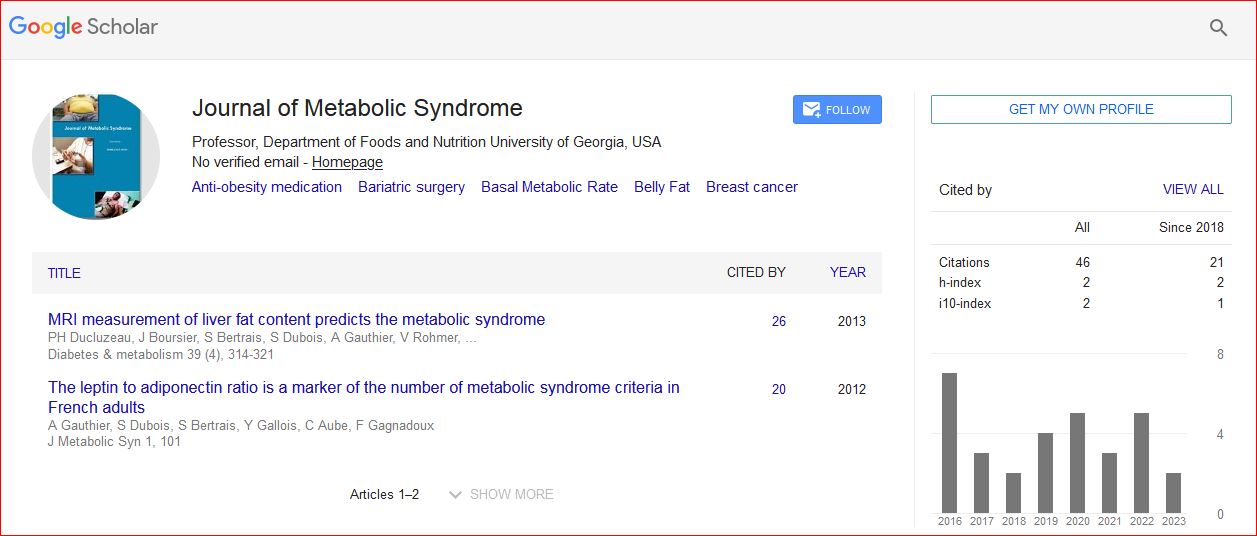
Journal of Metabolic Syndrome received 48 citations as per Google Scholar report