Perspective - (2025) Volume 10, Issue 4
Received: 01-Aug-2025, Manuscript No. jidm-26-188078;
Editor assigned: 04-Aug-2025, Pre QC No. P-188078;
Reviewed: 18-Aug-2025, QC No. Q-188078;
Revised: 22-Aug-2025, Manuscript No. R-188078;
Published:
29-Aug-2025
, DOI: 10.37421/2576-1420.2025.10.415
Citation: Patel, Sneha. ”Understanding and Combating Infectious
Disease Dynamics.” J Infect Dis Med 10 (2025):415.
Copyright: © 2025 Patel S. This is an open-access article distributed under the terms of the Creative Commons Attribution License, which permits unrestricted use, distribution
and reproduction in any medium, provided the original author and source are credited.
Understanding the multifaceted nature of infectious disease risk factors is paramount for developing effective prevention strategies in a globalized world. These factors encompass a broad spectrum, including individual behaviors such as vaccination status and hygiene practices, which significantly influence susceptibility and transmission [1].
Socioeconomic determinants, including poverty and access to healthcare, create environments where infectious diseases can disproportionately affect vulnerable populations [1].
Furthermore, environmental exposures, such as contaminated water and air pollution, play a critical role in the spread of pathogens [1].
The inherent characteristics of infectious agents, including their transmissibility and virulence, also dictate the dynamics of disease outbreaks [1].
Key prevention strategies logically revolve around bolstering host immunity through vaccination and promoting healthy lifestyle choices that enhance resilience [1].
Public health interventions, encompassing improved sanitation, vector control, and rapid diagnostic testing, are crucial for mitigating disease spread on a community and global scale [1].
Community engagement and education are vital for fostering adherence to preventive measures and building resilient populations against ever-evolving infectious threats [1].
Emerging infectious diseases present a significant and ongoing global challenge, frequently driven by factors such as increased human-animal contact, globalization, and the pervasive effects of climate change [2].
Effective prevention of these emergent threats necessitates a multi-pronged approach, including the enhancement of surveillance systems for early detection of novel pathogens [2].
This approach also demands the rapid development and deployment of accurate diagnostics and effective vaccines, alongside robust international collaboration to share knowledge and resources [2].
Antimicrobial stewardship is also critically important in the ongoing battle to combat the growing threat of drug-resistant infections [2].
Public health preparedness must be continuously assessed and rigorously strengthened to ensure effective responses to outbreaks and potential pandemics [2].
Vaccination stands as one of the most profoundly powerful tools available for infectious disease prevention, offering a direct and impactful means to protect individuals and communities [3].
The historical success of vaccines in eradicating or significantly reducing the incidence of devastating diseases like smallpox and polio serves as irrefutable testament to their efficacy and importance [3].
However, the persistent challenge of vaccine hesitancy, often fueled by the proliferation of misinformation and a general lack of public trust, continues to hinder progress [3].
Consequently, effective communication strategies that directly address public concerns, coupled with robust vaccine safety monitoring systems, are absolutely essential to maintain high vaccination coverage rates and achieve the crucial goal of herd immunity for a wide range of preventable diseases [3].
The profound influence of social and economic determinants on infectious disease risk cannot be overstated, as these factors fundamentally shape health outcomes [4].
Conditions such as poverty, inadequate housing, limited access to clean water and sanitation, and pervasive food insecurity collectively create environments where infectious agents can more easily thrive and spread [4].
These systemic disparities also significantly affect an individual's ability to access essential healthcare services, including vital preventive measures like vaccinations and timely, effective early treatment [4].
Therefore, addressing these upstream socioeconomic factors through targeted public health policies and comprehensive socioeconomic interventions is absolutely crucial for reducing existing health inequities and ultimately improving infectious disease outcomes for all [4].
Environmental factors play an undeniably critical role in the complex transmission pathways of infectious diseases, influencing their spread and prevalence [5].
Alterations in land use patterns, widespread deforestation, and intensive agricultural practices can inadvertently bring humans into closer and more frequent contact with animal reservoirs of disease, increasing the risk of zoonotic spillover [5].
Climate change, characterized by its associated shifts in temperature, precipitation patterns, and the increased frequency of extreme weather events, can further exacerbate these risks by expanding the geographic range of disease vectors, such as mosquitoes and ticks, thereby increasing the incidence of vector-borne illnesses like malaria, dengue fever, and Lyme disease [5].
Consequently, the active protection of natural ecosystems and the diligent mitigation of climate change are essential global actions for effective infectious disease prevention [5].
Antimicrobial resistance (AMR) has emerged as a rapidly escalating global health crisis, rendering previously manageable common infections increasingly difficult to treat and posing a significant threat to the very foundations of modern medical practice [6].
Multiple factors contribute to the acceleration of AMR, including the widespread overuse and misuse of antibiotics in both human and animal healthcare sectors, as well as inadequate infection prevention and control measures across various settings [6].
Therefore, multifaceted strategies to combat AMR must encompass the promotion of responsible antibiotic use, the urgent development of novel antimicrobial agents and viable alternatives, and the significant strengthening of surveillance and infection control programs [6].
Ultimately, effective global collaboration is indispensable to comprehensively address this multifaceted and complex challenge [6].
The recent COVID-19 pandemic served as a stark and undeniable reminder of the critical importance of possessing robust public health infrastructure and maintaining rapid response capabilities to effectively manage infectious disease outbreaks [7].
Factors that significantly contributed to the pandemic's rapid global spread included extensive international travel, high population densities in urban areas, and widely varying levels of national preparedness and response [7].
Effective prevention and control strategies implemented during the pandemic involved a crucial combination of public health measures, such as social distancing, mask-wearing, widespread testing, diligent contact tracing, and extensive vaccination campaigns [7].
The invaluable lessons learned from this unprecedented pandemic are absolutely crucial for enhancing our preparedness for future infectious disease threats [7].
Vector-borne diseases continue to represent a significant and persistent public health concern on a global scale, impacting millions of lives annually [8].
The transmission of various pathogens, including viruses, bacteria, and parasites, by arthropod vectors such as mosquitoes, ticks, and fleas is intricately influenced by a complex interplay of environmental conditions, human behavior, and specific pathogen-vector interactions [8].
Prevention strategies primarily focus on effective vector control, employing measures like targeted insecticide application, strategic habitat modification to reduce breeding grounds, and the promotion of personal protective equipment to minimize exposure [8].
Crucially, comprehensive public education on recognizing and avoiding vector bites, alongside prompt diagnosis and effective treatment of infected individuals, is also vital to effectively reduce the overall disease burden [8].
Healthcare-associated infections (HAIs) present a substantial and ongoing challenge within clinical settings, invariably leading to increased patient morbidity, elevated mortality rates, and significant escalations in overall healthcare costs [9].
Key risk factors contributing to the development of HAIs include the performance of invasive medical procedures, the presence of compromised immune systems in vulnerable patients, and, critically, inadequate adherence to established infection control protocols by healthcare personnel [9].
Prevention of HAIs relies heavily on the stringent and consistent application of fundamental practices such as meticulous hand hygiene, thorough environmental disinfection, effective sterilization of all medical equipment, and the systematic implementation of evidence-based care bundles specifically designed for common HAIs, including central line-associated bloodstream infections and catheter-associated urinary tract infections [9].
Human behavior demonstrably exerts a significant impact on the transmission dynamics of infectious diseases, influencing their spread within and between communities [10].
Everyday practices, such as inadequate hand hygiene, maintaining close physical contact with infected individuals, and non-adherence to recommended vaccination schedules, all substantially increase an individual's personal risk of contracting and subsequently spreading infections [10].
Conversely, the conscious adoption of protective preventive behaviors, including frequent and thorough handwashing, practicing proper respiratory etiquette, and maintaining appropriate physical distance during periods of heightened outbreak risk, can effectively curb and control disease transmission [10].
Consequently, well-designed and impactful public health campaigns and comprehensive educational initiatives are vital for promoting widespread awareness and fostering the consistent adoption of protective behaviors within communities [10].
The global epidemiology and control of infectious diseases necessitate a thorough understanding of numerous risk factors. These encompass individual behavioral patterns, such as vaccination status and personal hygiene, alongside socioeconomic determinants like poverty and healthcare accessibility, which significantly shape disease vulnerability [1].
Environmental exposures, including contaminated water and air pollution, create pathways for pathogen transmission, while the inherent characteristics of pathogens themselves, such as their transmissibility and virulence, dictate their potential for spread [1].
Core prevention strategies focus on enhancing host immunity through vaccination and promoting healthy lifestyles that bolster resilience [1].
Public health interventions, including advancements in sanitation, effective vector control measures, and rapid diagnostic testing, are indispensable for limiting the dissemination of infectious agents [1].
Furthermore, robust community engagement and comprehensive educational programs are vital for encouraging adherence to preventive measures and cultivating populations capable of withstanding infectious threats [1].
The emergence of novel infectious diseases constitutes a significant and persistent global challenge, often exacerbated by increased human-animal interactions, globalization, and the far-reaching impacts of climate change [2].
Addressing these emerging threats requires a multifaceted preventive approach, prioritizing enhanced surveillance systems for the early detection of unknown pathogens [2].
This also demands the swift development and deployment of diagnostic tools and vaccines, coupled with strengthened international cooperation to share crucial information and resources [2].
Antimicrobial stewardship remains a critical component in the ongoing effort to combat the escalating crisis of drug-resistant infections [2].
Continuous assessment and reinforcement of public health preparedness are essential to ensure effective responses to outbreaks and potential pandemics [2].
Vaccination has been unequivocally established as one of the most potent and effective tools for the prevention of infectious diseases, offering a direct shield against numerous pathogens [3].
The historical triumphs of vaccination programs, leading to the eradication of diseases like smallpox and the near-elimination of polio, underscore their profound impact on public health [3].
However, the persistent issue of vaccine hesitancy, often driven by misinformation and a deficit in public trust, presents an ongoing impediment to achieving widespread immunity [3].
Therefore, the implementation of effective communication strategies to address public concerns, alongside rigorous vaccine safety monitoring, is crucial for maintaining high vaccination rates and achieving herd immunity for vaccine-preventable diseases [3].
The intricate relationship between social and economic determinants and infectious disease risk is profound, influencing both susceptibility and outcomes [4].
Conditions such as poverty, inadequate housing, and limited access to basic necessities like clean water and sanitation create fertile ground for the proliferation and transmission of infectious agents [4].
These disparities also directly impact individuals' ability to access healthcare services, including essential preventive interventions such as vaccinations and timely medical treatment [4].
Consequently, addressing these fundamental socioeconomic drivers through well-conceived public health policies and targeted interventions is paramount for reducing health inequities and improving overall infectious disease control [4].
Environmental factors exert a significant influence on the transmission dynamics of infectious diseases, impacting their spread and geographic distribution [5].
Changes in land use, deforestation, and agricultural practices can increase human exposure to animal reservoirs of pathogens, thereby raising the risk of zoonotic transmission [5].
Climate change, with its attendant alterations in weather patterns and increased frequency of extreme events, can expand the range of disease vectors like mosquitoes and ticks, heightening the risk of vector-borne illnesses [5].
Therefore, preserving natural ecosystems and actively mitigating climate change are indispensable actions for effective infectious disease prevention [5].
Antimicrobial resistance (AMR) represents a formidable and escalating global health crisis, challenging the effectiveness of treatments for common infections and threatening the integrity of modern medicine [6].
The overuse and misuse of antibiotics in both human and animal health sectors, coupled with insufficient infection prevention and control measures, are key drivers of AMR [6].
Strategies to combat AMR must include promoting responsible antibiotic usage, fostering the development of new antimicrobial drugs and alternatives, and strengthening surveillance and control programs [6].
Global collaboration is indispensable for tackling this complex and interconnected challenge [6].
The COVID-19 pandemic vividly underscored the critical necessity of robust public health infrastructure and rapid response capabilities for managing infectious disease outbreaks [7].
Factors such as global travel, high population densities, and varying levels of preparedness facilitated the pandemic's widespread transmission [7].
Effective prevention and control measures encompassed a combination of public health strategies, including social distancing, mask-wearing, testing, contact tracing, and mass vaccination campaigns [7].
The insights gained from this pandemic are invaluable for preparing for future infectious disease threats [7].
Vector-borne diseases continue to pose a substantial global public health burden, transmitted by arthropods such as mosquitoes, ticks, and fleas [8].
Pathogen transmission is intricately linked to environmental conditions, human behavior, and host-pathogen interactions [8].
Prevention strategies primarily involve vector control through measures like insecticide use, habitat modification, and personal protective equipment [8].
Public education on bite prevention, alongside prompt diagnosis and treatment, are also essential for reducing disease impact [8].
Healthcare-associated infections (HAIs) represent a significant challenge in clinical settings, contributing to increased morbidity, mortality, and healthcare expenditures [9].
Risk factors include invasive procedures, compromised patient immunity, and inadequate adherence to infection control protocols by healthcare professionals [9].
Prevention strategies heavily rely on meticulous hand hygiene, environmental disinfection, sterilization of equipment, and the implementation of evidence-based care bundles for specific HAIs [9].
Human behavior critically influences the transmission of infectious diseases, with practices like poor hygiene and non-adherence to recommendations increasing risk [10].
Conversely, adopting protective behaviors such as handwashing and physical distancing can effectively mitigate transmission [10].
Public health campaigns and education are vital for promoting awareness and encouraging the adoption of these protective behaviors within communities [10].
Infectious disease risk is shaped by a complex interplay of individual behaviors, socioeconomic factors, environmental exposures, and pathogen characteristics. Prevention strategies involve bolstering immunity through vaccination, promoting healthy lifestyles, and implementing public health interventions like sanitation and vector control. Emerging infectious diseases demand enhanced surveillance, rapid diagnostics, vaccine development, and international collaboration. Antimicrobial resistance is a growing crisis driven by antibiotic misuse, necessitating responsible usage and new therapeutic approaches. Social and economic determinants create disparities that exacerbate disease vulnerability, highlighting the need for policy interventions. Environmental changes and climate change facilitate the spread of pathogens and vectors. Vector-borne diseases require targeted control measures and public education. Healthcare-associated infections are mitigated through stringent infection control practices, including hand hygiene and environmental disinfection. Human behavior plays a crucial role in disease transmission, emphasizing the importance of public health education and the adoption of preventive practices.
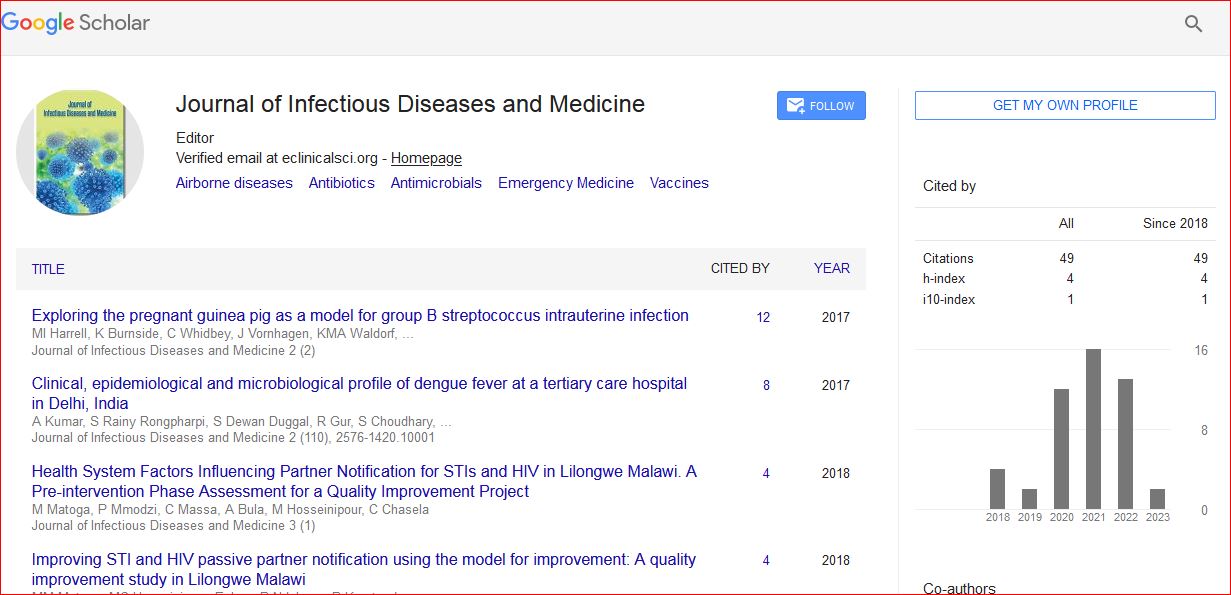
Journal of Infectious Diseases and Medicine received 1059 citations as per Google Scholar report