Short Communication - (2025) Volume 10, Issue 3
Received: 01-Jun-2025, Manuscript No. jidm-26-188071;
Editor assigned: 03-Jun-2025, Pre QC No. P-188071;
Reviewed: 17-Jun-2025, QC No. Q-188071;
Revised: 23-Jun-2025, Manuscript No. R-188071;
Published:
30-Jun-2025
, DOI: 10.37421/2576-1420.2025.10.408
Citation: McKenzie, Ian. ”Tropical Infectious Disease Management:
Evolving Strategies and Future.” J Infect Dis Med 10 (2025):408.
Copyright: © 2025 McKenzie I. This is an open-access article distributed under the terms of the Creative Commons Attribution License, which permits unrestricted use,
distribution and reproduction in any medium, provided the original author and source are credited.
The intricate field of tropical infectious diseases presents a complex and ever-evolving challenge to global public health, demanding continuous research and adaptation in clinical management strategies. Recent advancements have shed light on the multifaceted nature of these illnesses, from their epidemiological shifts to the development of novel therapeutic interventions. The growing burden of neglected tropical diseases (NTDs) necessitates a concerted effort towards integrated control, particularly in regions with limited resources, where the impact of these diseases is often most profound. The interplay of factors such as climate change, which influences the distribution and behavior of disease vectors, further complicates control efforts, requiring a proactive and adaptive approach to diagnosis, treatment, and prevention [1].
The pervasive issue of antimicrobial resistance (AMR) in tropical regions poses a significant threat to the efficacy of existing treatments, demanding a deep understanding of resistance mechanisms and the exploration of innovative solutions. Pathogens responsible for common tropical infections like malaria and tuberculosis are increasingly developing resistance, underscoring the urgency for new drugs and strategic approaches to antimicrobial use. The development of novel antimalarial agents, the judicious application of combination therapies for tuberculosis, and the implementation of robust antimicrobial stewardship programs are crucial steps in mitigating this escalating crisis. Continuous research into novel drug targets and advanced drug delivery systems is paramount to staying ahead of evolving resistance patterns [2].
Vector-borne diseases represent a significant component of the tropical disease burden, presenting unique diagnostic and clinical management challenges. Infections such as dengue, Zika, and chikungunya require accurate and timely diagnosis for effective patient care and public health intervention. The review of traditional diagnostic methods alongside emerging molecular and serological techniques highlights the progress made in achieving early and precise identification of these infections. Understanding the diverse clinical manifestations and adhering to current treatment guidelines are essential for optimal patient outcomes. Furthermore, the integration of entomological surveillance with clinical case management provides a comprehensive strategy to inform public health responses and control disease spread [3].
Climate change is undeniably reshaping the landscape of tropical infectious diseases, influencing both their epidemiology and clinical presentation. Shifts in temperature, precipitation patterns, and the frequency of extreme weather events are directly impacting the geographical distribution and transmission dynamics of diseases like malaria, leishmaniasis, and cholera. This necessitates a reevaluation of clinical management strategies to accommodate these changing patterns, emphasizing the need for climate-resilient public health infrastructure. Adopting a One Health approach, which recognizes the interconnectedness of climate, environment, and human health, is vital for effectively addressing these complex challenges [4].
Diarrheal diseases remain a leading cause of morbidity and mortality in tropical settings, disproportionately affecting vulnerable populations, particularly children. The clinical management of these diseases requires a multi-pronged approach encompassing accurate diagnostics, evidence-based treatment, and robust preventive measures. Advances in diagnostic tools, including rapid tests and molecular methods, facilitate early identification and appropriate intervention. Treatment strategies focusing on rehydration and nutritional support are fundamental, while primary prevention through sanitation, hygiene, and vaccination plays a crucial role in reducing disease incidence. The impact of pathogens like rotavirus and the proven efficacy of oral rehydration solutions underscore the importance of these interventions [5].
Neglected parasitic infections, such as schistosomiasis and lymphatic filariasis, continue to represent a significant public health concern in tropical regions, requiring sustained efforts for clinical management and control. Mass drug administration (MDA) programs have proven effective in reducing the burden of these diseases, but achieving sustainable elimination presents ongoing challenges. Research into novel drug development, coupled with the integration of MDA with vector control strategies and improvements in sanitation, offers promising avenues for enhanced control. Strengthening surveillance systems and fostering community engagement are essential components for long-term success in combating these persistent infections [6].
The effective management of emerging tropical infectious diseases hinges critically on robust public health infrastructure and strong global collaboration. Lessons learned from past outbreaks underscore the importance of developing and maintaining resilient surveillance systems, establishing rapid response mechanisms, and ensuring equitable access to diagnostics and treatments. Strengthening international partnerships and increasing investment in research and development are crucial for preparing for and mitigating the impact of future infectious disease threats. Building health systems capable of responding effectively to both endemic and emergent diseases is a global imperative [7].
Viral hemorrhagic fevers (VHFs) pose distinct clinical and public health challenges in tropical environments, necessitating specialized management protocols. Understanding the epidemiology, diagnosis, and clinical management of major VHFs like Ebola, Marburg, and Lassa fever is crucial for timely intervention. Early recognition, strict isolation, supportive care, and the judicious use of antiviral agents where applicable are key components of effective management. Robust infection prevention and control measures within healthcare settings, coupled with active community engagement in outbreak response, are vital for limiting transmission and mitigating the impact of these devastating diseases. Preparedness and rapid response remain the cornerstones of successful VHF outbreak management [8].
Respiratory tract infections, including prevalent conditions like pneumonia and tuberculosis, are often exacerbated by environmental factors within tropical climates, complicating their clinical management. A comprehensive approach involves the utilization of diverse diagnostic tools, ranging from conventional chest X-rays to rapid molecular tests, and adherence to established treatment protocols, including antibiotic and antiviral therapies. Consideration of co-infections and local antimicrobial resistance patterns is vital when formulating treatment plans. Furthermore, public health measures such as vaccination and improvements in indoor air quality are critical for disease prevention [9].
The integration of advanced genomic and molecular technologies is revolutionizing both the clinical management and epidemiological surveillance of tropical infectious diseases. Next-generation sequencing, bioinformatics, and other sophisticated molecular tools enable rapid pathogen identification, real-time tracking of transmission dynamics, and early detection of drug resistance. These advancements hold immense potential for improving diagnostic accuracy, tailoring personalized treatment strategies, and informing more effective public health interventions. However, realizing the full benefits of these technologies requires significant investment in capacity building, particularly within resource-limited settings, to ensure equitable access and widespread adoption [10].
The clinical management of tropical infectious diseases is an area of critical importance, reflecting the diverse and dynamic nature of pathogens prevalent in these regions. Recent reviews highlight significant advancements in understanding and combating these diseases. The evolving landscape of clinical management for tropical infectious diseases emphasizes recent progress in diagnosis, treatment, and prevention, with a particular focus on the growing threat of neglected tropical diseases (NTDs) and the crucial need for integrated control strategies, especially in resource-limited settings. Factors such as climate change influencing disease vectors and the emergence of novel therapeutics, alongside the indispensable role of global health partnerships and public health initiatives in surveillance and early detection, are central to current strategies [1].
Antimicrobial resistance (AMR) in tropical regions presents a formidable challenge to effective clinical management, requiring a detailed examination of resistance mechanisms for common infections like malaria and tuberculosis. Innovative approaches to overcome this hurdle are being explored, including the development of new antimalarial drugs, the utilization of combination therapies for tuberculosis, and the imperative of antimicrobial stewardship programs to prevent further resistance. The continuous pursuit of novel drug targets and advanced delivery systems remains a cornerstone of future prospects in this domain [2].
Vector-borne diseases, such as dengue, Zika, and chikungunya, pose significant diagnostic and management challenges in tropical settings. This review synthesizes the utility of traditional diagnostic methods alongside newer molecular and serological techniques, underscoring their importance in achieving early and accurate infection identification. Current treatment guidelines are discussed in conjunction with the clinical manifestations of these diseases. The integration of entomological surveillance with clinical case management is highlighted as a critical strategy for informing public health responses and mitigating disease spread [3].
The profound impact of climate change on the epidemiology and clinical presentation of tropical infectious diseases is a growing concern. This study delves into how alterations in temperature, rainfall, and extreme weather events influence the geographical distribution and transmission dynamics of diseases like malaria, leishmaniasis, and cholera. It offers insights into the clinical adaptations necessary for managing these evolving patterns and stresses the importance of climate-resilient public health infrastructure. The advocacy for a One Health approach to address the interconnectedness of climate, environment, and human health is a key takeaway [4].
Diarrheal diseases remain a major contributor to morbidity and mortality in tropical regions, particularly among children. Current diagnostic approaches, including rapid tests and molecular methods, are reviewed, alongside evidence-based treatment strategies centered on rehydration and nutritional support. The article also emphasizes the significance of sanitation, hygiene, and vaccination as primary prevention measures. Key findings include the impact of rotavirus and the effectiveness of oral rehydration solutions in managing these conditions [5].
Neglected parasitic infections, such as schistosomiasis and lymphatic filariasis, are central to tropical infectious disease control efforts. This review synthesizes recent evidence on the efficacy of mass drug administration (MDA) programs and discusses the challenges associated with achieving sustainable elimination. Novel drug development and the integration of MDA with vector control and improved sanitation are examined. The paper underscores the necessity for stronger surveillance systems and community engagement to support long-term control initiatives [6].
The management of emerging tropical infectious diseases relies heavily on public health infrastructure and global collaboration. Lessons learned from recent outbreaks highlight the importance of robust surveillance systems, rapid response mechanisms, and equitable access to diagnostics and treatments. The authors advocate for enhanced international partnerships and increased investment in research and development to prepare for future threats, emphasizing the need to build resilient health systems capable of addressing both endemic and emergent infectious diseases [7].
Viral hemorrhagic fevers (VHFs) present unique clinical and public health challenges in tropical regions. This review covers the epidemiology, diagnosis, and clinical management of major VHFs, including Ebola, Marburg, and Lassa fever. Emphasis is placed on early recognition, isolation, supportive care, and the judicious use of antiviral agents. Infection prevention and control measures in healthcare settings and the role of community engagement in outbreak response are also discussed, with preparedness and rapid response identified as critical for mitigating outbreaks [8].
Respiratory tract infections in tropical climates, including pneumonia and tuberculosis, are often complicated by environmental factors. This article reviews diagnostic tools, from chest X-rays to rapid molecular tests, and discusses current treatment protocols, including antibiotic and antiviral therapies. The impact of co-infections and the importance of considering local resistance patterns are addressed. Public health measures for prevention, such as vaccination and improved indoor air quality, are also considered [9].
The integration of advanced genomic and molecular technologies is transforming the clinical management and epidemiological surveillance of tropical infectious diseases. Next-generation sequencing, bioinformatics, and other molecular tools are being used for rapid pathogen identification, tracking transmission dynamics, and detecting drug resistance in real-time. The potential of these technologies to improve diagnostic accuracy, personalize treatment, and inform public health interventions is highlighted, with a call for capacity building in resource-limited settings to leverage these advancements effectively [10].
This collection of research reviews explores various facets of tropical infectious disease management. Key themes include the evolving strategies for neglected tropical diseases, the critical challenge of antimicrobial resistance, and advancements in diagnosing and treating vector-borne illnesses. The significant impact of climate change on disease patterns and the necessity of integrated public health approaches are emphasized. Diarrheal and respiratory infections, along with neglected parasitic infections, are discussed with a focus on current treatment and prevention strategies. The role of global health security and international collaboration in managing emerging threats, including viral hemorrhagic fevers, is highlighted. Furthermore, the transformative potential of genomic and molecular technologies in enhancing diagnosis, surveillance, and personalized treatment is underscored. Overall, these reviews present a comprehensive overview of the ongoing efforts and future directions in combating tropical infectious diseases.
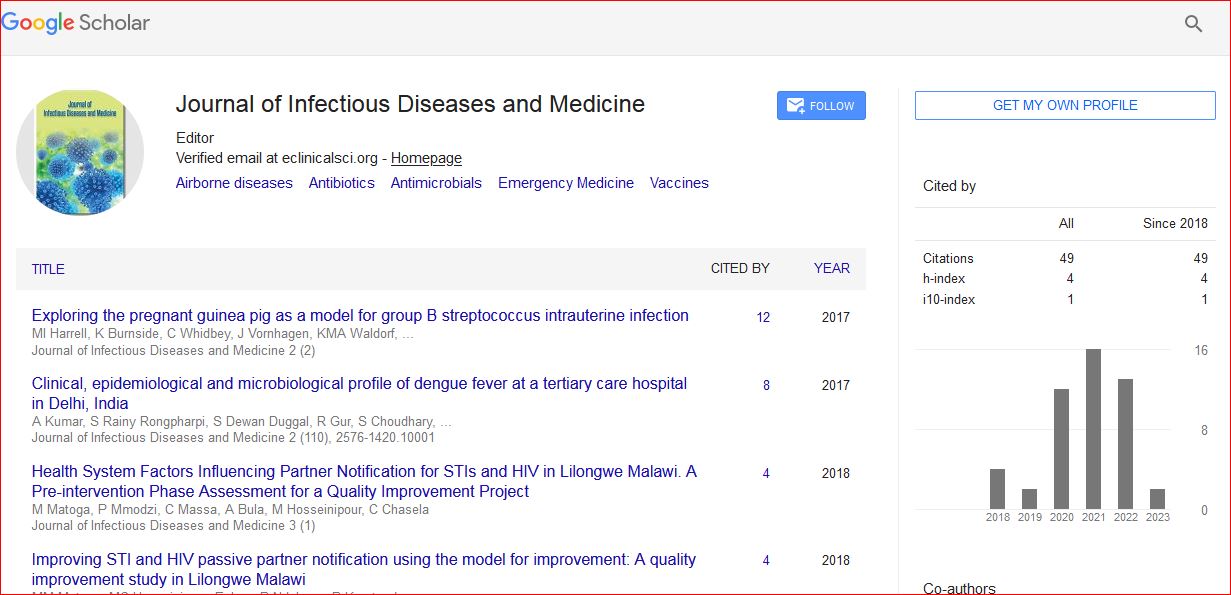
Journal of Infectious Diseases and Medicine received 1059 citations as per Google Scholar report