Brief Report - (2025) Volume 11, Issue 6
Received: 02-Nov-2025, Manuscript No. aso-26-184669;
Editor assigned: 04-Nov-2025, Pre QC No. P-184669;
Reviewed: 18-Nov-2025, QC No. Q-184669;
Revised: 24-Nov-2025, Manuscript No. R-184669;
Published:
01-Dec-2025
, DOI: 10.37421/2471-2671.2025.11.197
Citation: Becker, Hannah. ”Surgery’s Evolving Role in Cancer
Management.” Arch Surg Oncol 11 (2025):197.
Copyright: © 2025 Becker H. This is an open-access article distributed under the terms of the Creative Commons Attribution License, which permits unrestricted use,
distribution and reproduction in any medium, provided the original author and source are credited.
The surgical management of locally advanced and metastatic cancer is a complex endeavor, necessitating sophisticated strategies that integrate aggressive local control with systemic therapeutic approaches. For patients diagnosed with locally advanced disease, the primary objective is often curative, achieved through multimodality treatments that may encompass neoadjuvant or adjuvant therapies in conjunction with surgical intervention. In the context of metastatic cancer, surgery's role is reoriented towards palliation, alleviating symptoms, and potentially prolonging survival by targeting specific oligometastatic sites. Continuous advancements in surgical techniques, the increasing adoption of minimally invasive procedures, and a more profound understanding of tumor biology are collectively shaping and refining these treatment paradigms. Nevertheless, meticulous patient selection, accurate staging, and seamless integration with systemic treatments remain fundamental to optimizing patient outcomes in this challenging clinical landscape [1].
The strategic application of surgical intervention for oligometastatic disease presents a promising avenue for conferring significant survival advantages in carefully selected patient populations. This concept delineates an intermediate disease state, situated between localized cancer and widespread metastatic dissemination, characterized by a limited number of identifiable metastatic lesions. The precise identification of these patients, coupled with the determination of optimal surgical timing and the appropriate extent of resection, mandates a collaborative effort involving a multidisciplinary team of specialists. Ongoing research is actively exploring enhanced imaging modalities for improved detection capabilities and sophisticated genetic profiling techniques to better predict individual patient responses to both surgical and systemic therapies [2].
The integration of immunotherapy with surgical resection for advanced cancers represents a rapidly evolving and highly promising frontier in oncological treatment. Current investigations are focused on elucidating whether the administration of neoadjuvant or adjuvant immunotherapy can effectively prime the patient's immune system, thereby augmenting the efficacy of surgical procedures and enhancing the body's ability to combat micrometastatic disease. This innovative approach holds considerable potential for improving long-term survival rates and significantly reducing the incidence of cancer recurrence in patients whose disease has disseminated beyond the primary tumor site [3].
Minimally invasive surgical techniques, including laparoscopic and robotic-assisted approaches, are witnessing a growing application in the surgical management of both locally advanced and metastatic cancers. These advanced methods offer distinct advantages, such as reduced patient morbidity, accelerated recovery periods, and potentially comparable oncological outcomes when contrasted with traditional open surgical procedures. However, the successful implementation of these techniques necessitates a careful and thorough evaluation of tumor resectability, the requirement for extensive lymph node dissection, and the overall complexity inherent in each specific surgical case [4].
The utility of surgical debulking in the context of metastatic cancers, particularly in cases presenting with peritoneal carcinomatosis, continues to be an area of intensive research and considerable debate within the medical community. Cytoreductive surgery, often in combination with hyperthermic intraperitoneal chemotherapy (HIPEC), is a modality designed to aggressively remove macroscopic tumor burden from the peritoneal cavity. The establishment and application of stringent selection criteria for this intensive therapeutic approach are absolutely crucial for maximizing treatment efficacy and minimizing the risk of treatment-related morbidity [5].
Precision medicine is fundamentally reshaping the landscape of surgical oncology by enabling the tailoring of treatment strategies based on the unique molecular and genetic characteristics of an individual patient's tumor. Comprehensive genomic profiling plays a pivotal role in identifying actionable mutations and predicting the likelihood of response to targeted therapies, thereby directly influencing critical surgical decisions concerning the extent of tumor resection and the necessity for adjuvant systemic treatment regimens [6].
The management of bone metastases originating from solid tumors inherently requires a comprehensive, multidisciplinary approach, wherein surgical intervention assumes a vital role. Surgery is instrumental in providing pain relief, restoring lost function, and preventing pathological fractures, thereby significantly improving the quality of life for patients afflicted with skeletal involvement. Ongoing advancements in the field of orthopedic oncology, coupled with the sophisticated application of reconstructive techniques, are continuously enhancing the therapeutic options and outcomes for patients facing the challenges of bone metastases [7].
Palliative surgery continues to serve as a fundamental component in the comprehensive management of advanced cancer patients, with its primary aims being the alleviation of debilitating symptoms, the enhancement of overall quality of life, and the prevention of further treatment-related complications. Such surgical interventions may encompass procedures designed to relieve bowel obstruction, manage malignant effusions, or control tumor-related bleeding. The ultimate decision to undertake palliative surgery necessitates a careful and judicious assessment of the potential risks versus the anticipated benefits for each individual patient [8].
A profound understanding of the tumor microenvironment is paramount for the successful development and implementation of effective surgical and systemic treatment strategies for advanced cancers. Surgical interventions have the capacity to significantly alter the immune landscape within the tumor bed, and gaining deeper insights into these complex interactions is actively guiding the synergistic combination of surgery with novel immunomodulatory therapies [9].
The application of artificial intelligence (AI) and machine learning algorithms within the domain of surgical oncology is experiencing a period of rapid and transformative advancement. These cutting-edge technologies hold immense potential to significantly aid in prognostication, facilitate patient selection for highly specific surgical interventions in complex advanced disease scenarios, and even assist in the intricate processes of surgical planning and execution, ultimately aiming to improve outcomes in even the most challenging clinical cases [10].
The surgical management of locally advanced and metastatic cancer presents a complex challenge, demanding nuanced strategies that balance aggressive local control with systemic therapy. For locally advanced disease, the goal is often curative, involving multimodality approaches that may include neoadjuvant or adjuvant therapies alongside surgery. In the metastatic setting, surgery's role shifts towards palliation, symptom control, and potentially extending survival by addressing specific, oligometastatic sites. Advances in surgical techniques, minimally invasive approaches, and a deeper understanding of tumor biology are continuously refining these strategies. However, careful patient selection, precise staging, and integration with systemic treatments remain paramount to optimizing outcomes [1].
Addressing oligometastatic disease with a surgical approach can offer significant survival benefits for select patients. This concept suggests an intermediate state between localized and widespread metastatic disease where a limited number of metastases exist. Identifying these patients and determining the optimal timing and extent of surgical resection requires a multidisciplinary team. Current research is exploring improved imaging techniques for better detection and sophisticated genetic profiling to predict response to surgery and systemic therapies [2].
The integration of immunotherapy with surgical resection for advanced cancers is an evolving frontier. Studies are investigating whether neoadjuvant or adjuvant immunotherapy can prime the immune system to enhance the effectiveness of surgery or combat micrometastatic disease. This approach holds promise for improving long-term survival and reducing recurrence rates in cancers that have spread beyond the primary site [3].
Minimally invasive surgical techniques, including laparoscopic and robotic approaches, are increasingly being applied to locally advanced and metastatic cancers. These methods can lead to reduced morbidity, faster recovery times, and potentially equivalent oncological outcomes compared to open surgery. Their application, however, requires careful consideration of tumor resectability, the need for extensive lymph node dissection, and the complexity of the procedure [4].
The role of surgical debulking in metastatic cancers, particularly in cases of peritoneal carcinomatosis, remains a subject of ongoing research and debate. Cytoreductive surgery combined with hyperthermic intraperitoneal chemotherapy (HIPEC) aims to eliminate macroscopic tumor burden. Selection criteria for this aggressive approach are crucial for optimizing outcomes and minimizing treatment-related morbidity [5].
Precision medicine is transforming the surgical management of advanced cancers by tailoring treatments based on individual tumor characteristics. Genomic profiling can identify actionable mutations and predict response to targeted therapies, influencing surgical decisions regarding the extent of resection and the need for adjuvant systemic treatment [6].
The management of bone metastases from solid tumors requires a multidisciplinary approach, where surgery plays a critical role in pain relief, functional restoration, and fracture prevention. Advances in orthopedic oncology and the use of reconstructive techniques are improving the quality of life for patients with skeletal involvement [7].
Palliative surgery remains a cornerstone in the management of metastatic cancer when aimed at alleviating symptoms, improving quality of life, and avoiding further complications. This can include procedures to relieve bowel obstruction, manage malignant effusions, or control bleeding. The decision to proceed with palliative surgery requires careful risk-benefit assessment [8].
Understanding the tumor microenvironment is critical for developing effective surgical and systemic strategies for advanced cancers. Surgical interventions can alter the immune landscape of the tumor bed, and insights into this interaction are guiding the combination of surgery with immunomodulatory therapies [9].
The application of artificial intelligence (AI) and machine learning in surgical oncology is rapidly advancing. These technologies can aid in prognostication, patient selection for specific surgical interventions in advanced disease, and even in surgical planning and execution, potentially improving outcomes in complex cases [10].
Surgery plays a crucial role in managing locally advanced and metastatic cancers. For locally advanced disease, the goal is often curative with multimodality treatments. In metastatic settings, surgery focuses on palliation, symptom control, and addressing oligometastatic sites. Advances in surgical techniques, including minimally invasive approaches, are refining these strategies. Oligometastatic disease can benefit from surgical intervention, requiring multidisciplinary teams and advanced imaging. The integration of immunotherapy with surgery is an evolving area with potential for improved survival. Debulking surgery and HIPEC are used for peritoneal metastases, with strict selection criteria. Precision medicine and genomic profiling are tailoring surgical decisions. Surgery is vital for managing bone metastases, alleviating pain, and restoring function. Palliative surgery aims to improve quality of life and prevent complications. Understanding the tumor microenvironment informs combined surgical and immunotherapeutic strategies. Artificial intelligence is emerging as a tool for prognostication, patient selection, and surgical planning.
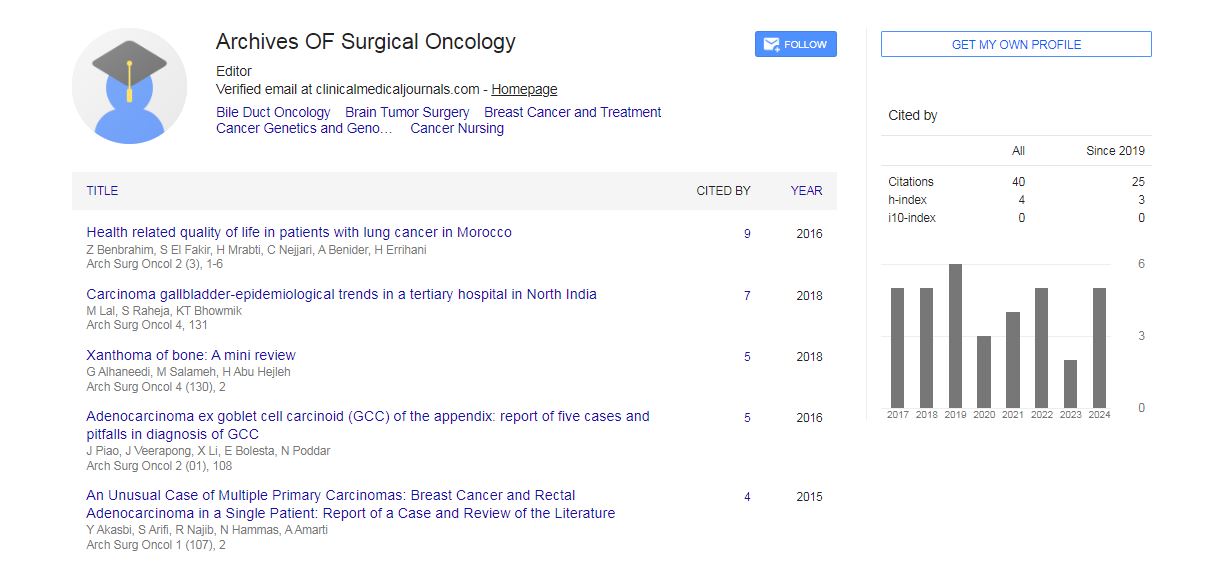
Archives of Surgical Oncology received 37 citations as per Google Scholar report