Opinion - (2025) Volume 16, Issue 3
Received: 01-May-2025, Manuscript No. bej-26-182427;
Editor assigned: 05-May-2025, Pre QC No. P-182427;
Reviewed: 19-May-2025, QC No. Q-182427;
Revised: 22-May-2025, Manuscript No. R-182427;
Published:
29-May-2025
, DOI: 10.37421/2161-6219.2025.16.557
Citation: Ngugi, Jackson. ”Strategic Business Decisions: Pillars
of Economic Stability and Growth.” Bus Econ J 16 (2025):557.
Copyright: © 2025 Ngugi J. This is an open-access article distributed under the terms of the Creative Commons Attribution License, which permits unrestricted use, distribution
and reproduction in any medium, provided the original author and source are credited.
Strategic business decisions are fundamental to the health and dynamism of national economies, influencing everything from job creation to long-term growth trajectories. These decisions, whether concerning investment in innovation, the expansion of market reach, or the allocation of critical resources, have a direct and measurable impact on economic stability. Conversely, approaches that are short-sighted or fail to embrace sustainability can precipitate market volatility, exacerbate unemployment, and ultimately impede the broader goals of economic development. The intricacies of how corporate governance, ethical considerations, and the adoption of sustainable business models intertwine and contribute to a more resilient and prosperous economic future are of paramount importance. [1] Firms that strategically prioritize research and development (R&D) demonstrate a consistent tendency towards higher productivity and play a more significant role in driving overall economic growth. This investment in new technologies and innovative processes equips businesses with the means to operate with greater efficiency, to develop higher-value products and services, and to adapt proactively to evolving market demands. This internal strengthening of firms, in turn, acts as a catalyst for broader economic expansion and enhances a nation's competitive standing on the global stage. [2]
Corporate social responsibility (CSR) initiatives, when thoughtfully integrated into the core strategic objectives of a business, possess the capacity to foster sustained economic stability over the long term. By actively considering environmental stewardship, implementing ethical labor practices, and engaging meaningfully with local communities, businesses can cultivate stronger brand reputations, attract discerning consumers and investors who value social impact, and effectively mitigate various operational risks. This comprehensive and ethically grounded approach contributes to the development of a more balanced and sustainable economic ecosystem for all stakeholders. [3] The pervasive trend of globalization and the expansion of international trade, largely propelled by the strategic business decisions of companies seeking new markets, exert profound influences on economic stability. While these global connections offer substantial opportunities for economic growth and operational efficiencies, the heightened degree of global interconnectedness also inherently exposes national economies to external shocks and intense competitive pressures. Consequently, the development and implementation of effective business strategies in this complex global environment necessitate a keen focus on meticulous risk management and the cultivation of organizational adaptability. [4] The financial decisions made by businesses, particularly those pertaining to their capital structure and investment strategies, exert a direct and tangible influence on overall market stability. An excessive reliance on leverage, for instance, can significantly amplify financial distress during periods of economic downturn, whereas the adoption of prudent financial management practices serves to bolster sustained economic growth. A comprehensive understanding of the intricate interplay between corporate finance and macroeconomic stability is therefore critically important for both policymakers and business leaders navigating the modern economic landscape. [5] The widespread adoption of new technologies and the ongoing digital transformation represent fundamental drivers of enhanced business competitiveness and robust economic growth. Companies that proactively embrace emerging digital tools and platforms are better positioned to optimize their operational efficiency, extend their reach to wider customer bases, and foster a culture of innovation. This transformative shift, however, demands strategic foresight and substantial investment in workforce skills to ensure that the resulting economic benefits are broadly and inclusively distributed. [6] Ensuring supply chain resilience has emerged as a critical business decision that directly impacts economic stability, particularly in the face of unforeseen disruptions such as pandemics or geopolitical events. Businesses that proactively diversify their supplier networks, invest strategically in advanced logistics capabilities, and adopt agile supply chain management methodologies are demonstrably better equipped to withstand economic shocks. This enhanced resilience ensures the continuity of operations and provides essential support for overall economic activity. [7] Strategic decisions regarding mergers and acquisitions (M&A) have the potential to significantly reshape entire industries and exert a considerable influence on the trajectory of economic growth. While successful M&A can yield substantial benefits in terms of increased efficiency and enhanced market power, poorly executed transactions can unfortunately lead to undesirable outcomes such as widespread job losses, a reduction in market competition, and ultimately, economic instability. Therefore, a meticulous analysis of market dynamics and the development of robust integration strategies are absolutely essential for realizing the intended benefits of such transactions. [8] Entrepreneurship and the continuous creation of new business ventures serve as fundamental engines of economic dynamism and sustained growth. The crucial business decisions made during the nascent startup phase, encompassing aspects like innovation, market entry strategies, and the securing of adequate funding, critically determine a venture's potential for job creation and its capacity to foster the development of entirely new industries. Consequently, supportive policy environments that actively encourage and nurture entrepreneurship are vital for promoting overall economic stability. [9] Investment in human capital development represents a critical business decision that forms the bedrock of sustainable, long-term economic growth. Strategic investments in employee training programs, access to education, and the promotion of overall well-being not only enhance individual and collective productivity but also foster a culture of innovation and cultivate a more skilled and adaptable workforce. This vital human element, in turn, significantly strengthens a nation's economic foundation and bolsters its capacity to compete effectively on a global scale. [10]The fundamental nature of strategic business decisions is inextricably linked to the vitality and progress of national economies, influencing a wide spectrum of outcomes from job creation to long-term developmental trajectories. These strategic choices, whether they manifest as investments in groundbreaking innovation, the ambitious expansion into new markets, or the judicious allocation of finite resources, exert a direct and measurable influence on economic stability. Conversely, the adoption of business practices that are characterized by short-sightedness or a disregard for sustainability can precipitate considerable market volatility, lead to increased unemployment, and ultimately act as a significant impediment to sustained economic development. Therefore, a thorough exploration into the interconnected roles of corporate governance, ethical considerations, and the deliberate adoption of sustainable business models is essential for understanding their collective contribution to fostering a more resilient and prosperous economic future. [1] Evidence consistently indicates that firms which strategically elect to prioritize investments in research and development (R&D) tend to exhibit superior productivity metrics and contribute more substantially to the broader economic growth of a nation. The deliberate investment in pioneering new technologies and optimizing existing processes empowers businesses to operate with enhanced efficiency, to conceptualize and deliver higher-value products and services, and to demonstrate agility in adapting to the ever-shifting landscape of market demands. This internal strengthening and innovation within individual firms, as a direct consequence, serves as a powerful catalyst for wider economic expansion and significantly elevates a nation's competitive position within the global economic arena. [2]
Initiatives focused on corporate social responsibility (CSR), when they are genuinely integrated into the fundamental strategic fabric of a business rather than being treated as peripheral activities, possess a remarkable capacity to foster enduring economic stability. By consciously and proactively incorporating considerations for environmental sustainability, adhering to stringent ethical labor practices, and actively engaging with and contributing to local communities, businesses are able to cultivate stronger, more trustworthy reputations. This ethical positioning, in turn, attracts a growing segment of socially conscious consumers and investors, while simultaneously reducing the likelihood of encountering various operational risks. This holistic and ethically driven approach collectively contributes to the establishment of a more balanced and sustainable economic ecosystem for all involved parties. [3] The pervasive and accelerating trend of globalization, coupled with the expansion of international trade, which is largely propelled by the strategic business decisions of companies actively seeking to enter and establish a presence in new global markets, exerts profound and multifaceted influences on economic stability. While these expanding global connections undoubtedly offer significant and valuable opportunities for enhanced economic growth and the achievement of greater operational efficiencies, the increasing degree of global interconnectedness also inherently exposes national economies to a greater susceptibility to external shocks and intensified competitive pressures from international players. Consequently, the successful formulation and effective implementation of robust business strategies within this complex and dynamic global environment necessitates a heightened and unwavering focus on meticulous risk management protocols and the consistent cultivation of organizational adaptability. [4] The financial decisions meticulously made by businesses, with particular emphasis on those related to their capital structure and their forward-looking investment strategies, exert a direct, tangible, and often immediate influence on overall market stability. An excessive or imprudent reliance on leverage, for example, has the demonstrable potential to significantly amplify the severity of financial distress experienced by a company during periods of economic downturn or recessionary trends. Conversely, the consistent adoption and adherence to prudent and well-considered financial management practices serve as a crucial enabler for sustained and healthy economic growth. Therefore, achieving a comprehensive and nuanced understanding of the intricate and interdependent relationship between corporate finance and broader macroeconomic stability is of paramount importance for both the policymakers responsible for economic governance and the business leaders navigating the complexities of the modern economic landscape. [5] The widespread and ongoing adoption of innovative new technologies, alongside the transformative process of digital transformation, are unequivocally recognized as fundamental and potent drivers of enhanced business competitiveness and robust, sustainable economic growth. Companies that proactively and strategically embrace emerging digital tools, advanced platforms, and data analytics capabilities are invariably better positioned to optimize their operational efficiency, to extend their market reach to significantly wider customer bases, and to foster a dynamic culture of continuous innovation. This profound and accelerating shift, however, necessitates strategic foresight, substantial upfront investment in developing and upskilling the workforce, and careful planning to ensure that the resultant economic benefits are broadly and equitably distributed across society. [6] Establishing and maintaining supply chain resilience has become a critically important strategic business decision that has a direct and significant impact on economic stability, particularly in the face of increasingly frequent and severe disruptions such as global pandemics, geopolitical conflicts, or natural disasters. Businesses that proactively diversify their supplier networks across different geographical regions, invest strategically in advanced logistics and inventory management capabilities, and rigorously adopt agile and responsive supply chain management methodologies are demonstrably better equipped to withstand economic shocks and maintain operational continuity. This enhanced resilience is crucial not only for the individual firm but also for providing essential support for overall economic activity and preventing cascading failures. [7] Strategic decisions centered around mergers and acquisitions (M&A) possess the significant potential to fundamentally reshape entire industries, alter market structures, and exert a considerable influence on the overall trajectory of economic growth. While well-executed and strategically sound M&A transactions can yield substantial benefits in terms of achieving increased operational efficiency, realizing economies of scale, and enhancing market power, poorly planned or executed transactions can unfortunately lead to a range of undesirable outcomes. These negative consequences can include widespread job losses due to redundancies, a reduction in market competition, and ultimately, contribute to economic instability. Therefore, a meticulous and thorough analysis of prevailing market dynamics and the development of comprehensive and robust integration strategies are absolutely essential for maximizing the potential benefits and mitigating the inherent risks of such transformative transactions. [8] Entrepreneurship, characterized by the continuous creation and nurturing of new business ventures, serves as a fundamental and indispensable engine of economic dynamism and sustained long-term growth. The crucial and often challenging business decisions made during the nascent startup phase, encompassing critical aspects such as the pursuit of innovation, the strategic identification of market entry points, and the securing of adequate and appropriate funding, critically determine a venture's ultimate potential for significant job creation and its capacity to foster the development and emergence of entirely new industries. Consequently, the establishment and maintenance of supportive policy environments that actively encourage, facilitate, and nurture entrepreneurship are unequivocally vital for promoting overall economic stability and fostering a vibrant business ecosystem. [9] Strategic and sustained investment in human capital development represents a fundamentally critical business decision that forms the essential bedrock of sustainable, long-term economic growth. Strategic investments directed towards comprehensive employee training programs, facilitating access to continuous education, and actively promoting overall employee well-being not only serve to significantly enhance individual and collective productivity but also foster a robust culture of innovation and cultivate a more skilled, adaptable, and resilient workforce. This vital human element, in turn, significantly strengthens a nation's underlying economic foundation and substantially bolsters its inherent capacity to compete effectively and advantageously on a global scale. [10]Strategic business decisions are pivotal for national economic stability and growth, influencing job creation, productivity, and international competitiveness. Key areas of impact include investment in innovation, market expansion, and resource allocation. Conversely, unsustainable practices can lead to market volatility and unemployment. Research and development (R&D) investment is strongly linked to higher firm productivity and economic expansion. Corporate social responsibility (CSR) initiatives, when integrated into core strategies, foster long-term economic stability by considering environmental, ethical, and community factors, thereby building stronger reputations and reducing risks. Globalization and international trade present opportunities but also risks, requiring careful business strategies for resilience. Financial decisions, particularly regarding capital structure and investment, directly affect market stability, with prudent management supporting growth. Technological adoption and digital transformation are vital for competitiveness and growth, enhancing efficiency and innovation, but require strategic planning and investment in skills. Supply chain resilience is a critical business decision that impacts economic stability during disruptions. Mergers and acquisitions can reshape industries but require careful execution to avoid negative economic consequences. Entrepreneurship drives economic dynamism through innovation and job creation, necessitating supportive policy environments. Finally, human capital development through investment in training and well-being enhances productivity and innovation, strengthening a nation's economic foundation for global competition.
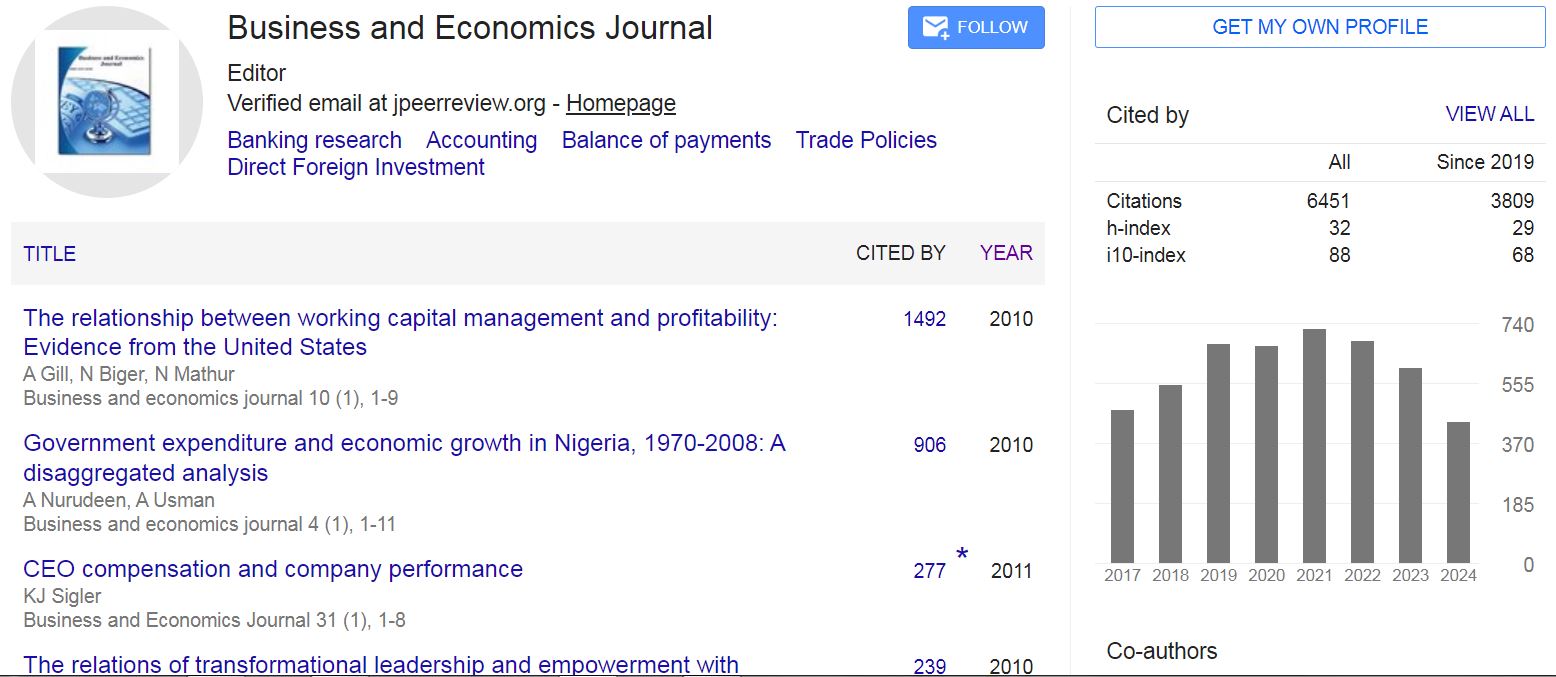
Business and Economics Journal received 6451 citations as per Google Scholar report