Short Communication - (2025) Volume 16, Issue 2
Received: 02-Mar-2025, Manuscript No. jpm-26-179360;
Editor assigned: 04-Mar-2025, Pre QC No. P-179360;
Reviewed: 18-Mar-2025, QC No. Q-179360;
Revised: 24-Mar-2025, Manuscript No. R-179360;
Published:
31-Mar-2025
, DOI: 10.37421/2090-0902.2025.16.530
Citation: El-Sayed, Aisha. ”Stochastic Processes: Unraveling Complexity in Physics.” J Phys Math 16 (2025):530.
Copyright: © 2025 El-Sayed A. This is an open-access article distributed under the terms of the Creative Commons Attribution License, which permits unrestricted use, distribution and reproduction in any medium, provided the original author and source are credited.
Stochastic processes are fundamental to understanding complex systems in statistical and thermal physics, providing a powerful framework for modeling diverse phenomena [1].
These processes enable the probabilistic capture of inherent randomness and emergent behavior, offering insights into equilibrium and non-equilibrium dynamics [1].
The application of stochastic calculus extends to describing the dynamics of interacting particles in thermal baths, deriving master and Langevin equations that govern macroscopic observables [2].
Fluctuations, captured by stochastic terms, are crucial in determining a system's trajectory and its approach to equilibrium, particularly in systems far from equilibrium [2].
Complex spatial and temporal patterns in driven systems can emerge through stochastic differential equations, where noise acts as a constructive element leading to self-organization [3].
These principles are illustrated with specific examples from reaction-diffusion systems, demonstrating noise-induced pattern formation [3].
The field extends to quantum thermodynamics, where classical stochastic methods are adapted to analyze the thermodynamic properties of quantum systems interacting with their environment [4].
This extension quantifies work, heat, and entropy production in quantum systems governed by stochastic dynamics [4].
Anomalous diffusion in disordered media, relevant to thermal physics, can be modeled using fractional Brownian motion due to its inherent memory effects [5].
This approach explains sub- or super-diffusive behavior in many natural and engineered systems, providing a theoretical framework for their transport properties [5].
Non-Markovian stochastic processes in open quantum systems are also examined, with methods for characterizing memory effects and their thermodynamic implications [6].
Challenges and advancements in dealing with non-Markovianity are highlighted for understanding energy exchange and information flow [6].
Path integral formulations offer a method for analyzing stochastic processes in statistical mechanics, mapping stochastic differential equations to path integrals for calculating probability distributions and thermodynamic quantities [7].
This approach is powerful for complex systems with non-trivial potentials and boundary conditions [7].
Fluctuation theorems connect microscopic reversibility to macroscopic thermodynamic irreversibility through stochastic trajectories, playing a fundamental role in non-equilibrium statistical physics [8].
Various formulations and their applications are discussed, emphasizing the role of stochastic processes in their derivation and interpretation [8].
Stochastic resonance is another area where stochastic processes enhance signal detection in noisy systems, with implications for sensor design and biological processes [9].
Judiciously chosen noise levels can amplify weak signals, a phenomenon grounded in the study of stochastic processes [9].
Finally, non-equilibrium steady states are explored using statistical mechanics and novel stochastic models that capture their thermodynamic properties and the role of driving forces [10].
These models are valuable for understanding complex, driven systems not in thermal equilibrium [10].
Stochastic processes are indispensable tools for unraveling the complexities of statistical and thermal physics, offering a robust framework for modeling a wide spectrum of phenomena, from particle diffusion to critical transitions [1].
The inherent randomness and emergent behaviors observed in these physical systems are effectively captured through probabilistic approaches, providing deep insights into both equilibrium and non-equilibrium dynamics [1].
Extending these concepts, stochastic calculus is applied to elucidate the dynamics of interacting particles within thermal baths, leading to the derivation of master and Langevin equations that precisely govern the evolution of macroscopic observables [2].
A key revelation is the critical role of fluctuations, encoded in stochastic terms, in dictating a system's trajectory and its eventual convergence to equilibrium, particularly in environments far removed from equilibrium conditions [2].
The emergence of intricate spatial and temporal patterns within driven systems can be understood through the lens of stochastic differential equations, where noise, rather than being a mere disturbance, actively contributes to self-organization [3].
Concrete illustrations of these principles are drawn from reaction-diffusion systems, highlighting how noise can constructively drive pattern formation [3].
Furthermore, the scope of stochastic processes extends into the quantum realm, specifically quantum thermodynamics, where classical stochastic methodologies are adapted to scrutinize the thermodynamic properties of quantum systems in interaction with their surroundings [4].
This advanced application allows for the precise quantification of work, heat, and entropy production within quantum systems governed by stochastic dynamics [4].
Anomalous diffusion, a common characteristic of disordered media relevant to thermal physics, finds a fitting model in fractional Brownian motion, attributed to its intrinsic memory effects [5].
This theoretical construct effectively explains the sub- or super-diffusive behaviors observed across numerous natural and engineered systems, thereby providing a foundational framework for comprehending their transport properties [5].
The examination of non-Markovian stochastic processes within open quantum systems reveals methods for characterizing system dynamics' memory effects and their profound thermodynamic consequences [6].
This area addresses significant challenges and showcases advancements in understanding energy exchange and information flow, particularly in non-Markovian scenarios [6].
Path integral formulations offer a sophisticated approach to analyzing stochastic processes in statistical mechanics, enabling the transformation of stochastic differential equations into path integrals for the calculation of probability distributions and thermodynamic quantities [7].
This technique proves especially valuable for complex systems characterized by non-trivial potentials and boundary conditions [7].
Fundamental to non-equilibrium statistical physics are fluctuation theorems, which bridge microscopic reversibility and macroscopic irreversibility through stochastic trajectories [8].
A comprehensive review of their various formulations and applications underscores the pivotal role of stochastic processes in their derivation and interpretative framework [8].
Stochastic resonance, a phenomenon where noise constructively enhances signal detection, is explored in physical systems, holding implications for sensor design and biological process understanding [9].
The principle hinges on how carefully managed noise levels can amplify faint signals, a concept deeply rooted in the study of stochastic processes [9].
Lastly, the statistical mechanics of non-equilibrium steady states are investigated using novel stochastic models that exhibit such states, focusing on their thermodynamic characteristics and the influence of driving forces [10].
These models are crucial for emulating the behavior of complex, driven systems that deviate from thermal equilibrium [10].
This collection of research explores the pervasive role of stochastic processes across various fields of physics. It highlights their application in understanding complex systems, from particle diffusion and phase transitions in statistical and thermal physics to the dynamics of interacting particles and quantum systems. The research delves into how noise can induce pattern formation, how stochastic calculus aids in deriving governing equations, and how phenomena like anomalous diffusion and non-equilibrium steady states are modeled. Additionally, it touches upon the connection between stochastic processes and quantum thermodynamics, fluctuation theorems, and stochastic resonance. The overarching theme is the power of probabilistic and noise-driven approaches in unraveling physical phenomena.
None
None
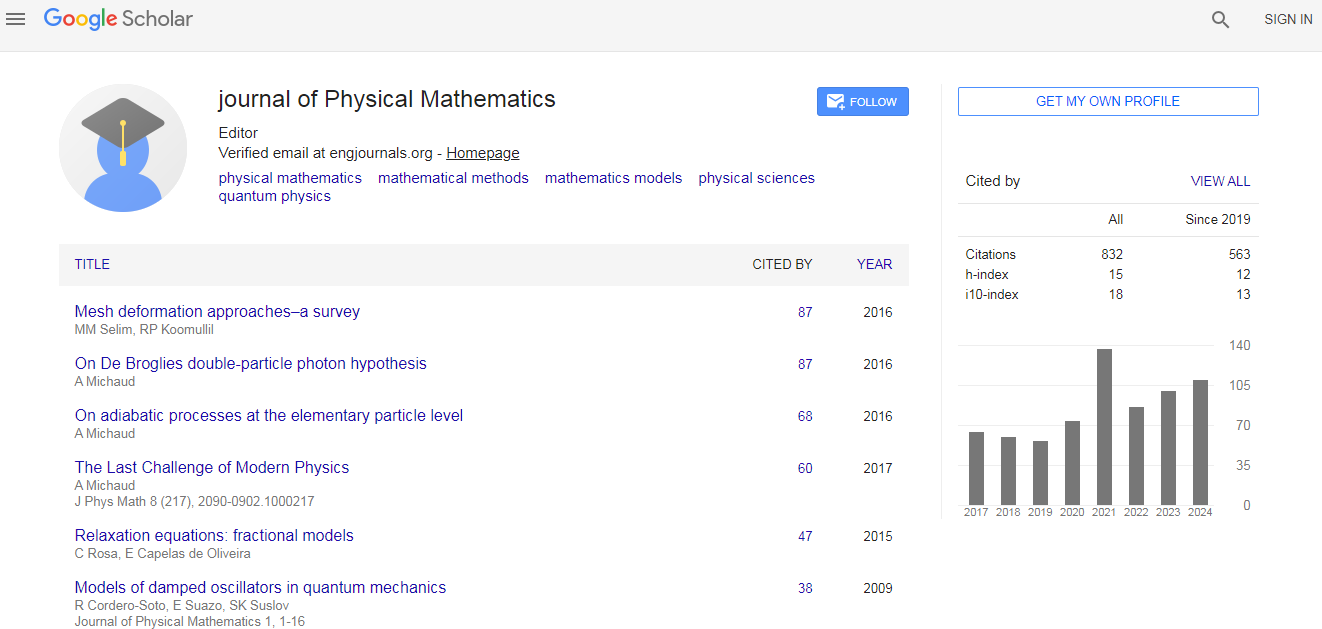
Physical Mathematics received 686 citations as per Google Scholar report