Commentary - (2025) Volume 15, Issue 3
Received: 01-May-2025, Manuscript No. jbpbt-25-178498;
Editor assigned: 05-May-2025, Pre QC No. P-178498;
Reviewed: 19-May-2025, QC No. Q-178498;
Revised: 22-May-2025, Manuscript No. R-178498;
Published:
29-May-2025
, DOI: 10.37421/2155-9821.2025.15.674
Citation: Williams, Hannah R.. ”Single-Use Technologies: Revolutionizing Biopharmaceutical Manufacturing.” J Bioprocess Biotech
(2025):674.*
Copyright: © 2025 Williams R. Hannah This is an open-access article distributed under the terms of the Creative Commons Attribution License, which permits unrestricted use,
distribution and reproduction in any medium, provided the original author and source are credited.
Single-use technologies (SUTs) have fundamentally reshaped biopharmaceutical manufacturing, ushering in an era of enhanced flexibility, significantly reduced contamination risks, and accelerated campaign changeovers. The driving force behind their widespread adoption is the imperative to achieve cost-effective production of intricate biologics, including crucial monoclonal antibodies and cutting-edge advanced therapies. However, the integration of these disposable systems is not without its challenges, notably concerning the presence of leachables and extractables, the effective management of generated waste, and seamless integration with established manufacturing infrastructures. Continued advancements in materials science and sophisticated process design are therefore paramount to fully harness the manifold benefits that SUTs offer in addressing the escalating global demand for biopharmaceutical products. [1] The integration of single-use bioreactors (SUBs) has markedly improved the manufacturing flexibility essential for producing a diverse range of biologics. SUBs adeptly address critical challenges related to scale-up and the stringent control of contamination, proving particularly valuable during early-phase clinical trials and for the production of specialized niche therapeutic products. Significant progress in material science is continuously enhancing the performance of SUBs, leading to a reduction in leachables and a notable improvement in the overall robustness of bioprocesses. Furthermore, the burgeoning trend towards continuous manufacturing amplifies the inherent advantages provided by SUBs, thereby facilitating the establishment of agile and highly efficient production workflows. [2] Leachables and extractables (L&E) originating from single-use systems represent a critical area of concern within the biopharmaceutical manufacturing landscape. A comprehensive understanding and rigorous control of L&E profiles are indispensable for ensuring both the quality of the final product and the safety of patients. Sophisticated analytical techniques, coupled with meticulously designed risk assessment strategies, are routinely employed to identify, quantify, and effectively mitigate the risks associated with L&E emanating from single-use components. Thorough material compatibility studies and the implementation of appropriate cleaning and sterilization procedures are vital steps in safeguarding the integrity of the entire bioprocess. [3] The crucial sustainability aspects associated with single-use technologies in biomanufacturing are increasingly coming to the forefront of industry discussions. While SUTs demonstrably offer advantages such as reduced consumption of water and energy when contrasted with traditional stainless steel systems, their waste generation profile necessitates careful and thorough consideration. Life cycle assessment (LCA) studies are indispensable for accurately evaluating the comprehensive environmental impact of SUTs, spanning the entire spectrum from raw material sourcing to ultimate disposal. The development of biodegradable materials and the implementation of enhanced recycling programs stand out as key areas of focus for significantly improving the sustainability credentials of single-use solutions. [4] Single-use filtration systems are integral to the effective execution of downstream processing within the biopharmaceutical sector. These advanced systems provide enhanced assurance of sterility, substantially reduce the risks of cross-contamination, and contribute to improved overall process efficiency. Innovations in membrane technology and sophisticated filter design have resulted in superior performance capabilities across various critical operations, including clarification, sterile filtration, and virus removal. The inherent ease of use and inherent scalability of single-use filters significantly facilitate rapid process development and the efficient manufacturing of a wide array of biologics. [5] The implementation of single-use chromatography systems represents a significant paradigm shift in the established purification strategies for biologics. These disposable systems offer considerable advantages, primarily in terms of enhanced process flexibility, a marked reduction in the need for extensive cleaning validation, and the effective prevention of carry-over between different production campaigns. The advent of pre-packed single-use chromatography columns, incorporating a diverse range of resin chemistries, enables swift system setup and highly efficient purification processes. Their widespread adoption is particularly critical for facilities handling multiple products and for accelerating the overall drug development timelines. [6] Navigating the evolving regulatory landscape pertaining to single-use technologies in bioprocess manufacturing presents a unique set of considerations for industry stakeholders. Regulatory agencies consistently emphasize the paramount importance of conducting robust risk assessments, performing comprehensive material characterization, and diligently validating the performance of all single-use components. The overarching focus remains firmly on ensuring the consistent quality, safety, and efficacy of the final biopharmaceutical products throughout their entire lifecycle. Manufacturers are thus obligated to demonstrate a clear and thorough understanding of material interactions, sterilization processes, and the potential for leachables to successfully gain regulatory approval and maintain ongoing compliance. [7] The compelling economic advantages offered by single-use technologies serve as a primary catalyst for their increasing adoption in biopharmaceutical manufacturing operations. SUTs contribute to reduced capital expenditures, lower consumption of utilities, and substantially shorter facility setup times, ultimately leading to significant cost savings, particularly for small-to-medium scale production runs. While the per-unit cost of single-use components may indeed be higher than their traditional stainless steel counterparts, the overarching economic benefits, encompassing enhanced flexibility, minimized cleaning requirements, and accelerated turnaround times, frequently outweigh these initial cost differences. [8] The application of single-use sensors and sophisticated monitoring devices is progressively enhancing the capabilities for real-time process control within biomanufacturing environments. These disposable sensors are capable of providing critical process parameters, such as pH, dissolved oxygen, temperature, and pressure, without the necessity for laborious cleaning or extensive validation procedures. Their seamless integration into manufacturing processes facilitates improved process understanding, enables tighter control over operational parameters, and holds the potential for enhancing both product quality and overall consistency. This technological trend is closely aligned with the broader industry movement towards adopting Industry 4.0 principles in the biopharmaceutical sector. [9] The role of single-use assemblies in the critical stages of aseptic filling and lyophilization is paramount for guaranteeing the sterility and ultimate integrity of the final pharmaceutical products. Pre-sterilized single-use tubing, connectors, and filling needles serve to substantially minimize the risk of microbial contamination and concurrently reduce the dependency on traditional cleanroom gowning protocols and complex, time-consuming sterilization procedures. This streamlined approach not only simplifies operations but also enhances operator safety and significantly improves the overall efficiency of the final drug product manufacturing stages. [10]
Single-use technologies (SUTs) have fundamentally revolutionized biopharmaceutical manufacturing, offering unparalleled flexibility, a significant reduction in contamination risks, and the ability to achieve faster campaign changeovers. The adoption of SUTs is largely propelled by the continuous need for cost-effective production methods for complex biologics, such as monoclonal antibodies and advanced therapeutic agents. Despite their widespread benefits, challenges persist, particularly in managing leachables and extractables, addressing waste generation, and integrating these systems with existing manufacturing infrastructure. Ongoing innovation in materials science and process engineering is crucial to maximize the advantages of SUTs and meet the escalating demand for biologics. [1] Single-use bioreactors (SUBs) are instrumental in enhancing the manufacturing flexibility required for biologics production. They effectively tackle challenges related to scale-up and contamination control, making them particularly suitable for early-phase clinical trials and the manufacturing of specialized therapeutic products. Advancements in material science are continuously improving SUB performance, leading to reduced leachables and increased bioprocess robustness. The growing trend towards continuous manufacturing further accentuates the benefits of SUBs, enabling agile and efficient production workflows. [2] Leachables and extractables (L&E) from single-use systems represent a significant concern in biopharmaceutical manufacturing. Understanding and controlling L&E profiles are essential for maintaining product quality and ensuring patient safety. Advanced analytical methods and rigorous risk assessment strategies are employed to identify, quantify, and mitigate L&E risks associated with single-use components. Material compatibility studies and proper cleaning/sterilization protocols are vital for preserving the integrity of the bioprocess. [3] Sustainability is becoming an increasingly important consideration for single-use technologies in biomanufacturing. While SUTs offer environmental benefits like reduced water and energy usage compared to stainless steel systems, their waste generation requires careful management. Life cycle assessment (LCA) studies are critical for evaluating the environmental impact of SUTs from raw material sourcing to disposal. The development of biodegradable materials and improved recycling programs are key areas for enhancing the sustainability of single-use solutions. [4] Single-use filtration systems play a crucial role in the downstream processing of biopharmaceuticals. These systems provide enhanced sterility assurance, minimize cross-contamination risks, and improve process efficiency. Advances in membrane technology and filter design have led to superior performance in clarification, sterile filtration, and virus removal. The ease of use and scalability of single-use filters support rapid process development and the manufacturing of diverse biologics. [5] Single-use chromatography systems are transforming purification strategies for biologics. They offer significant advantages in process flexibility, reduced cleaning validation efforts, and prevention of carry-over. The availability of pre-packed single-use chromatography columns with various resin chemistries facilitates rapid setup and efficient purification. Their adoption is vital for multi-product facilities and for accelerating drug development timelines. [6] Regulatory bodies are increasingly focusing on single-use technologies in bioprocess manufacturing. Emphasis is placed on robust risk assessment, comprehensive material characterization, and thorough validation of single-use components to ensure product quality, safety, and efficacy. Manufacturers must demonstrate a clear understanding of material interactions, sterilization processes, and potential leachables to achieve regulatory approval and maintain compliance throughout the product lifecycle. [7] The economic benefits of single-use technologies are a major driver for their adoption in biopharmaceutical manufacturing. SUTs lead to reduced capital expenditure, lower utility consumption, and shorter facility setup times, resulting in substantial cost savings, particularly for small to medium-scale operations. Although the per-unit cost of single-use components may be higher, the overall economic advantages related to flexibility, reduced cleaning, and faster turnaround times often outweigh these initial costs. [8] Single-use sensors and monitoring devices are enhancing real-time process control in biomanufacturing. These disposable sensors provide crucial process parameters like pH, dissolved oxygen, temperature, and pressure without requiring extensive cleaning or validation. Their integration allows for improved process understanding, tighter control, and potentially enhanced product quality and consistency, aligning with the broader trend towards Industry 4.0 in biopharma. [9] Single-use assemblies are essential for aseptic filling and lyophilization, ensuring product sterility and integrity. Pre-sterilized single-use tubing, connectors, and filling needles minimize microbial contamination risks and reduce the need for traditional cleanroom gowning and complex sterilization procedures. This approach streamlines operations, enhances operator safety, and improves the overall efficiency of final drug product manufacturing. [10]
Single-use technologies (SUTs) have revolutionized biopharmaceutical manufacturing by offering enhanced flexibility, reduced contamination risks, and faster campaign changeovers. Driven by the need for cost-effective production of complex biologics, SUTs, including bioreactors, filtration systems, chromatography columns, and sensors, provide significant advantages. These benefits encompass improved process efficiency, simplified scale-up, real-time monitoring, and streamlined downstream processing. However, challenges related to leachables and extractables, waste management, sustainability, and regulatory compliance must be addressed. Despite these challenges, the economic advantages, such as reduced capital expenditure and operational costs, make SUTs an increasingly preferred choice in the industry. Continuous innovation in materials and process design is crucial to further unlock the potential of SUTs in meeting the growing global demand for biopharmaceuticals.
None
None
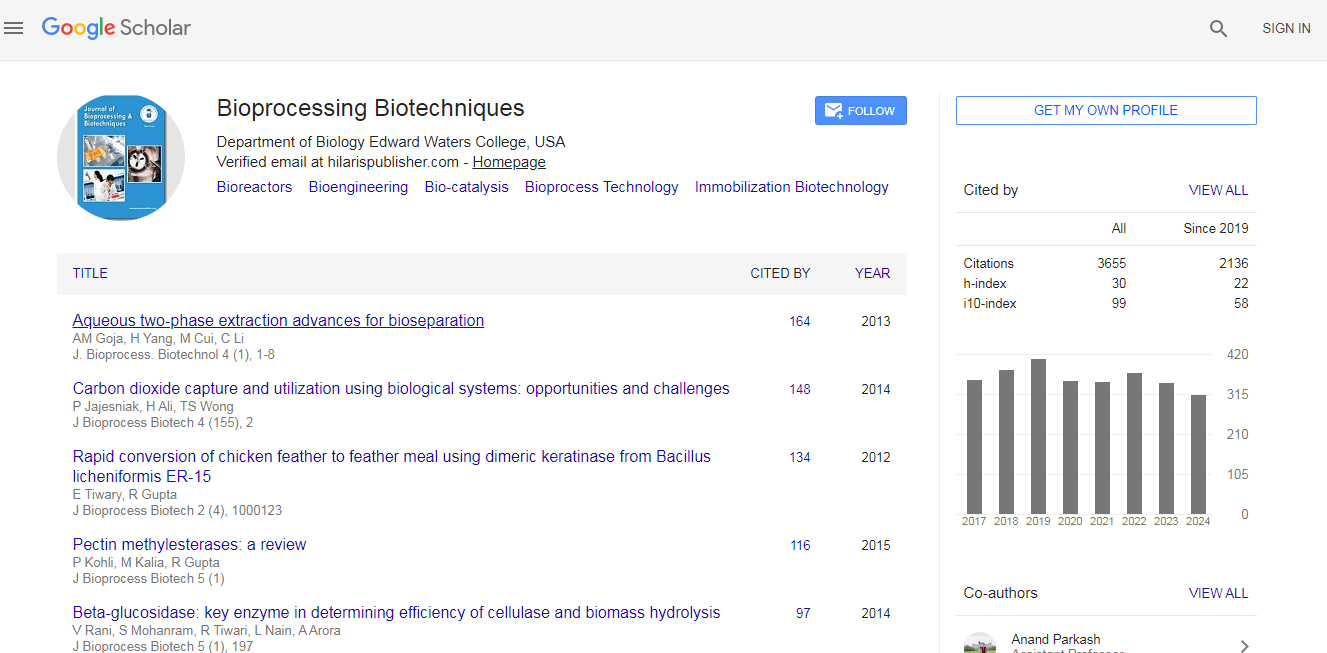
Journal of Bioprocessing & Biotechniques received 3351 citations as per Google Scholar report