Perspective - (2025) Volume 11, Issue 5
Received: 01-Oct-2025, Manuscript No. jctt-26-188429;
Editor assigned: 03-Oct-2025, Pre QC No. P-188429;
Reviewed: 17-Oct-2025, QC No. Q-188429;
Revised: 22-Oct-2025, Manuscript No. R-188429;
Published:
29-Oct-2025
, DOI: 10.37421/2471-9323.2024.10.347
Citation: Rahman, Layla. ”Silk Proteins: Beauty, Health, and Healing Benefits.” J Cosmo Tricho 11 (2025):347.
Copyright: © 2025 Rahman L. This is an open-access article distributed under the terms of the Creative Commons Attribution License, which permits unrestricted use, distribution and reproduction in any medium, provided the original author and source are credited.
This review delves into the multifaceted applications of silk proteins, specifically fibroin and sericin, within the realms of cosmetology and trichology. Their biochemical properties have positioned them as valuable active ingredients in formulations designed to enhance skin and hair health. Research highlights their capacity to boost skin hydration, improve hair strength and luster, and provide a protective shield against environmental aggressors, with potential uses in advanced hair care and dermatological treatments extending their scope [1].
The efficacy of silk peptide derivatives in addressing hair cuticle integrity and reducing surface friction has been investigated. Analysis of how these peptides interact with damaged hair shafts demonstrates their ability to smooth the cuticle, thereby improving shine and combability, underscoring their utility in hair repair products [2].
Furthermore, the significant moisturizing and antioxidant attributes of silk sericin in skincare have been examined. Studies reveal that sericin effectively increases skin hydration by forming a protective film and exhibits free radical scavenging activity, contributing to anti-aging benefits. Its inherent biocompatibility makes it well-suited for formulations intended for sensitive skin [3].
The exploration of silk fibroin nanoparticles as sophisticated delivery systems for active ingredients in hair treatments is a notable advancement. These nanoparticles possess the capability to penetrate the hair shaft, delivering beneficial compounds deep within its structure, paving the way for advanced hair repair and conditioning therapies [4].
Silk protein hydrolysates are also discussed for their application in scalp care formulations. Their proven ability to enhance scalp barrier function, mitigate inflammation, and foster a healthy scalp environment is crucial for optimal hair growth. Additionally, their humectant properties contribute to scalp hydration [5].
The film-forming and conditioning effects of processed silk fibroin on human hair have been critically evaluated. Evidence suggests that silk fibroin creates a flexible, transparent film that boosts hair gloss and minimizes static electricity, alongside improvements in tensile strength and resistance to mechanical damage [6].
Silk sericin's potential as a biomaterial for wound healing and skin regeneration is a compelling area of research. Its biocompatibility, biodegradability, and capacity to promote cell proliferation position it as a promising ingredient for topical treatments aimed at accelerating skin repair and diminishing scar formation [7].
The impact of silk fibroin on the epidermal barrier function and skin moisture retention has been a focus of investigation. Findings indicate that silk fibroin can fortify the skin barrier by promoting the synthesis of essential lipids and proteins, resulting in enhanced hydration and reduced transepidermal water loss, suggesting its value in barrier repair creams [8].
Moreover, the anti-inflammatory properties of silk sericin have been studied in relation to human keratinocytes. Sericin demonstrates an ability to suppress the production of pro-inflammatory cytokines, indicating its potential application in cosmetic products designed to calm sensitive or irritated skin and scalp conditions [9].
Finally, the reparative effects of silk protein treatment on hair damage induced by chemical processes have been explored. Silk fibroin has been shown to effectively restore protein lost in chemically treated hair, thereby reinstating its structural integrity, elasticity, and shine, highlighting its significance in post-treatment hair care regimens [10].
The intricate relationship between silk proteins, namely fibroin and sericin, and their profound impact on skin and hair health forms the core of numerous scientific investigations. These proteins, owing to their unique biochemical profiles, are recognized for their potential as active agents in cosmetic and trichological products. Studies have illuminated their capacity to significantly enhance skin hydration levels, bolster hair strength and impart a healthy shine, while also offering protective benefits against environmental stressors. This broad spectrum of advantages positions silk proteins for application in sophisticated hair care solutions and dermatological treatments, promising advancements in personal care [1].
In the domain of hair care, silk peptide derivatives have emerged as key components for improving the integrity of the hair cuticle and reducing surface friction. Through meticulous analysis of their interactions with damaged hair shafts, researchers have confirmed their ability to effectively smooth the hair cuticle, thereby amplifying shine and facilitating easier combing. These findings strongly support the integration of silk peptides into reparative hair care formulations designed to restore hair health and appearance [2].
Silk sericin, a protein derived from silk, has garnered attention for its remarkable moisturizing and antioxidant properties, particularly in skincare applications. Experimental evidence substantiates its ability to significantly increase skin hydration by forming a protective film on the skin's surface. Furthermore, its potent free radical scavenging activity contributes to anti-aging effects, and its inherent biocompatibility renders it an ideal ingredient for sensitive skin formulations [3].
Advanced hair treatment strategies are being developed utilizing silk fibroin nanoparticles as sophisticated delivery systems for active ingredients. These biocompatible nanoparticles have demonstrated the capacity to penetrate the hair shaft, enabling the targeted delivery of beneficial compounds deep within the hair's structure. This breakthrough opens avenues for highly effective hair repair and conditioning therapies [4].
For optimal scalp health, silk protein hydrolysates are being explored for their therapeutic benefits in scalp care formulations. Research indicates that these hydrolysates can substantially improve the scalp's barrier function, reduce inflammation, and cultivate a healthy scalp environment, which is fundamental for robust hair growth. Their humectant properties also play a role in maintaining scalp hydration [5].
The film-forming capabilities and conditioning effects of processed silk fibroin on human hair are another significant area of study. Silk fibroin is observed to form a pliable, transparent film that not only enhances the gloss of the hair but also effectively reduces static electricity. Moreover, the protein contributes to improved tensile strength and provides enhanced resistance to mechanical damage, making it a valuable component in hair care products [6].
Silk sericin's versatility extends to its application as a biomaterial for wound healing and skin regeneration. Its inherent biocompatibility, biodegradability, and demonstrated ability to stimulate cell proliferation make it a highly promising candidate for topical formulations aimed at accelerating skin repair processes and minimizing the formation of scars. The review of its biological activities further solidifies its potential [7].
The enhancement of epidermal barrier function and skin moisture retention through the application of silk fibroin has been investigated. Studies reveal that silk fibroin can fortify the skin's natural barrier by upregulating the synthesis of crucial lipids and proteins, leading to superior hydration and a reduction in transepidermal water loss. This characteristic makes it suitable for creams designed for barrier repair [8].
Further research into silk sericin has uncovered its significant anti-inflammatory effects on human keratinocytes. Findings indicate that sericin can effectively suppress the production of pro-inflammatory cytokines, suggesting its valuable application in cosmetic formulations intended to soothe sensitive or irritated skin and scalp conditions [9].
Lastly, the impact of silk protein treatment, specifically silk fibroin, on repairing hair damage caused by chemical processes is noteworthy. This protein has demonstrated efficacy in restoring protein loss in chemically compromised hair, thereby reinstating its structural integrity, elasticity, and natural shine. This highlights silk fibroin's critical role in hair care regimens following chemical treatments [10].
Silk proteins, including fibroin and sericin, are recognized for their significant benefits in cosmetic and hair care applications. They enhance skin hydration, improve hair strength and shine, and offer protective qualities. Silk peptides smooth hair cuticles, while sericin provides moisturizing and antioxidant effects, aiding in skin hydration and anti-aging. Silk fibroin nanoparticles act as delivery systems for hair treatments, and protein hydrolysates support scalp health and hydration. Processed silk fibroin improves hair gloss and reduces static, while sericin shows promise in wound healing and has anti-inflammatory properties beneficial for sensitive skin. Silk fibroin also repairs chemically damaged hair and strengthens the skin barrier.
None
None
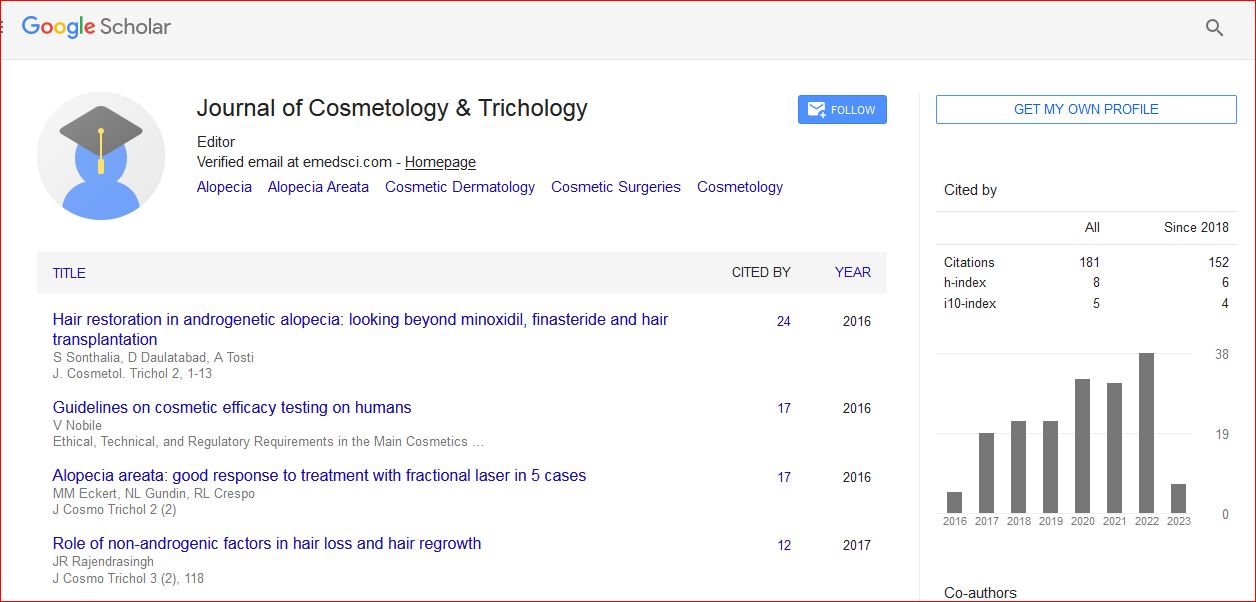
Journal of Cosmetology & Trichology received 180 citations as per Google Scholar report