Short Communication - (2025) Volume 9, Issue 3
Received: 01-May-2025, Manuscript No. jchd-26-185692;
Editor assigned: 04-May-2025, Pre QC No. P-185692;
Reviewed: 18-May-2025, QC No. Q-185692;
Revised: 22-May-2025, Manuscript No. R-185692;
Published:
29-May-2025
, DOI: 10.37421/2684-6020.2024.9.248
Citation: Bianchi, Luca. ”Silent MIs: Early Detection, Personalized
Prevention, and Future Insights.” J Coron Heart Dis 09 (2025):248.
Copyright: © 2025 Bianchi L. This is an open-access article distributed under the terms of the Creative Commons Attribution License, which permits unrestricted use,
distribution and reproduction in any medium, provided the original author and source are credited.
The detection of silent myocardial infarctions (MIs) is a critical area of cardiovascular medicine, essential for early intervention and the prevention of long-term complications. These events, often characterized by a lack of classic chest pain, necessitate advanced diagnostic approaches. Recent progress in this field has been driven by innovations in diagnostic tools and a growing understanding of atypical presentations. High-sensitivity troponin assays, for instance, have emerged as powerful indicators, capable of identifying myocardial injury even when symptoms are absent, marking a significant advancement in our ability to diagnose these subtle cardiac events.
This technological leap facilitates a more nuanced assessment of cardiac risk, moving beyond traditional symptomatic detection methods. Furthermore, novel imaging techniques, such as cardiac magnetic resonance imaging (CMR), offer unparalleled visualization of myocardial tissue, allowing for the detection of scar and dysfunction that may indicate a silent MI. The high resolution of CMR complements biomarker analysis, contributing to a more comprehensive risk stratification for individuals at elevated risk of cardiovascular disease. Alongside these technological advancements, a deeper understanding of the diverse and often subtle ways MIs can manifest is crucial, particularly in vulnerable populations where symptoms can be easily overlooked. Recognizing less obvious signs like fatigue or indigestion as potential indicators of cardiac ischemia can prompt earlier medical attention. The genetic landscape of coronary heart disease and its silent manifestations is also under intense investigation. Identifying genetic predispositions can pave the way for personalized screening strategies and tailored preventative measures, aligning with the principles of precision medicine in cardiovascular health. The integration of artificial intelligence (AI) and machine learning (ML) into cardiovascular data analysis presents a transformative opportunity for the early detection of silent MIs. These technologies possess the capacity to analyze vast datasets from electronic health records, medical imaging, and wearable devices, uncovering subtle patterns that may predict an individual's risk. Wearable devices themselves are becoming increasingly valuable for continuous cardiac monitoring. Data from these devices, including electrocardiogram (ECG) and heart rate variability, could potentially identify silent ischemic episodes, signaling the need for prompt medical evaluation. The role of inflammation in the development of coronary heart disease, including silent MIs, is also gaining prominence. Measuring inflammatory biomarkers may provide additional insights for risk assessment and early detection, thereby guiding more focused preventative strategies. Despite these advancements, lifestyle modifications remain a cornerstone of cardiovascular disease prevention. Educating individuals about the risks associated with conditions such as hypertension and dyslipidemia, and empowering them to adopt healthier habits, is fundamental to reducing the incidence of silent MIs. Finally, the evolution of cardiovascular risk scores is actively incorporating novel biomarkers and imaging findings to enhance the identification of individuals at high risk for silent MIs, aiming to guide more proactive preventative strategies and timely interventions. Detecting silent myocardial infarctions (MIs) is of paramount importance for timely intervention and mitigating long-term cardiovascular sequelae. The absence of classic chest pain symptoms in these events underscores the need for advanced diagnostic capabilities. Recent breakthroughs have significantly enhanced our ability to identify these conditions. High-sensitivity cardiac troponin assays have revolutionized the field, enabling the detection of minute elevations indicative of myocardial injury, even in asymptomatic individuals. This technological advancement allows for a more refined assessment of cardiac risk and earlier management of potential silent MIs. Complementing biochemical markers, sophisticated imaging modalities like cardiac magnetic resonance imaging (CMR) provide detailed visualization of myocardial structure and function. CMR's capacity to identify myocardial scar and dysfunction offers valuable insights for diagnosing silent MIs and aids in comprehensive risk stratification, especially for those with known risk factors. A critical aspect of silent MI detection involves recognizing atypical presentations, which are often more prevalent in certain demographics such as women, the elderly, and individuals with diabetes. A broader awareness of symptoms like fatigue, shortness of breath, or even indigestion as potential cardiac indicators is vital for encouraging early medical consultation. Research into the genetic underpinnings of coronary heart disease, including its silent forms, is uncovering predispositions that can inform personalized screening protocols and preventative measures, aligning with the goals of precision medicine. The advent of artificial intelligence (AI) and machine learning (ML) in processing complex cardiovascular data offers unprecedented potential for early identification of silent MIs. These technologies can analyze large-scale data from diverse sources to detect subtle, predictive patterns of risk. Furthermore, the proliferation of wearable devices is providing continuous physiological monitoring. Data streams from these devices, particularly ECG and heart rate variability, may serve as early warning signals for silent ischemic events, prompting timely medical intervention. The pathogenetic role of inflammation in coronary heart disease, including silent MIs, is a growing area of interest. Biomarkers associated with inflammation may offer additional layers of information for risk assessment and early detection, guiding targeted interventions. Notwithstanding the technological strides, the fundamental importance of lifestyle modifications in preventing cardiovascular events cannot be overstated. Educating individuals about the risks posed by conditions such as hypertension and dyslipidemia, and empowering them to adopt healthier lifestyles, remains a crucial strategy for reducing the burden of silent MIs. Concurrently, the development of advanced cardiovascular risk scores is incorporating novel biomarkers and imaging findings to more accurately stratify individuals at high risk for silent MIs, thereby enabling more aggressive preventative strategies and timely interventions.The early identification of silent myocardial infarctions (MIs) is crucial for implementing timely interventions and averting long-term cardiovascular morbidity. These events, often characterized by the absence of typical chest pain, necessitate a proactive approach to diagnosis. Modern diagnostic tools, including high-sensitivity troponin assays, are instrumental in detecting even subtle elevations of cardiac biomarkers that may indicate myocardial injury in asymptomatic individuals
. This technological advancement allows for a more precise assessment of cardiac risk and enables earlier management strategies for silent MIs. Advanced imaging techniques, such as cardiac magnetic resonance imaging (CMR), provide detailed, non-invasive visualization of myocardial tissue. CMR's ability to detect myocardial scar and dysfunction is invaluable in confirming silent MIs and contributes significantly to the comprehensive risk stratification of individuals at risk. Understanding the diverse and often non-specific presentations of myocardial infarction is also critical, particularly in vulnerable populations where symptoms can be easily misinterpreted. Recognizing symptoms like fatigue, shortness of breath, or gastrointestinal distress as potential indicators of cardiac ischemia can prompt prompt medical attention. Research into the genetic factors influencing coronary heart disease and its silent manifestations is uncovering predispositions that can personalize screening and prevention efforts, embodying the principles of precision medicine. The application of artificial intelligence (AI) and machine learning (ML) in analyzing large cardiovascular datasets holds immense promise for identifying subtle patterns indicative of silent MIs. These technologies can process information from electronic health records, imaging studies, and wearable devices to predict risk. Wearable devices are emerging as a significant tool for continuous cardiac monitoring. Data such as electrocardiogram (ECG) and heart rate variability collected by these devices may flag silent ischemic episodes, prompting timely medical evaluation. The role of inflammation in the pathogenesis of coronary heart disease, including silent MIs, is becoming increasingly evident. Inflammatory biomarkers may offer additional insights for risk assessment and early detection, guiding targeted preventative measures. Lifestyle modifications remain a cornerstone of cardiovascular disease prevention. Educating individuals about the risks associated with conditions like hypertension and dyslipidemia, and encouraging the adoption of healthier habits, is essential for reducing the incidence of silent MIs. Furthermore, evolving cardiovascular risk scores are incorporating novel biomarkers and imaging findings to improve the identification of individuals at high risk for silent MIs, thereby facilitating more aggressive preventative strategies and timely interventions. Silent myocardial infarctions (MIs) represent a significant clinical challenge due to their often asymptomatic nature, delaying diagnosis and treatment. The critical need for early detection is being addressed by advancements in diagnostic technologies. High-sensitivity cardiac troponin assays have proven invaluable in identifying myocardial injury with enhanced sensitivity, even in the absence of overt symptoms, thereby facilitating earlier diagnosis and management of silent MIs. Complementing these biochemical markers, cardiac magnetic resonance imaging (CMR) offers a powerful non-invasive method for visualizing myocardial damage. Its ability to detect myocardial scar and dysfunction provides crucial information for diagnosing silent MIs and aids in comprehensive risk assessment. A crucial aspect of improving detection rates involves a better understanding of atypical presentations of MI, which are frequently observed in specific patient groups, including women, the elderly, and individuals with diabetes. Awareness of symptoms such as fatigue, shortness of breath, or indigestion as potential cardiac indicators is vital for encouraging early medical consultation. The genetic architecture of coronary heart disease, including its silent forms, is a focus of ongoing research. Identifying genetic predispositions can lead to personalized screening and preventative strategies, aligning with the tenets of precision cardiovascular medicine. The integration of artificial intelligence (AI) and machine learning (ML) in analyzing complex cardiovascular data presents a transformative opportunity for the early detection of silent MIs. These advanced analytical tools can identify subtle patterns predictive of risk within vast datasets derived from electronic health records, imaging, and wearable technologies. Wearable devices are also emerging as key instruments for continuous cardiovascular monitoring. Data streams from these devices, such as ECG and heart rate variability, may serve as early indicators of silent ischemic events, prompting timely medical intervention. The pathological role of inflammation in the development of coronary heart disease, including silent MIs, is a subject of growing scientific interest. Biomarkers of inflammation may provide supplementary information for risk stratification and early detection, guiding the implementation of targeted preventative measures. Despite technological progress, lifestyle modifications continue to be fundamental in the prevention of cardiovascular events. Educating individuals about the risks associated with conditions like hypertension and dyslipidemia, and empowering them to adopt healthier lifestyles, remains a cornerstone strategy for reducing the incidence of silent MIs. Lastly, the refinement of cardiovascular risk scores is actively incorporating novel biomarkers and imaging data to more accurately identify individuals at high risk for silent MIs, thereby enabling more proactive preventative interventions.Silent myocardial infarctions (MIs), characterized by a lack of classic symptoms, pose a significant challenge in cardiovascular care. Advancements in diagnostic tools, including high-sensitivity troponin assays and cardiac magnetic resonance imaging (CMR), are improving early detection by identifying subtle myocardial injury and damage. Recognizing atypical presentations, particularly in vulnerable populations, is crucial for timely medical attention. Genetic research and the application of artificial intelligence (AI) and machine learning (ML) offer personalized screening and predictive capabilities. Wearable devices provide continuous monitoring, potentially flagging silent ischemic events. The role of inflammation and the importance of lifestyle modifications, such as managing hypertension and dyslipidemia, remain central to prevention. Evolving cardiovascular risk scores are incorporating these new insights to guide more proactive interventions.
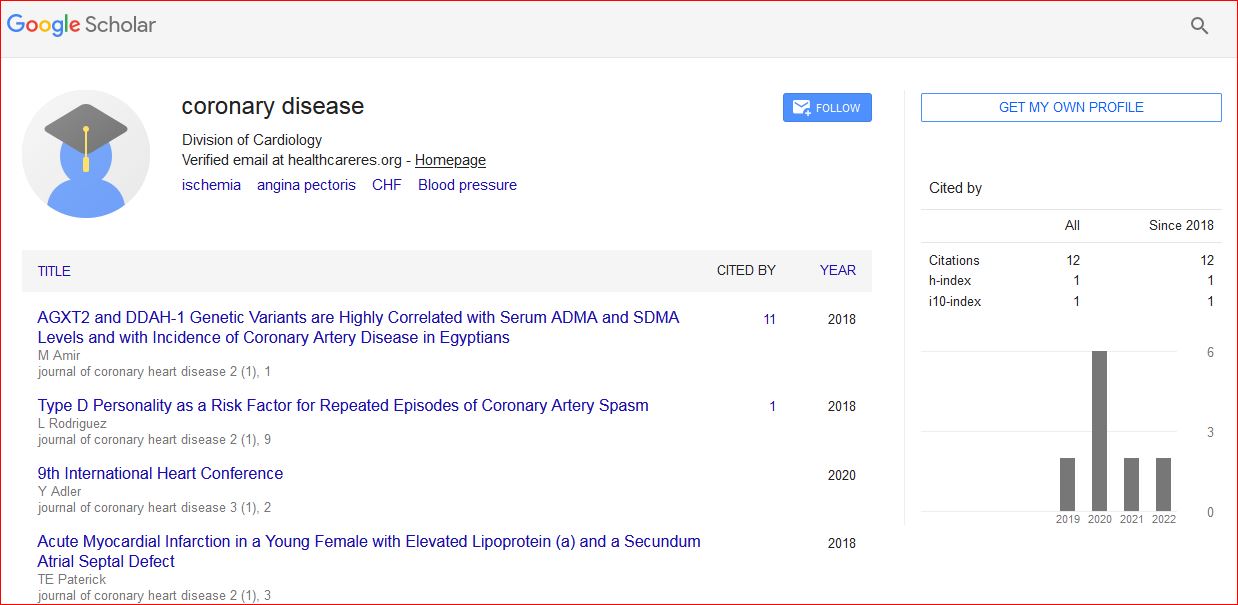
Journal of Coronary Heart Diseases received 15 citations as per Google Scholar report