Short Communication - (2025) Volume 13, Issue 5
Received: 01-Oct-2025, Manuscript No. JGPR-26-190227;
Editor assigned: 03-Oct-2025, Pre QC No. P-190227;
Reviewed: 17-Oct-2025, QC No. Q-190227;
Revised: 22-Oct-2025, Manuscript No. R-190227;
Published:
29-Oct-2025
, DOI: 10.37421/2329-9126.2025.13.637
Citation: Ionescu, Andrei. ”Shared Decision-Making: Patient Values, Better Outcomes.” J Gen Pract 13 (2025):637.
Copyright: © 2025 Ionescu A. This is an open-access article distributed under the terms of the Creative Commons Attribution License, which permits unrestricted use, distribution and reproduction in any medium, provided the original author and source are credited.
Shared decision-making (SDM) in family medicine is a cornerstone of patient-centered care, actively involving individuals in their healthcare choices to enhance autonomy and satisfaction. This collaborative partnership between patients and physicians ensures that treatment plans are aligned with patient values and preferences, which is particularly vital for managing chronic conditions and navigating complex therapeutic options, ultimately leading to improved adherence and health outcomes. Effective SDM hinges on clear communication, thorough exploration of alternatives, and deliberate shared deliberation among all parties involved. [1] Implementing SDM within family medicine practices presents a duality of opportunities and challenges that warrant careful consideration. Key facilitators for its successful integration include comprehensive physician training in effective communication strategies, the proactive availability of well-designed decision aids, and robust organizational support structures. Conversely, common barriers frequently encountered involve significant time constraints during patient consultations, a general lack of standardized protocols for SDM implementation, and considerable variations in patient health literacy levels. Addressing these identified barriers through the development and application of targeted interventions is absolutely vital for the sustained and successful integration of SDM principles. [2] Decision aids serve as crucial and indispensable tools for facilitating effective shared decision-making (SDM) within the family medicine context. These thoughtfully designed tools are specifically engineered to provide patients with balanced, unbiased information concerning various treatment options, encompassing their potential benefits, inherent harms, and inherent uncertainties, thereby empowering them to make truly informed choices. Their judicious use has been consistently associated with demonstrably increased patient knowledge regarding their conditions and treatment, a significant reduction in decisional conflict, and a marked increase in overall decisional satisfaction. Consequently, tailoring these decision aids to the specific conditions being managed and the unique characteristics of distinct patient populations is of paramount importance for maximizing their impact. [3] The indispensable role of communication skills in the successful execution of shared decision-making (SDM) within the practice of family medicine cannot be overstated. It is imperative that physicians cultivate and demonstrate proficiency in essential communication techniques, including active listening, empathetic engagement with patients, and the art of skillfully exploring and understanding patient values. The adoption of specific, evidence-based techniques, such as the well-established 'Ask-Tell-Ask' approach and the utilization of the teach-back method, can significantly enhance patient comprehension of their health conditions and treatment options, thereby fostering deeper engagement in the crucial decision-making process. [4] Patient engagement in the process of shared decision-making (SDM) is demonstrably influenced by a multifaceted array of factors, encompassing their level of health literacy, their specific cultural background, and their perception of the physician's approachability. Within the specific domain of family medicine, the art of tailoring SDM strategies to meet the diverse and individual needs of each patient, coupled with the active empowerment of patients to confidently voice their preferences and concerns, are absolutely paramount for achieving optimal outcomes. Furthermore, the consistent application of culturally sensitive communication practices and the diligent use of plain, easily understandable language are essential prerequisites for ensuring equitable and effective SDM for all patients. [5] The profound impact of shared decision-making (SDM) on the overall healthcare outcomes observed in family medicine is both significant and extensively documented. Empirical studies consistently reveal improvements in patient adherence to prescribed treatment plans, demonstrably better management of chronic health conditions, and notably higher levels of patient satisfaction with their care. SDM actively contributes to the selection of more appropriate and suitable treatment choices by ensuring that medical interventions are carefully aligned with the patient's personal goals and deeply held values, a process that can potentially lead to a meaningful reduction in unnecessary medical procedures and associated healthcare costs. [6] Integrating shared decision-making (SDM) seamlessly into the demanding daily workflow of busy family medicine practices necessitates the adoption of pragmatic and adaptable approaches. This critical integration involves strategic efforts such as optimizing the allocation and utilization of consultation time, exploring the potential benefits of shared medical appointments, and strategically leveraging available technology to facilitate efficient information sharing and enhance patient-physician communication channels. Crucially, comprehensive training programs and ongoing, consistent support for primary care teams are indispensable components for achieving the sustainable and widespread implementation of SDM. [7] The fundamental ethical underpinnings of shared decision-making (SDM) within the practice of family medicine are firmly rooted in the core principles of respect for patient autonomy and the ethical imperative of beneficence. SDM actively promotes and upholds patient autonomy by meticulously ensuring that their unique values and personal preferences serve as the guiding force behind all clinical decisions made. Furthermore, it genuinely supports beneficence by facilitating care pathways that are demonstrably more likely to align with the patient's overall well-being and deeply desired goals, thereby unequivocally enhancing the overall quality of the care provided. [8] Accurately measuring the quality of shared decision-making (SDM) as it is practiced in family medicine is an essential and critical step for rigorously evaluating its true effectiveness. A variety of validated instruments and assessment tools have been developed and refined to meticulously assess both patient and physician perspectives on the multifaceted SDM process, including crucial aspects such as the extent of patient involvement, the efficacy of information sharing, and the depth of mutual deliberation. The reliable and consistent application of these measurement tools is instrumental in identifying specific areas that require improvement and effectively guiding the development and refinement of implementation strategies. [9] Future research endeavors in the domain of shared decision-making (SDM) within family medicine are poised to explore several promising and impactful new directions. These include harnessing the transformative potential of technology to enable remote SDM, delving deeper into the application and nuances of SDM within the complex context of multimorbidity, and gaining a more profound understanding of its long-term influence on the vital patient-physician relationship. A central and ongoing priority remains the concerted development of scalable and sustainable SDM interventions that can be effectively and reliably integrated into the diverse operational settings of various primary care environments. [10]
Shared decision-making (SDM) in family medicine stands as a pivotal approach to enhancing patient autonomy and overall satisfaction by ensuring active patient involvement in their healthcare choices. This methodology cultivates a robust collaborative partnership between patients and their physicians, thereby guaranteeing that treatment strategies are intricately aligned with the unique values and personal preferences of the patient. This is of particular importance for the effective management of chronic conditions and for navigating the complexities often associated with diverse treatment options, ultimately contributing to improved adherence and more favorable health outcomes. The successful implementation of SDM necessitates clear and open communication channels, a thorough exploration of all available alternatives, and a process of deliberate shared deliberation. [1] The integration of shared decision-making (SDM) into the fabric of family medicine practices is characterized by a landscape of both promising opportunities and considerable challenges. Among the key facilitators that contribute to its successful adoption are comprehensive physician training programs focused on advanced communication skills, the ready availability of well-developed decision aids, and strong organizational support for SDM initiatives. Conversely, the barriers commonly encountered often include significant time constraints during routine patient consultations, a notable lack of standardized protocols designed to guide SDM processes, and considerable variability in patient health literacy levels. Effectively addressing these identified barriers through the strategic implementation of targeted interventions is critically important for achieving successful and sustainable SDM integration. [2] Within the realm of family medicine, decision aids are recognized as indispensable tools that are fundamental to the effective practice of shared decision-making (SDM). These sophisticated tools are designed to furnish patients with comprehensive and balanced information regarding their various treatment options, meticulously detailing their potential benefits, inherent risks, and inherent uncertainties, thereby empowering them to make truly informed decisions. The utilization of these decision aids has been consistently linked to demonstrable increases in patient knowledge, a reduction in decisional conflict, and enhanced satisfaction with the decisions made. Consequently, the practice of tailoring these decision aids to specifically address particular medical conditions and the unique characteristics of diverse patient populations is of paramount importance for maximizing their clinical utility and impact. [3] The critical importance of communication skills in the successful execution of shared decision-making (SDM) within family medicine cannot be overemphasized. It is incumbent upon physicians to develop and consistently demonstrate proficiency in essential communication competencies, including active listening, empathetic engagement with patients, and the adeptness to explore patient values and preferences. The strategic application of specific techniques, such as the widely recognized 'Ask-Tell-Ask' approach and the implementation of the teach-back method, can significantly contribute to a deeper patient understanding of their health situation and treatment alternatives, thereby fostering greater engagement in the decision-making process. [4] Patient engagement in the dynamic process of shared decision-making (SDM) is demonstrably influenced by a complex interplay of various factors, including their individual health literacy levels, their unique cultural background, and their perception of the physician's approachability. In the specific context of family medicine, the crucial elements of tailoring SDM strategies to meet the distinct needs of each patient and actively empowering patients to voice their preferences are of paramount importance. Furthermore, the consistent application of culturally sensitive communication practices and the diligent use of plain, accessible language are essential prerequisites for ensuring that SDM is equitable and effective for all individuals seeking care. [5] The tangible impact of shared decision-making (SDM) on the ultimate healthcare outcomes observed within family medicine settings is both substantial and well-substantiated. Empirical research consistently indicates notable improvements in patient adherence to prescribed treatment regimens, more effective management of chronic diseases, and higher levels of patient satisfaction with the care they receive. SDM plays a critical role in facilitating the selection of more appropriate treatment choices by ensuring that medical interventions are carefully aligned with the patient's personal goals and deeply held values, which can subsequently lead to a reduction in unnecessary procedures and associated healthcare expenditures. [6] The effective integration of shared decision-making (SDM) into the demanding daily workflow of family medicine practices requires the adoption of pragmatic and adaptable strategies. This includes optimizing the efficiency of consultation time, exploring the utility of shared medical appointments, and strategically leveraging available technology to enhance information exchange and communication between patients and physicians. Crucially, the provision of comprehensive training and ongoing support for primary care teams is essential for ensuring the sustainable implementation and sustained success of SDM initiatives. [7] The core ethical principles that underpin shared decision-making (SDM) in family medicine are deeply rooted in the fundamental tenets of respect for patient autonomy and the ethical obligation of beneficence. SDM actively upholds and promotes patient autonomy by meticulously ensuring that their values and preferences are central to guiding clinical decisions. Moreover, it effectively supports beneficence by promoting care plans that are more likely to align with the patient's overall well-being and desired goals, thereby significantly enhancing the quality of healthcare provided. [8] The rigorous measurement of the quality of shared decision-making (SDM) within family medicine practice is an essential requirement for effectively evaluating its impact and effectiveness. A range of validated instruments are available that allow for the systematic assessment of both patient and physician perspectives on the SDM process, encompassing critical aspects such as the extent of patient involvement, the clarity of information shared, and the quality of deliberation. The reliable application of these measurement tools is instrumental in pinpointing areas that require enhancement and in guiding the refinement of implementation strategies. [9] Future research directions in the field of shared decision-making (SDM) within family medicine are focused on several key areas of development. These include harnessing technological advancements to facilitate remote SDM, investigating the application of SDM in the complex context of multimorbidity, and gaining a deeper understanding of its long-term effects on the patient-physician relationship. A persistent and significant priority remains the development of scalable and sustainable SDM interventions that can be effectively integrated into the diverse operational environments of primary care settings. [10]
Shared decision-making (SDM) in family medicine enhances patient autonomy and satisfaction by actively involving individuals in their healthcare choices, fostering a collaborative partnership that aligns treatment plans with patient values. This approach is crucial for managing chronic conditions and complex treatments, leading to improved adherence and outcomes. Effective SDM relies on clear communication, exploration of alternatives, and shared deliberation. While implementing SDM offers opportunities, challenges like time constraints and varying patient health literacy exist. Decision aids are vital tools providing balanced information to facilitate informed choices, while strong communication skills are essential for physicians to engage patients effectively. Patient engagement is influenced by health literacy and cultural background, requiring tailored strategies. SDM has a significant impact on healthcare outcomes, improving adherence and chronic disease management. Integrating SDM into workflows requires pragmatic approaches and team support. Ethically, SDM upholds patient autonomy and beneficence. Measuring SDM quality is crucial for evaluation and improvement. Future research will focus on technology, multimorbidity, and long-term relationship impacts.
None
None
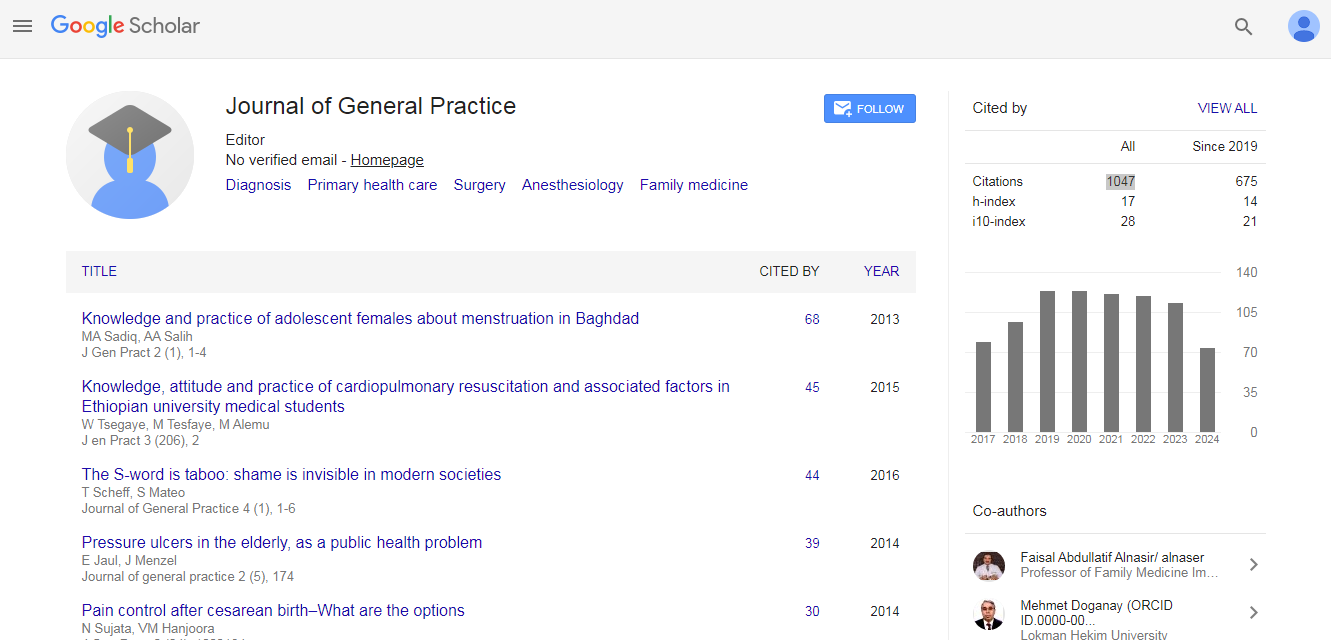
Journal of General Practice received 1047 citations as per Google Scholar report