Short Communication - (2025) Volume 11, Issue 3
Received: 02-Jun-2025, Manuscript No. jpnp-25-175498;
Editor assigned: 04-Jun-2025, Pre QC No. P-175498;
Reviewed: 18-Jun-2025, QC No. Q-175498;
Revised: 23-Jun-2025, Manuscript No. R-175498;
Published:
30-Jun-2025
, DOI: 10.37421/2472-0992.2025.11.370
Citation: Muller, Jonas. ”Sesquiterpenes: Diverse Natural Compounds, Global Applications.” J Pharmacogn Nat Prod 11 (2025):370.
Copyright: © 2025 Muller J. This is an open-access article distributed under the terms of the Creative Commons Attribution License, which permits unrestricted use, distribution and reproduction in any medium, provided the original author and source are credited.
Sesquiterpenes, a vast and structurally diverse class of natural products, hold significant interest across various scientific disciplines due to their widespread occurrence and remarkable biological activities. These compounds are predominantly found in medicinal plants, where they contribute to a range of defensive and physiological processes [6].
Understanding their intricate biosynthetic pathways, which involve specific sesquiterpene synthases, is crucial for unlocking their full potential and for advanced metabolic engineering endeavors aimed at enhancing their production [2].
Recent comprehensive reviews highlight the diverse pharmacological actions of sesquiterpenoids, positioning them as promising candidates for numerous therapeutic applications [3].
This includes their capacity as antimicrobial, anti-inflammatory, anticancer, and neuroprotective agents, among others, underscoring their broad spectrum of therapeutic relevance [3].
The anti-cancer potential of specific sesquiterpene lactones, such as costunolide and dehydrocostus lactone, has garnered significant attention [1].
Research indicates these compounds exert their effects through multifaceted mechanisms, including inducing apoptosis, inhibiting cell proliferation, suppressing angiogenesis, and modulating immune responses across various cancer cell lines [1].
These findings suggest sesquiterpenes could be foundational for new cancer therapeutic strategies, either used independently or in combination with existing conventional treatments [1].
Beyond oncology, their anti-inflammatory properties are equally compelling. Many natural sesquiterpenes exhibit potent anti-inflammatory effects by inhibiting pro-inflammatory mediators like NF-κB, COX-2, and iNOS [4].
These compounds represent potential alternatives or adjuncts to traditional anti-inflammatory drugs, offering new avenues for treating inflammatory diseases with potentially fewer adverse effects [4].
A systematic review further reinforces the notion that sesquiterpenes are promising natural agents for treating inflammatory conditions, validating their role in modulating inflammatory pathways and reducing pro-inflammatory mediators [10].
The neuroprotective capacity of natural sesquiterpenes, especially those derived from medicinal plants, is another area of active investigation. These compounds show promise in mitigating neuronal damage, reducing oxidative stress, inhibiting neuroinflammation, and preventing apoptosis, which are critical actions in various neurological conditions [5].
This suggests a significant potential for developing therapeutic strategies against severe neurodegenerative diseases like Alzheimer's and Parkinson's [5].
Furthermore, the biological activities of sesquiterpenes extend beyond direct human health applications to include roles in environmental and food industries. For instance, insecticidal sesquiterpenes play a vital role in plant defense mechanisms and are being explored as natural, environmentally beneficial alternatives to synthetic pesticides [7].
Their diverse structures and modes of action against insects position them favorably for applications in sustainable agriculture [7].
Similarly, their antimicrobial and antioxidant properties make them excellent candidates for natural food preservatives. They are crucial for extending the shelf life and maintaining the quality of food products, offering a safe and natural additive alternative in the food industry by acting against foodborne pathogens and spoilage organisms [9].
Recent advancements in phytochemistry and synthetic biology are significantly propelling the understanding and application of sesquiterpenes. Efforts are continuously made to discover novel sesquiterpenes and explore their therapeutic potential, building on their structural diversity and established biological activities [6].
The elucidation of new sesquiterpene synthases, the mapping of novel biosynthetic pathways, and the engineering of microbial hosts are enhancing the sustainable and efficient production of these complex natural products [8].
These developments underscore the growing recognition of sesquiterpenes as a rich source of bioactive compounds with broad implications for drug discovery, agriculture, and food preservation, highlighting an exciting future for research and development in this field [3, 6, 8]. The collective body of research points to sesquiterpenes as not just interesting natural curiosities but as vital components in the next generation of solutions for health, environment, and industry [3, 6].
Sesquiterpenoids represent a significant class of natural products characterized by their diverse chemical structures and widespread occurrence, particularly in medicinal plants [6]. Their biosynthesis is a complex process involving specific sesquiterpene synthases, and ongoing research continues to elucidate novel pathways and regulatory mechanisms governing their production [2, 3]. Advances in metabolic engineering and synthetic biology are crucial for optimizing the sustainable and efficient production of these valuable compounds for various applications [2, 8]. This understanding forms the bedrock for targeted drug discovery and the development of new industrial products [3]. Recent reviews comprehensively cover their phytochemistry, highlighting the vast structural diversity and isolation methods employed to discover novel sesquiterpenes [6].
The pharmacological landscape of sesquiterpenes is remarkably broad, with significant potential in addressing numerous health challenges. For instance, specific sesquiterpene lactones, such as costunolide and dehydrocostus lactone, demonstrate potent anti-cancer properties [1]. Their mechanisms of action are multifaceted, involving the induction of apoptosis, inhibition of proliferation, suppression of angiogenesis, and modulation of immune responses in various cancer cells [1]. These findings position them as promising candidates for novel cancer therapies, either alone or in synergistic combinations with existing treatments [1]. Beyond oncology, sesquiterpenes are recognized for their robust anti-inflammatory effects. Numerous natural sesquiterpenes act by inhibiting key pro-inflammatory mediators, including NF-κB, COX-2, and iNOS, thereby offering a natural pathway to mitigate inflammatory diseases [4]. A systematic review further supports their role as effective natural agents for inflammatory conditions, suggesting they can modulate inflammatory pathways with potential for enhanced efficacy and reduced side effects compared to conventional drugs [10].
Moreover, the neuroprotective capabilities of sesquiterpenes are gaining prominence. Compounds derived from medicinal plants have shown promise in mitigating neuronal damage, reducing oxidative stress, and inhibiting neuroinflammation, crucial steps in preventing apoptosis associated with neurological conditions [5]. This provides a foundation for developing new therapeutic strategies against debilitating neurodegenerative diseases like Alzheimer's and Parkinson's [5]. Apart from these specific areas, sesquiterpenes exhibit a spectrum of other biological activities, including antimicrobial and antioxidant effects [3, 6]. These diverse properties collectively contribute to their appeal as multi-target therapeutic agents and provide a rich source for drug discovery efforts [3].
Beyond pharmaceutical applications, sesquiterpenes play vital roles in other sectors, particularly in agriculture and food preservation. Their insecticidal properties are highly valuable, showcasing their function in plant defense mechanisms [7]. Research into insecticidal sesquiterpenes focuses on their occurrence, chemical diversity, and specific modes of action against various insects, paving the way for developing natural, environmentally friendly alternatives to synthetic pesticides [7]. This contributes significantly to sustainable agricultural practices [7]. In the food industry, sesquiterpenes are being explored as natural food preservatives [9]. Their inherent antimicrobial and antioxidant activities are critical for extending the shelf life of food products and maintaining quality, combating foodborne pathogens and spoilage organisms [9]. This offers a safe and natural additive alternative, addressing consumer demand for cleaner labels and sustainable practices in food preservation [9].
The ongoing research and advancements in synthetic biology are continuously expanding the utility of sesquiterpenoids. The discovery of new sesquiterpene synthases and the elucidation of novel biosynthetic pathways are critical for their enhanced production [8]. Engineering microbial hosts to efficiently produce target sesquiterpenes underscores the importance of synthetic biology tools in providing sustainable and cost-effective methods for these complex natural products [8]. These concerted efforts in phytochemistry, biological activity screening, and synthetic biology signify a promising future for harnessing the full therapeutic and industrial potential of sesquiterpenes, moving them from niche natural compounds to mainstream applications [3, 6, 8].
Sesquiterpenes, a diverse class of natural compounds primarily found in medicinal plants, exhibit a remarkable array of biological activities with broad therapeutic and industrial applications. These compounds demonstrate significant anticancer potential by inducing apoptosis and inhibiting proliferation, alongside robust anti-inflammatory effects through the modulation of key inflammatory mediators. They also offer neuroprotective benefits, mitigating neuronal damage and neuroinflammation, which is promising for treating neurodegenerative diseases. Beyond medicine, sesquiterpenes serve crucial roles in agriculture as natural insecticidal agents for plant defense and sustainable pest control. Their antimicrobial and antioxidant properties are harnessed in the food industry for use as effective, natural food preservatives, extending shelf life and ensuring product quality. Recent advancements in phytochemistry, biosynthesis, and synthetic biology are continuously enhancing the understanding and production of these complex natural products. The elucidation of new biosynthetic pathways and the engineering of microbial hosts are paving the way for sustainable and efficient production. Overall, sesquiterpenes represent a rich and versatile source of bioactive compounds, driving innovative solutions in health, agriculture, and food science. Ongoing research promises to unlock even more of their potential, positioning them as key players in future therapeutic and industrial strategies.
None
None
Indexed at, Google Scholar, Crossref
Indexed at, Google Scholar, Crossref
Indexed at, Google Scholar, Crossref
Indexed at, Google Scholar, Crossref
Indexed at, Google Scholar, Crossref
Indexed at, Google Scholar, Crossref
Indexed at, Google Scholar, Crossref
Indexed at, Google Scholar, Crossref
Indexed at, Google Scholar, Crossref
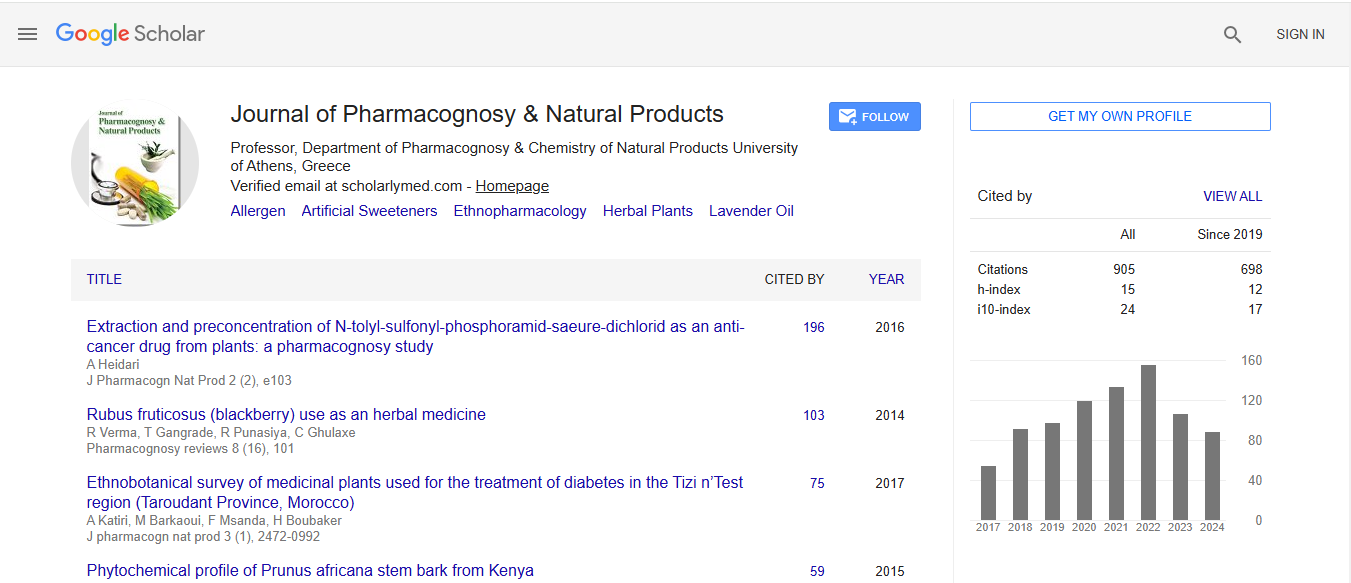
Journal of Pharmacognosy & Natural Products received 606 citations as per Google Scholar report