Short Communication - (2025) Volume 11, Issue 3
Received: 02-Jun-2025, Manuscript No. jpnp-25-175497;
Editor assigned: 04-Jun-2025, Pre QC No. P-175497;
Reviewed: 18-Jun-2025, QC No. Q-175497;
Revised: 23-Jun-2025, Manuscript No. R-175497;
Published:
30-Jun-2025
, DOI: 10.37421/2472-0992.2025.11.369
Citation: Dubois, Léa. ”Secondary Metabolites: Diverse Roles, Biotech Future.” J Pharmacogn Nat Prod 11 (2025):369.
Copyright: © 2025 Dubois L. This is an open-access article distributed under the terms of the Creative Commons Attribution License, which permits unrestricted use, distribution and reproduction in any medium, provided the original author and source are credited.
Plants produce an array of secondary metabolites that act as crucial defense mechanisms against various plant pathogens. These compounds, spanning diverse chemical classes like phenolics, terpenoids, and alkaloids, are not merely passive shields. They actively interfere with pathogen growth, inhibit colonization, and can even prime the plant's immune system for a more robust response. Understanding how these metabolites function is key to developing sustainable disease management strategies in agriculture, moving towards natural resilience rather than synthetic interventions[1].
Microorganisms are undisputed factories for an immense diversity of secondary metabolites, many of which possess remarkable biological activities. These microbial compounds represent a vast, largely untapped reservoir for drug discovery, offering potential solutions for emerging infectious diseases, cancer, and other challenging health conditions. Exploring and optimizing the production of these natural products, from bacteria, fungi, and archaea, is a critical avenue for pharmaceutical innovation, particularly as resistance to existing drugs grows[2].
Fungi produce a wide array of secondary metabolites with significant potential for use in sustainable agriculture. These compounds can serve as biopesticides, biofertilizers, or growth promoters, offering eco-friendly alternatives to synthetic chemicals. Leveraging fungal secondary metabolites can help mitigate environmental impact, improve crop yield, and enhance plant resistance to diseases and pests, representing a powerful tool for developing more resilient and sustainable food systems[3].
The marine environment is an unparalleled source of structurally diverse secondary metabolites, many of which exhibit potent anticancer properties. Organisms living in extreme marine conditions, such as sponges, corals, and microorganisms, have evolved unique biochemical pathways to produce compounds with novel mechanisms of action against cancer cells. This vast chemical diversity from the ocean holds immense promise for the discovery and development of new anticancer drugs, addressing the urgent need for more effective and less toxic treatments[4].
Engineering microorganisms for enhanced or novel secondary metabolite biosynthesis has seen significant advancements. Modern synthetic biology and metabolic engineering techniques allow scientists to precisely manipulate microbial pathways, introducing new genes or optimizing existing ones to boost production yields, create unnatural variants, or even produce entirely new compounds. These engineered biological systems offer a powerful platform for sustainable and scalable production of valuable pharmaceuticals, agrochemicals, and industrial biochemicals[5].
Plants synthesize a diverse range of secondary metabolites that are not directly involved in growth but play crucial roles in their interaction with the environment and offer significant health benefits to humans. These compounds, including flavonoids, alkaloids, and terpenoids, exhibit antioxidant, anti-inflammatory, antimicrobial, and anticancer activities. Incorporating these plant-derived compounds through diet or supplements can contribute to disease prevention and overall well-being, highlighting the importance of phytochemical research for public health[6].
Secondary metabolites act as a complex chemical language facilitating interactions between plants and microbes. These compounds mediate communication, defense, and resource acquisition, shaping the intricate dynamics of plant-microbe symbioses and antagonisms. Understanding this chemical dialogue is critical for manipulating plant microbiomes to improve crop health and resilience, offering pathways to develop new biocontrol agents and enhance nutrient uptake in agricultural systems[7].
Natural secondary metabolites possess diverse therapeutic properties, making them invaluable in modern medicine. From ancient traditional remedies to contemporary drug development, these compounds offer a rich source for new antibiotics, anticancer agents, anti-inflammatory drugs, and more. Their complex chemical structures and varied bioactivities provide unique scaffolds for drug design, inspiring synthetic modifications to create even more potent and selective therapeutic agents[8].
Biotechnological approaches have revolutionized the production of plant secondary metabolites, enabling scalable and controlled synthesis of valuable compounds. Techniques like plant tissue culture, hairy root cultures, and metabolic engineering in heterologous hosts offer alternatives to traditional extraction from wild plants, which can be unsustainable. While significant progress has been made, scaling these processes and optimizing yields remain key challenges for industrial applications, yet the potential for consistent, high-quality production is immense[9].
Endophytic fungi, which live symbiotically within plant tissues without causing disease, are a remarkable source of novel bioactive secondary metabolites. These fungi often produce compounds structurally similar to those from their host plants, or entirely unique ones, with diverse pharmaceutical potential, including antimicrobial, anticancer, and immunosuppressive activities. Discovering and characterizing these metabolites from endophytes offers an exciting frontier for drug development, especially given the vast and largely unexplored diversity of endophytic fungi[10].
Secondary metabolites, a remarkably diverse group of chemical compounds, are fundamental to life across various biological systems. Plants, for example, rely on these compoundsâ??such as phenolics, terpenoids, and alkaloidsâ??as crucial defense mechanisms against a range of plant pathogens. These are not merely passive deterrents; they actively interfere with pathogen growth, inhibit colonization, and can even prime the plant's immune system for a more robust and rapid response [1]. Beyond their direct defensive roles, plant-derived secondary metabolites also offer significant health benefits to humans. Compounds like flavonoids and alkaloids exhibit antioxidant, anti-inflammatory, antimicrobial, and potent anticancer activities, suggesting their importance in disease prevention and overall well-being when incorporated through diet or supplements [6]. Furthermore, secondary metabolites function as a complex chemical language, mediating communication, defense, and resource acquisition in the intricate dynamics of plant-microbe interactions. Understanding this chemical dialogue is critical for manipulating plant microbiomes, aiming to improve crop health and resilience, and developing new biocontrol agents [7].
The natural world presents an immense reservoir of secondary metabolites, particularly from microbial and marine sources, each with unique biological activities. Microorganisms, spanning bacteria, fungi, and archaea, are prolific producers, yielding compounds that represent a largely untapped resource for drug discovery, offering potential solutions for emerging infectious diseases, cancer, and other challenging health conditions [2]. Specifically, fungi produce a wide array of secondary metabolites with significant potential for sustainable agriculture, acting as biopesticides, biofertilizers, or growth promoters. These offer eco-friendly alternatives to synthetic chemicals, helping mitigate environmental impact, improve crop yield, and enhance plant resistance to diseases and pests [3]. The marine environment is another unparalleled source of structurally diverse secondary metabolites, many of which demonstrate potent anticancer properties. Organisms like sponges and corals have evolved unique biochemical pathways to produce compounds with novel mechanisms of action against cancer cells, holding immense promise for new anticancer drug development [4]. Moreover, endophytic fungi, which live symbiotically within plant tissues without causing harm, are a remarkable and largely unexplored source of novel bioactive secondary metabolites, often structurally similar to host plant compounds, with diverse pharmaceutical potential including antimicrobial and immunosuppressive activities [10].
The therapeutic properties of natural secondary metabolites make them invaluable in modern medicine. Their applications range from ancient traditional remedies to contemporary drug development, providing a rich source for new antibiotics, anticancer agents, and anti-inflammatory drugs. The complex chemical structures and varied bioactivities of these compounds offer unique scaffolds for drug design, inspiring synthetic modifications to create even more potent and selective therapeutic agents [8]. This continuous exploration underscores their critical role in addressing current and future health challenges, particularly as drug resistance grows and the need for novel treatments becomes more urgent.
Biotechnological approaches have significantly advanced the production of these valuable compounds, moving beyond traditional extraction methods that can be unsustainable. Modern synthetic biology and metabolic engineering techniques allow scientists to precisely manipulate microbial pathways. This manipulation can introduce new genes or optimize existing ones to boost production yields, create unnatural variants, or even produce entirely new compounds, establishing powerful platforms for sustainable and scalable production of pharmaceuticals, agrochemicals, and industrial biochemicals [5]. Similarly, for plant secondary metabolites, techniques like plant tissue culture, hairy root cultures, and metabolic engineering in heterologous hosts offer controlled and consistent synthesis. While scaling these processes and optimizing yields remain key challenges for industrial applications, the potential for high-quality production is immense, reducing reliance on wild plant resources [9].
The ongoing research into secondary metabolites from all sourcesâ??plants, microbes, marine organisms, and engineered systemsâ??is driving significant progress. From enhancing plant defense and agricultural sustainability [1, 3] to discovering new drugs for intractable diseases [2, 4, 8, 10], these compounds are central to addressing global challenges. The deciphering of their roles in complex ecological interactions [7] and the development of sophisticated production methods [5, 9] collectively underscore the profound impact and future potential of secondary metabolite research in fostering natural resilience and developing innovative solutions across health, agriculture, and industry.
Secondary metabolites are diverse compounds produced by various organisms, playing critical roles in their interactions with the environment and offering substantial benefits to humans. Plants utilize these compounds, such as phenolics and alkaloids, as vital defense mechanisms against pathogens, actively interfering with microbial growth and priming their immune systems. They also provide significant health benefits, including antioxidant and anticancer activities, which can be harnessed through diet. Microorganisms, including bacteria, fungi, and archaea, are rich sources of novel secondary metabolites with remarkable biological activities, representing a vast reservoir for drug discovery, particularly for emerging infectious diseases and cancer. Fungi, in particular, contribute compounds valuable for sustainable agriculture as biopesticides and growth promoters, enhancing crop resilience. The marine environment also offers a unique treasure trove of structurally diverse secondary metabolites with potent anticancer properties, reflecting evolutionary adaptations. The production of these valuable compounds is being revolutionized by biotechnological advancements. Synthetic biology and metabolic engineering allow for precise manipulation of microbial pathways, enhancing biosynthesis and enabling the creation of novel compounds for pharmaceuticals and agrochemicals. Similarly, biotechnological approaches like plant tissue culture provide sustainable alternatives for producing plant secondary metabolites. These compounds also act as a crucial chemical language in plant-microbe interactions, mediating communication and shaping ecological dynamics. Overall, secondary metabolites are essential for defense, health, and agriculture, with ongoing research and engineering efforts continually unlocking their immense therapeutic and industrial potential.
None
None
Indexed at, Google Scholar, Crossref
Indexed at, Google Scholar, Crossref
Indexed at, Google Scholar, Crossref
Indexed at, Google Scholar, Crossref
Indexed at, Google Scholar, Crossref
Indexed at, Google Scholar, Crossref
Indexed at, Google Scholar, Crossref
Indexed at, Google Scholar, Crossref
Indexed at, Google Scholar, Crossref
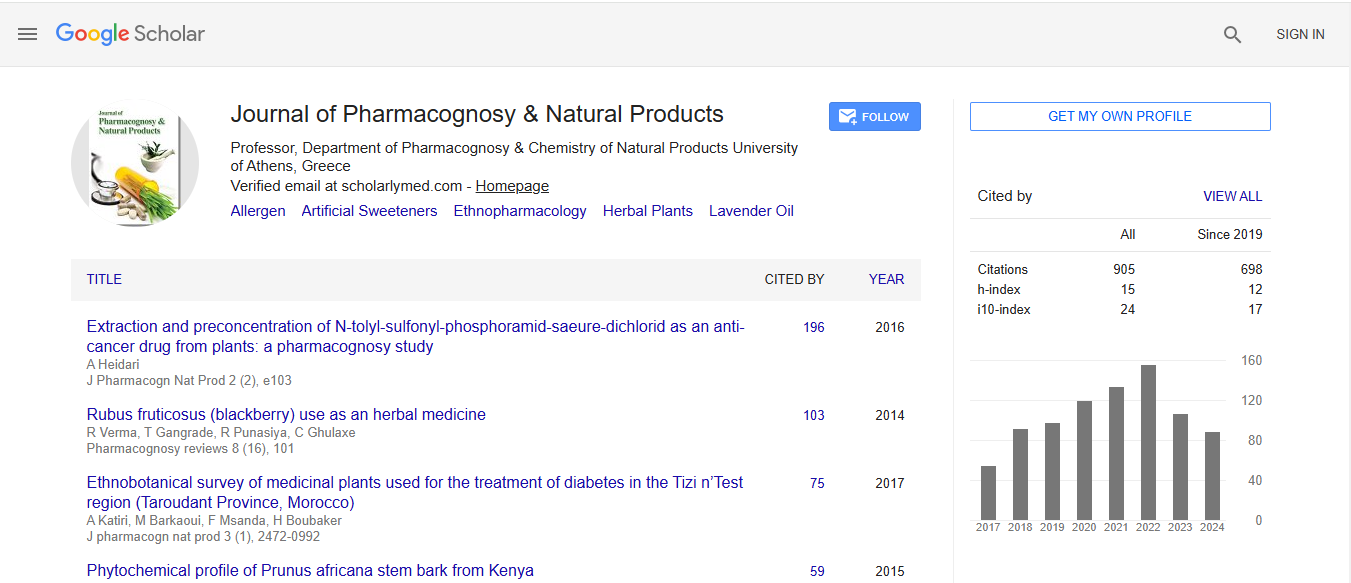
Journal of Pharmacognosy & Natural Products received 606 citations as per Google Scholar report