Short Communication - (2025) Volume 11, Issue 3
Received: 02-Jun-2025, Manuscript No. jctt-26-188411;
Editor assigned: 04-Jun-2025, Pre QC No. P-188411;
Reviewed: 18-Jun-2025, QC No. Q-188411;
Revised: 23-Jun-2025, Manuscript No. R-188411;
Published:
30-Jun-2025
, DOI: 10.37421/2471-9323.2024.10.329
Citation: Papadopoulos, Eleni. ”Radiance Revealed: Ingredients and Mechanisms for Skin.” J Cosmo Tricho 11 (2025):329.
Copyright: © 2025 Papadopoulos E. This is an open-access article distributed under the terms of the Creative Commons Attribution License, which permits unrestricted use, distribution and reproduction in any medium, provided the original author and source are credited.
The pursuit of luminous and healthy hair and skin has long been a cornerstone of cosmetic science, driven by a desire to enhance natural beauty through scientifically validated approaches [1].
Understanding the intricate biochemical and molecular mechanisms that contribute to this desired radiance is paramount for developing effective cosmetic formulations that can significantly improve appearance and perceived vitality [1].
Central to achieving a healthy glow is the integrity of the skin barrier, a crucial protective layer that maintains hydration and defends against environmental stressors. Specific lipids and fatty acids play a vital role in fortifying this barrier, leading to improved skin texture and a smoother, more radiant complexion through enhanced moisture retention and reduced transepidermal water loss [2].
Similarly, the aesthetic of healthy hair is intrinsically linked to the integrity of its cuticle. When the hair fiber's surface is smooth and intact, it is better able to reflect light, resulting in increased shine and improved manageability. Ingredients like hydrolyzed proteins and conditioning agents work by filling in microscopic fissures on the cuticle, thereby enhancing light reflection and overall hair luster [3].
Oxidative stress, a significant contributor to skin aging and dullness, can be effectively combatted by potent antioxidants such as vitamin C and its derivatives. These compounds not only neutralize free radicals but also actively promote collagen synthesis and inhibit melanin production, leading to a brighter and more luminous skin tone [4].
Adequate hydration is fundamental to achieving plump, supple skin that exhibits a youthful glow. Humectants, particularly hyaluronic acid, are instrumental in this regard, drawing and retaining moisture within the skin. By increasing water content, they create a smoother surface that reflects light more evenly, contributing to a radiant and revitalized appearance [5].
The benefits of botanical extracts, especially those rich in polyphenols, extend to both photoprotection and skin brightening. These natural compounds can mitigate UV-induced damage and reduce hyperpigmentation, resulting in a clearer, more even-toned, and radiant complexion by supporting the skin's natural defenses and repair mechanisms [6].
Ceramides are another critical component for maintaining robust skin barrier function and achieving a healthy, glowing appearance. By replenishing the skin's natural ceramide levels, cosmetic products can strengthen its defenses, reduce water loss, and promote a smoother, more hydrated, and luminous skin surface, which is particularly beneficial for anti-aging concerns [7].
Peptides, particularly signaling and carrier peptides, offer a sophisticated approach to skin rejuvenation and radiance enhancement. They actively stimulate collagen production, bolster skin elasticity, and facilitate the delivery of vital nutrients, collectively contributing to a firmer, more vibrant, and glowing complexion by supporting cellular renewal and structural integrity [8].
Retinoids, when carefully formulated with complementary ingredients like antioxidants and emollients, present a powerful strategy for optimizing skin health and radiance. Their ability to accelerate cell turnover and boost collagen synthesis, combined with supportive hydration and irritation mitigation, results in smoother, brighter, and more youthful-looking skin, highlighting the importance of synergistic formulation [9].
Finally, the vitality of both hair and skin is significantly influenced by microcirculation. Ingredients that promote vasodilation can enhance nutrient and oxygen delivery to hair follicles and skin cells, fostering improved hair growth and a more radiant complexion by ensuring optimal cellular function and metabolic activity [10].
The intricate biochemical pathways governing the 'glow' of healthy hair and skin are increasingly understood, enabling cosmetic science to harness specific ingredients for enhanced radiance. Antioxidants, peptides, and humectants are identified as key players, working synergistically to promote cellular regeneration, reinforce the skin's natural barrier, and optimize light reflection, thereby contributing to a luminous aesthetic through scientifically grounded formulation strategies [1].
The skin barrier's crucial role in maintaining hydration and overall health is underscored by the impact of specific lipids and fatty acids. By enhancing barrier integrity, these components lead to improved skin texture and a smoother surface, directly contributing to a more radiant complexion through fortified natural defenses and superior moisture retention [2].
In the realm of hair care, the shine and manageability of hair are directly correlated with the integrity of the hair cuticle. Hydrolyzed proteins and conditioning agents are instrumental in smoothing the cuticle surface by filling micro-fissures, which enhances light reflection and imparts a natural luster, demonstrating a clear link between structural integrity and aesthetic appeal [3].
The antioxidant prowess of vitamin C and its derivatives offers a robust defense against oxidative stress, a primary driver of skin aging and dullness. Their efficacy lies in stimulating collagen production and regulating melanin synthesis, thereby brightening the skin and contributing to a more luminous and even-toned complexion, particularly when delivered in stable formulations [4].
Moisture is fundamental to achieving a plump and youthful appearance, and humectants like hyaluronic acid excel at this. By attracting and retaining water, they cultivate a smoother, more supple skin surface that reflects light with greater uniformity, leading to a visibly radiant and revitalized look, with varying molecular weights offering tailored penetration benefits [5].
Botanical extracts, particularly those abundant in polyphenols, offer significant photoprotective and skin-brightening properties. These natural compounds actively mitigate UV-induced damage and combat hyperpigmentation, contributing to a clearer, more radiant skin tone and supporting the use of plant-derived ingredients for achieving a luminous complexion [6].
Ceramides are essential for maintaining a healthy skin barrier and promoting a glowing appearance. Replenishing natural ceramides strengthens the skin's defenses against environmental aggressors and minimizes water loss, resulting in smoother, more hydrated, and luminous skin, highlighting their critical role in anti-aging formulations [7].
Peptides, specifically signaling and carrier types, are pivotal in skin rejuvenation and enhancing radiance. Their capacity to stimulate collagen, improve elasticity, and facilitate nutrient delivery leads to a firmer, more vibrant, and glowing complexion, demonstrating their significant potential in advanced cosmetic applications [8].
Well-formulated retinoid products, when combined with antioxidants and emollients, synergistically optimize skin health and radiance. Retinoids accelerate cell turnover and collagen synthesis, while other ingredients provide essential hydration and reduce irritation, culminating in smoother, brighter, and more youthful-looking skin [9].
The enhancement of microcirculation plays a vital role in delivering essential nutrients to hair follicles and skin cells. Ingredients promoting vasodilation can improve blood flow, ensuring optimal nutrient and oxygen supply, which directly contributes to healthier, more lustrous hair and a radiant complexion by supporting intrinsic cellular vitality [10].
This collection of research highlights key ingredients and mechanisms driving skin and hair radiance. Focus areas include biochemical pathways for glow, the role of lipids in skin barrier function, and the impact of cuticle integrity on hair shine. Antioxidants like Vitamin C combat aging and brighten skin, while humectants such as hyaluronic acid provide essential hydration for a plump, smooth appearance. Botanical extracts offer photoprotective and brightening benefits. Ceramides and peptides are crucial for barrier repair and skin rejuvenation, respectively. Retinoids, when formulated appropriately, promote cell turnover and collagen synthesis for smoother, brighter skin. Finally, improved microcirculation enhances nutrient delivery, contributing to overall vitality and radiance in both hair and skin.
None
None
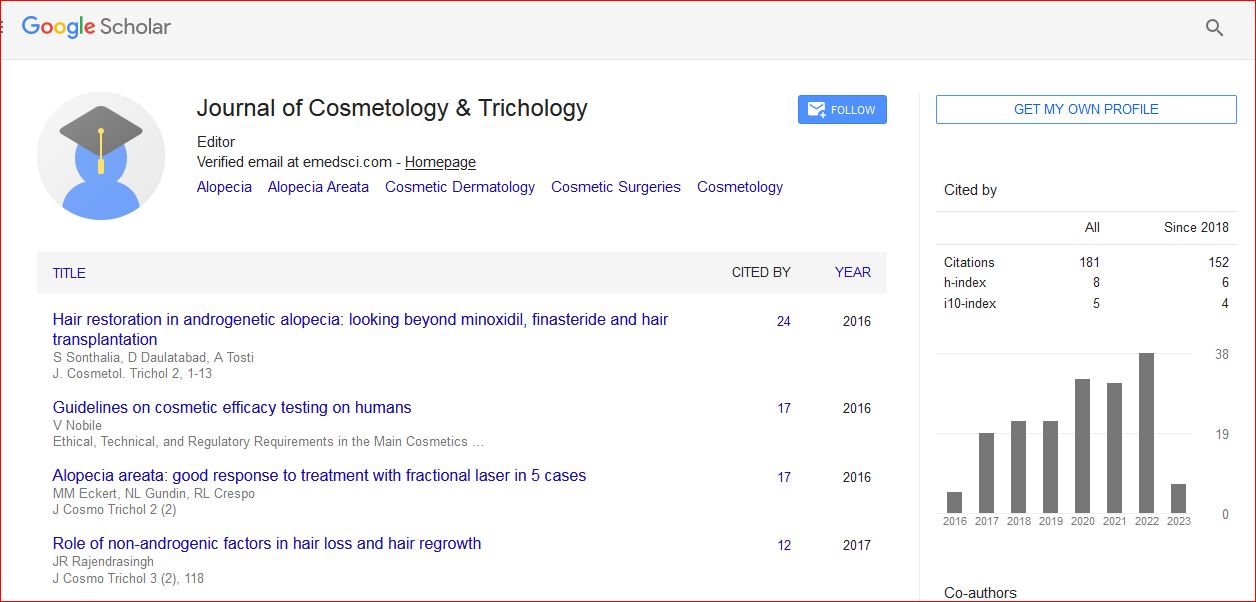
Journal of Cosmetology & Trichology received 180 citations as per Google Scholar report