Opinion - (2025) Volume 11, Issue 3
Received: 02-Jun-2025, Manuscript No. JOV-26-186418;
Editor assigned: 04-Jun-2025, Pre QC No. P-186418;
Reviewed: 18-Jun-2025, QC No. Q-186418;
Revised: 23-Jun-2025, Manuscript No. R-186418;
Published:
30-Jun-2025
, DOI: 10.37421/2471-9544.2025.11.305
Citation: Miller, Jonathan. ”Quantum Biology: New Frontiers in Vascular Research.” J Vasc 11 (2025):305.
Copyright: © 2025 Miller J. This is an open-access article distributed under the terms of the Creative Commons Attribution License, which permits unrestricted use, distribution and reproduction in any medium, provided the original author and source are credited.
The burgeoning field of quantum biology presents a paradigm shift in our understanding of fundamental biological processes, extending beyond classical biophysical explanations. This new frontier explores how quantum mechanical phenomena, once thought to be confined to the subatomic realm, may play crucial roles in the intricate workings of living systems. Our investigation begins by examining the nascent intersection of quantum mechanics and vascular biology, specifically focusing on how quantum phenomena might influence cellular processes within blood vessel fabrics. The authors posit that quantum entanglement and superposition could play understated roles in cellular signaling, membrane dynamics, and molecular interactions within the vascular endothelium. Understanding these quantum ripples could unlock novel therapeutic targets for vascular diseases, moving beyond classical biophysical explanations [1].
Further advancing this interdisciplinary approach, we delve into quantum coherence in protein folding, suggesting mechanisms relevant to cellular function. While not directly on vascular biology, the principles of quantum tunneling and vibrational energy transfer in protein dynamics offer a framework for how quantum effects might impact protein behavior within the vascular system, potentially affecting enzyme activity or receptor binding [2].
In parallel, the role of quantum entanglement in biological information transfer is scrutinized, proposing that non-local correlations could be involved in cellular communication pathways. Applied to vascular tissues, this might explain rapid, coordinated responses within the endothelium that are difficult to account for via classical diffusion or signaling cascades alone [3].
Complementing these ideas, research into the quantum nature of electron transfer in biological systems provides insights into redox reactions fundamental to cellular metabolism and signaling. For vascular biology, this is relevant to processes like nitric oxide synthesis and reactive oxygen species production, where quantum tunneling might influence reaction rates and pathway selection [4].
Moreover, we explore how quantum effects might influence the specificity and efficiency of enzyme-substrate interactions. In the context of vascular function, enzymes involved in regulating blood pressure, inflammation, and coagulation could exhibit quantum effects that enhance their catalytic precision, impacting overall vascular health [5].
Drawing parallels from other biological systems, the potential for quantum coherence in photosynthetic systems offers a biological precedent for quantum phenomena. While distant from vascular biology, it highlights that complex biological systems can harness quantum effects, suggesting similar possibilities for cellular processes in blood vessels, perhaps related to energy transfer in biomolecular complexes [6].
The quantum mechanical description of molecular interactions, particularly van der Waals forces and hydrogen bonding, which are critical for protein-ligand binding in the vascular system, also warrants attention. Understanding the quantum underpinnings of these forces could refine our models of drug-receptor interactions for vascular diseases [7].
Investigations into quantum effects in biological membranes explore how quantum phenomena might influence membrane fluidity and protein embedded within it. This is directly relevant to the vascular endothelium, where membrane properties dictate barrier function and cellular communication [8].
Furthermore, the potential role of quantum tunneling in DNA repair mechanisms, though not directly vascular, highlights how quantum effects can operate within cellular machinery. This suggests similar quantum influences might be at play in the maintenance and repair of vascular endothelial cells [9].
Finally, a comprehensive review of the emerging field of quantum biology provides a broad overview of quantum phenomena like superposition and entanglement and their proposed roles in biological processes, setting the stage for more specific investigations into vascular applications [10].
The exploration of quantum mechanics within biological systems, particularly vascular biology, signifies a profound shift in scientific inquiry. This investigation delves into the nascent intersection of quantum mechanics and vascular biology, focusing on how quantum phenomena might influence cellular processes within blood vessel fabrics. The authors posit that quantum entanglement and superposition could play understated roles in cellular signaling, membrane dynamics, and molecular interactions within the vascular endothelium. Understanding these quantum ripples could unlock novel therapeutic targets for vascular diseases, moving beyond classical biophysical explanations [1].
Further insights are provided by studies investigating quantum coherence in protein folding, suggesting mechanisms relevant to cellular function. While not directly on vascular biology, the principles of quantum tunneling and vibrational energy transfer in protein dynamics offer a framework for how quantum effects might impact protein behavior within the vascular system, potentially affecting enzyme activity or receptor binding [2].
The examination of quantum entanglement as a mechanism for biological information transfer proposes that non-local correlations could be involved in cellular communication pathways. Applied to vascular tissues, this might explain rapid, coordinated responses within the endothelium that are difficult to account for via classical diffusion or signaling cascades alone [3].
Research into the quantum nature of electron transfer in biological systems offers critical insights into redox reactions that are fundamental to cellular metabolism and signaling. For vascular biology, this is relevant to processes like nitric oxide synthesis and reactive oxygen species production, where quantum tunneling might influence reaction rates and pathway selection [4].
The impact of quantum effects on the specificity and efficiency of enzyme-substrate interactions is also a significant area of study. In the context of vascular function, enzymes involved in regulating blood pressure, inflammation, and coagulation could exhibit quantum effects that enhance their catalytic precision, impacting overall vascular health [5].
The biological precedent of quantum coherence in photosynthetic systems highlights that complex biological systems can indeed harness quantum effects. This suggests similar possibilities for cellular processes in blood vessels, perhaps related to energy transfer in biomolecular complexes [6].
The quantum mechanical description of molecular interactions, specifically van der Waals forces and hydrogen bonding, which are critical for protein-ligand binding in the vascular system, provides a deeper understanding of these phenomena. Understanding the quantum underpinnings of these forces could refine our models of drug-receptor interactions for vascular diseases [7].
Studies examining quantum effects in biological membranes explore how quantum phenomena might influence membrane fluidity and protein embedded within it. This is directly relevant to the vascular endothelium, where membrane properties dictate barrier function and cellular communication [8].
The potential role of quantum tunneling in DNA repair mechanisms, although not directly vascular, demonstrates how quantum effects can operate within cellular machinery. This suggests similar quantum influences might be at play in the maintenance and repair of vascular endothelial cells [9].
Finally, a comprehensive review of the emerging field of quantum biology offers a broad overview of quantum phenomena such as superposition and entanglement and their proposed roles in biological processes, thereby setting the stage for more specific investigations into vascular applications [10].
This collection of research explores the emerging field of quantum biology and its potential applications in vascular research. Studies highlight how quantum phenomena like entanglement, superposition, tunneling, and coherence may influence cellular processes in the vascular system, including signaling, protein dynamics, electron transfer, enzyme catalysis, and membrane properties. Understanding these quantum effects could lead to novel therapeutic strategies for vascular diseases by refining our understanding of molecular interactions and cellular functions. The research spans from theoretical frameworks to specific biological mechanisms, suggesting a paradigm shift in how we approach vascular health.
None
None
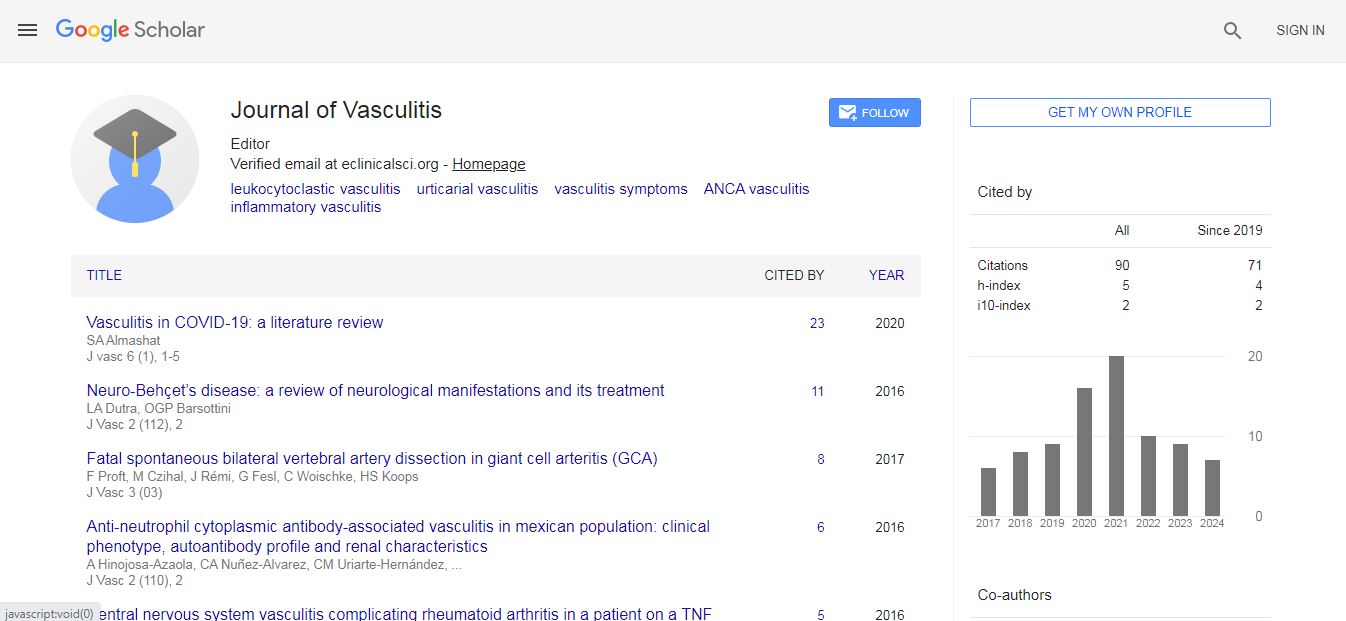
Journal of Vasculitis received 83 citations as per Google Scholar report