Perspective - (2025) Volume 11, Issue 3
Received: 02-May-2025, Manuscript No. ldt-25-178432;
Editor assigned: 05-May-2025, Pre QC No. P-178432;
Reviewed: 19-May-2025, QC No. Q-178432;
Revised: 23-May-2025, Manuscript No. R-178432;
Published:
30-May-2025
, DOI: 10.37421/2472-1018.2025.11.308
Citation: Salah, Nadia Ben. ”Pulmonary Infections: Advances in Treatment and Understanding.” J Lung Dis Treat 11 (2025):308.
Copyright: © 2025 Salah B. Nadia This is an open-access article distributed under the terms of the Creative Commons Attribution License, which permits unrestricted use, distribution and reproduction in any medium, provided the original author and source are credited.
Pulmonary infections represent a significant global health challenge, demanding continuous innovation in diagnostic and therapeutic approaches. Recent advancements have shed light on novel antimicrobial strategies and refined diagnostic methods for conditions such as pneumonia and tuberculosis, underscoring the persistent threat of antimicrobial resistance and the imperative for new treatment modalities [1].
The landscape of antibiotic treatment for community-acquired pneumonia (CAP) is continually evolving, with a strong emphasis on pathogen-specific therapies and the judicious use of antibiotics to mitigate the rise of resistance. The role of biomarkers in guiding these critical treatment decisions is gaining prominence, alongside the exploration of promising adjunctive therapies [2].
Emerging viral pathogens pose a substantial threat to pulmonary health, necessitating a deep understanding of their pathogenesis and clinical manifestations. Significant progress has been made in developing antiviral therapies and vaccines, which are crucial tools for managing infections caused by influenza, coronaviruses, and RSV [3].
Non-tuberculous mycobacterial (NTM) pulmonary infections present complex diagnostic and therapeutic challenges. While current treatment regimens involve macrolides, ethambutol, and rifampicin, research is actively exploring newer agents and strategies to combat drug-resistant NTM strains [4].
Ventilator-associated pneumonia (VAP) remains a critical concern in intensive care settings, prompting a focus on optimizing antibiotic selection, therapy duration, and the integration of non-antibiotic interventions, including selective digestive decontamination and robust antimicrobial stewardship programs [5].
The growing prevalence of multidrug-resistant (MDR) bacterial infections in the lungs demands urgent attention. Emerging therapeutic strategies, such as novel antimicrobial agents, bacteriophage therapy, and vaccine development, are being explored to combat resistant pathogens like Pseudomonas aeruginosa and Acinetobacter baumannii [6].
Understanding the intricate role of the host immune response in pulmonary infections offers a pathway to novel therapeutic targets. Immunomodulatory therapies and strategies designed to bolster the body's natural defenses are particularly vital for immunocompromised patients [7].
Fungal pulmonary infections, especially in immunocompromised individuals, require specialized attention. While current antifungal agents are the mainstay of treatment, the emergence of resistance necessitates the development of novel therapeutic approaches and a comprehensive understanding of the spectrum of fungal pathogens [8].
Monoclonal antibodies (mAbs) are emerging as a promising frontier in the prevention and treatment of respiratory infections. Their application extends from viral pathogens like influenza and RSV to an increasing role in managing bacterial pneumonia [9].
Precision medicine holds significant potential for treating complex pulmonary infections by leveraging genetic, molecular, and microbiological data. This tailored approach aims to optimize drug efficacy and minimize adverse effects, particularly for patients with chronic lung diseases [10].
Recent breakthroughs in treating pulmonary infections have been marked by the development of novel antimicrobial strategies and advancements in diagnostic approaches for conditions such as pneumonia and tuberculosis. These developments are crucial in light of the escalating challenge of antimicrobial resistance, emphasizing the urgent need for new therapeutic agents and personalized treatment regimens that consider pathogen identification and the host immune response [1].
The field of antibiotic treatment for community-acquired pneumonia (CAP) is continually being reshaped by a focus on pathogen-specific therapies and the judicious use of antibiotics to combat the growing threat of resistance. Biomarkers are increasingly recognized for their role in guiding treatment decisions, complemented by the exploration of promising adjunctive therapies [2].
Emerging viral pathogens have a profound impact on pulmonary health, leading to significant respiratory syndromes. Advances in antiviral therapies and vaccine development have become critical tools in the management of infections caused by influenza, coronaviruses, and RSV [3].
Pulmonary infections caused by non-tuberculous mycobacteria (NTM) pose significant diagnostic and therapeutic challenges. While current treatment involves macrolides, ethambutol, and rifampicin, ongoing research is focused on identifying newer agents and refining treatment strategies for drug-resistant NTM [4].
Ventilator-associated pneumonia (VAP) is a critical issue in intensive care units, prompting extensive research into optimal antibiotic selection, duration of therapy, and the integration of non-antibiotic interventions such as selective digestive decontamination and antimicrobial stewardship programs [5].
The growing concern over multidrug-resistant (MDR) bacterial infections affecting the lungs has spurred the development of emerging therapeutic strategies. These include novel antimicrobial agents, bacteriophage therapy, and vaccines aimed at combating resistant pathogens like Pseudomonas aeruginosa and Acinetobacter baumannii [6].
Understanding the host immune response is becoming increasingly important for developing novel therapeutic targets in pulmonary infections. Strategies focusing on immunomodulatory therapies and enhancing the body's natural defenses are particularly valuable for immunocompromised patients [7].
The management of fungal pulmonary infections, especially in immunocompromised individuals, is an area of active research. This includes a detailed examination of fungal pathogens, current antifungal agents, the emergence of resistance, and the development of novel therapeutic approaches [8].
Monoclonal antibodies (mAbs) are gaining traction as a new frontier in the prevention and treatment of respiratory infections, showing promise against viral pathogens such as influenza and RSV, and an expanding role in bacterial pneumonia [9].
Precision medicine is revolutionizing the treatment of complex pulmonary infections by enabling the tailoring of therapies based on genetic, molecular, and microbiological data. This approach aims to enhance drug efficacy and minimize adverse effects, particularly in patients with chronic lung conditions [10].
This collection of research highlights significant progress in the understanding and treatment of various pulmonary infections. Advances in antimicrobial strategies and diagnostics are crucial in combating the growing challenge of antimicrobial resistance. The review covers emerging viral threats, the complexities of non-tuberculous mycobacterial infections, and strategies for managing ventilator-associated pneumonia. Emerging therapeutic approaches, including novel antimicrobial agents, bacteriophage therapy, and monoclonal antibodies, are discussed. Furthermore, the importance of harnessing the host immune response and the role of precision medicine in tailoring treatments for optimal outcomes are emphasized. The development of antifungal therapies and improved vaccine strategies also contribute to the comprehensive management of these respiratory conditions.
None
None
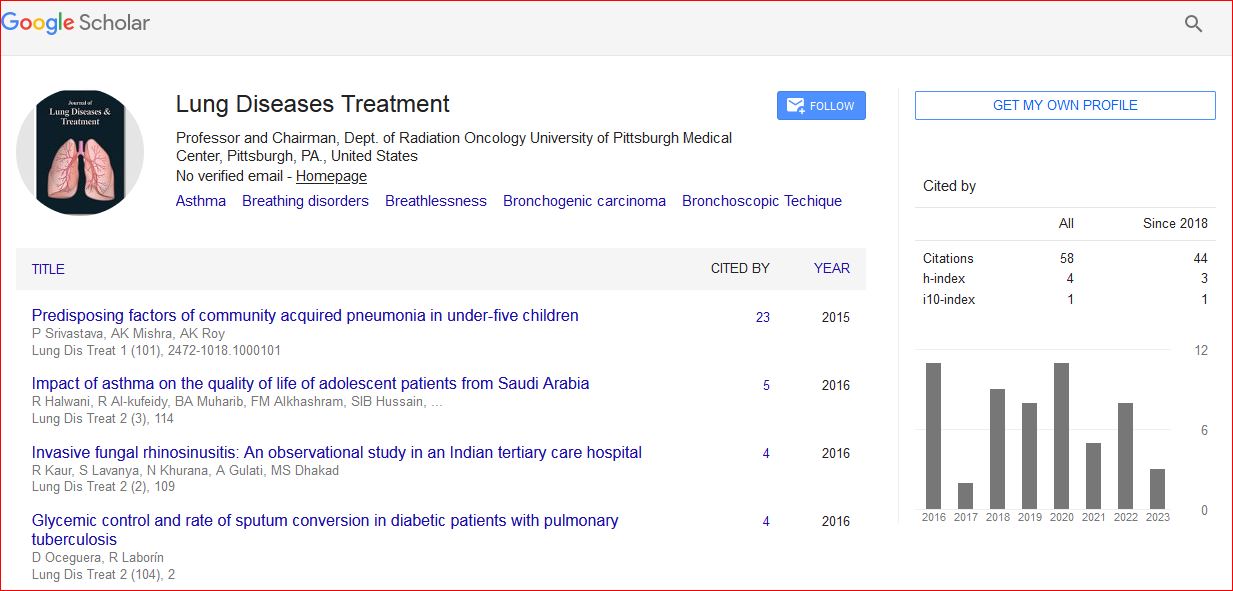
Journal of Lung Diseases & Treatment received 247 citations as per Google Scholar report