Perspective - (2025) Volume 13, Issue 3
Received: 03-Jun-2025, Manuscript No. JGPR-26-188023;
Editor assigned: 05-Jun-2025, Pre QC No. P-188023;
Reviewed: 19-Jun-2025, QC No. Q-188023;
Revised: 24-Jun-2025, Manuscript No. R-188023;
Published:
30-Jun-2025
, DOI: 10.37421/2329-9126.2025.13.620
Citation: Khan, Ahmed. ”Primary Care: Enhancing Vaccination Awareness and Rates.” J Gen Pract 13 (2025):620.
Copyright: © 2025 Khan A. This is an open-access article distributed under the terms of the Creative Commons Attribution License, which permits unrestricted use, distribution and reproduction in any medium, provided the original author and source are credited.
Enhancing vaccination awareness among primary care patients is a critical strategy for bolstering immunization rates and preventing the spread of infectious diseases across all age demographics. This proactive educational approach within primary care settings is paramount, as these environments offer unparalleled opportunities for routine health screenings, in-depth patient counseling, and the effective addressing of vaccine hesitancy with evidence-based information and reassurance concerning vaccine safety and efficacy [1].
Patient education regarding the significant benefits of routine vaccinations, encompassing protection against prevalent illnesses such as influenza, pneumococcal disease, and shingles, must be integrated as a fundamental component of primary care practice. By directly confronting and debunking common myths and misconceptions with well-substantiated, evidence-based information, healthcare providers can empower patients to make more informed and confident decisions regarding their personal health and the well-being of their families [2].
The primary care physician holds a pivotal and indispensable role in actively advocating for and promoting vaccination. Engaging in proactive discussions during patient appointments, supplemented by clear and easily understandable visual aids and reliable written materials, can substantially enhance patient comprehension and foster greater acceptance of recommended immunizations. This proactive engagement strategy has been demonstrated to be significantly more effective than a reactive approach that only addresses patient-initiated questions [3].
Leveraging the capabilities of electronic health records (EHRs) presents a powerful technological solution for streamlining the vaccination process within primary care settings. EHR systems can be utilized to flag patients who are due for specific vaccinations and to generate personalized reminders, thereby facilitating proactive outreach and ensuring continuity of care. Furthermore, these systems are invaluable for accurately tracking patient immunization histories and identifying critical gaps in vaccination coverage [4].
Community-based interventions, frequently orchestrated and supported by primary care networks, possess the substantial potential to significantly elevate vaccination awareness and uptake. These initiatives may encompass broad public health campaigns, targeted educational workshops, and strategic collaborations with local community organizations, all designed to effectively reach diverse patient populations and address specific cultural barriers that may impede vaccination acceptance [5].
The development and dissemination of vaccination educational materials that are sensitive to cultural nuances are absolutely essential for primary care providers to achieve effective communication with patients from a wide array of backgrounds. Tailoring informational messages to directly address specific patient concerns, beliefs, and values is crucial for increasing comprehension, building trust, and ultimately improving adherence to vaccination recommendations [6].
Primary care teams, encompassing a range of healthcare professionals such as nurses and medical assistants, are well-positioned to make substantial contributions to vaccination awareness efforts. By consistently reinforcing physician recommendations and providing immediate, accessible education during patient encounters, these team members play a vital role. Empowering the entire care team with consistent, unified messaging and comprehensive training is fundamental to the successful implementation of a holistic vaccination strategy [7].
Modern digital health tools, including patient portals and secure messaging systems, offer a contemporary and effective channel for primary care practices to disseminate vital vaccination information, dispatch timely reminders, and facilitate convenient communication to address patient queries. This digital approach serves as a valuable complement to traditional face-to-face interactions, thereby enhancing accessibility and overall patient convenience [8].
Conducting a thorough assessment of a patient's existing knowledge and attitudes concerning vaccination during routine visits enables primary care providers to precisely tailor their educational interventions. Understanding specific patient concerns, such as potential side effects, perceived efficacy, or historical misinformation, is critically important for delivering effective counseling and cultivating robust patient trust in vaccination recommendations [9].
The long-term impact and overall effectiveness of primary care-based vaccination awareness programs necessitate ongoing and rigorous evaluation. Measuring key outcomes such as sustained changes in immunization rates, levels of patient satisfaction, and demonstrable reductions in the incidence of vaccine-preventable diseases is crucial for validating the value of these initiatives and for informing the development of more effective future strategies [10].
Improving vaccination awareness among patients within primary care settings is a vital objective for enhancing overall immunization coverage and effectively preventing the incidence of infectious diseases. This endeavor necessitates comprehensive patient education focusing on vaccine safety, proven efficacy, and the critical importance of adhering to recommended vaccination schedules for individuals of all ages. Primary care environments are uniquely suited for implementing these crucial interventions, offering consistent opportunities for routine health assessments, personalized patient counseling, and direct engagement to address vaccine hesitancy with accurate and trustworthy information [1].
A cornerstone of effective primary care practice should involve robust patient education that clearly articulates the substantial benefits of routine vaccinations. This education should cover protection against common and serious illnesses like influenza, pneumococcal disease, and shingles. By actively addressing prevalent myths and misunderstandings with clear, evidence-based information, healthcare providers can significantly empower patients to make well-informed decisions regarding their health and that of their family members [2].
The role of the primary care physician is undeniably central to the successful promotion of vaccinations. Cultivating proactive dialogue during patient appointments, supported by accessible visual aids and credible written resources, can markedly improve patient understanding and foster greater acceptance of essential immunizations. This proactive, educational approach is considerably more impactful than passively responding to patient-initiated questions regarding vaccines [3].
The strategic utilization of electronic health records (EHRs) offers a streamlined pathway for managing vaccination efforts in primary care. These systems can be configured to automatically flag patients who are due for immunizations and to dispatch personalized reminders, thereby simplifying the follow-up process. Furthermore, EHRs are instrumental in maintaining accurate immunization histories and in identifying specific populations with incomplete vaccination coverage [4].
Community-based initiatives, often developed and implemented in close collaboration with primary care providers, have demonstrated a significant capacity to boost vaccination awareness. These multifaceted strategies may include widespread public health campaigns, informative educational workshops, and collaborative partnerships with various local organizations, all aimed at reaching diverse patient populations and overcoming cultural barriers to vaccination [5].
Developing educational materials about vaccination that are culturally sensitive and appropriate is a fundamental requirement for primary care providers seeking to communicate effectively with patients from diverse cultural and linguistic backgrounds. Adapting messages to resonate with specific concerns, beliefs, and values held by different patient groups can substantially enhance comprehension and build greater trust in vaccination recommendations [6].
Primary care teams, which typically include nurses, physician assistants, and medical assistants, play an instrumental role in advancing vaccination awareness. By consistently reinforcing the recommendations of physicians and providing immediate, accessible education during patient interactions, these team members are invaluable. Equipping the entire primary care team with consistent messaging and thorough training is paramount for the successful execution of a comprehensive vaccination strategy [7].
Patient portals and secure messaging platforms represent modern and convenient channels through which primary care practices can effectively distribute vaccination information, send out reminders, and respond to patient inquiries. This digital engagement strategy complements traditional in-person consultations, thereby improving accessibility and overall convenience for patients [8].
Systematically assessing a patient's current knowledge and attitudes toward vaccination during regular appointments allows primary care providers to tailor their educational strategies more effectively. Understanding specific patient concerns, such as potential side effects or doubts about efficacy, is absolutely essential for providing meaningful counseling and for fostering a strong foundation of patient trust [9].
The sustained effectiveness of vaccination awareness programs implemented within primary care settings requires continuous and thorough evaluation. Measuring key indicators such as shifts in immunization rates, patient satisfaction levels, and reductions in the occurrence of vaccine-preventable diseases is vital for demonstrating the value of these interventions and for guiding the refinement of future strategies [10].
Primary care settings are crucial for enhancing vaccination awareness and improving immunization rates. Strategies include educating patients on vaccine safety and efficacy, addressing hesitancy with evidence-based information, and leveraging the pivotal role of primary care physicians in advocating for immunizations. Utilizing electronic health records for reminders and tracking, implementing community-based interventions, and developing culturally sensitive educational materials are also key. Empowering the entire primary care team and employing digital tools like patient portals further support vaccination efforts. Assessing patient knowledge and attitudes allows for tailored education, and ongoing evaluation is essential to measure the impact of these programs.
None
None
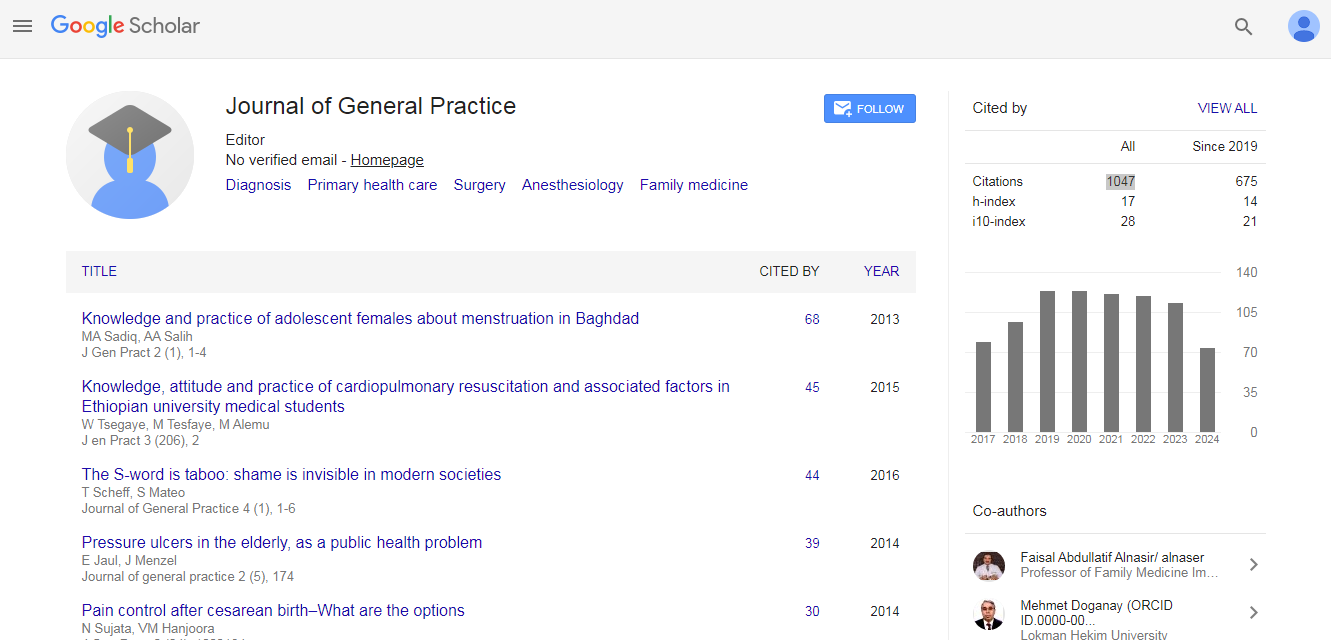
Journal of General Practice received 1047 citations as per Google Scholar report