Opinion - (2025) Volume 9, Issue 3
Received: 01-May-2025, Manuscript No. jchd-26-185689;
Editor assigned: 04-May-2025, Pre QC No. P-185689;
Reviewed: 18-May-2025, QC No. Q-185689;
Revised: 22-May-2025, Manuscript No. R-185689;
Published:
29-May-2025
, DOI: 10.37421/2684-6020.2024.9.245
Citation: Zahra, Amina. ”Preventing Coronary Heart Disease:
Risk Factors and Strategies.” J Coron Heart Dis 09 (2025):245.
Copyright: © 2025 Zahra A. This is an open-access article distributed under the terms of the Creative Commons Attribution License, which permits unrestricted use, distribution
and reproduction in any medium, provided the original author and source are credited.
Coronary heart disease (CHD) stands as a paramount global health concern, contributing significantly to mortality worldwide. This article embarks on an in-depth exploration of CHD, placing a strong emphasis on its primary prevention strategies. A critical understanding reveals that modifiable risk factors, including hypertension, dyslipidemia, diabetes mellitus, obesity, and detrimental lifestyle choices, play a pivotal role in CHD development [1].
The intricate pathophysiology of atherosclerosis, the fundamental mechanism underlying CHD, involves a complex cascade of lipid accumulation, inflammatory responses, and the insidious formation of atherosclerotic plaques within the coronary arteries. These processes progressively lead to narrowing of the arterial lumen and a consequential reduction in blood flow, ultimately manifesting as angina and myocardial infarction. While genetic predispositions are recognized as significant contributors, their impact often intersects with environmental and lifestyle influences [2].
Hypertension emerges as a preeminent modifiable risk factor for CHD. Elevated blood pressure exerts damaging effects on the coronary arteries, accelerating the atherosclerotic process through various physiological pathways. Consequently, regular blood pressure monitoring and adherence to evidence-based management strategies, encompassing both lifestyle modifications and pharmacotherapy, are underscored as critical [3].
Dyslipidemia, defined by aberrant levels of cholesterol and triglycerides in the blood, is intrinsically linked to the development of CHD. This condition intricately influences the atherosclerotic process through the roles of low-density lipoprotein (LDL) cholesterol, high-density lipoprotein (HDL) cholesterol, and triglycerides. Therefore, regular lipid profile assessments and the judicious use of lipid-lowering therapies, such as statins, alongside dietary interventions, are of paramount importance [4].
Diabetes mellitus, particularly its type 2 form, exerts a substantial influence on the risk of developing CHD. The pervasive effects of hyperglycemia, insulin resistance, and associated metabolic dysregulations contribute significantly to the accelerated progression of atherosclerosis and endothelial dysfunction. This necessitates stringent glycemic control and a holistic approach to cardiovascular risk management in diabetic patients [5].
Obesity, especially when characterized by central adiposity, is robustly associated with an elevated risk of CHD. Excess adipose tissue promotes a pro-inflammatory state, exacerbates dyslipidemia, contributes to hypertension, and fuels insulin resistance, all of which collectively drive the atherosclerotic cascade. Effective weight management through dietary adjustments and regular physical activity is therefore highlighted as essential [6].
Lifestyle factors, encompassing diet, physical activity, and smoking habits, are cornerstones of effective CHD prevention. A heart-healthy dietary pattern, rich in fruits, vegetables, whole grains, and lean proteins, coupled with consistent aerobic exercise and complete smoking cessation, can profoundly improve cardiovascular health and substantially reduce CHD incidence [7].
Stress management techniques are recognized as vital components in the prevention of CHD. Chronic psychological stress can trigger deleterious physiological responses, including elevated blood pressure, the adoption of unhealthy lifestyle choices, and pro-inflammatory reactions that promote atherosclerosis. Exploring evidence-based relaxation techniques and behavioral interventions is therefore recommended [8].
Early detection and accurate risk stratification are indispensable for implementing effective CHD prevention strategies. Regular health check-ups, including targeted screening for major risk factors such as hypertension, dyslipidemia, diabetes, and obesity, are crucial. The application of established risk assessment tools in clinical practice aids in identifying individuals at higher risk [9].
Finally, patient education and empowerment form the bedrock of successful CHD prevention. Comprehensive counseling regarding risk factors, the rationale behind lifestyle modifications, and the importance of treatment adherence is essential. Empowered patients are better equipped to adopt and maintain healthy behaviors, leading to improved cardiovascular outcomes [10].
Coronary heart disease (CHD) represents a significant global health challenge, and its primary prevention is a central focus of contemporary medical research and clinical practice. A thorough examination of the evidence highlights the critical role of modifiable risk factors such as hypertension, dyslipidemia, diabetes mellitus, obesity, and unhealthy lifestyle choices in the etiology of CHD [1].
The underlying mechanism of CHD is atherosclerosis, a complex pathological process involving the accumulation of lipids, chronic inflammation, and the formation of atherosclerotic plaques within the coronary arteries. These pathological changes lead to luminal narrowing, reduced blood flow, and can culminate in ischemic events such as angina and myocardial infarction. While genetic factors can predispose individuals to this condition, lifestyle and environmental influences often interact significantly with genetic susceptibility [2].
Hypertension is unequivocally identified as a major modifiable risk factor for CHD. The elevated blood pressure directly contributes to endothelial dysfunction and accelerates the atherosclerotic process within the coronary arteries. Therefore, consistent monitoring of blood pressure and the implementation of evidence-based management strategies, including lifestyle modifications and appropriate pharmacotherapy, are essential for mitigating risk [3].
Dyslipidemia, characterized by abnormal blood lipid levels, is a fundamental contributor to the development of CHD. Understanding the roles of LDL cholesterol, HDL cholesterol, and triglycerides in the atherosclerotic cascade is crucial. Consequently, regular assessment of lipid profiles and therapeutic interventions, such as statin therapy and dietary adjustments, are vital for cardiovascular risk reduction [4].
Diabetes mellitus, especially type 2, is a potent risk factor for CHD. Hyperglycemia, insulin resistance, and associated metabolic abnormalities create a pro-atherogenic environment, leading to accelerated atherosclerosis and endothelial dysfunction. Stringent glycemic control and comprehensive cardiovascular risk management are imperative for individuals with diabetes [5].
Obesity, particularly abdominal obesity, is strongly correlated with an increased risk of CHD. Excess adipose tissue is a source of pro-inflammatory mediators and contributes to the development of dyslipidemia, hypertension, and insulin resistance, all of which promote atherosclerosis. Weight management through dietary changes and regular physical activity is therefore a critical preventive measure [6].
Lifestyle choices, including dietary habits, levels of physical activity, and smoking status, are pivotal in CHD prevention. Adopting a heart-healthy diet, engaging in regular aerobic exercise, and ceasing tobacco use can significantly improve cardiovascular health and lower the incidence of CHD [7].
Effective stress management is an important, though often overlooked, aspect of CHD prevention. Chronic stress can adversely affect blood pressure, promote unhealthy behaviors, and contribute to systemic inflammation, thereby exacerbating atherosclerosis. Incorporating evidence-based stress reduction techniques and behavioral interventions can be beneficial [8].
Early identification of individuals at risk and appropriate risk stratification are cornerstones of successful CHD prevention. Regular health screenings designed to detect major risk factors like hypertension, dyslipidemia, diabetes, and obesity are essential. Risk assessment tools assist clinicians in tailoring preventive strategies to individual patient needs [9].
Patient education and empowerment are fundamental to the long-term success of CHD prevention efforts. Comprehensive counseling on risk factors, the importance of lifestyle modifications, and the necessity of adhering to prescribed treatments empowers patients to take an active role in managing their cardiovascular health, leading to better outcomes [10].
Coronary heart disease (CHD) is a leading cause of global mortality, with primary prevention being a key focus. Modifiable risk factors such as hypertension, dyslipidemia, diabetes, obesity, and unhealthy lifestyles significantly contribute to its development. The underlying cause is atherosclerosis, a process of lipid accumulation and plaque formation in coronary arteries. Effective prevention strategies include managing these risk factors through dietary changes, regular physical activity, smoking cessation, and stress management. Early detection via regular screening and risk stratification, coupled with comprehensive patient education and empowerment, are crucial for improving cardiovascular health and reducing CHD incidence.
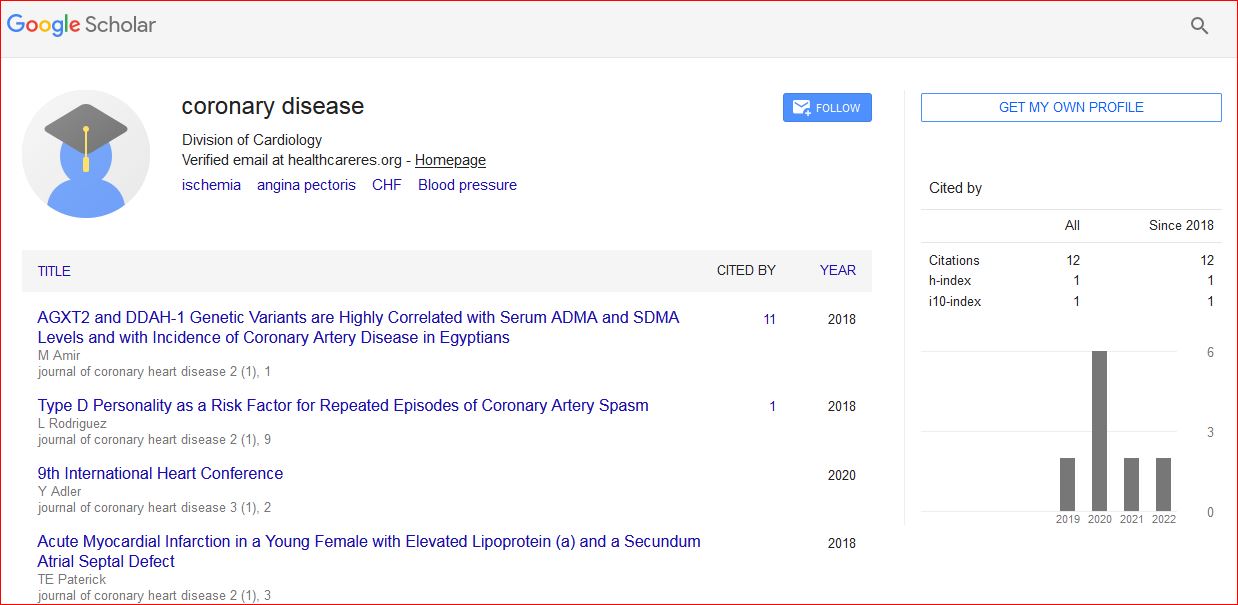
Journal of Coronary Heart Diseases received 15 citations as per Google Scholar report