Brief Report - (2025) Volume 9, Issue 4
Received: 01-Jul-2025, Manuscript No. hps-26-184474;
Editor assigned: 03-Jul-2025, Pre QC No. P-184474;
Reviewed: 17-Jul-2025, QC No. Q-184474;
Revised: 22-Jul-2025, Manuscript No. R-184474;
Published:
29-Jul-2025
, DOI: 10.37421/2573-4563.2025.9.354
Citation: Papadopoulos, Eleni K.. ”Oxidative Stress and Autophagy: Pancreatic Injury and Disease.” J Hepatol Pancreat Sci 09 (2025):354.
Copyright: © 2025 Papadopoulos K. Eleni This is an open-access article distributed under the terms of the Creative Commons Attribution License, which permits unrestricted use, distribution and reproduction in any medium, provided the original author and source are credited.
Oxidative stress and dysregulated autophagy are established as critical components in the pathogenesis of pancreatic injury and disease, encompassing conditions such as pancreatitis and pancreatic cancer. Oxidative stress, arising from an imbalance between the production of reactive oxygen species (ROS) and the capacity of antioxidant defense mechanisms, precipitates cellular damage and inflammation within the pancreas. Concurrently, autophagy, a fundamental cellular recycling process, initially functions as a protective mechanism, facilitating the clearance of damaged organelles and misfolded proteins. However, in scenarios of chronic or severe pancreatic injury, autophagy can exhibit impaired functionality or even adopt a pro-survival role for cancerous cells, thereby contributing to disease progression. A comprehensive understanding of this intricate interplay is indispensable for the development of effective therapeutic strategies targeting pancreatic pathologies [1].
In acute pancreatitis, the overload of ROS plays a significant role in promoting acinar cell injury. This process is mediated through the disruption of mitochondrial function and the induction of endoplasmic reticulum (ER) stress within these cells. Furthermore, the impairment of autophagic flux in this context serves to exacerbate inflammatory responses and amplify tissue damage, underscoring the critical involvement of autophagy in the acute phase of pancreatic injury [2].
The progression of chronic pancreatitis is intricately linked to the subsequent development of pancreatic cancer. This association is significantly influenced by persistent oxidative stress and alterations in autophagic pathways. These factors collectively contribute to cellular transformation processes and play a crucial role in the initiation of tumors within the pancreas [3].
Research endeavors are actively exploring novel therapeutic targets aimed at modulating both oxidative stress pathways and autophagy. Such interventions hold promise for ameliorating pancreatic damage and mitigating disease progression, offering new avenues for clinical management [4].
The complex regulatory network governing oxidative stress and autophagy in pancreatic diseases is further elucidated by the involvement of specific microRNAs. These non-coding RNAs have been shown to regulate the crosstalk between oxidative stress and autophagy within pancreatic stellate cells, which are key cellular players in the development of pancreatic fibrosis [5].
Inflammatory cytokines, often induced by oxidative stress, exert a considerable influence on autophagic pathways within pancreatic cancer cells. This modulation can lead to the promotion of chemoresistance, a significant challenge in the treatment of pancreatic cancer, highlighting the intricate relationship between inflammation, autophagy, and therapeutic outcomes [6].
In experimental models of pancreatic ductal adenocarcinoma, the activation of autophagy has demonstrated a protective role. Specifically, it has been shown to safeguard against damage induced by oxidative stress, suggesting that enhancing autophagic activity could be a potential therapeutic strategy for this aggressive cancer [7].
The role of autophagy in pancreatic cancer is multifaceted and highly context-dependent. It can exert both tumor-suppressive and tumor-promoting effects, a duality that is often significantly influenced by the prevailing level of oxidative stress within the tumor microenvironment. Understanding this delicate balance is crucial for targeted therapies [8].
The pathogenesis of cystic fibrosis-related pancreatic disease is notably influenced by oxidative stress, with significant implications for autophagic processes. A comprehensive understanding of how oxidative stress contributes to the development of this condition and its interplay with autophagy is essential for developing effective management strategies [9].
Dietary interventions, particularly the consumption of antioxidants, are being investigated for their potential to mitigate oxidative stress and modulate autophagic activity. Studies examining the effects of dietary antioxidants in experimental models of pancreatic injury are exploring their therapeutic value in managing pancreatic damage [10].
Pancreatic injury and disease represent a significant global health burden, necessitating a deep understanding of the underlying molecular mechanisms. Among these, oxidative stress and autophagy have emerged as central players, profoundly influencing cellular homeostasis and disease progression. Oxidative stress, characterized by an imbalance between reactive oxygen species (ROS) production and antioxidant defense systems, can lead to cellular damage and inflammation. Autophagy, a conserved cellular degradation and recycling pathway, initially acts as a protective mechanism against cellular stress by clearing damaged components. However, its role can become complex and sometimes detrimental in the context of chronic diseases and cancer, highlighting the need for nuanced therapeutic approaches. The intricate interplay between these two cellular processes is a key area of research for developing novel treatment strategies for a spectrum of pancreatic pathologies. This introduction will explore the foundational roles of oxidative stress and autophagy in pancreatic injury and disease, setting the stage for a detailed examination of their specific mechanisms and therapeutic implications. The focus will be on elucidating how disruptions in these pathways contribute to conditions ranging from acute pancreatitis to pancreatic cancer, and how understanding these interactions can pave the way for targeted interventions. The initial insights into the role of oxidative stress and autophagy in pancreatic health and disease have been pivotal, guiding subsequent research towards unraveling the complexities of their crosstalk. This foundational knowledge underpins the ongoing efforts to identify effective therapeutic modalities. The critical nature of these processes necessitates a thorough exploration of their functional dynamics in various pancreatic disease contexts. The multifaceted nature of autophagy, which can be either protective or detrimental depending on the cellular environment and disease stage, adds another layer of complexity to therapeutic development. Moreover, the persistent generation of ROS in various pancreatic insults provides a constant challenge to cellular antioxidant systems, further exacerbating damage and influencing autophagic responses. Therefore, a holistic approach that considers both oxidative stress and autophagy is crucial for a comprehensive understanding and effective management of pancreatic diseases. The ongoing research in this field aims to decipher the precise molecular signaling pathways that connect oxidative stress and autophagy, with the ultimate goal of translating this knowledge into clinical applications. The subsequent sections will delve deeper into specific aspects of this relationship, exploring various disease models and therapeutic strategies. This comprehensive review seeks to synthesize the current understanding of oxidative stress and autophagy in pancreatic diseases, providing a foundation for future research and clinical practice. It is crucial to appreciate the dynamic nature of these processes and their susceptibility to modulation by external factors and internal cellular states. The exploration of these critical pathways is paramount for advancing our understanding and improving patient outcomes in pancreatic disease. This evolving field of research continues to uncover novel insights into the pathogenesis of pancreatic disorders, offering hope for the development of more effective treatments. The inherent complexity of the pancreatic microenvironment further complicates the precise roles of oxidative stress and autophagy, necessitating context-specific investigations. The scientific community's commitment to unraveling these intricate mechanisms is driving significant progress in the field. The consistent emergence of oxidative stress and autophagy as key players underscores their fundamental importance in pancreatic health and disease. Their dysregulation represents a common thread in many pancreatic pathologies, making them attractive therapeutic targets. The scientific pursuit of knowledge in this domain is essential for addressing the unmet clinical needs associated with pancreatic diseases. A thorough understanding of their reciprocal interactions is key to unlocking novel therapeutic avenues. The continuous advancement of research methodologies is enabling a more precise dissection of these complex cellular processes. The collective body of work highlights the imperative of considering both oxidative stress and autophagy in any comprehensive therapeutic strategy for pancreatic diseases. Pancreatic diseases, including pancreatitis and pancreatic cancer, are often characterized by significant cellular dysfunction, with oxidative stress and dysregulated autophagy emerging as central themes. Oxidative stress arises from an imbalance where the production of reactive oxygen species (ROS) overwhelms the body's antioxidant defense mechanisms, leading to cellular damage and inflammation. Autophagy, a fundamental cellular process responsible for degrading and recycling damaged organelles and proteins, initially serves a protective role by maintaining cellular homeostasis. However, its function can become compromised or even contribute to disease progression, particularly in chronic conditions or cancer. Understanding the intricate interplay between these two pathways is vital for developing effective therapeutic interventions. The initial characterization of oxidative stress as a contributor to pancreatic damage provided a foundation for further investigation into its molecular mechanisms. Simultaneously, research into autophagy revealed its dual nature, capable of both protecting against and promoting cellular dysfunction depending on the context. The convergence of these research streams has illuminated the critical link between oxidative stress and autophagy in the pathogenesis of various pancreatic diseases. This complex relationship necessitates a detailed examination of how disruptions in ROS balance and autophagic flux contribute to distinct pancreatic pathologies. The subsequent discussion will explore these mechanisms in greater depth, highlighting the specific cellular events and molecular signaling pathways involved. The progressive nature of pancreatic diseases often involves a feedback loop where oxidative stress impairs autophagy, and impaired autophagy, in turn, exacerbates oxidative stress and inflammation. This vicious cycle contributes significantly to tissue damage and disease progression. Therefore, therapeutic strategies that target either or both of these pathways hold considerable promise. The diversity of pancreatic conditions, from acute inflammatory events to chronic degenerative processes and malignant transformations, requires a nuanced understanding of how oxidative stress and autophagy are specifically involved in each. Research into the protective role of autophagy in acute pancreatitis, for example, contrasts with its more complex and often pro-tumorigenic role in pancreatic cancer. This highlights the importance of context-specific therapeutic modulation. The identification of key molecular mediators that bridge oxidative stress signaling and autophagic machinery is an active area of research. Such understanding could lead to the development of highly targeted therapies. The impact of external factors, such as diet and environmental exposures, on modulating both oxidative stress and autophagy in the pancreas also warrants further investigation. This holistic approach to understanding pancreatic diseases is crucial for advancing clinical practice. The scientific community's ongoing efforts to unravel these intricate mechanisms are steadily paving the way for more effective diagnostic and therapeutic strategies. The continuous refinement of research tools and techniques allows for a more precise analysis of the molecular events occurring within pancreatic cells under various disease conditions. The profound implications of oxidative stress and autophagy in pancreatic pathogenesis underscore their importance as targets for therapeutic intervention. The intricate balance between these pathways is delicate, and its disruption has far-reaching consequences for pancreatic health. The exploration of these critical cellular processes is essential for improving patient outcomes and advancing the field of pancreatic disease research. A comprehensive grasp of their reciprocal influences is fundamental to unlocking novel therapeutic possibilities. The ever-evolving landscape of scientific discovery in this area promises to yield significant breakthroughs in the management of pancreatic diseases. The intricate molecular dialogue between oxidative stress and autophagy represents a central paradox that researchers are actively working to resolve for therapeutic gain. The dynamic interplay of these cellular components dictates the fate of pancreatic cells in the face of injury and disease. Their multifaceted roles demand careful consideration in the design of any effective treatment regimen. The scientific endeavor to understand these processes is a testament to their critical importance in human health and disease. The collaborative efforts of researchers worldwide are accelerating the pace of discovery in this vital field. The pivotal role of both oxidative stress and autophagy in the pathogenesis of pancreatic disorders firmly establishes them as prime targets for innovative therapeutic strategies. Their dysregulation offers a common pathway through which diverse insults can lead to pancreatic pathology, making them unifying elements in the study of pancreatic diseases. The scientific pursuit of knowledge regarding these pathways is paramount for addressing the significant unmet medical needs in pancreatic disease management. A thorough comprehension of their interconnectedness is the key to unlocking transformative therapeutic interventions. The continuous progress in our understanding of these cellular mechanisms is essential for translating fundamental research into tangible clinical benefits. The intricate dance between oxidative stress and autophagy governs the cellular response to various pancreatic insults. Their complex interactions present both challenges and opportunities for therapeutic intervention. The scientific community's dedication to deciphering these mechanisms is driving significant advancements in the field. The pervasive involvement of oxidative stress and autophagy in pancreatic disorders solidifies their position as critical targets for future therapeutic development. Their dysregulation serves as a hallmark of many pancreatic pathologies, offering a shared mechanism that can be exploited for treatment. The relentless pursuit of knowledge regarding these critical pathways is indispensable for improving the lives of patients suffering from pancreatic diseases. A deep and nuanced understanding of their complex interplay is the cornerstone for developing groundbreaking therapeutic solutions. The intricate relationship between oxidative stress and autophagy is central to understanding pancreatic injury and disease, including pancreatitis and pancreatic cancer. Oxidative stress, stemming from an imbalance in reactive oxygen species (ROS) and antioxidant defenses, triggers cellular damage and inflammation in the pancreas. Autophagy, a cellular recycling process, initially offers protection by clearing damaged components, but can become impaired or pro-survival in disease states, contributing to progression. This complex interplay is crucial for developing therapeutic strategies. For instance, in acute pancreatitis, ROS overload exacerbates acinar cell injury via mitochondrial dysfunction and ER stress, while impaired autophagy amplifies inflammation and tissue damage. The progression from chronic pancreatitis to pancreatic cancer is linked to sustained oxidative stress and altered autophagy, driving cellular transformation. Novel therapeutic targets are being explored to modulate both oxidative stress and autophagy to ameliorate pancreatic damage. MicroRNAs play a role in regulating the crosstalk between these pathways in pancreatic stellate cells, key contributors to fibrosis. Inflammatory cytokines induced by oxidative stress can also affect autophagy in pancreatic cancer cells, promoting chemoresistance. Conversely, autophagy activation can be protective against oxidative stress-induced damage in pancreatic ductal adenocarcinoma. The dual role of autophagy in pancreatic cancer, being both tumor-suppressive and tumor-promoting, is influenced by oxidative stress levels. Oxidative stress and autophagy are also implicated in cystic fibrosis-related pancreatic disease. Dietary antioxidants are being investigated for their ability to mitigate oxidative stress and modulate autophagy in experimental pancreatic injury. This multifaceted involvement highlights the need for integrated therapeutic approaches targeting both oxidative stress and autophagy in pancreatic diseases. Future research will likely focus on deciphering the precise molecular mechanisms governing this crosstalk and developing targeted interventions. The therapeutic potential lies in modulating these pathways to restore cellular balance and prevent or reverse disease progression. Pancreatic diseases, including pancreatitis and pancreatic cancer, are profoundly influenced by the cellular processes of oxidative stress and autophagy. Oxidative stress arises from an imbalance in reactive oxygen species (ROS) production and antioxidant capacity, leading to cellular damage and inflammation. Autophagy, a fundamental cellular recycling pathway, typically acts protectively by removing damaged components, but its dysregulation is implicated in disease progression. The complex interplay between these two pathways is a critical area of investigation for therapeutic development. Research has shown that in acute pancreatitis, ROS overload contributes to acinar cell injury through mitochondrial dysfunction and ER stress, while impaired autophagy exacerbates inflammation. Chronic pancreatitis and its progression to pancreatic cancer are linked to sustained oxidative stress and altered autophagy, driving cellular transformation. Consequently, novel therapeutic strategies are being developed to target the modulation of both oxidative stress and autophagy for ameliorating pancreatic damage. The involvement of microRNAs in regulating the crosstalk between these pathways in pancreatic stellate cells, crucial for fibrosis, is also being studied. Furthermore, inflammatory cytokines, often induced by oxidative stress, can influence autophagic processes in pancreatic cancer cells, contributing to chemoresistance. In contrast, activating autophagy has shown promise in protecting against oxidative stress-induced damage in pancreatic ductal adenocarcinoma. The dual role of autophagy in pancreatic cancer, which can be either tumor-suppressive or tumor-promoting, is often dependent on the prevailing level of oxidative stress. These processes are also relevant in cystic fibrosis-related pancreatic disease, where oxidative stress plays a significant role. The potential of dietary antioxidants to mitigate oxidative stress and modulate autophagy in experimental pancreatic injury is under investigation. This comprehensive involvement underscores the importance of considering integrated therapeutic approaches that address both oxidative stress and autophagy in managing pancreatic diseases. The ongoing research aims to elucidate the precise molecular mechanisms governing this interaction and to translate these findings into effective clinical interventions.
The pervasive involvement of oxidative stress and dysregulated autophagy in pancreatic injury and disease, including pancreatitis and pancreatic cancer, highlights their critical roles in pathogenesis. Oxidative stress, characterized by an imbalance between reactive oxygen species (ROS) production and antioxidant defense mechanisms, initiates cellular damage and inflammation within the pancreas. Concurrently, autophagy, a fundamental cellular recycling process, initially functions as a protective mechanism by facilitating the clearance of damaged organelles and misfolded proteins. However, in contexts of chronic or severe pancreatic injury, autophagy can become impaired or even adopt a pro-survival role for cancer cells, thereby contributing to disease progression. A comprehensive understanding of this intricate interplay is indispensable for the development of effective therapeutic strategies targeting pancreatic pathologies [1].
In acute pancreatitis, a significant overload of ROS contributes to acinar cell injury. This detrimental effect is mediated through the disruption of mitochondrial function and the induction of endoplasmic reticulum (ER) stress. Furthermore, the impairment of autophagic flux in this acute setting serves to exacerbate inflammatory responses and amplify tissue damage, thereby underscoring the critical involvement of autophagy in the acute phase of pancreatic injury [2].
The progression from chronic pancreatitis to the subsequent development of pancreatic cancer is intricately linked. This association is significantly influenced by sustained oxidative stress and alterations in autophagic pathways. These factors collectively contribute to cellular transformation processes and play a crucial role in the initiation of tumors within the pancreas [3].
Current research efforts are focused on exploring novel therapeutic targets. These targets aim to modulate both oxidative stress pathways and autophagy, with the ultimate goal of ameliorating pancreatic damage and mitigating disease progression, thereby offering new avenues for clinical management [4].
The complex regulatory network that governs oxidative stress and autophagy in various pancreatic diseases is further elucidated by the involvement of specific microRNAs. These non-coding RNAs have been shown to regulate the crosstalk between oxidative stress and autophagy within pancreatic stellate cells, which are recognized as key cellular players in the development of pancreatic fibrosis [5].
Inflammatory cytokines, frequently induced by oxidative stress, exert a considerable influence on autophagic pathways within pancreatic cancer cells. This modulation can lead to the promotion of chemoresistance, a significant clinical challenge in the treatment of pancreatic cancer, thus highlighting the intricate relationship between inflammation, autophagy, and therapeutic outcomes [6].
In experimental models designed to study pancreatic ductal adenocarcinoma, the activation of autophagy has demonstrated a discernible protective role. Specifically, it has been shown to safeguard cells against damage induced by oxidative stress, suggesting that enhancing autophagic activity could represent a potential therapeutic strategy for this aggressive form of cancer [7].
The role of autophagy in the context of pancreatic cancer is characterized by its dual nature, exhibiting both tumor-suppressive and tumor-promoting effects. This complex behavior is often significantly influenced by the prevailing level of oxidative stress within the tumor microenvironment. Understanding this delicate balance is crucial for the design of targeted therapies [8].
The pathogenesis of cystic fibrosis-related pancreatic disease is notably influenced by oxidative stress, with significant implications for autophagic processes. A comprehensive understanding of how oxidative stress contributes to the development of this specific condition and its intricate interplay with autophagy is essential for developing effective management strategies [9].
Dietary interventions, particularly those involving the consumption of antioxidants, are being actively investigated for their potential to mitigate oxidative stress and modulate autophagic activity. Studies that examine the effects of dietary antioxidants in experimental models of pancreatic injury are exploring their therapeutic value in managing pancreatic damage [10].
Oxidative stress and dysregulated autophagy are central to pancreatic injury and disease, including pancreatitis and pancreatic cancer. Oxidative stress, an imbalance between ROS production and antioxidant defenses, triggers cellular damage and inflammation in the pancreas. Autophagy, a cellular recycling process, initially protects by clearing damaged components, but can become impaired or promote cancer cell survival, contributing to disease progression. Understanding this complex interplay is crucial for developing therapeutic strategies. In acute pancreatitis, ROS overload leads to acinar cell injury through mitochondrial dysfunction and ER stress, while impaired autophagy exacerbates inflammation. Chronic pancreatitis and pancreatic cancer are linked to sustained oxidative stress and altered autophagy, driving cellular transformation. Therefore, novel therapeutic targets aim to modulate both pathways to ameliorate pancreatic damage. MicroRNAs regulate the crosstalk between oxidative stress and autophagy in pancreatic stellate cells, important in fibrosis. Inflammatory cytokines induced by oxidative stress also affect autophagy in pancreatic cancer, promoting chemoresistance. Conversely, autophagy activation can protect against oxidative stress-induced damage in pancreatic ductal adenocarcinoma. Autophagy's dual role in pancreatic cancer, being both tumor-suppressive and tumor-promoting, depends on oxidative stress levels. Oxidative stress and autophagy are also involved in cystic fibrosis-related pancreatic disease. Dietary antioxidants are being studied for their potential to mitigate oxidative stress and modulate autophagy in experimental pancreatic injury. This highlights the importance of integrated therapeutic approaches targeting both oxidative stress and autophagy for pancreatic diseases. Future research will focus on deciphering the precise molecular mechanisms and translating findings into clinical interventions. The goal is to restore cellular balance and prevent or reverse disease progression. Pancreatic diseases, encompassing pancreatitis and pancreatic cancer, are significantly impacted by oxidative stress and autophagy. Oxidative stress, an imbalance in ROS production and antioxidant capacity, leads to cellular damage and inflammation. Autophagy, a cellular recycling pathway, typically protective, becomes dysregulated in disease, contributing to progression. Their complex interplay is key for therapeutic development. In acute pancreatitis, ROS overload causes acinar cell injury via mitochondrial dysfunction and ER stress, while impaired autophagy worsens inflammation. Chronic pancreatitis and cancer are linked to persistent oxidative stress and altered autophagy, driving cellular transformation. Novel therapies are being sought to modulate both pathways to reduce pancreatic damage. MicroRNAs regulate the oxidative stress-autophagy crosstalk in pancreatic stellate cells, relevant to fibrosis. Inflammatory cytokines, induced by oxidative stress, affect autophagy in cancer cells, enhancing chemoresistance. Conversely, autophagy activation may protect against oxidative stress damage in pancreatic ductal adenocarcinoma. Autophagy's dual role in cancer, both suppressing and promoting tumors, is influenced by oxidative stress levels. These processes are also implicated in cystic fibrosis-related pancreatic disease. Dietary antioxidants are being explored to reduce oxidative stress and modulate autophagy in experimental pancreatic injury. This underscores the need for combined therapeutic strategies targeting both oxidative stress and autophagy in pancreatic diseases. Ongoing research aims to clarify molecular mechanisms and translate findings into clinical practice, restoring cellular balance and preventing disease advancement. Oxidative stress and altered autophagy are fundamental to pancreatic injury and disease, including pancreatitis and pancreatic cancer. Oxidative stress, stemming from an imbalance in reactive oxygen species (ROS) production and antioxidant defenses, induces cellular damage and inflammation. Autophagy, a cellular recycling process, initially protective by clearing damaged components, can become dysregulated in disease, promoting progression. Understanding their complex interaction is vital for therapeutic development. In acute pancreatitis, ROS overload causes acinar cell injury through mitochondrial dysfunction and ER stress, while impaired autophagy exacerbates inflammation. Chronic pancreatitis and pancreatic cancer are linked to sustained oxidative stress and altered autophagy, driving cellular transformation. Thus, novel therapeutic strategies aim to modulate both pathways to ameliorate pancreatic damage. MicroRNAs regulate the crosstalk between oxidative stress and autophagy in pancreatic stellate cells, important in fibrosis. Inflammatory cytokines, induced by oxidative stress, affect autophagy in pancreatic cancer cells, promoting chemoresistance. Conversely, autophagy activation can protect against oxidative stress-induced damage in pancreatic ductal adenocarcinoma. Autophagy's dual role in pancreatic cancer, being both tumor-suppressive and tumor-promoting, is influenced by oxidative stress levels. These processes are also relevant in cystic fibrosis-related pancreatic disease. Dietary antioxidants are being investigated for their potential to mitigate oxidative stress and modulate autophagy in experimental pancreatic injury. This highlights the importance of integrated therapeutic approaches targeting both oxidative stress and autophagy for pancreatic diseases. Future research will focus on deciphering the precise molecular mechanisms and translating findings into clinical interventions, aiming to restore cellular balance and prevent disease advancement.
Oxidative stress and dysregulated autophagy are central to pancreatic injury and disease, including pancreatitis and cancer. Oxidative stress, an imbalance of reactive oxygen species (ROS), causes cellular damage and inflammation. Autophagy, a cellular recycling process, is initially protective but can become impaired or pro-survival in disease, contributing to progression. This complex interplay is crucial for developing therapeutic strategies. In acute pancreatitis, ROS overload and impaired autophagy exacerbate injury and inflammation. Chronic pancreatitis and pancreatic cancer are linked to sustained oxidative stress and altered autophagy, driving cellular transformation. Research focuses on modulating both pathways for therapeutic benefit. MicroRNAs, inflammatory cytokines, and dietary antioxidants also play roles in this intricate relationship. Understanding and targeting these pathways, including the dual role of autophagy in cancer and its implications in cystic fibrosis-related pancreatic disease, is key for future treatments.
None
None
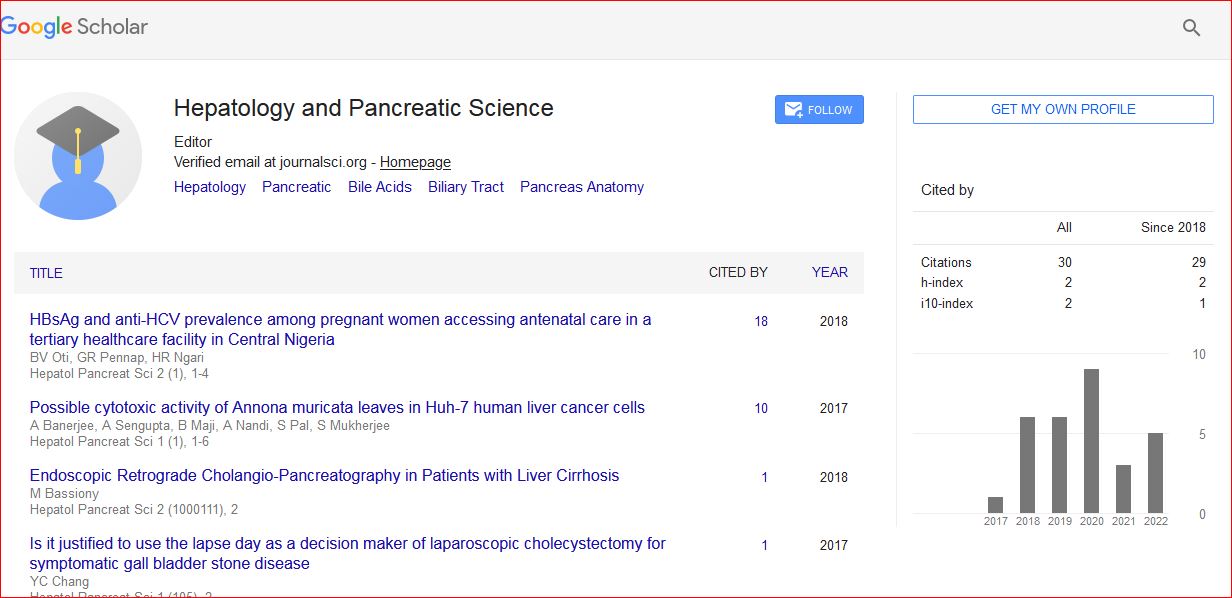
Hepatology and Pancreatic Science received 34 citations as per Google Scholar report