Perspective - (2025) Volume 11, Issue 5
Received: 01-Sep-2025, Manuscript No. aso-25-184650;
Editor assigned: 03-Sep-2025, Pre QC No. P-184650;
Reviewed: 17-Sep-2025, QC No. Q-184650;
Revised: 22-Sep-2025, Manuscript No. R-184650;
Published:
29-Sep-2025
, DOI: 10.37421/2471-2671.2025.11.195
Citation: Johansson, Emma. ”Optimizing Cancer Surgery: Timing,
Technique, and Multidisciplinary Care.” Arch Surg Oncol 11 (2025):195.
Copyright: © 2025 Johansson E. This is an open-access article distributed under the terms of the Creative Commons Attribution License, which permits unrestricted use,
distribution and reproduction in any medium, provided the original author and source are credited.
Surgery stands as a fundamental pillar within the comprehensive framework of multidisciplinary cancer care, with its strategic timing and meticulous technical execution profoundly influencing patient prognoses. The optimal timing for surgical intervention, frequently influenced by neoadjuvant treatment regimens or the patient's overall physiological status, is critical for enhancing resectability and diminishing the likelihood of recurrence. Significant advancements in surgical methodologies, encompassing minimally invasive techniques and robotic-assisted procedures, are continually improving operative precision and facilitating more rapid patient recovery. The synthesis of surgical data with other pertinent oncological information is indispensable for the refinement of therapeutic strategies, ultimately aiming to achieve superior long-term survival rates and enhanced quality of life for cancer patients [1].
In the context of rectal cancer management, the sequential administration of neoadjuvant chemotherapy followed by surgical resection has demonstrated a marked improvement in patient outcomes. This integrated therapeutic strategy facilitates tumor downstaging and enables the achievement of more favorable surgical margins, thereby conferring substantial benefits to the patient's overall prognosis. The careful selection of appropriate candidates for this approach, alongside the precise determination of the surgical timing post-neoadjuvant treatment, represents crucial elements in the successful implementation of this strategy [2].
Robotic surgery has emerged as a particularly valuable modality in the execution of oncological procedures, providing surgeons with enhanced dexterity and superior visualization capabilities. For complex surgical resections, such as those involving the pelvic region, robotic platforms enable a more precise dissection of tissues and facilitate intricate reconstructive maneuvers. These advantages can potentially lead to a reduction in postoperative complications and accelerate recovery times when contrasted with conventional surgical approaches [3].
The adoption of a multidisciplinary team approach is unequivocally paramount in the contemporary management of cancer. For surgical oncologists, this necessitates close and continuous collaboration with medical oncologists, radiation oncologists, pathologists, and radiologists. This synergistic collaboration ensures that all surgical decisions are made with a comprehensive understanding of the patient's specific disease characteristics and their overarching treatment plan, thereby fostering the development of optimized care pathways [4].
Minimally invasive surgery (MIS) presents distinct and significant advantages in the domain of oncological resections. These benefits include a reduction in intraoperative blood loss, shorter hospital stays for patients, and improved cosmetic outcomes. The successful application of MIS techniques across a diverse array of cancer types, including but not limited to colorectal and lung cancers, underscores its broad utility and its substantial contribution to enhanced patient recovery and improved adherence to adjuvant therapeutic regimens [5].
The judicious timing of surgical intervention in relation to systemic therapy represents a critical decision-making point in the management of numerous cancer types. For instance, in the treatment of breast cancer, the sequence in which neoadjuvant chemotherapy, surgery, and adjuvant therapy are administered has a profound impact on treatment efficacy and patient outcomes. A thorough understanding of the biological response to these treatments, alongside careful consideration of individual patient factors, is essential for optimizing this therapeutic sequence [6].
Enhanced Recovery After Surgery (ERAS) protocols are being increasingly integrated into the practice of oncological surgery. These comprehensive, multimodal strategies encompass pre-operative optimization of the patient's condition, meticulous intra-operative management, and dedicated post-operative care. The primary objectives of ERAS protocols are to accelerate patient recovery, minimize the incidence of complications, and ultimately improve the overall success of surgical interventions [7].
The precision with which surgical techniques are executed directly influences the achievement of favorable oncological outcomes, particularly in the critical endeavor of obtaining negative surgical margins. Significant progress in surgical planning methodologies, the provision of intraoperative guidance through technologies such as image-guided surgery, and the development of advanced reconstructive techniques are all vital for improving both local disease control and the functional recovery of cancer patients following surgery [8].
The advent and widespread adoption of immunotherapy have fundamentally reshaped the landscape of cancer treatment paradigms, and its strategic integration with surgical interventions is a vibrant and active area of ongoing research. The administration of perioperative immunotherapy, either preceding or following surgical resection, holds the potential to augment the host's immune response against any residual disease, thereby possibly enhancing survival rates in carefully selected patient populations with specific malignancies [9].
Patient-reported outcomes (PROs) are gaining increasing recognition as essential metrics for evaluating the success of oncological surgery, extending well beyond the scope of traditional clinical endpoints. The systematic evaluation of factors such as health-related quality of life, functional status, and the burden of symptom experienced by patients post-surgery provides a more holistic and patient-centered perspective on treatment efficacy and is instrumental in facilitating informed shared decision-making processes [10].
Surgery occupies a central position in the multidisciplinary approach to cancer care, with its temporal placement and technical execution significantly influencing patient prognoses. Optimal surgical timing, often determined by neoadjuvant therapies or the patient's overall health, can enhance resectability and reduce recurrence rates. Innovations in surgical techniques, including minimally invasive and robotic-assisted methods, are improving precision and recovery. Integrating surgical data with other oncological information is vital for refining treatment strategies and achieving better long-term survival and quality of life [1].
Neoadjuvant chemotherapy followed by surgery in rectal cancer has led to improved outcomes. This combined approach facilitates tumor downstaging and better surgical margins, ultimately benefiting patient prognosis. Patient selection and the precise timing of surgery after neoadjuvant treatment are critical components of this strategy [2].
Robotic surgery has become a valuable tool in oncologic procedures, offering enhanced dexterity and visualization. For complex resections, such as those in the pelvic region, robotic platforms allow for more precise dissection and reconstruction, potentially leading to fewer complications and faster recovery compared to traditional methods [3].
The multidisciplinary team approach is crucial in modern cancer management. For surgical oncologists, this means close collaboration with medical oncologists, radiation oncologists, pathologists, and radiologists. This synergy ensures surgical decisions are informed by a comprehensive understanding of the patient's disease and overall treatment plan, leading to optimized care pathways [4].
Minimally invasive surgery (MIS) offers distinct advantages in oncological resections, including reduced blood loss, shorter hospital stays, and improved cosmesis. The application of MIS techniques in various cancers, such as colorectal and lung cancers, demonstrates its broad applicability and contribution to better patient recovery and adherence to adjuvant therapies [5].
The timing of surgery relative to systemic therapy is a critical decision in managing many cancers. For example, in breast cancer, the sequence of neoadjuvant chemotherapy, surgery, and adjuvant therapy significantly impacts outcomes. Understanding the biological response to treatment and patient factors is key to optimizing this sequence [6].
Enhanced Recovery After Surgery (ERAS) protocols are increasingly integrated into oncological surgery. These multimodal strategies, involving pre-operative optimization, intra-operative management, and post-operative care, aim to accelerate patient recovery, reduce complications, and improve overall surgical outcomes [7].
The precision of surgical techniques directly influences oncological outcomes, particularly in achieving negative surgical margins. Advances in surgical planning, intraoperative guidance (e.g., image-guided surgery), and reconstructive methods are crucial for improving both local control and functional recovery in cancer patients [8].
The advent of immunotherapy has reshaped cancer treatment paradigms, and its integration with surgery is an active area of research. Perioperative immunotherapy, either before or after surgery, may enhance the host immune response against residual disease, potentially improving survival rates in select malignancies [9].
Patient-reported outcomes (PROs) are increasingly recognized as vital measures of success in oncological surgery, extending beyond traditional clinical endpoints. Evaluating factors like quality of life, functional status, and symptom burden post-surgery provides a more holistic view of treatment efficacy and informs shared decision-making [10].
Surgery is integral to multidisciplinary cancer care, with timing and technique significantly impacting outcomes. Neoadjuvant therapies and patient condition influence surgical timing for better resectability and reduced recurrence. Advances like minimally invasive and robotic surgery enhance precision and recovery. Integrating surgical data with other oncological information is crucial for refining treatments and improving long-term survival and quality of life. Neoadjuvant chemotherapy followed by surgery shows improved outcomes in rectal cancer by enabling tumor downstaging and better margins. Robotic surgery offers enhanced dexterity and visualization, potentially reducing complications and speeding recovery in complex oncological procedures. The multidisciplinary team approach, involving close collaboration among various specialists, ensures informed surgical decisions and optimized care pathways. Minimally invasive surgery provides benefits such as reduced blood loss and shorter hospital stays, contributing to better patient recovery. The sequence of systemic therapy and surgery is critical, especially in breast cancer, requiring understanding of biological responses and patient factors for optimal sequencing. Enhanced Recovery After Surgery (ERAS) protocols accelerate patient recovery and reduce complications through multimodal care strategies. Precise surgical techniques, aided by advanced planning and guidance, are vital for achieving negative margins and improving local control and functional recovery. Perioperative immunotherapy is being researched for its potential to enhance immune response against residual disease and improve survival. Patient-reported outcomes are increasingly important for evaluating surgical success, offering a holistic view of treatment efficacy and informing shared decision-making.
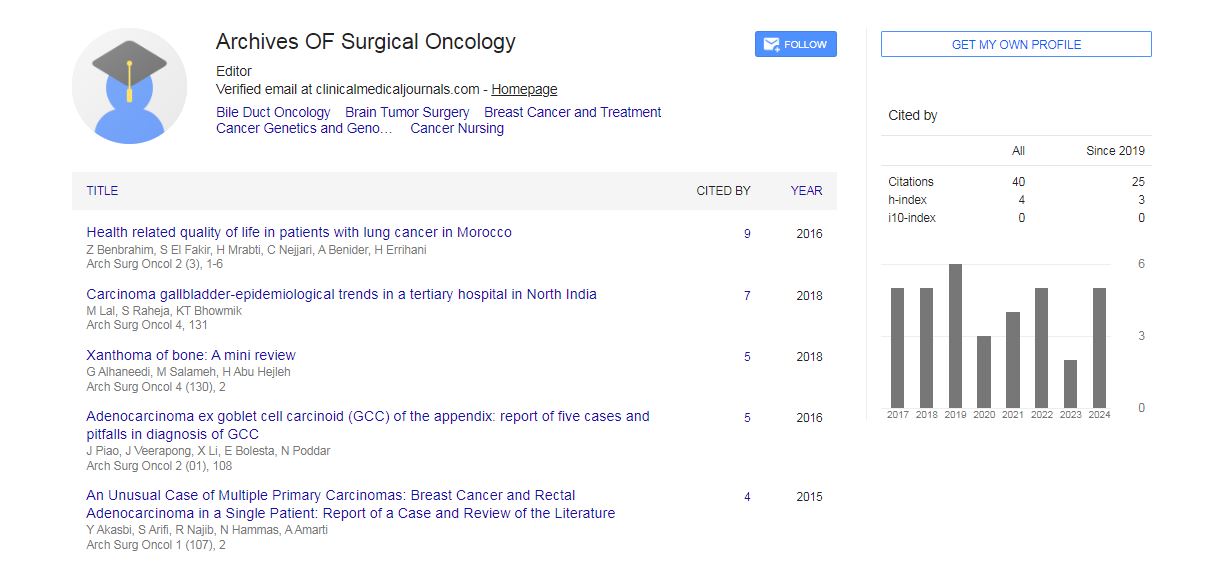
Archives of Surgical Oncology received 37 citations as per Google Scholar report