Perspective - (2025) Volume 14, Issue 5
Received: 01-Sep-2025, Manuscript No. jmmd-26-184704;
Editor assigned: 03-Sep-2025, Pre QC No. P-184704;
Reviewed: 17-Sep-2025, QC No. Q-184704;
Revised: 22-Sep-2025, Manuscript No. R-184704;
Published:
29-Sep-2025
, DOI: 10.37421/2161-0703.2025.14.548
Citation: Novak, Peter. ”Opportunistic Fungal Infections: Diagnosis, Resistance, and Management.” J Med Microb Diagn 14 (2025):548.
Copyright: © 2025 Novak P. This is an open-access article distributed under the terms of the Creative Commons Attribution License, which permits unrestricted use, distribution and reproduction in any medium, provided the original author and source are credited.
Opportunistic fungal infections (OFIs) represent a significant and growing threat to individuals with compromised immune systems, leading to severe morbidity and mortality worldwide. These infections arise when the body's natural defenses are weakened, allowing fungi, which are often part of the normal human flora or present in the environment, to proliferate and invade tissues [1].
Conditions that predispose individuals to OFIs are diverse and include the human immunodeficiency virus (HIV) infection, organ transplantation, aggressive chemotherapy regimens, and the widespread use of immunosuppressive medications [1].
Pathogens such as Candida, Aspergillus, and Pneumocystis jirovecii are primary culprits, capable of causing life-threatening systemic diseases [1].
The critical importance of prompt and accurate laboratory diagnosis cannot be overstated, as it forms the bedrock for effective therapeutic strategies against these challenging infections [1].
The diagnostic landscape for fungal infections in immunocompromised patients is undergoing a rapid transformation, driven by technological advancements aimed at achieving faster and more precise pathogen identification. Traditional culture-based methods, while still valuable, are often time-consuming, delaying the initiation of critical antifungal treatments. Consequently, the focus has shifted towards the utility of advanced diagnostic methods, including matrix-assisted laser desorption/ionization-time of flight mass spectrometry (MALDI-TOF MS) and various polymerase chain reaction (PCR)-based assays. These techniques offer the promise of significantly shortening the time to diagnosis, thereby enabling earlier targeted antifungal therapy and improving patient outcomes [2].
The pervasive threat of Aspergillus infections, particularly invasive aspergillosis, continues to be a major concern in critically ill and immunocompromised individuals. Patients undergoing hematopoietic stem cell transplantation or intensive chemotherapy are at exceedingly high risk for developing this severe condition. Understanding the intricate pathogenesis, recognizing the diverse clinical manifestations, and adhering to current treatment guidelines are paramount. The role of diagnostic markers such as galactomannan and beta-D-glucan in guiding empirical therapy is crucial, as is awareness of the increasing prevalence of azole resistance in Aspergillus species, which complicates clinical management [3].
Pneumocystis jirovecii pneumonia (PJP) presents a unique set of clinical and diagnostic challenges, particularly in immunocompromised patients such as those with HIV infection and recipients of solid organ transplants. The epidemiology and risk factors for PJP are well-established, but effective diagnostic strategies remain a focus of research and clinical practice. While microscopy for detecting P. jirovecii cysts is a standard method, molecular techniques are increasingly employed for their improved sensitivity in diagnosing this opportunistic pathogen [4].
Candidiasis, a spectrum of infections caused by yeasts of the genus Candida, poses a significant burden, especially in critically ill patients and individuals with hematological malignancies. Distinguishing between colonization and true infection is vital for appropriate management, and rapid diagnostics play a pivotal role in this regard. The evolving landscape of antifungal resistance, particularly among multidrug-resistant strains like Candida auris and other non-albicans Candida species, adds another layer of complexity to treating these vulnerable patient populations [5].
The utility of biomarkers for the diagnosis of invasive fungal infections (IFIs) in immunocompromised patients is a rapidly advancing field offering valuable adjunctive tools. Key biomarkers such as beta-D-glucan (BDG) and galactomannan (GM) have demonstrated utility in various clinical settings, including prophylaxis and diagnosis of aspergillosis and candidiasis. However, understanding their sensitivity, specificity, and limitations is crucial. Optimal patient management relies on the integration of biomarker data with clinical and imaging findings, emphasizing a comprehensive diagnostic approach [6].
Beyond the more commonly encountered fungal pathogens, a range of rare opportunistic fungal infections can afflict immunocompromised hosts, presenting significant diagnostic and therapeutic hurdles. Infections caused by less common fungi, such as Mucorales species (mucormycosis) and Cryptococcus species, can be rapidly progressive and often fatal. Increased clinician awareness, coupled with prompt and aggressive treatment using appropriate antifungal agents, is essential for improving outcomes in these challenging cases [7].
Candida auris has emerged as a global threat to public health due to its multidrug resistance and propensity to cause outbreaks in healthcare settings, particularly among immunocompromised patients. This yeast presents unique diagnostic challenges, including its potential for misidentification with conventional methods, underscoring the importance of molecular identification and antifungal susceptibility testing. Current strategies for prevention and control are critical in mitigating the spread and impact of C. auris infections [8].
Solid organ transplant recipients represent a particularly vulnerable population due to potent immunosuppression, placing them at high risk for a broad spectrum of fungal infections. These can be caused by common pathogens like Candida, Aspergillus, and Pneumocystis, as well as less frequent agents. The nuances of timely diagnosis, differentiating between prophylaxis, pre-emptive therapy, and treatment, and navigating the evolving antifungal armamentarium alongside challenges posed by resistance are critical aspects of managing these complex cases [9].
The intricate relationship between the gut microbiome and the susceptibility to and outcome of opportunistic fungal infections in immunocompromised patients is an area of increasing research interest. Dysbiosis, an imbalance in microbial communities, can predispose individuals to fungal overgrowth and invasive disease. Modulating the microbiome presents a potential avenue for novel therapeutic or prophylactic strategies, highlighting the complex interplay between host immunity, microbial communities, and fungal pathogens [10].
Opportunistic fungal infections (OFIs) represent a substantial and escalating global health concern, disproportionately affecting individuals with compromised immune systems. These infections occur when fungi, often present commensally or in the environment, exploit a weakened host defense mechanism to initiate and sustain an infection [1].
A variety of clinical scenarios can lead to immune deficiency, including the human immunodeficiency virus (HIV) epidemic, the increasing success of organ transplantation, the aggressive use of cytotoxic chemotherapy for cancer treatment, and the widespread prescription of immunosuppressive drugs for autoimmune diseases and transplant rejection prophylaxis [1].
The primary etiological agents include yeasts like Candida, molds such as Aspergillus, and the fungus Pneumocystis jirovecii, all of which can cause severe, disseminated, and life-threatening diseases [1].
Therefore, the timely and accurate identification of these fungal pathogens through laboratory diagnostics is paramount for guiding effective treatment strategies and improving patient prognosis [1].
The field of laboratory diagnostics for fungal infections in immunocompromised patients is characterized by rapid innovation and a move towards more sophisticated techniques. Traditional diagnostic methods, primarily reliant on microscopy and culture, are often insufficient in terms of speed and sensitivity for the timely management of life-threatening IFIs. Consequently, there is a growing emphasis on advanced diagnostic modalities, such as matrix-assisted laser desorption/ionization-time of flight mass spectrometry (MALDI-TOF MS) for rapid species identification, and various polymerase chain reaction (PCR)-based assays for sensitive and specific detection of fungal DNA [2].
These cutting-edge techniques hold the potential to significantly reduce the turnaround time for diagnosis, thereby facilitating earlier initiation of appropriate antifungal therapy and ultimately enhancing patient survival rates [2].
Invasive aspergillosis, a severe and often fatal mold infection, continues to pose a formidable challenge in the management of critically ill and immunocompromised patients. Individuals who have undergone hematopoietic stem cell transplantation or are receiving intensive chemotherapy are at particularly elevated risk. A thorough understanding of the pathogenesis of Aspergillus infections, recognition of their diverse clinical presentations, and adherence to current treatment guidelines are essential. Diagnostic markers like galactomannan and beta-D-glucan play a crucial role in the early detection and management of invasive aspergillosis, especially in empirical treatment strategies. Furthermore, the increasing incidence of azole resistance among Aspergillus species necessitates continuous monitoring and adaptation of therapeutic approaches [3].
Pneumocystis jirovecii pneumonia (PJP) remains a significant opportunistic infection, particularly prevalent in immunocompromised individuals, including those with advanced HIV infection and recipients of solid organ transplants. While the epidemiology and risk factors for PJP are well-characterized, ongoing efforts focus on refining diagnostic strategies to ensure early and accurate detection. Microscopy remains a cornerstone for identifying P. jirovecii cysts in respiratory samples, but molecular diagnostic methods are increasingly recognized for their superior sensitivity, aiding in the diagnosis of PJP, especially in challenging clinical scenarios [4].
Candidiasis encompasses a broad spectrum of fungal diseases caused by Candida species, with a high incidence observed in critically ill patients and those with hematological malignancies. A key diagnostic challenge lies in differentiating true invasive infection from mere colonization, which is critical for guiding appropriate antifungal therapy. The development and application of rapid, non-culture-based diagnostic tools are increasingly important in this context. Moreover, the escalating issue of antifungal resistance, particularly among emerging pathogens like Candida auris and other non-albicans Candida species, presents a significant hurdle in effectively managing these infections in vulnerable patient populations [5].
Biomarkers have emerged as valuable adjuncts in the diagnostic armamentarium for invasive fungal infections (IFIs) in immunocompromised patients, offering crucial insights that complement traditional methods. Key biomarkers such as beta-D-glucan (BDG) and galactomannan (GM) are widely employed for their ability to detect fungal elements or metabolites in biological fluids. While these markers possess considerable diagnostic utility, understanding their specific sensitivities, specificities, and limitations in various clinical contexts, including prophylactic monitoring and definitive diagnosis of infections like aspergillosis and candidiasis, is essential for their effective application [6].
In addition to common fungal pathogens, a group of less frequently encountered but often aggressive opportunistic fungi can cause severe infections in immunocompromised individuals. Infections attributed to agents such as Mucorales species, responsible for mucormycosis, and Cryptococcus species, can progress rapidly and have a high mortality rate. The diagnosis of these uncommon IFIs often relies on a combination of histopathology, molecular methods, and prompt recognition of clinical signs. Increased awareness among healthcare professionals and the immediate initiation of aggressive treatment with appropriate antifungal agents are crucial for improving patient outcomes [7].
Candida auris has rapidly evolved into a formidable global public health threat, characterized by its multidrug resistance and its tendency to cause outbreaks in healthcare facilities worldwide. This yeast is particularly problematic in immunocompromised patients. Diagnostic challenges associated with C. auris include its potential for misidentification by standard laboratory methods, highlighting the critical need for molecular identification techniques and comprehensive antifungal susceptibility testing. The implementation of robust prevention and control strategies is paramount to limiting the transmission and impact of C. auris infections [8].
Solid organ transplant recipients are a high-risk group for developing invasive fungal infections due to the intensive immunosuppressive regimens they receive. The spectrum of fungal pathogens encountered in this population includes common agents like Candida, Aspergillus, and Pneumocystis, as well as rarer opportunistic fungi. Effective management hinges on timely diagnosis, judicious use of prophylactic and pre-emptive strategies, and appropriate therapeutic interventions. The evolving landscape of antifungal agents and the persistent challenge of antifungal resistance further complicate the care of these complex patients [9].
The complex interplay between the gut microbiome and the host's susceptibility to and outcome of opportunistic fungal infections in immunocompromised individuals is an area of significant scientific investigation. Disruptions in the gut microbial community, known as dysbiosis, can create an environment conducive to fungal overgrowth and increase the risk of invasive fungal disease. Consequently, strategies aimed at modulating the gut microbiome are being explored as potential novel therapeutic or prophylactic approaches, underscoring the intricate relationship between host immunity, microbial composition, and fungal pathogenesis [10].
Opportunistic fungal infections (OFIs) pose a severe threat to immunocompromised individuals, stemming from conditions like HIV, organ transplantation, and chemotherapy. Pathogens such as Candida, Aspergillus, and Pneumocystis jirovecii can cause life-threatening diseases. Prompt laboratory diagnosis, employing advanced techniques like MALDI-TOF MS and PCR, is crucial for timely and targeted antifungal therapy, significantly improving patient outcomes and reducing mortality. The increasing prevalence of antifungal resistance, particularly with emerging pathogens like Candida auris, further complicates management. Biomarkers such as galactomannan and beta-D-glucan aid in diagnosis, and understanding the role of the gut microbiome in susceptibility to IFIs is an evolving area of research. Rare fungal infections also present diagnostic and therapeutic challenges, demanding high clinical awareness and aggressive treatment. Effective management requires integrating diagnostic data with clinical findings and adapting to the dynamic landscape of fungal pathogens and their resistance patterns.
None
None
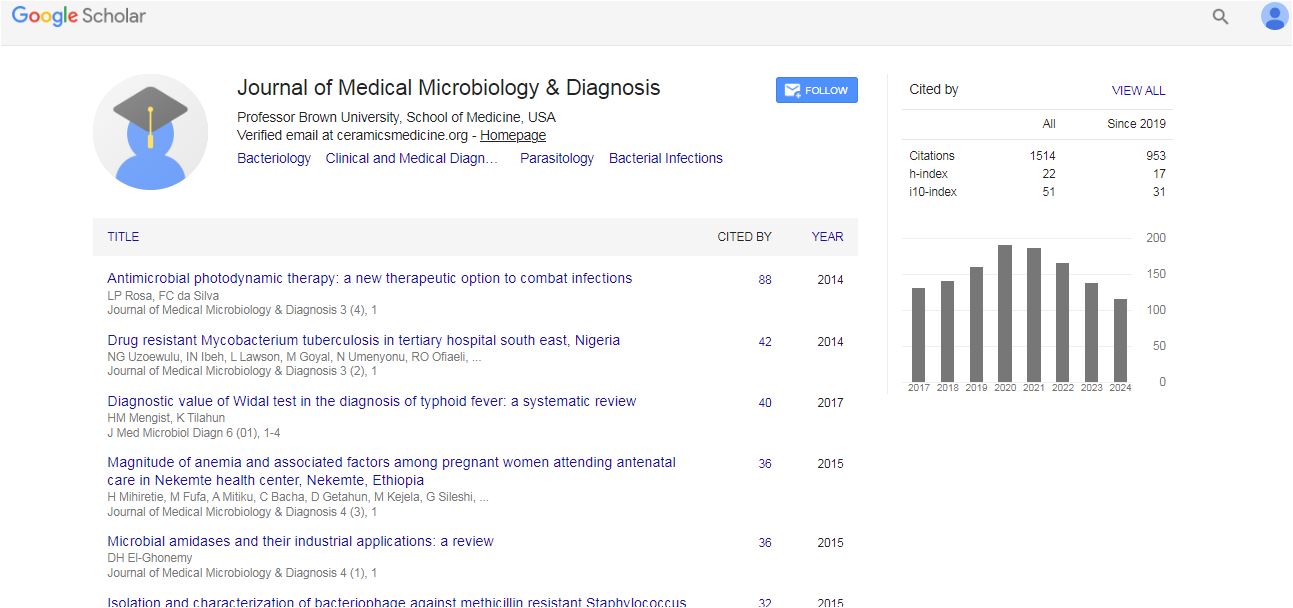
Medical Microbiology & Diagnosis received 14 citations as per Google Scholar report