Short Communication - (2025) Volume 14, Issue 5
Received: 01-Oct-2025, Manuscript No. jhoa-2j-187843;
Editor assigned: 03-Oct-2025, Pre QC No. P-187843;
Reviewed: 17-Oct-2025, QC No. Q-187843;
Revised: 22-Oct-2025, Manuscript No. R-187843;
Published:
29-Oct-2025
, DOI: 10.37421/2167-1095.2025.14.543
Citation: Berg, Jonas. ”Obesity’s Grip On Hypertension: Inflammation, RAAS, And Sympathetic Overdrive.” J Hypertens 14 (2025):543.
Copyright: © 2025 Berg J. This is an open-access article distributed under the terms of the Creative Commons Attribution License, which permits unrestricted use, distribution and reproduction in any medium, provided the original author and source are credited.
Obesity represents a significant and escalating global health challenge, intricately linked to a heightened susceptibility to a myriad of chronic diseases, with hypertension being a particularly prominent comorbidity. The biological mechanisms underpinning this association are multifaceted and involve complex interactions between adipose tissue, metabolic pathways, and cardiovascular regulation. Understanding these intricate connections is paramount for effective prevention and management strategies. Recent research has shed considerable light on how excess body fat actively contributes to the development and exacerbation of high blood pressure, moving beyond a simple correlational observation to a mechanistic understanding [1].
The dynamic interplay between obesity and hypertension is mediated by a complex network of hormonal, metabolic, and neural signals. Adipose tissue, once considered primarily an energy storage depot, is now recognized as a metabolically active endocrine organ that secretes a variety of signaling molecules, termed adipokines. These adipokines exert profound effects on systemic physiology, influencing vascular tone, inflammatory responses, and insulin sensitivity, all of which are critical determinants of blood pressure homeostasis [2].
Among the various depots of adipose tissue, visceral adiposity, located around internal organs, has emerged as a particularly potent contributor to cardiovascular risk, including hypertension. This intra-abdominal fat is characterized by a heightened inflammatory state, releasing a cascade of pro-inflammatory cytokines and free fatty acids that promote insulin resistance and impair the function of the endothelium, a critical regulator of vascular health. The reduction of visceral fat through targeted interventions is therefore considered a cornerstone of hypertension management in obese individuals [3].
A key hormonal system implicated in blood pressure regulation is the renin-angiotensin-aldosterone system (RAAS). Dysregulation of the RAAS is frequently observed in obesity and plays a critical role in the pathogenesis of obesity-induced hypertension. Obesity can lead to increased activation of the RAAS, resulting in enhanced sodium and water retention, as well as vasoconstriction, thereby elevating blood pressure. Pharmacological agents that target the RAAS have proven efficacy in managing hypertension in this population [4].
Endothelial dysfunction, characterized by a reduction in the bioavailability of nitric oxide, a crucial vasodilator, is another common consequence of obesity that contributes significantly to hypertension. Adipose tissue-derived factors can directly impair the function of the vascular endothelium, leading to increased peripheral vascular resistance and contributing to elevated blood pressure. Interventions aimed at improving endothelial function, whether through lifestyle modifications or specific pharmacological agents, hold promise for managing obesity-associated hypertension [5].
Furthermore, the sympathetic nervous system (SNS) is frequently overactive in individuals with obesity, contributing directly to elevated blood pressure. Increased sympathetic outflow leads to a cascade of cardiovascular effects, including peripheral vasoconstriction, an increased heart rate, and enhanced stimulation of the kidneys to release renin, all of which promote hypertension. Strategies designed to modulate SNS activity, such as regular physical activity, are vital in managing this aspect of obesity-related hypertension [6].
Leptin, a hormone primarily produced by adipocytes that plays a role in appetite regulation, also influences blood pressure. While its primary function is to signal satiety, leptin's effects on the sympathetic nervous system and vascular tone can contribute to hypertension in obese individuals, particularly when the body develops resistance to its actions. This leptin resistance can lead to a paradoxical increase in sympathetic activity and vascular constriction [7].
Chronic inflammation is a central pathophysiological process that bridges obesity and hypertension. Pro-inflammatory adipokines, such as tumor necrosis factor-alpha (TNF-α) and interleukin-6 (IL-6), released from adipose tissue, promote a state of low-grade systemic inflammation. This inflammation can disrupt vascular function, contribute to insulin resistance, and activate other pathways that ultimately lead to elevated blood pressure. Exploring anti-inflammatory strategies is a promising avenue for novel therapeutic approaches [8].
Oxidative stress, an imbalance between the production of reactive oxygen species (ROS) and the body's antioxidant defense mechanisms, is another pervasive phenomenon in obesity that contributes to hypertension. Elevated levels of ROS can damage endothelial cells, exacerbate inflammation, and activate the sympathetic nervous system, all of which are pro-hypertensive. Antioxidant therapies are being investigated as potential adjuncts for managing hypertension in obese individuals [9].
The interconnectedness of these various factors is often encapsulated within the concept of the metabolic syndrome, a cluster of metabolic abnormalities that includes obesity, hypertension, dyslipidemia, and impaired glucose metabolism. Hypertension is a core component of the metabolic syndrome, and its development is significantly influenced by obesity, underscoring the critical need for a holistic approach to managing these intertwined risk factors for cardiovascular disease [10].
The pervasive link between obesity and the development of hypertension is a subject of extensive research, revealing a complex interplay of physiological mechanisms. Obesity significantly elevates the risk of hypertension by fostering an inflammatory environment, impairing endothelial function, and dysregulating sympathetic nervous system activity. Excess adipose tissue actively secretes adipokines, which contribute to insulin resistance and oxidative stress, both pivotal factors in the elevation of blood pressure. Weight loss interventions have demonstrated consistent success in reducing blood pressure among individuals with obesity, highlighting the direct impact of weight management [1].
The intricate relationship between obesity and hypertension is orchestrated through a complex interplay of hormonal, metabolic, and neural pathways. Adipose tissue functions as an endocrine organ, releasing substances that critically influence vascular tone and renal function. Concurrently, dietary patterns and sedentary lifestyles, often associated with obesity, further amplify the risk of developing hypertension. A comprehensive understanding of these underlying mechanisms is indispensable for the design of targeted and effective therapeutic strategies [2].
Visceral adiposity, in particular, is strongly associated with an increased risk of cardiovascular events, including hypertension. This type of abdominal fat actively releases pro-inflammatory cytokines and free fatty acids, which not only promote insulin resistance but also compromise endothelial function. Consequently, lifestyle modifications that prioritize the reduction of visceral fat are of paramount importance in the effective management of hypertension among obese individuals [3].
Within the complex system of blood pressure regulation, the renin-angiotensin-aldosterone system (RAAS) plays a pivotal role, and its aberrant function is strongly implicated in obesity-induced hypertension. Obesity can trigger the activation of the RAAS, leading to increased sodium retention and vasoconstriction. Therefore, pharmacological interventions specifically targeting the RAAS are recognized as effective therapeutic options for managing hypertension in obese patients [4].
Endothelial dysfunction, characterized by a diminished availability of nitric oxide, a key vasodilator, is a prevalent feature in obese individuals and a significant contributor to the development of hypertension. Adipose tissue-derived signaling molecules can impair the normal functioning of the endothelium, resulting in increased vascular resistance. Interventions that aim to improve endothelial function, whether through lifestyle adjustments or targeted medications, can offer substantial benefits in managing hypertension [5].
The sympathetic nervous system (SNS) often exhibits heightened activity in obese individuals, directly contributing to elevated blood pressure. Increased sympathetic outflow triggers vasoconstriction, accelerates heart rate, and augments renin release from the kidneys. Consequently, therapeutic strategies that effectively modulate sympathetic activity, such as regular exercise and certain pharmacological agents, are crucial for managing hypertension in this population [6].
Leptin, a hormone secreted by adipocytes, exerts notable influence on blood pressure regulation. While primarily known for its role in appetite suppression, leptin's effects on sympathetic nervous system activity and vascular tone can paradoxically contribute to hypertension in obese states, particularly when leptin resistance develops. This resistance can lead to a sustained increase in sympathetic drive and blood pressure [7].
Inflammation, orchestrated by pro-inflammatory adipokines such as TNF-α and IL-6, stands as a central mechanism linking obesity to hypertension. These inflammatory mediators can disrupt normal vascular function and contribute to the development of insulin resistance, both of which are key drivers of elevated blood pressure. Therefore, anti-inflammatory therapeutic strategies are being explored as potentially novel approaches for managing this complex condition [8].
Oxidative stress, defined as an imbalance between the production of reactive oxygen species and the capacity of antioxidant defenses, is a common characteristic of obesity and a significant contributor to hypertension. Oxidative stress inflicts damage on endothelial cells, exacerbates inflammatory processes, and activates the sympathetic nervous system, collectively leading to increased blood pressure. Antioxidant therapies are under investigation as potential complementary treatments for hypertension management [9].
The metabolic syndrome, a constellation of conditions including obesity, hypertension, hyperglycemia, and dyslipidemia, substantially heightens the risk of cardiovascular disease. Hypertension is an integral component of the metabolic syndrome and is profoundly influenced by obesity, underscoring the critical interconnectedness of these major cardiovascular risk factors [10].
Obesity significantly increases the risk of hypertension through mechanisms involving inflammation, endothelial dysfunction, and altered sympathetic nervous system activity. Adipose tissue releases adipokines that promote insulin resistance and oxidative stress, key drivers of high blood pressure. Visceral fat is particularly implicated due to its inflammatory mediators. The renin-angiotensin-aldosterone system (RAAS) and sympathetic nervous system are often overactive in obesity-induced hypertension. Endothelial dysfunction and leptin resistance further contribute. Inflammation, oxidative stress, and the metabolic syndrome are central to this relationship. Weight loss and lifestyle modifications are crucial for managing hypertension in obese individuals.
None
None
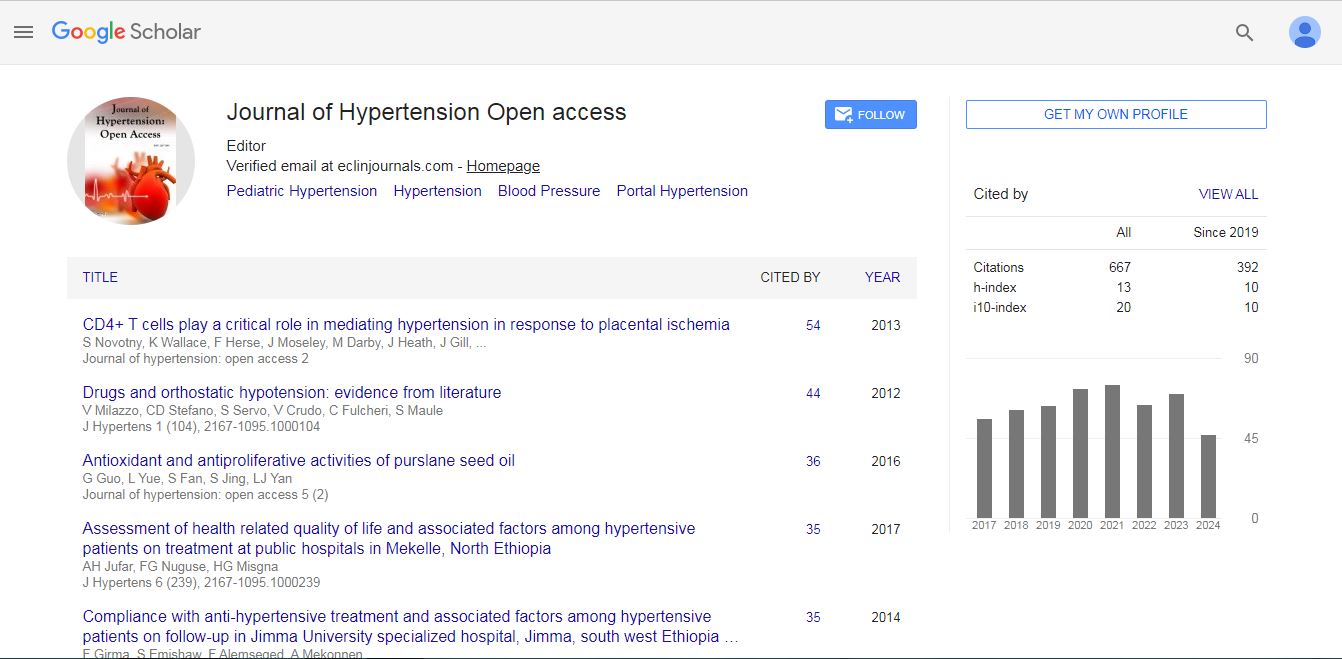
Journal of Hypertension: Open Access received 614 citations as per Google Scholar report