Perspective - (2025) Volume 9, Issue 6
Received: 01-Dec-2025, Manuscript No. ahbs-26-182572;
Editor assigned: 03-Dec-2025, Pre QC No. P-182572;
Reviewed: 17-Dec-2025, QC No. Q-182572;
Revised: 22-Dec-2025, Manuscript No. R-182572;
Published:
29-Dec-2025
, DOI: 10.37421/2952-8097.2025.9.349
Citation: Petrova, Natalia. ”Nutrition’s Impact on Animal Behavior
and Well-being.” J Anim Health Behav Sci 09 (2025):349.
Copyright: © 2025 Petrova N. This is an open-access article distributed under the terms of the Creative Commons Attribution License, which permits unrestricted use,
distribution and reproduction in any medium, provided the original author and source are credited.
Nutritional deficiencies profoundly influence animal behavior, affecting a wide spectrum of physiological and psychological processes. These alterations can manifest as changes in mood, cognitive abilities, and social interactions, underscoring the intricate link between diet and behavior. For instance, a lack of essential B vitamins can manifest as pronounced lethargy and a noticeable increase in irritability, disrupting an animal's typical disposition [1].
Furthermore, insufficient levels of omega-3 fatty acids, critical for neural health, have been directly associated with heightened aggression and elevated anxiety levels in various species. These essential fats play a vital role in maintaining neurotransmitter balance and reducing inflammation, both of which are crucial for emotional regulation [1].
Deficiencies in crucial minerals such as magnesium or zinc can present with a range of behavioral symptoms. These often include a heightened sensitivity to environmental stressors and a noticeable alteration in exploratory behaviors, indicating a compromised ability to cope with daily challenges [1].
In livestock, calcium and vitamin D deficiencies can lead to significant motor impairments. These manifest as altered gait and a general reduction in activity levels, which are frequently misdiagnosed as lameness or pain, thereby delaying appropriate nutritional intervention [2].
These skeletal health deficiencies directly impair muscle function and compromise bone integrity, resulting in a discernible decline in mobility. Affected animals tend to remain recumbent for extended periods, a clear indication of underlying physiological distress [2].
In young animals, iron deficiency anemia can precipitate substantial behavioral shifts. These often include a reduction in playful engagement, a decrease in food consumption, and a heightened susceptibility to common infections, impacting overall vitality [3].
The inadequate supply of iron impedes efficient oxygen transport throughout the body. This directly affects overall energy reserves and can hinder cognitive development, leading to a generalized state of lethargy and disinterest in the surroundings [3].
Thiamine (Vitamin B1) deficiency is a well-documented cause of neurological signs and significant behavioral alterations in felines. Symptoms can range from anorexia and ataxia to a characteristic head tilt, reflecting the vitamin's essential role in neurological function [4].
More subtle, yet equally important, behavioral changes associated with thiamine deficiency in cats can include increased vocalization and apparent episodes of disorientation. Prompt supplementation can often reverse these debilitating symptoms, underscoring the nutrient's critical impact on neurological well-being [4].
Zinc deficiency in horses extends beyond visible dermatological issues and immune compromise, significantly impacting behavior. Animals may display reduced appetite, lethargy, and a general lack of responsiveness, signaling an underlying nutritional imbalance that requires attention [5].
Micronutrient deficiencies represent a significant etiological factor in a wide array of behavioral changes observed across the animal kingdom. These subtle yet critical alterations in behavior often serve as early indicators of underlying physiological stress and nutritional imbalance, necessitating a thorough understanding for accurate diagnosis and effective management strategies. For example, deficiencies in B vitamins can manifest as pronounced lethargy and a noticeable increase in irritability, disrupting an animal's typical disposition and social interactions [1].
Furthermore, insufficient levels of omega-3 fatty acids, which are vital for neural health and function, have been directly associated with heightened aggression and elevated anxiety levels in various species. These essential fats play a critical role in maintaining neurotransmitter balance and reducing inflammation, both of which are crucial for emotional regulation and cognitive processes [1].
Deficiencies in crucial minerals such as magnesium or zinc can present with a range of behavioral symptoms. These often include a heightened sensitivity to environmental stressors and a noticeable alteration in exploratory behaviors, indicating a compromised ability to cope with daily challenges and navigate their environment effectively [1].
In livestock populations, deficiencies in calcium and vitamin D can lead to significant motor impairments that are often mistaken for other ailments. These manifest as altered gait and a general reduction in activity levels, which are frequently misdiagnosed as lameness or pain, thereby delaying appropriate nutritional intervention and treatment [2].
These skeletal health deficiencies directly impair muscle function and compromise bone integrity, resulting in a discernible decline in mobility. Affected animals tend to remain recumbent for extended periods, a clear and concerning indication of underlying physiological distress and potential skeletal compromise [2].
In the context of young animals, iron deficiency anemia can precipitate substantial behavioral shifts that impact growth and development. These often include a reduction in playful engagement, a decrease in food consumption, and a heightened susceptibility to common infections, significantly affecting their overall vitality and health [3].
The inadequate supply of iron impedes efficient oxygen transport throughout the body, a fundamental physiological process. This directly affects overall energy reserves and can hinder cognitive development, leading to a generalized state of lethargy and disinterest in their surroundings and social interactions [3].
Thiamine (Vitamin B1) deficiency is a well-documented cause of neurological signs and significant behavioral alterations in felines. Symptoms can range from anorexia and ataxia to a characteristic head tilt, clearly reflecting the vitamin's essential role in maintaining proper neurological function and coordination [4].
More subtle, yet equally important, behavioral changes associated with thiamine deficiency in cats can include increased vocalization and apparent episodes of disorientation. Prompt supplementation can often reverse these debilitating symptoms, underscoring the nutrient's critical impact on neurological well-being and cognitive clarity [4].
Zinc deficiency in horses extends beyond visible dermatological issues and immune compromise, significantly impacting their overall demeanor and behavior. Animals may display reduced appetite, lethargy, and a general lack of responsiveness, signaling an underlying nutritional imbalance that requires prompt attention and correction [5].
Nutritional deficiencies significantly impact animal behavior, affecting mood, cognition, and social interactions. Deficiencies in B vitamins can cause lethargy and irritability, while low omega-3 fatty acids are linked to aggression and anxiety. Essential mineral deficiencies like magnesium and zinc can lead to stress sensitivity and altered exploratory behavior. In livestock, calcium and vitamin D deficiencies impair mobility and can be mistaken for lameness. Iron deficiency in young animals results in reduced playfulness and increased susceptibility to infections. Thiamine deficiency in cats causes neurological signs and disorientation. Zinc deficiency in horses affects appetite and responsiveness. These behavioral changes highlight the crucial role of nutrition in maintaining physical and mental well-being in animals.
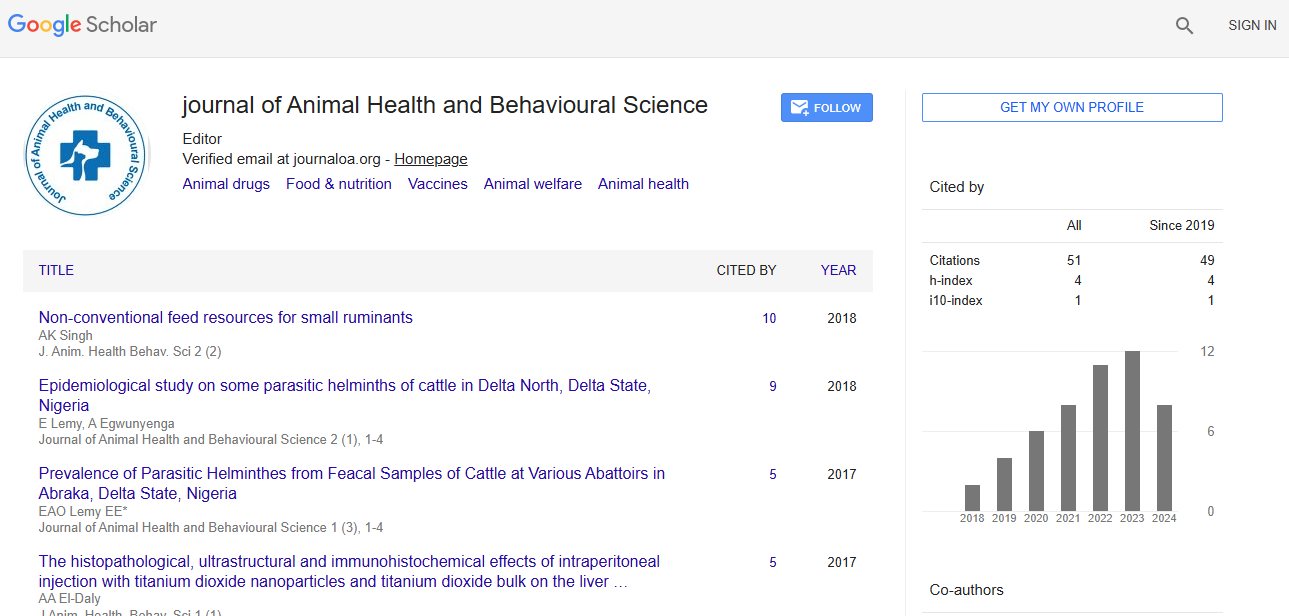
Journal of Animal Health and Behavioural Science received 38 citations as per Google Scholar report