Perspective - (2025) Volume 10, Issue 6
Received: 02-Nov-2025, Manuscript No. apn-26-179355;
Editor assigned: 04-Nov-2025, Pre QC No. P-179355;
Reviewed: 16-Nov-2025, QC No. Q-179355;
Revised: 23-Nov-2025, Manuscript No. R-179355;
Published:
30-Nov-2025
, DOI: 10.37421/2573-0347.2025.10.462
Citation: Santos, Pedro. ”Nurses Advance Pharmacological Management: Critical Roles and Outcomes.” J Adv Practice Nurs 10 (2025):462.
Copyright: © 2025 Santos P. This is an open-access article distributed under the terms of the Creative Commons Attribution License, which permits unrestricted use,
distribution and reproduction in any medium, provided the original author and source are credited.
The evolving landscape of nursing practice is increasingly characterized by the assumption of advanced responsibilities in pharmacological management, particularly for complex medication regimens [1].
Advanced practice nurses are now at the forefront of prescribing, meticulously monitoring, and optimizing drug therapies across a diverse spectrum of patient populations, signifying a profound shift in their clinical roles [1].
One significant area of advancement is the integration of pharmacogenomic testing, which holds immense potential to personalize medication selection and dosing, moving away from a generalized approach towards tailored therapeutic strategies [2].
This personalized medicine paradigm aims to enhance drug efficacy and significantly reduce the incidence of adverse drug reactions, thereby improving patient outcomes [2].
The critical challenge of managing polypharmacy, especially in elderly patients, remains a prominent concern in clinical nursing practice [3].
Evidence-based recommendations are being developed to guide nurses in effectively identifying, evaluating, and de-prescribing unnecessary medications, with the overarching goal of improving medication safety and enhancing the quality of life for older adults [3].
Furthermore, nurses play a pivotal role in the implementation and evaluation of evidence-based guidelines for the pharmacological management of common chronic diseases, such as diabetes and hypertension [4].
Their involvement ensures that patients receive the most effective and up-to-date treatments by critically appraising research and applying it to clinical practice [4].
Innovations in pain management pharmacology have also expanded the nurse's role, particularly in optimizing analgesic therapies through multimodal approaches and opioid stewardship [5].
Advanced knowledge of pain pathways and pharmacodynamics is essential for nurses to ensure safe and effective pain relief [5].
The complexities of psychopharmacology present another area where advanced nursing management is crucial [6].
Nurses are instrumental in drug selection, monitoring for efficacy and side effects, and promoting patient adherence to complex treatment regimens for mental health conditions [6].
In the ongoing battle against antimicrobial resistance, nurses are central to antibiotic stewardship programs, contributing to appropriate antibiotic selection, duration of therapy, and monitoring [7].
Their educational role in combating resistance and optimizing antimicrobial use is paramount [7].
From a nursing perspective, the pharmacological management of cardiovascular diseases requires advanced skills in understanding therapeutic classes, drug interactions, and patient adherence strategies [8].
Nurses are vital in monitoring therapeutic effects and mitigating adverse events for patients with conditions like heart failure and hypertension [8].
The dynamic field of oncology pharmacotherapy necessitates that nurses possess in-depth knowledge of targeted therapies, immunotherapies, and chemotherapy protocols [9].
Their role in managing toxicities, supporting patients, and ensuring safe administration of these complex agents is indispensable [9].
Finally, the ethical and legal dimensions of advanced pharmacological management, including prescribing authority and informed consent, are critical considerations for nurses [10].
Navigating these complex issues ensures patient advocacy and upholds the highest standards of quality care within their professional scope of practice [10].
Advanced practice nurses are increasingly engaged in the sophisticated management of complex pharmacological regimens, a trend that underscores their expanding role in contemporary healthcare [1].
This encompasses the critical functions of prescribing medications, diligently monitoring patient responses, and actively optimizing drug therapies across a wide array of patient demographics and conditions [1].
The integration of pharmacogenomic testing into routine nursing practice represents a significant paradigm shift, offering the potential to revolutionize medication management by enabling personalized treatment strategies [2].
This individualized approach, which moves beyond a one-size-fits-all methodology, is designed to enhance therapeutic efficacy and minimize the occurrence of adverse drug reactions [2].
Addressing the pervasive issue of polypharmacy, particularly among older adults, is a key focus within clinical nursing [3].
Nurses are equipped with evidence-based strategies to identify, evaluate, and, where appropriate, de-prescribe medications, thereby enhancing medication safety and improving the overall quality of life for this vulnerable population [3].
Nurses are instrumental in the practical application and evaluation of evidence-based guidelines for managing common chronic illnesses through pharmacological interventions [4].
Their role involves critically assessing research findings and translating this knowledge into effective clinical practice to ensure patients receive the most current and beneficial treatments [4].
The domain of pain management pharmacology has seen considerable advancements, and nurses are central to optimizing analgesic therapies through the implementation of multimodal strategies and rigorous opioid stewardship [5].
A deep understanding of pain pathways and pharmacodynamics is vital for nurses to ensure the safe and effective administration of pain relief interventions [5].
Managing psychotropic medications requires a specialized nursing skillset, encompassing the latest evidence and best practices in psychopharmacology [6].
Nurses play a crucial role in selecting appropriate medications, monitoring for both effectiveness and potential side effects, and supporting patient adherence to these complex regimens [6].
In the context of healthcare-associated infections and antimicrobial resistance, nurses are integral to the success of antibiotic stewardship programs [7].
Their contributions include ensuring the appropriate selection and duration of antibiotic therapy and actively monitoring treatment outcomes to optimize antimicrobial use and patient care [7].
The pharmacological management of cardiovascular diseases from a nursing standpoint involves a comprehensive understanding of various therapeutic classes, potential drug interactions, and effective patient adherence strategies [8].
Nurses utilize their advanced skills to monitor therapeutic responses and proactively mitigate adverse events in patients with cardiac conditions [8].
In the rapidly evolving field of oncology pharmacotherapy, nurses are essential for the safe and effective administration and management of advanced treatments, including targeted therapies and immunotherapies [9].
Their role extends to managing treatment toxicities and providing comprehensive patient support throughout their care [9].
Beyond clinical interventions, nurses are confronted with significant ethical and legal considerations in advanced pharmacological management, particularly concerning their prescribing authority, obtaining informed consent, and navigating end-of-life medication decisions [10].
Upholding professional scope of practice and addressing complex ethical dilemmas are paramount to patient advocacy and ensuring high-quality care [10].
This collection of articles highlights the expanding and critical role of nurses in advanced pharmacological management. The focus spans various specialties, including managing complex medication regimens, utilizing pharmacogenomics for personalized therapy, and addressing polypharmacy in older adults. Nurses are key in implementing evidence-based practices for chronic diseases, optimizing pain and psychotropic medication management, and contributing to antibiotic stewardship. The importance of specialized knowledge in oncology and cardiovascular pharmacotherapy is also emphasized, alongside the ethical and legal considerations inherent in advanced prescribing and medication management. Collectively, these articles underscore the need for nurses to possess advanced skills and knowledge to ensure patient safety and improve therapeutic outcomes in diverse clinical settings.
None
None
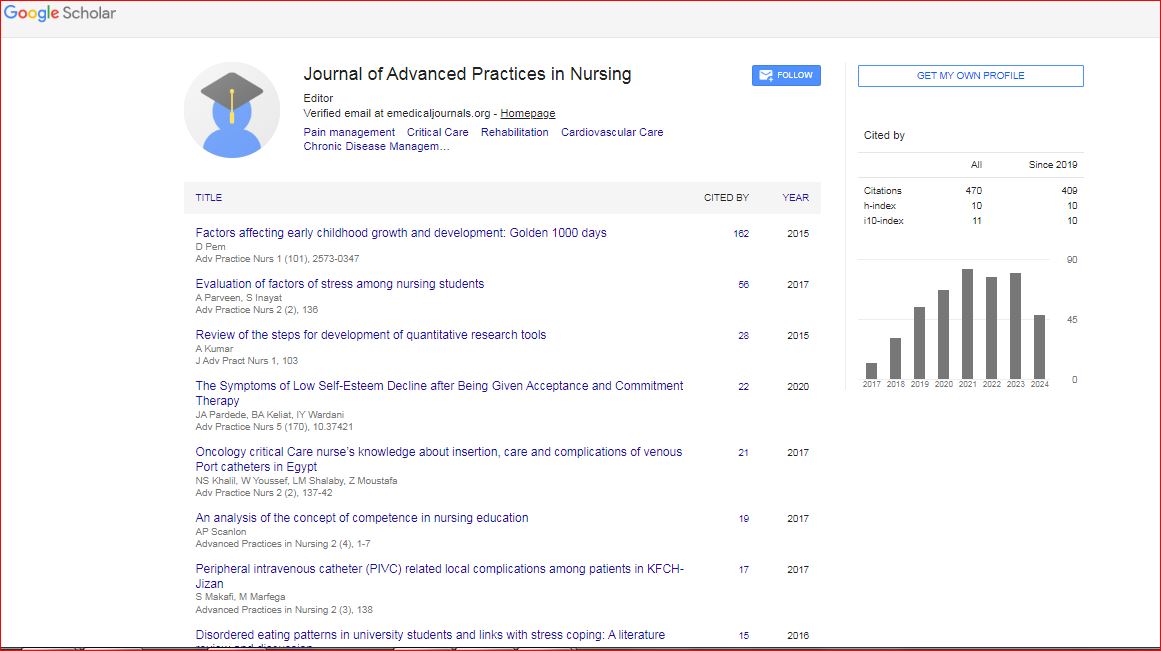
Journal of Advanced Practices in Nursing received 410 citations as per Google Scholar report