Short Communication - (2025) Volume 21, Issue 6
Received: 01-Nov-2025, Manuscript No. jos-26-185190;
Editor assigned: 03-Nov-2025, Pre QC No. P-185190;
Reviewed: 17-Nov-2025, QC No. Q-185190;
Revised: 24-Nov-2025, Manuscript No. R-185190;
Published:
01-Dec-2025
, DOI: 10.37421/1584-9341.2024.20.239
Citation: Mwangi, Joseph. ”Normothermia: Key To Optimal Surgical
Wound Healing.” J Surg 21 (2025):239.
Copyright: © 2025 Mwangi J. This is an open-access article distributed under the terms of the Creative Commons Attribution License, which permits unrestricted use,
distribution and reproduction in any medium, provided the original author and source are credited.
Intraoperative hypothermia, a common complication during surgical procedures, significantly impedes the complex process of wound healing by compromising various physiological mechanisms essential for tissue repair. This phenomenon is characterized by a drop in core body temperature below 36°C and is associated with a cascade of detrimental effects that can lead to delayed recovery and increased morbidity. Maintaining normothermia, or a normal body temperature, throughout the perioperative period is therefore recognized as a critical factor in optimizing surgical outcomes and ensuring robust wound healing. The cellular metabolism, a fundamental driver of tissue regeneration, is notably suppressed under hypothermic conditions. This reduction in metabolic activity directly impacts the cells' ability to respond to injury and initiate repair processes. Consequently, the inflammatory phase, a crucial early stage of wound healing involving the recruitment of immune cells to clear debris and signal for tissue regeneration, is significantly disrupted. Neutrophil function, vital for combating potential pathogens and removing damaged tissue, and macrophage activation, essential for orchestrating the repair process, are both impaired, thereby hindering the effective progression of healing [1].
Furthermore, the synthesis of collagen, the primary structural protein responsible for providing tensile strength to healing tissues, is substantially reduced in the presence of hypothermia. Collagen deposition is a cornerstone of wound closure and the restoration of tissue integrity, and its diminished production directly translates to weaker wounds. This impaired collagen synthesis, coupled with a compromised inflammatory response, creates an environment conducive to the development of surgical site infections (SSIs). The body's innate defense mechanisms are weakened, making it more susceptible to bacterial invasion and proliferation, thus increasing the risk of complications and further delaying healing. Recognizing these profound impacts, perioperative warming strategies have become indispensable tools to prevent intraoperative hypothermia. These strategies aim to preserve the body's natural defense mechanisms and promote faster, more effective wound healing by maintaining optimal physiological conditions [2].
The inflammatory phase of wound healing, a finely tuned process involving the coordinated action of various immune cells, is particularly vulnerable to the effects of hypothermia. As mentioned, neutrophil function is critically affected, compromising their ability to engulf and destroy pathogens and clear cellular debris. Similarly, macrophage activation, which is essential for both the inflammatory and proliferative phases of healing, is also impaired. These cells play pivotal roles in orchestrating the entire healing cascade, and their diminished capacity due to hypothermia can lead to a prolonged inflammatory phase and delayed transition to tissue repair. This disruption in immune cell function directly translates to a less efficient and more protracted wound healing process [3].
Beyond the cellular and immune aspects, hypothermia also exerts a significant negative influence on the microcirculation and tissue oxygenation at the surgical site. Reduced blood flow and diminished oxygen delivery to surgical tissues are direct consequences of peripheral vasoconstriction, a physiological response to cold aimed at conserving core body heat. This compromised perfusion of oxygen and nutrients is detrimental to the proliferating fibroblasts, the cells responsible for producing the extracellular matrix, including collagen, that fills the wound. Without adequate oxygen and nutrients, fibroblast proliferation and subsequent collagen deposition are hindered, directly impacting the wound's ability to gain strength and achieve closure. This impact on microcirculation and tissue oxygenation underscores the systemic effects of hypothermia on wound healing [4].
The elevated risk of surgical site infections (SSIs) in hypothermic patients is a well-documented and clinically significant consequence. The impaired immune function observed during hypothermia is a primary driver of this increased susceptibility. Specifically, the oxidative burst of neutrophils, a critical mechanism for killing bacteria, is reduced. Furthermore, the activity of T-cells, vital components of the adaptive immune response, is also impaired. These combined immune deficiencies create an environment where bacteria can more easily establish an infection, leading to delayed healing, increased patient discomfort, and potentially more severe complications requiring further medical intervention [5].
To counteract these detrimental effects, effective perioperative warming strategies have been developed and implemented. Patient warming devices, such as forced-air warmers and warming blankets, along with active fluid warming techniques, are crucial for maintaining normothermia during lengthy surgical procedures. These interventions directly contribute to better wound healing by ensuring that the body's physiological processes involved in tissue repair are not compromised by cold. By actively managing patient temperature, clinicians can mitigate the negative impacts of hypothermia and promote an optimal environment for wound recovery [6].
It is important to acknowledge that anesthesia itself can contribute to intraoperative hypothermia by interfering with the body's thermoregulatory mechanisms. Many anesthetic agents have vasodilatory effects or suppress shivering, making patients more prone to heat loss. Consequently, careful management of anesthetic agents, alongside robust patient warming protocols, is paramount to prevent hypothermia and its associated adverse effects on wound healing. This highlights the integrated approach required for optimal perioperative temperature management [7].
The mechanical properties of tissues are also demonstrably affected by temperature. Hypothermia can lead to increased tissue stiffness, which in turn can exacerbate the mechanical stresses experienced by tissues during surgical manipulation. This increased stiffness may contribute to greater tissue damage during the procedure and can impede the natural viscoelastic recovery of tissues, potentially leading to delayed healing. Understanding the thermomechanical properties of tissues is therefore relevant to surgical interventions and their impact on healing [8].
Given the multifaceted impact of hypothermia on wound healing, vigilant monitoring of core body temperature throughout the intraoperative period is essential. This continuous monitoring allows for the early identification of deviations from normothermia, enabling prompt corrective actions. By actively managing and correcting temperature fluctuations, clinicians can safeguard the delicate processes of wound healing, minimize the risk of complications, and contribute to a smoother patient recovery [9].
Ultimately, optimal wound healing is a complex and multifactorial process that is influenced by a wide array of variables, ranging from patient health status to surgical technique. However, the role of normothermia in this process is significant and often underestimated. By mitigating complications such as infection and impaired tissue repair, maintaining a normal body temperature plays a crucial, albeit sometimes overlooked, role in ensuring successful patient recovery and minimizing adverse surgical outcomes [10].
Intraoperative hypothermia presents a substantial challenge to surgical wound healing, primarily by suppressing critical cellular metabolic processes that are fundamental to tissue regeneration. A decrease in core body temperature below the normal range directly diminishes the rate at which cells function, thereby slowing down their ability to respond to surgical trauma and initiate the complex cascade of events required for repair. This reduction in metabolic activity has far-reaching consequences, impacting not only cellular function but also systemic responses vital for recovery. Consequently, the initial inflammatory phase of wound healing, a dynamic period involving the orchestrated arrival of immune cells to clear damaged tissue and combat potential pathogens, is significantly disrupted. The efficacy of neutrophils in phagocytosing bacteria and clearing debris, as well as the activation of macrophages, which are central to orchestrating the subsequent proliferative and remodeling phases of healing, are both compromised, leading to a less efficient and more prolonged healing process [1].
Beyond the cellular and inflammatory impacts, hypothermia profoundly affects the body's ability to synthesize essential structural proteins, most notably collagen. Collagen forms the scaffold of healing tissue, providing the necessary tensile strength for wound closure and restoration of tissue integrity. Its synthesis is a critical step in wound repair, and the diminished production observed under hypothermic conditions directly results in weaker wounds that are more prone to dehiscence or other complications. Recognizing these adverse effects, the implementation of perioperative warming strategies has become a cornerstone of modern surgical care. These proactive measures are vital to prevent intraoperative hypothermia, thereby preserving the integrity of the body's innate defense mechanisms and facilitating faster, more effective wound healing by maintaining an optimal physiological environment for cellular function and repair processes [2].
The inflammatory response, a complex immunological process that is the first line of defense and repair following injury, is severely hampered by hypothermia. Key immune cells, such as neutrophils, which are responsible for engulfing and destroying invading microorganisms and clearing away cellular debris, exhibit reduced functionality. This impairment means that the surgical site is less effectively cleared of necrotic tissue and protected against infection. Furthermore, macrophages, crucial for their dual role in initiating inflammation and promoting tissue regeneration, are also less effective when the body is hypothermic. Their diminished capacity to orchestrate the healing process can lead to prolonged inflammation and delayed progression to the later stages of wound repair, further compromising the overall healing trajectory [3].
Compounding these issues, hypothermia significantly impacts the microvasculature and the delivery of oxygen to surgical tissues. Peripheral vasoconstriction, a natural response to cold, reduces blood flow to the extremities and can compromise perfusion at the surgical site. This reduction in blood flow means that essential nutrients and oxygen, which are vital for cellular activity and tissue repair, are not delivered adequately. The consequences are particularly severe for fibroblasts, the cells responsible for producing the extracellular matrix, including collagen, that is crucial for wound strength. Inadequate oxygen and nutrient supply directly inhibits fibroblast proliferation and their ability to synthesize collagen, thereby impairing the wound's capacity to heal and achieve structural integrity [4].
The increased incidence of surgical site infections (SSIs) in patients experiencing intraoperative hypothermia is a well-established clinical concern. This heightened susceptibility is directly linked to the compromised immune function that accompanies a lowered body temperature. The effectiveness of the innate immune system in fighting off bacterial invasion is diminished, with specific impacts on neutrophil activity, including a reduced oxidative burst, which is a key mechanism for killing bacteria. Additionally, the function of T-cells, which are critical components of the adaptive immune system, is also impaired, further weakening the body's defenses. This dual assault on immune competence creates a fertile ground for microbial proliferation, leading to infections that can significantly complicate recovery and delay healing [5].
To effectively combat intraoperative hypothermia and its deleterious effects on wound healing, the application of robust perioperative warming strategies is essential. These strategies encompass the use of various patient warming devices, such as forced-air warmers and conductive warming blankets, as well as active fluid warming techniques. These interventions are particularly critical during prolonged surgical procedures where significant heat loss can occur. By actively maintaining normothermia, these strategies directly contribute to improved wound healing outcomes by ensuring that the physiological processes necessary for tissue repair are not inhibited by suboptimal temperatures [6].
Anesthesia itself plays a role in the development of intraoperative hypothermia, as many anesthetic agents can interfere with the body's natural thermoregulatory processes. Certain anesthetic medications can induce vasodilation, leading to increased heat loss from the body's surface, while others can suppress shivering, the body's primary mechanism for generating heat. Therefore, a careful and judicious selection of anesthetic agents, in conjunction with comprehensive patient warming protocols, is paramount to prevent the onset of hypothermia and mitigate its negative consequences on wound healing. This integrated approach to temperature management is a critical aspect of anesthetic care [7].
The physical properties of surgical tissues are also influenced by temperature, with hypothermia leading to increased stiffness. This augmented tissue stiffness can have implications during surgical procedures, potentially increasing the mechanical stresses experienced by tissues during manipulation and contributing to greater intraoperative damage. Such increased mechanical insult may, in turn, impede the natural healing process. Understanding how temperature affects the mechanical behavior of tissues is therefore important for optimizing surgical techniques and anticipating potential challenges in wound healing [8].
Given the pervasive influence of temperature on wound healing, the continuous and vigilant monitoring of core body temperature throughout the intraoperative period is a non-negotiable aspect of perioperative care. This monitoring is not merely an observational practice but an active intervention. It allows for the timely detection of any deviations from the target normothermic range, enabling immediate corrective measures to be implemented. By ensuring that a patient's temperature is maintained within physiological limits, clinicians can effectively safeguard the delicate processes of wound healing and reduce the likelihood of postoperative complications [9].
In conclusion, the process of optimal wound healing is intricately dependent on a multitude of factors, each contributing to the successful restoration of tissue integrity. While numerous elements influence this complex biological phenomenon, the role of normothermia is undeniably significant and perhaps more critical than commonly recognized. By actively preventing hypothermia, healthcare providers can significantly mitigate potential complications, promote efficient tissue repair, and ultimately ensure a more successful and timely recovery for surgical patients [10].
Intraoperative hypothermia negatively impacts surgical wound healing by reducing cellular metabolism, impairing inflammatory responses, hindering collagen synthesis, and increasing infection risk. Maintaining normothermia during surgery is crucial for optimal outcomes. Perioperative warming strategies are vital to prevent hypothermia, preserve innate defense mechanisms, and promote faster wound healing. Hypothermia disrupts the inflammatory phase by affecting neutrophil and macrophage function. Reduced blood flow and oxygen delivery during hypothermia compromise fibroblast proliferation and collagen deposition, essential for wound strength. Surgical site infections are more common in hypothermic patients due to impaired immune function. Warming devices and fluid warming are effective in maintaining normothermia and improving wound healing. Anesthetics can contribute to hypothermia, necessitating careful management and warming. Tissue stiffness increases with hypothermia, potentially causing more damage. Vigilant core body temperature monitoring is essential to correct deviations and safeguard wound healing. Normothermia plays a significant, often underestimated, role in mitigating complications and ensuring successful patient recovery.
None
None
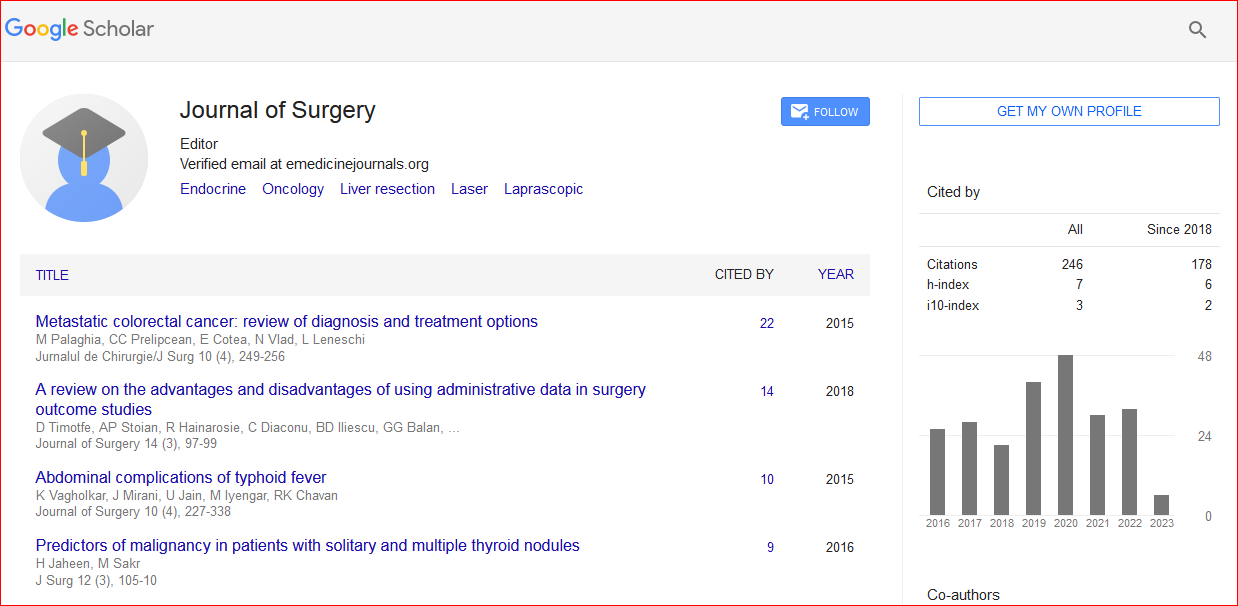
Journal of Surgery received 288 citations as per Google Scholar report