Opinion - (2025) Volume 11, Issue 6
Received: 01-Dec-2025, Manuscript No. elj-25-176220;
Editor assigned: 03-Dec-2025, Pre QC No. P-176220;
Reviewed: 17-Dec-2025, QC No. Q-176220;
Revised: 22-Dec-2025, Manuscript No. R-176220;
Published:
29-Dec-2025
, DOI: 10.37421/2472-0895.2025.11.349
Citation: Lebedev, Dmitri. ”Neonatal Seizures: Advancing Diagnosis, Therapy, Outcomes.” Epilepsy J 11 (2025):349.
Copyright: © 2025 Lebedev D. This is an open-access article distributed under the terms of the Creative Commons Attribution License, which permits unrestricted use, distribution and reproduction in any medium, provided the original author and source are credited.
This article provides a comprehensive overview of current approaches to diagnosing and managing neonatal seizures, highlighting the importance of timely recognition and appropriate treatment to improve neurodevelopmental outcomes. It discusses the evolving understanding of etiologies, advancements in electroencephalography (EEG) monitoring, and the use of targeted therapies[1].
A contemporary perspective on neonatal seizures emphasizes the inherent challenges in differentiating epileptic from non-epileptic events. There is a clear need for standardized diagnostic criteria to guide clinical practice effectively. This involves exploring various causes, ranging from hypoxic-ischemic encephalopathy to complex genetic disorders, alongside discussing the efficacy of first-line and emerging antiseizure medications[2].
Understanding the prognosis of neonatal seizures is crucial not just for medical assessment but also for counseling families and planning essential interventions. Recent advances in predicting long-term neurological outcomes consider multiple factors such as etiology, seizure burden, and the patient's response to treatment. This underscores the significant variability observed in outcomes and highlights the critical need for early and sustained neurodevelopmental follow-up[3].
Continuous EEG monitoring has fundamentally transformed the detection and subsequent management of neonatal seizures, especially since many of these events are often subclinical and thus easily missed. Current practices and future directions for cEEG monitoring are under review. This includes addressing challenges in interpretation, standardizing monitoring protocols across institutions, and exploring the significant potential for automated seizure detection algorithms to substantially improve clinical care and patient outcomes[4].
Genetic factors play an increasingly recognized and significant role in the etiology of neonatal seizures. A practical guide outlines the precise indications for genetic testing, details the various testing modalities currently available, and provides insights on how to interpret the complex results effectively. This understanding is paramount, emphasizing the importance of identifying specific genetic causes to guide precision medicine approaches and provide more accurate prognoses for affected infants[5].
The pharmacological management of neonatal seizures is a critical area, where current evidence for established antiseizure medications is continuously reviewed. This includes a thorough discussion of the unique challenges in dosing and monitoring within this vulnerable neonatal population. The imperative for individualized treatment plans is highlighted, alongside strategies for effectively addressing refractory seizures that do not respond to initial therapies[6].
Neuroimaging techniques are indispensable tools for identifying both the etiology and the extent of any brain injury associated with neonatal seizures. Recent advancements in neuroimaging, such as high-resolution Magnetic Resonance Imaging (MRI) and diffusion tensor imaging, offer improved clinical applications. These advancements help in understanding the complex mechanisms of seizures and in more accurately predicting long-term neurodevelopmental outcomes[7].
The identification of reliable biomarkers for neonatal seizures holds the promise of revolutionizing diagnosis, refining prognosis, and improving the monitoring of treatment efficacy. A systematic review explores various potential biomarkers. These include inflammatory markers, neurotrophic factors, and distinct genetic signatures, with careful consideration given to their practical utility and inherent limitations in day-to-day clinical practice[8].
Neonatal seizures can indeed have significant and often lasting long-term consequences on neurodevelopment. Current evidence regarding neurodevelopmental outcomes in neonates affected by seizures is synthesized. This review highlights the profound impact of seizure burden, underlying etiology, and the timeliness and effectiveness of early interventions on various aspects of development, including cognitive, motor, and behavioral domains[9].
Precision medicine is rapidly gaining traction and importance within neonatology. Its core aim is to tailor treatments precisely based on the individual characteristics of each patient. This article explores the current status and future directions of precision medicine as applied to neonatal seizures, specifically focusing on how genetic insights, when combined with advanced diagnostics, can lead to the development of more effective and truly personalized therapeutic strategies[10].
Neonatal seizures are a critical concern in neonatology, necessitating comprehensive approaches for timely diagnosis and effective management. Recognizing these events swiftly is paramount for improving long-term neurodevelopmental outcomes, especially considering the evolving understanding of their diverse etiologies. Advanced electroencephalography (EEG) monitoring plays a crucial role in this, alongside the development of targeted therapies [1]. A contemporary perspective highlights the difficulty in distinguishing epileptic from non-epileptic events, emphasizing the urgent need for standardized diagnostic criteria. Varied causes, from hypoxic-ischemic encephalopathy to genetic disorders, contribute to this complexity, driving discussions on the efficacy of existing and new antiseizure medications [2].
Continuous EEG monitoring has brought about a significant transformation in detecting and managing neonatal seizures, many of which are subclinical. Reviews of current practices and future directions for cEEG delve into challenges like interpretation, the standardization of protocols, and the promise of automated seizure detection algorithms to enhance clinical care [4]. Equally vital is understanding the prognosis of neonatal seizures, which is essential for family counseling and intervention planning. Recent advances in predicting long-term neurological outcomes consider factors such as etiology, seizure burden, and response to treatment, underscoring the considerable variability in outcomes and the imperative for early neurodevelopmental follow-up [3].
The role of genetic factors in the etiology of neonatal seizures is increasingly clear. Practical guides detail the indications for genetic testing, outline available testing modalities, and offer insights into interpreting results effectively. Identifying specific genetic causes is crucial for guiding precision medicine approaches and refining prognoses [5]. Pharmacological management reviews current evidence for established antiseizure medications, while also addressing unique challenges in dosing and monitoring in neonates. The focus remains on individualized treatment plans and managing refractory seizures effectively [6].
Neuroimaging serves as an indispensable tool for identifying the etiology and extent of brain injury associated with neonatal seizures. Recent advancements in techniques like MRI and diffusion tensor imaging have expanded their clinical applications, aiding in understanding seizure mechanisms and predicting neurodevelopmental outcomes [7]. Furthermore, the search for reliable biomarkers is a promising avenue to revolutionize diagnosis, prognosis, and treatment monitoring. Systematic reviews explore potential biomarkers, including inflammatory markers, neurotrophic factors, and genetic signatures, discussing their utility and limitations in clinical practice [8].
Neonatal seizures often lead to significant long-term neurodevelopmental consequences. Current evidence synthesizes information on neurodevelopmental outcomes, emphasizing how seizure burden, etiology, and early interventions influence cognitive, motor, and behavioral development [9]. Looking ahead, precision medicine is gaining considerable traction in neonatology, aiming to tailor treatments based on individual patient characteristics. This approach for neonatal seizures, driven by genetic insights and advanced diagnostics, promises more effective and truly personalized therapeutic strategies in the future [10].
Neonatal seizures present significant challenges, requiring timely recognition and appropriate treatment to improve neurodevelopmental outcomes. Current approaches emphasize evolving understandings of etiologies, advancements in electroencephalography (EEG) monitoring, and targeted therapies. Differentiating epileptic from non-epileptic events and standardizing diagnostic criteria are crucial, given various causes from hypoxic-ischemic encephalopathy to genetic disorders. Continuous EEG monitoring has revolutionized detection, particularly for often subclinical seizures, with ongoing efforts in interpretation, protocol standardization, and automated detection algorithms. Understanding prognosis is vital for counseling families, involving factors like etiology, seizure burden, and treatment response, highlighting outcome variability and the need for early neurodevelopmental follow-up. Genetic factors are increasingly recognized as playing a significant role. Genetic testing guides precision medicine and prognosis by identifying specific causes. Pharmacological management involves reviewing established antiseizure medications, addressing dosing and monitoring challenges, and developing individualized treatment plans for refractory seizures. Neuroimaging techniques, like MRI and diffusion tensor imaging, are indispensable for identifying the etiology and extent of brain injury, aiding in understanding seizure mechanisms and predicting neurodevelopmental outcomes. Ultimately, improved diagnostic tools, personalized therapies, and a deeper understanding of underlying causes are key to advancing care for neonates with seizures.
None
None
Indexed at, Google Scholar, Crossref
Indexed at, Google Scholar, Crossref
Indexed at, Google Scholar, Crossref
Indexed at, Google Scholar, Crossref
Indexed at, Google Scholar, Crossref
Indexed at, Google Scholar, Crossref
Indexed at, Google Scholar, Crossref
Indexed at, Google Scholar, Crossref
Indexed at, Google Scholar, Crossref
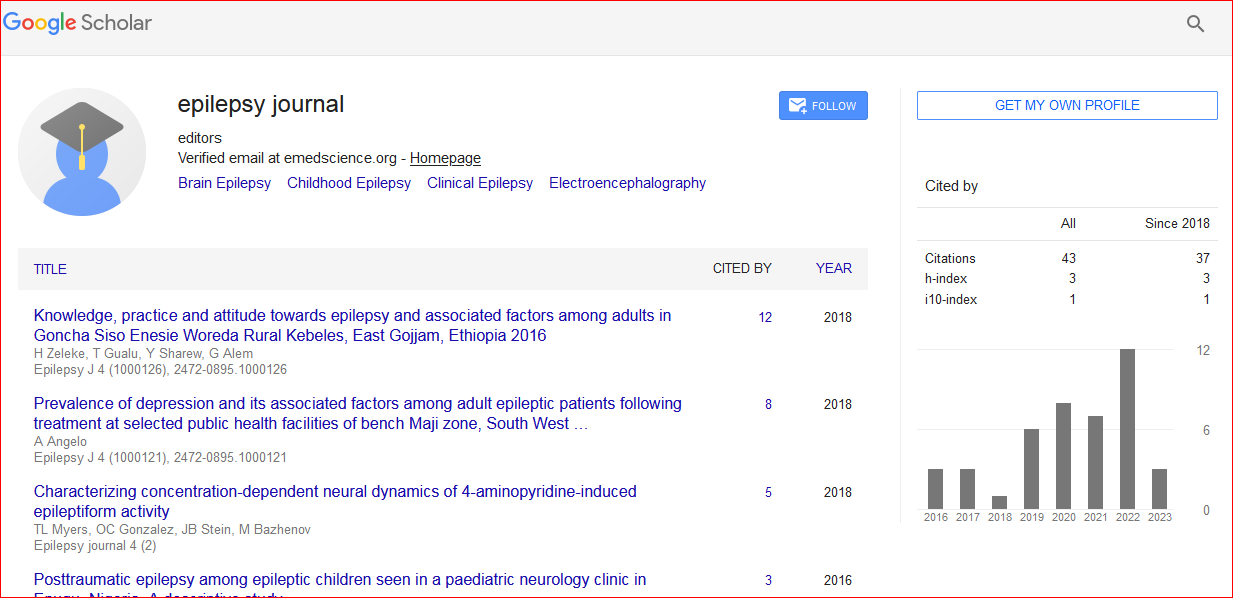
Epilepsy Journal received 41 citations as per Google Scholar report