Perspective - (2025) Volume 14, Issue 5
Received: 01-Oct-2025, Manuscript No. jnc-25-173989;
Editor assigned: 03-Oct-2025, Pre QC No. P-173989;
Reviewed: 17-Oct-2025, QC No. Q-173989;
Revised: 22-Oct-2025, Manuscript No. R-173989;
Published:
29-Oct-2025
, DOI: 10.37421/2167-1168.2025.14.734
Citation: Norah Mwangi. ”Neonatal Care: Challenges, Strategies, Outcomes.” J Nurs Care 14 (2025):734.
Copyright: © 2025 M. Norah This is an open-access article distributed under the terms of the Creative Commons Attribution License, which permits unrestricted use, distribution and reproduction in any medium, provided the original author and source are credited.
Neonatal sepsis, a severe infection in newborns, remains a major cause of global morbidity and mortality. Recent research highlights evolving diagnostic challenges and therapeutic strategies, emphasizing the need for early, accurate identification, often complicated by non-specific symptoms. Understanding unique immune responses in neonates is crucial for developing targeted interventions and improving outcomes[1].
Therapeutic hypothermia is the standard of care for neonatal Hypoxic-Ischemic Encephalopathy (HIE), significantly improving neurodevelopmental outcomes. Reviews explore recent advancements in its application, including optimizing cooling protocols and identifying adjunct therapies. This work underscores the critical window for intervention and ongoing research into neuroprotective strategies beyond cooling[2].
Effective pain management in neonates is crucial for long-term neurodevelopmental outcomes, yet it remains an undertreated aspect of care. Articles review current evidence-based strategies, encompassing pharmacological and non-pharmacological interventions. They discuss the importance of a multidisciplinary approach to assessing and mitigating pain in vulnerable newborns[3].
Advances in managing Neonatal Respiratory Distress Syndrome (RDS) have substantially improved survival rates for premature infants. This includes optimized surfactant therapy, non-invasive ventilation strategies, and judicious oxygen use. The article highlights a shift towards less invasive interventions to minimize lung injury and improve long-term respiratory outcomes[4].
Optimal nutrition for preterm infants is critical for their growth, neurodevelopment, and long-term health. This article reviews current evidence and guidelines, focusing on macronutrient and micronutrient requirements, parenteral and enteral feeding strategies, and the importance of human milk. It emphasizes individualized approaches to meet the unique needs of these vulnerable infants[5].
Neonatal hyperbilirubinemia, or jaundice, is a common condition requiring careful monitoring and timely intervention to prevent severe neurological complications. This review discusses updated guidelines for risk assessment, diagnostic approaches, and management strategies, including phototherapy and exchange transfusion, highlighting early detection and personalized care[6].
Developmental care in the Neonatal Intensive Care Unit (NICU) aims to minimize environmental stress and support optimal neurodevelopmental outcomes for preterm and sick infants. A systematic review explores various strategies, including individualized care plans, family-centered approaches, and environmental modifications. It underscores the critical role of nurses and the need for consistent implementation across units[7].
Long-term follow-up for high-risk neonates, especially preterm infants, is essential to monitor their neurodevelopmental progress and provide early intervention. This article discusses challenges in implementing comprehensive follow-up programs and highlights opportunities to improve continuity of care, emphasizing a multidisciplinary team approach to support families[8].
Bronchopulmonary dysplasia (BPD) remains a significant challenge for extremely preterm infants, leading to long-term respiratory morbidity. Recent advances in prevention and management strategies include optimized ventilation, anti-inflammatory therapies, and nutritional support. The focus is on reducing lung injury and promoting healthy lung development to improve outcomes[9].
Invasive candidiasis poses a substantial threat to vulnerable neonates, particularly preterm infants, due to their immature immune systems. This review examines current prophylactic strategies, including antifungal agents and infection control measures, alongside future directions in diagnosing and preventing this serious fungal infection, emphasizing tailored approaches for high-risk populations[10].
Understanding the critical health challenges facing newborns is paramount for improving neonatal care globally. Infections like neonatal sepsis continue to be a leading cause of severe illness and death in this vulnerable population. Current research underscores the complexities of diagnosing sepsis early due to its often non-specific symptoms and emphasizes the need for rapid, accurate identification. A key focus is on understanding the unique immunological responses of neonates, which is essential for developing effective, targeted treatments and ultimately enhancing survival rates and long-term well-being [1]. Similarly, invasive candidiasis presents another significant infectious threat, especially for preterm infants whose immature immune systems offer limited protection. Reviews highlight current prophylactic measures, including specific antifungal agents and rigorous infection control, while also exploring future strategies for diagnosis and prevention that are tailored to these high-risk groups [10].
Beyond infection, neurological well-being is a major concern. Neonatal Hypoxic-Ischemic Encephalopathy (HIE) can have devastating neurodevelopmental consequences. Therapeutic hypothermia has become the established standard of care for HIE, dramatically improving outcomes. Ongoing studies delve into optimizing cooling protocols and exploring adjunct therapies to further enhance neuroprotection. These efforts recognize a crucial, limited time window for effective intervention, stressing the urgency of early and precise management [2]. Furthermore, addressing pain in neonates is not merely a matter of comfort but a critical factor influencing their long-term neurodevelopment. Despite its known impact, neonatal pain is often undertreated. Current evidence-based practices encompass both pharmacological and non-pharmacological approaches, advocating for a multidisciplinary team strategy to effectively assess and alleviate pain in these sensitive patients [3].
Respiratory health is another cornerstone of neonatal survival, particularly for premature infants. Neonatal Respiratory Distress Syndrome (RDS) remains a common, serious condition. Significant advancements in its management, such as refined surfactant therapy, the adoption of non-invasive ventilation techniques, and careful oxygen administration, have dramatically improved survival. The prevailing trend in care aims for less invasive interventions to minimize iatrogenic lung injury and promote better long-term respiratory function [4]. For extremely preterm infants, Bronchopulmonary Dysplasia (BPD) continues to pose a formidable challenge, often leading to persistent respiratory issues. Recent efforts focus on optimizing ventilation, utilizing anti-inflammatory therapies, and providing tailored nutritional support to reduce lung injury and foster healthy lung development [9].
Optimal nutrition is undeniably vital for the growth, neurodevelopment, and overall health of preterm infants. Contemporary guidelines outline specific macronutrient and micronutrient requirements, advocating for sophisticated parenteral and enteral feeding strategies. The irreplaceable benefits of human milk are consistently highlighted, reinforcing the need for highly individualized nutritional plans that cater to the unique metabolic demands of each vulnerable infant [5]. Another common, yet potentially serious, condition is neonatal hyperbilirubinemia, or jaundice. This requires vigilant monitoring and timely intervention to avert severe neurological damage. Updated guidelines offer comprehensive strategies for risk assessment, diagnostic procedures, and management, including phototherapy and exchange transfusion, all emphasizing early detection and personalized care pathways [6].
Finally, comprehensive care extends beyond acute medical management. Developmental care within the Neonatal Intensive Care Unit (NICU) focuses on creating an environment that minimizes stress and supports optimal neurodevelopment. This involves individualized care plans, strong family-centered approaches, and carefully considered environmental modifications. Nurses play a pivotal role in implementing these strategies consistently across units [7]. Equally important is long-term follow-up for high-risk neonates, particularly preterm infants. This ensures continuous monitoring of their neurodevelopmental progress and enables prompt intervention when needed. While implementing robust follow-up programs presents challenges, there are clear opportunities to enhance continuity of care through a collaborative, multidisciplinary team approach that actively supports families throughout their child's early developmental years [8].
Neonatal care encompasses a wide range of critical health challenges, demanding precise diagnostic and therapeutic strategies to improve outcomes for newborns. Infections like neonatal sepsis and invasive candidiasis are significant threats, requiring early identification, understanding of unique immune responses, and tailored prophylactic measures. Neurological conditions such as Hypoxic-Ischemic Encephalopathy benefit from interventions like therapeutic hypothermia, which is continuously refined for optimal neuroprotection. Moreover, effective pain management is increasingly recognized as crucial for long-term neurodevelopment, prompting multidisciplinary approaches using both pharmacological and non-pharmacological methods. Respiratory issues, particularly Neonatal Respiratory Distress Syndrome and Bronchopulmonary Dysplasia in preterm infants, have seen advancements in management through optimized ventilation, surfactant therapy, and anti-inflammatory strategies aimed at minimizing lung injury. Optimal nutrition, including specialized feeding strategies and the emphasis on human milk, is vital for the growth and development of these vulnerable infants. Common conditions like neonatal hyperbilirubinemia necessitate careful monitoring and timely intervention with phototherapy or exchange transfusion to prevent neurological complications. Beyond acute care, developmental care in the NICU focuses on stress reduction and neurodevelopmental support, while long-term follow-up programs are essential for monitoring progress and providing early interventions for high-risk neonates, advocating for a strong multidisciplinary, family-centered approach.
None
None
1. Andrea LS, Chloe S, Lindsay HR. "Neonatal sepsis: new insights into an old problem".Curr Opin Infect Dis 34 (2021):227-234.
Indexed at, Google Scholar, Crossref
2. Sudhin T, Kyla L, Laura MT. "Management of Hypoxic-Ischemic Encephalopathy in Term and Late Preterm Infants".Clin Perinatol 50 (2023):111-125.
Indexed at, Google Scholar, Crossref
3. K. JSA, Mats E, Deven S. "Neonatal pain management: a review of current evidence and future directions".J Neonatal Perinatal Med 13 (2020):113-125.
Indexed at, Google Scholar, Crossref
4. Monica S, Shalini S, Vaibhav G. "Recent advances in the management of neonatal respiratory distress syndrome".J Clin Neonatol 11 (2022):167-172.
Indexed at, Google Scholar, Crossref
5. Nicholas DE, Karen S, Deborah F. "Current Perspectives on Nutrition in Preterm Infants".Nutrients 13 (2021):1184.
Indexed at, Google Scholar, Crossref
6. M. JM, Vinod KB, David BB. "Neonatal Hyperbilirubinemia: Risk Factors, Diagnosis, and Management".Clin Perinatol 49 (2022):191-204.
Indexed at, Google Scholar, Crossref
7. Eimear O, Jean M, Catherine D. "Implementing developmental care in the neonatal intensive care unit: a systematic review".J Neonatal Nurs 26 (2020):310-316.
Indexed at, Google Scholar, Crossref
8. Patricia M, Christine C, J S. "Long-term follow-up of preterm infants: challenges and opportunities".Arch Pediatr 28 (2021):S102-S108.
Indexed at, Google Scholar, Crossref
9. Stephen HA, Mary KS, Joseph MC. "Recent advances in the prevention and management of bronchopulmonary dysplasia".Curr Opin Pediatr 33 (2021):161-168.
Indexed at, Google Scholar, Crossref
10. David K, Rory B, Maram A. "Prevention of Invasive Candidiasis in Neonates: A Review of Current Practices and Future Directions".J Fungi (Basel) 8 (2022):363.
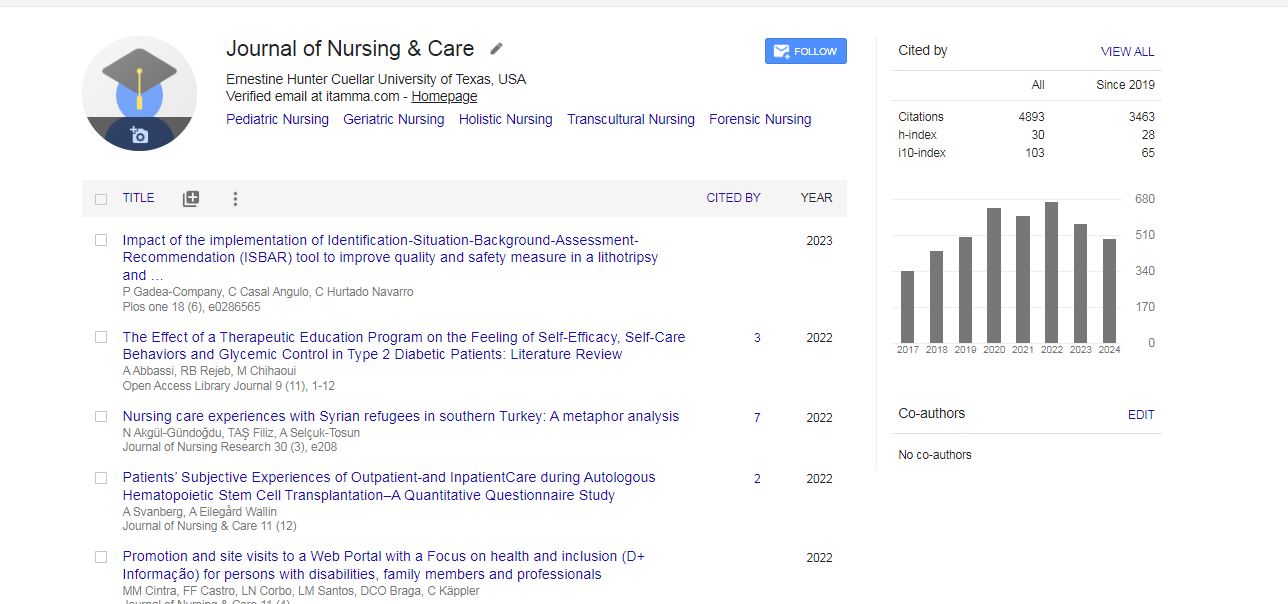
Journal of Nursing & Care received 4230 citations as per Google Scholar report