Brief Report - (2025) Volume 11, Issue 6
Received: 02-Nov-2025, Manuscript No. aso-26-184670;
Editor assigned: 04-Nov-2025, Pre QC No. P-184670;
Reviewed: 18-Nov-2025, QC No. Q-184670;
Revised: 24-Nov-2025, Manuscript No. R-184670;
Published:
01-Dec-2025
, DOI: 10.37421/2471-2671.2025.11.196
Citation: Ferreira, Lucas. ”Neoadjuvant Therapy: Optimizing
Surgery, Improving Cancer Outcomes.” Arch Surg Oncol 11 (2025):196.
Copyright: © 2025 Ferreira L. This is an open-access article distributed under the terms of the Creative Commons Attribution License, which permits unrestricted use,
distribution and reproduction in any medium, provided the original author and source are credited.
Neoadjuvant therapy has emerged as a cornerstone in the management of various cancers, fundamentally reshaping surgical strategies and significantly impacting patient outcomes. This therapeutic approach, administered before definitive surgery, offers a unique window to evaluate tumor response and modify treatment plans accordingly. In gastrointestinal cancers, neoadjuvant therapy enables less invasive surgical procedures, such as organ preservation and tumor downstaging, which allows for more precise surgical planning, potentially leading to improved functional outcomes and reduced morbidity. Prognostically, it can enhance overall and disease-free survival, especially when a pathological complete response is achieved. Therefore, the selection of the neoadjuvant regimen and the patient's response are critical determinants of both surgical planning and prognosis [1].
In the realm of rectal cancer, neoadjuvant chemoradiotherapy (nCRT) has become a standard of care, revolutionizing surgical approaches by facilitating tumor shrinkage and downstaging. This leads to an increased likelihood of sphincter preservation and less extensive resections compared to upfront surgery. The extent of pathological response to nCRT is a potent predictor of oncological outcomes, with pathological complete response being significantly associated with better long-term disease-free and overall survival [2].
The integration of neoadjuvant immunotherapy into the management of locally advanced non-small cell lung cancer (NSCLC) is transforming surgical strategies. Response to immunotherapy, characterized by tumor regression and inflammatory changes, directly influences the timing and extent of surgical resection. Immune-related pathological complete response is increasingly recognized as a surrogate marker for improved survival, guiding postoperative management and prognosis [3].
For locally advanced breast cancer, neoadjuvant chemotherapy (NACT) is instrumental in tumor downstaging, thereby increasing the feasibility of breast-conserving surgery and improving rates of complete surgical resection. The achievement of pathological complete response (pCR) after NACT is strongly linked to a favorable prognosis, including improved event-free and overall survival. Consequently, surgical strategy is adapted based on the response to NACT, with pCR often guiding decisions about the extent of axillary surgery [4].
The use of neoadjuvant systemic therapy in pancreatic cancer is gaining significant traction, with the primary goals of improving resectability and long-term outcomes. While upfront surgery is often challenging due to tumor stage and local invasion, neoadjuvant approaches can facilitate R0 resections by reducing tumor burden and treating micrometastatic disease. The prognosis is heavily influenced by the ability to achieve a complete resection and the pathological response to therapy, although robust data on survival benefits are still evolving [5].
In the context of locally advanced head and neck squamous cell carcinoma (HNSCC), neoadjuvant chemotherapy or chemoradiotherapy can induce tumor downstaging, allowing for less radical surgical interventions and the potential preservation of critical structures. The response to neoadjuvant treatment serves as a key prognostic factor, with studies indicating that patients achieving a clinical or pathological complete response have improved survival outcomes. This necessitates careful multidisciplinary planning to integrate systemic therapy with surgical strategy [6].
Neoadjuvant therapy in bladder cancer has evolved considerably, enabling bladder preservation strategies and improving surgical outcomes for select patients. The response to neoadjuvant chemotherapy, particularly the absence of residual tumor after treatment, is a strong predictor of survival. This paradigm shift allows for more tailored surgical planning, moving away from routine radical cystectomy in cases with a good response, thereby impacting both the surgical approach and the long-term prognosis [7].
For locally advanced sarcomas, neoadjuvant chemotherapy or radiation can induce tumor shrinkage and downstaging, making previously unresectable tumors amenable to surgical resection. This modification of surgical strategy aims to achieve margin-negative resections, which are crucial for local control and improved prognosis. The degree of pathological response is often correlated with better outcomes, underscoring the importance of this neoadjuvant approach in optimizing surgical planning and patient prognosis [8].
The role of neoadjuvant systemic therapy in gastric cancer is to improve resectability and long-term survival by enabling the downstaging of locally advanced tumors. This increases the rate of R0 resections and potentially allows for less extensive surgery. Pathological response to neoadjuvant chemotherapy is a significant predictor of prognosis, with a pathological complete response associated with a marked improvement in disease-free and overall survival [9].
In the management of hepatocellular carcinoma (HCC), neoadjuvant therapy, particularly locoregional therapies or systemic agents administered prior to liver transplantation or resection, aims to downstage tumors and enhance surgical candidacy. This approach optimizes tumor burden, potentially leading to better surgical outcomes and survival. The response to neoadjuvant treatment can influence the surgical strategy by identifying patients more likely to benefit from definitive intervention and those with better prognoses [10].
Neoadjuvant therapy profoundly influences surgical strategy by facilitating less invasive procedures, such as organ preservation and tumor downstaging, in gastrointestinal cancers. This enables more precise surgical planning, potentially leading to improved functional outcomes and reduced morbidity. Prognostically, neoadjuvant treatment can enhance overall and disease-free survival, particularly in response to therapy, as evidenced by pathological complete response. The choice of neoadjuvant regimen and its response are therefore critical determinants of both surgical planning and patient prognosis [1].
In rectal cancer, neoadjuvant chemoradiotherapy (nCRT) is a standard of care that has revolutionized surgical approaches. nCRT facilitates tumor shrinkage and downstaging, increasing the likelihood of sphincter preservation and enabling less extensive resections compared to upfront surgery. The extent of pathological response to nCRT is a strong predictor of oncological outcomes, with pathological complete response associated with significantly better long-term disease-free and overall survival [2].
The integration of neoadjuvant immunotherapy into the management of locally advanced non-small cell lung cancer (NSCLC) is transforming surgical strategies. Response to immunotherapy, characterized by tumor regression and inflammatory changes, influences the timing and extent of surgical resection. Pathological response, particularly immune-related pathological complete response, is increasingly recognized as a surrogate for improved survival, guiding postoperative management and prognosis [3].
For locally advanced breast cancer, neoadjuvant chemotherapy (NACT) allows for tumor downstaging, increasing the feasibility of breast-conserving surgery and improving rates of complete surgical resection. The achievement of pathological complete response (pCR) after NACT is strongly associated with a favorable prognosis, including improved event-free and overall survival. Surgical strategy is thus adapted based on the response to NACT, with pCR often guiding decisions about the extent of axillary surgery [4].
The use of neoadjuvant systemic therapy in pancreatic cancer is gaining traction, aiming to improve resectability and long-term outcomes. While upfront surgery is often challenging due to tumor stage and local invasion, neoadjuvant approaches can facilitate R0 resections by reducing tumor burden and treating micrometastatic disease. The prognosis is heavily influenced by the ability to achieve a complete resection and the pathological response to therapy, although robust data on survival benefits are still evolving [5].
In the context of locally advanced head and neck squamous cell carcinoma (HNSCC), neoadjuvant chemotherapy or chemoradiotherapy can lead to tumor downstaging, allowing for less radical surgical interventions and potentially preserving critical structures. The response to neoadjuvant treatment is a key prognostic factor, with studies indicating that patients achieving a clinical or pathological complete response have improved survival outcomes. This necessitates careful multidisciplinary planning to integrate systemic therapy with surgical strategy [6].
Neoadjuvant therapy in bladder cancer has significantly evolved, enabling bladder preservation strategies and improving surgical outcomes for select patients. The response to neoadjuvant chemotherapy, particularly the absence of residual tumor after treatment, is a strong predictor of survival. This shift allows for more tailored surgical planning, moving away from routine radical cystectomy in cases with good response, thereby impacting both the surgical approach and the long-term prognosis [7].
For locally advanced sarcomas, neoadjuvant chemotherapy or radiation can induce tumor shrinkage and downstaging, making previously unresectable tumors amenable to surgical resection. This modification of surgical strategy aims to achieve margin-negative resections, which is crucial for local control and improved prognosis. The degree of pathological response is often correlated with better outcomes, underscoring the importance of this neoadjuvant approach in optimizing surgical planning and patient prognosis [8].
The role of neoadjuvant systemic therapy in gastric cancer is to improve resectability and long-term survival. It allows for downstaging of locally advanced tumors, increasing the rate of R0 resections and potentially enabling less extensive surgery. Pathological response to neoadjuvant chemotherapy is a significant predictor of prognosis, with a pathological complete response associated with a marked improvement in disease-free and overall survival [9].
In the management of hepatocellular carcinoma (HCC), neoadjuvant therapy, particularly locoregional therapies or systemic agents prior to liver transplantation or resection, aims to downstage tumors and improve surgical candidacy. This approach can optimize the tumor burden, potentially leading to better surgical outcomes and survival. The response to neoadjuvant treatment can influence the surgical strategy by identifying patients who are more likely to benefit from definitive intervention and those with better prognoses [10].
Neoadjuvant therapy plays a crucial role in optimizing surgical strategies and improving patient prognoses across various cancers. It enables less invasive surgeries through tumor downstaging and facilitates more precise surgical planning. A key indicator of treatment success and a predictor of improved survival is the pathological complete response. This approach is particularly impactful in gastrointestinal cancers, rectal cancer, non-small cell lung cancer, breast cancer, pancreatic cancer, head and neck squamous cell carcinoma, bladder cancer, sarcomas, gastric cancer, and hepatocellular carcinoma. The response to neoadjuvant treatment directly influences surgical decisions, such as organ preservation or the extent of resection, and ultimately impacts long-term outcomes like disease-free and overall survival.
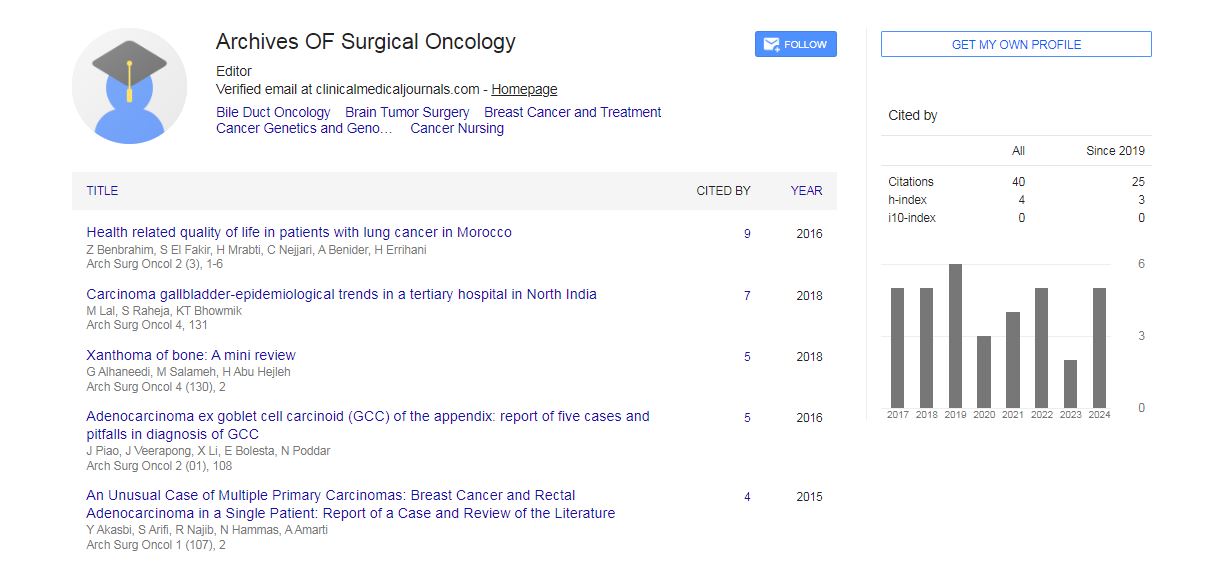
Archives of Surgical Oncology received 37 citations as per Google Scholar report