Opinion - (2025) Volume 9, Issue 5
Received: 01-Sep-2025, Manuscript No. jigc-26-185929;
Editor assigned: 03-Sep-2025, Pre QC No. P-185929;
Reviewed: 17-Sep-2025, QC No. Q-185929;
Revised: 22-Sep-2025, Manuscript No. R-185929;
Published:
29-Sep-2025
, DOI: 10.37421/2684-4591.2025.9.338
Citation: Moreau, Clara. ”Modeling Blood Flow Dynamics in
Bioabsorbable Vascular Frameworks.” J Interv Gen Cardiol 09 (2025):338.
Copyright: © 2025 Moreau C. This is an open-access article distributed under the terms of the Creative Commons Attribution License, which permits unrestricted use,
distribution and reproduction in any medium, provided the original author and source are credited.
The field of cardiovascular intervention is rapidly advancing with the development of next-generation bioabsorbable vascular frameworks. These innovative devices are designed to provide temporary support to blood vessels, gradually dissolving over time, and thereby eliminating the need for permanent implants. A critical aspect of their design and efficacy lies in understanding and accurately modeling the fluid dynamics within these evolving structures. The changing geometry and mechanical properties of the frameworks as they bioabsorb directly influence blood flow patterns, shear stress distribution, and the overall hemodynamic environment. This necessitates the development of sophisticated computational models that can predict these dynamic changes and their implications for vascular health. The accurate simulation of fluid flow through bioabsorbable vascular devices is paramount for their clinical success. This research focuses on validating advanced computational models against in vitro flow studies of degrading frameworks. The work addresses the challenge of capturing the transient changes in scaffold structure and its impact on shear stress, flow separation, and residence time, crucial factors influencing biological responses like endothelialization and thrombosis. The aim is to refine modeling approaches for predicting device performance throughout its absorption lifecycle [1].
The intricate interplay between bioabsorbable material degradation and vascular hemodynamics necessitates sophisticated modeling. This research emphasizes the development of predictive computational fluid dynamics (CFD) models that account for the time-dependent changes in scaffold architecture and mechanical properties. By simulating the gradual dissolution of the framework and its impact on flow resistance, shear stress distribution, and potential areas of recirculation, the study aims to inform the design of bioabsorbable devices that promote favorable long-term outcomes. The validation of these models against experimental data is a key component [2].
Computational modeling of blood flow through bioabsorbable vascular frameworks presents unique challenges due to their evolving geometry and mechanical characteristics. This paper focuses on creating multiphysics models that integrate fluid-structure interaction with material degradation kinetics. The goal is to provide a comprehensive understanding of how the scaffold's transformation influences the local microenvironment, specifically regarding wall shear stress and transmural pressure gradients. Such insights are vital for designing next-generation devices that mimic natural vessel behavior during healing and remodeling [3].
The development of bioabsorbable vascular frameworks requires a thorough understanding of their mechanical behavior and how it affects hemodynamics during degradation. This study investigates the use of finite element analysis (FEA) coupled with CFD to predict flow patterns within these dynamic scaffolds. Special attention is paid to the correlation between material resorption rates and the resulting changes in lumen geometry and wall stiffness, aiming to optimize device design for reduced thrombogenicity and improved patency [4].
This article explores advanced modeling techniques for adaptive flow channels within next-generation bioabsorbable vascular frameworks. It highlights how understanding and predicting fluid dynamics within these evolving structures is crucial for optimizing their performance and integration with native vasculature. The focus is on developing computational models that can accurately simulate the changes in channel geometry and wall properties as the framework bioabsorbs, thereby influencing blood flow patterns and shear stress. This adaptive modeling aims to predict and mitigate potential issues like thrombosis or restenosis, paving the way for more effective and personalized cardiovascular treatments [5].
The adaptive nature of bioabsorbable vascular frameworks necessitates modeling approaches that can capture their dynamic evolution. This study examines the application of patient-specific computational models to simulate blood flow through these devices, considering their progressive degradation and changes in mechanical properties. The emphasis is on understanding how these alterations influence local hemodynamic environments, such as wall shear stress, and how this impacts biological responses. Such personalized modeling promises to enhance the efficacy and safety of next-generation bioabsorbable devices [6].
Predicting the hemodynamic consequences of bioabsorbable vascular framework degradation is critical for optimizing their clinical application. This work introduces a novel modeling framework that integrates material degradation physics with advanced fluid dynamics simulations. The objective is to accurately forecast the evolution of flow patterns, shear stress, and pressure gradients within the vessel lumen as the scaffold gradually resorbs. This research aims to guide the design of more effective bioabsorbable devices by providing quantitative insights into their dynamic behavior [7].
The mechanical behavior and degradation characteristics of bioabsorbable vascular frameworks significantly influence the surrounding blood flow. This study employs computational fluid dynamics (CFD) to analyze the evolving hemodynamic environment within these scaffolds. The research emphasizes the importance of accurate modeling of the porous structure and its changing permeability and mechanical stiffness as it degrades. Understanding these dynamics is key to designing devices that promote favorable vascular healing and prevent adverse events like thrombosis [8].
Modeling the adaptive flow channels within bioabsorbable vascular frameworks is essential for predicting their long-term efficacy. This paper investigates the use of computational fluid dynamics (CFD) coupled with constitutive models for bioabsorbable polymers to simulate the time-dependent changes in lumen geometry and wall properties. The study focuses on how these adaptations affect hemodynamic parameters such as shear stress and flow patterns, which are critical for vascular health and the prevention of complications like restenosis [9].
The progressive degradation of bioabsorbable vascular frameworks leads to significant changes in their mechanical properties and geometry, influencing blood flow dynamics. This research employs computational fluid dynamics (CFD) to model these adaptive flow channels. The study aims to quantify the impact of scaffold resorption on wall shear stress, endothelial cell activation, and potential thrombotic events. By developing accurate predictive models, this work contributes to the design of next-generation bioabsorbable devices that optimize vascular healing and long-term patency [10].
The accurate simulation of fluid flow through bioabsorbable vascular devices is paramount for their clinical success. This research focuses on validating advanced computational models against in vitro flow studies of degrading frameworks. The work addresses the challenge of capturing the transient changes in scaffold structure and its impact on shear stress, flow separation, and residence time, crucial factors influencing biological responses like endothelialization and thrombosis. The aim is to refine modeling approaches for predicting device performance throughout its absorption lifecycle [1].
The intricate interplay between bioabsorbable material degradation and vascular hemodynamics necessitates sophisticated modeling. This research emphasizes the development of predictive computational fluid dynamics (CFD) models that account for the time-dependent changes in scaffold architecture and mechanical properties. By simulating the gradual dissolution of the framework and its impact on flow resistance, shear stress distribution, and potential areas of recirculation, the study aims to inform the design of bioabsorbable devices that promote favorable long-term outcomes. The validation of these models against experimental data is a key component [2].
Computational modeling of blood flow through bioabsorbable vascular frameworks presents unique challenges due to their evolving geometry and mechanical characteristics. This paper focuses on creating multiphysics models that integrate fluid-structure interaction with material degradation kinetics. The goal is to provide a comprehensive understanding of how the scaffold's transformation influences the local microenvironment, specifically regarding wall shear stress and transmural pressure gradients. Such insights are vital for designing next-generation devices that mimic natural vessel behavior during healing and remodeling [3].
The development of bioabsorbable vascular frameworks requires a thorough understanding of their mechanical behavior and how it affects hemodynamics during degradation. This study investigates the use of finite element analysis (FEA) coupled with CFD to predict flow patterns within these dynamic scaffolds. Special attention is paid to the correlation between material resorption rates and the resulting changes in lumen geometry and wall stiffness, aiming to optimize device design for reduced thrombogenicity and improved patency [4].
This article explores advanced modeling techniques for adaptive flow channels within next-generation bioabsorbable vascular frameworks. It highlights how understanding and predicting fluid dynamics within these evolving structures is crucial for optimizing their performance and integration with native vasculature. The focus is on developing computational models that can accurately simulate the changes in channel geometry and wall properties as the framework bioabsorbs, thereby influencing blood flow patterns and shear stress. This adaptive modeling aims to predict and mitigate potential issues like thrombosis or restenosis, paving the way for more effective and personalized cardiovascular treatments [5].
The adaptive nature of bioabsorbable vascular frameworks necessitates modeling approaches that can capture their dynamic evolution. This study examines the application of patient-specific computational models to simulate blood flow through these devices, considering their progressive degradation and changes in mechanical properties. The emphasis is on understanding how these alterations influence local hemodynamic environments, such as wall shear stress, and how this impacts biological responses. Such personalized modeling promises to enhance the efficacy and safety of next-generation bioabsorbable devices [6].
Predicting the hemodynamic consequences of bioabsorbable vascular framework degradation is critical for optimizing their clinical application. This work introduces a novel modeling framework that integrates material degradation physics with advanced fluid dynamics simulations. The objective is to accurately forecast the evolution of flow patterns, shear stress, and pressure gradients within the vessel lumen as the scaffold gradually resorbs. This research aims to guide the design of more effective bioabsorbable devices by providing quantitative insights into their dynamic behavior [7].
The mechanical behavior and degradation characteristics of bioabsorbable vascular frameworks significantly influence the surrounding blood flow. This study employs computational fluid dynamics (CFD) to analyze the evolving hemodynamic environment within these scaffolds. The research emphasizes the importance of accurate modeling of the porous structure and its changing permeability and mechanical stiffness as it degrades. Understanding these dynamics is key to designing devices that promote favorable vascular healing and prevent adverse events like thrombosis [8].
Modeling the adaptive flow channels within bioabsorbable vascular frameworks is essential for predicting their long-term efficacy. This paper investigates the use of computational fluid dynamics (CFD) coupled with constitutive models for bioabsorbable polymers to simulate the time-dependent changes in lumen geometry and wall properties. The study focuses on how these adaptations affect hemodynamic parameters such as shear stress and flow patterns, which are critical for vascular health and the prevention of complications like restenosis [9].
The progressive degradation of bioabsorbable vascular frameworks leads to significant changes in their mechanical properties and geometry, influencing blood flow dynamics. This research employs computational fluid dynamics (CFD) to model these adaptive flow channels. The study aims to quantify the impact of scaffold resorption on wall shear stress, endothelial cell activation, and potential thrombotic events. By developing accurate predictive models, this work contributes to the design of next-generation bioabsorbable devices that optimize vascular healing and long-term patency [10].
This collection of research highlights the critical need for advanced computational modeling in the development of bioabsorbable vascular frameworks. The central theme revolves around simulating blood flow dynamics within these devices as they degrade and change over time. Studies employ various techniques, including computational fluid dynamics (CFD), finite element analysis (FEA), and multiphysics models, to predict changes in lumen geometry, wall properties, and hemodynamic parameters like shear stress. The ultimate goal is to optimize the design of these frameworks to promote favorable vascular healing, prevent complications such as thrombosis and restenosis, and enhance long-term patency. Validation of these models against experimental data and the application of patient-specific approaches are emphasized for their clinical relevance. The research collectively aims to advance the efficacy and safety of next-generation bioabsorbable vascular devices by providing a deeper understanding of their behavior throughout the absorption lifecycle.
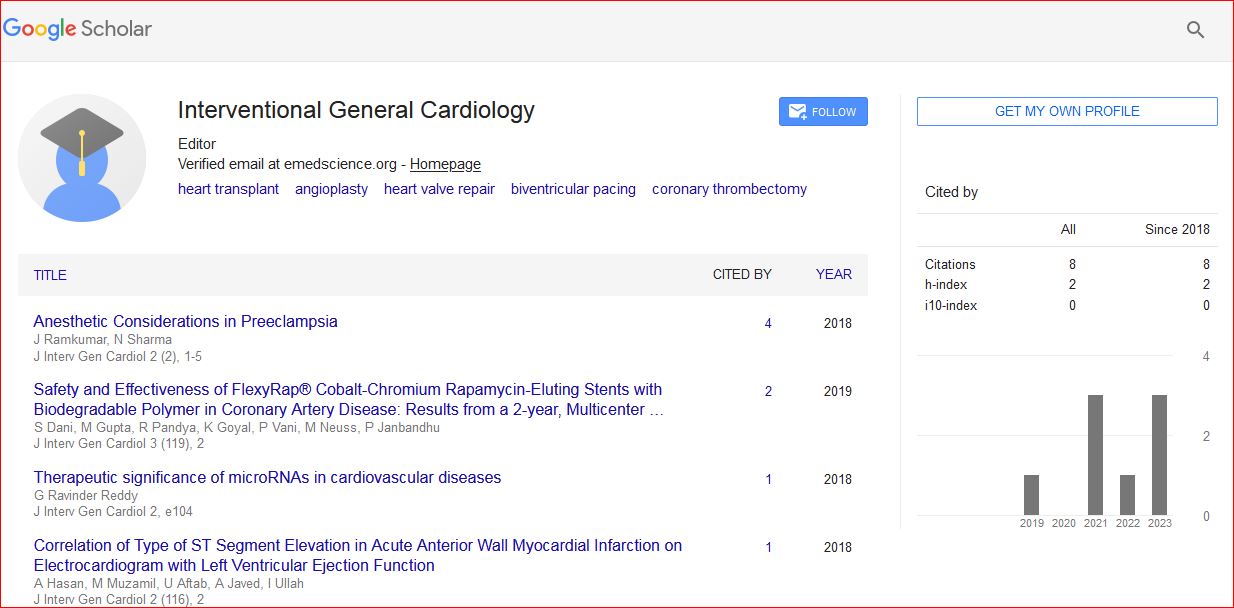
Journal of Interventional and General Cardiology received 11 citations as per Google Scholar report