Brief Report - (2025) Volume 16, Issue 1
Received: 01-Jan-2025, Manuscript No. jnmrt-25-172719;
Editor assigned: 03-Jan-2025, Pre QC No. P-172719;
Reviewed: 18-Jan-2025, QC No. Q-172719;
Revised: 24-Jan-2025, Manuscript No. R-172719;
Published:
31-Jan-2025
, DOI: 10.37421/2155-9619.2025.16.627
Citation: Romano, Paolo G.. ”Mitigating Radiation Toxicities: A Patient-Centric Approach.” J Nucl Med Radiat Ther 16 (2025):627.
Copyright: © 2025 Romano G. Paolo This is an open-access article distributed under the terms of the Creative Commons Attribution License, which permits unrestricted use, distribution and reproduction in any medium, provided the original author and source are credited.
Radiation therapy, a cornerstone in cancer treatment, unfortunately, carries a significant risk of inducing a wide array of toxicities that can severely impact a patient's quality of life. Effective management of these radiation-induced side effects is paramount, requiring sophisticated, patient-centric approaches across various cancer types and affected bodily systems. Research continues to refine strategies, from prevention to advanced therapeutic interventions, ensuring patients receive comprehensive care during and after their treatment. Managing radiation-induced toxicities in gynecologic cancers is complex, requiring a multidisciplinary approach focused on prevention, early detection, and tailored interventions. Treatment strategies often involve pharmacologic agents, supportive care, and lifestyle modifications to mitigate side effects and improve patient quality of life after radiation therapy[1].
Effective strategies for handling radiation-induced toxicity in head and neck cancer patients are crucial. These approaches often combine prophylactic measures with acute and late toxicity management, addressing issues like mucositis, dysphagia, xerostomia, and dermatological reactions to maintain patient function and well-being[2].
Understanding the mechanisms and risk factors for radiation-induced pneumonitis in lung cancer is key to its management. Strategies involve careful treatment planning, dose reduction, and prompt administration of corticosteroids or other immunomodulators when symptoms arise, aiming to preserve lung function and minimize severe complications[3].
Managing radiation-induced toxicity in prostate cancer focuses on minimizing genitourinary and gastrointestinal side effects. This involves using advanced radiotherapy techniques, such as IMRT and SBRT, along with supportive medications and lifestyle advice to help men navigate treatment with better quality of life[4].
Recent advancements in managing radiation-induced gastrointestinal toxicity highlight the role of prophylactic agents, dietary interventions, and advanced imaging for precision radiotherapy. These developments aim to reduce inflammation, protect intestinal integrity, and alleviate symptoms, enhancing patient comfort during and after treatment[5].
New insights into radiation-induced cognitive impairment point towards potential therapeutic interventions that protect neural integrity. Managing this toxicity involves identifying at-risk patients, exploring neuroprotective agents, and considering rehabilitation strategies to mitigate long-term cognitive decline and improve brain function[6].
The current management of radiation-induced dermatitis involves a spectrum of topical treatments, systemic medications, and supportive care to alleviate skin irritation and promote healing. Prevention is also a major focus, using skin care regimens and advanced radiation techniques to minimize skin exposure and damage[7].
Understanding the pathophysiology of radiation-induced cardiotoxicity is vital for effective management. Strategies focus on risk stratification, cardiac protective agents, and vigilant monitoring to detect and treat heart damage early, aiming to preserve cardiovascular health in patients receiving thoracic radiation[8].
Managing radiation-induced oral mucositis involves a combination of preventive and therapeutic measures. These include meticulous oral hygiene, cryotherapy, low-level laser therapy, and pharmacological agents to reduce pain, prevent infection, and promote healing of the oral lining, improving quality of life for patients undergoing head and neck radiation[9].
Addressing radiation-induced lymphedema requires early diagnosis and a comprehensive management plan. This typically involves complex decongestive therapy, manual lymphatic drainage, compression garments, and exercise, with some cases exploring surgical interventions to reduce swelling and manage discomfort effectively[10].
Collectively, these studies underscore the dynamic nature of managing radiation-induced toxicities. They highlight the ongoing commitment to improving patient outcomes through tailored interventions, advanced technologies, and a holistic approach to care. From site-specific challenges like those in gynecologic and head and neck cancers to systemic issues like cardiotoxicity and cognitive impairment, the focus remains on minimizing harm and enhancing overall well-being. This body of research provides a critical foundation for optimizing supportive care in radiation oncology.
This collection of research underscores the critical importance of managing radiation-induced toxicities across various cancer treatments, emphasizing patient quality of life and functional well-being. The spectrum of these toxicities is broad, affecting multiple organ systems and requiring highly specialized, often multidisciplinary, management approaches. What this really means is that a universal solution isn't available, and treatment must be personalized.
For patients with gynecologic cancers, managing radiation-induced toxicities necessitates a complex, multidisciplinary strategy. This involves prevention, early detection, and interventions specifically tailored to the individual. Often, these treatment strategies leverage pharmacologic agents, supportive care measures, and lifestyle modifications to reduce side effects and significantly improve the patientâ??s quality of life following radiation therapy [1]. Similarly, those undergoing treatment for head and neck cancers face crucial challenges with radiation-induced toxicity. Effective strategies here combine prophylactic measures with active management of both acute and late toxicities. Key issues addressed include mucositis, dysphagia, xerostomia, and various dermatological reactions, all aimed at maintaining the patient's function and overall well-being [2].
In lung cancer, understanding the specific mechanisms and risk factors for radiation-induced pneumonitis is central to its effective management. Strategies here typically involve meticulous treatment planning, precise dose reduction techniques, and the timely administration of corticosteroids or other immunomodulators when symptoms develop. The goal is to preserve lung function and minimize severe complications [3]. Prostate cancer patients also experience radiation-induced toxicity, primarily genitourinary and gastrointestinal side effects. Management focuses on minimizing these by employing advanced radiotherapy techniques, such as Intensity-Modulated Radiation Therapy (IMRT) and Stereotactic Body Radiation Therapy (SBRT). This is complemented by supportive medications and lifestyle guidance, enabling men to navigate their treatment journey with a better quality of life [4].
Beyond site-specific toxicities, radiation can induce more generalized or systemic issues. For instance, recent advancements in managing radiation-induced gastrointestinal toxicity highlight the crucial role of prophylactic agents, specific dietary interventions, and the use of advanced imaging for highly precise radiotherapy. These developments are specifically designed to reduce inflammation, protect intestinal integrity, and alleviate uncomfortable symptoms, thereby enhancing patient comfort both during and after their cancer treatment [5]. Furthermore, new insights into radiation-induced cognitive impairment suggest promising therapeutic interventions capable of protecting neural integrity. Effectively managing this toxicity requires identifying patients at higher risk, exploring various neuroprotective agents, and thoughtfully considering rehabilitation strategies to mitigate long-term cognitive decline and improve overall brain function [6].
Dermatological reactions are also common. The current management of radiation-induced dermatitis encompasses a wide range of topical treatments, systemic medications, and comprehensive supportive care aimed at alleviating skin irritation and promoting rapid healing. A major focus in this area is prevention, utilizing specialized skin care regimens and advanced radiation techniques to minimize direct skin exposure and subsequent damage [7]. Heart health is another significant concern; understanding the pathophysiology of radiation-induced cardiotoxicity is absolutely vital for its effective management. Strategies concentrate on robust risk stratification, the use of cardiac protective agents, and vigilant monitoring to detect and treat any heart damage early. The overarching aim is to preserve cardiovascular health in patients undergoing thoracic radiation [8].
Moreover, radiation can lead to uncomfortable oral issues. Managing radiation-induced oral mucositis involves a combination of preventive and therapeutic measures. These encompass meticulous oral hygiene practices, cryotherapy, low-level laser therapy, and pharmacological agents designed to reduce pain, prevent infection, and promote the healing of the oral lining. All these efforts work to significantly improve the quality of life for patients undergoing head and neck radiation [9]. Finally, addressing radiation-induced lymphedema requires both early diagnosis and a comprehensive, multi-faceted management plan. This typically includes complex decongestive therapy, manual lymphatic drainage techniques, the use of compression garments, and specific exercises. In some instances, surgical interventions might be explored to effectively reduce swelling and manage patient discomfort [10].
This body of work consistently shows that effective management of radiation-induced toxicities is not only about treating the disease but also profoundly about enhancing patient well-being through multifaceted and evolving strategies.
Managing radiation-induced toxicities is a critical aspect of comprehensive cancer care, fundamentally aiming to improve patient quality of life across various cancer types. What this really means is that treatments need to go beyond just targeting cancer cells. Strategies are diverse and highly specialized, beginning with multidisciplinary approaches for complex issues in gynecologic cancers, encompassing prevention, early detection, and tailored interventions. For head and neck toxicities, such as mucositis and xerostomia, management involves a combination of prophylactic measures and acute intervention. In lung cancer, careful treatment planning, dose reduction, and immunomodulators are key to addressing pneumonitis. Prostate cancer management utilizes advanced radiotherapy techniques like IMRT and SBRT, alongside supportive medications, to minimize genitourinary and gastrointestinal side effects. There are also broad advancements in mitigating gastrointestinal toxicity, leveraging prophylactic agents, dietary interventions, and precision radiotherapy. New insights are emerging for cognitive impairment, explored through neuroprotective agents and rehabilitation strategies to protect neural integrity. Skin care regimens and advanced radiation techniques remain crucial for preventing and treating dermatitis, while cardiotoxicity management emphasizes risk stratification and vigilant monitoring for early detection. Oral mucositis benefits significantly from meticulous oral hygiene, cryotherapy, low-level laser therapy, and targeted pharmacological agents. Lastly, radiation-induced lymphedema requires early diagnosis and a comprehensive plan involving decongestive therapy, manual lymphatic drainage, and sometimes surgical interventions. The common thread here is a patient-centric approach combining prevention, early detection, and tailored interventions to effectively mitigate the wide array of side effects and enhance patient well-being throughout their cancer journey.
None
None
Indexed at, Google Scholar, Crossref
Indexed at, Google Scholar, Crossref
Indexed at, Google Scholar, Crossref
Indexed at, Google Scholar, Crossref
Indexed at, Google Scholar, Crossref
Indexed at, Google Scholar, Crossref
Indexed at, Google Scholar, Crossref
Indexed at, Google Scholar, Crossref
Indexed at, Google Scholar, Crossref
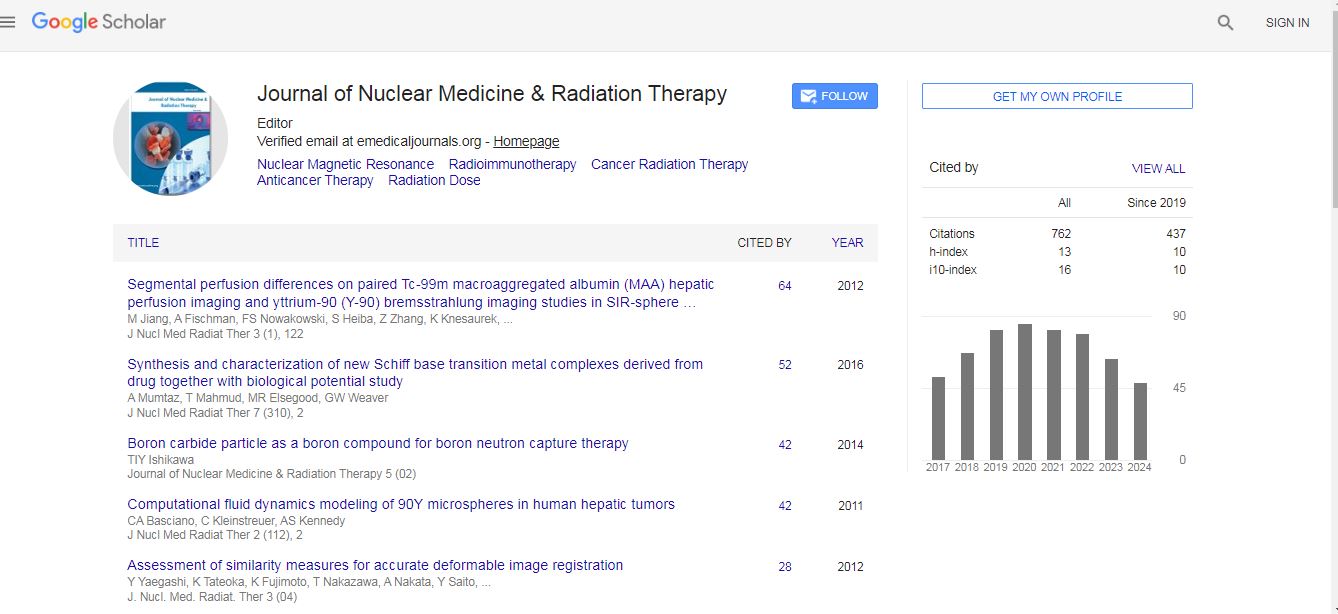
Nuclear Medicine & Radiation Therapy received 706 citations as per Google Scholar report