Commentary - (2025) Volume 14, Issue 3
Received: 01-May-2025, Manuscript No. jmmd-26-184682;
Editor assigned: 05-May-2025, Pre QC No. P-184682;
Reviewed: 19-May-2025, QC No. Q-184682;
Revised: 22-May-2025, Manuscript No. R-184682;
Published:
29-May-2025
, DOI: 10.37421/2161-0703.2025.14.526
Citation: Al-Farouq, Hassan. ”Microbiota: A Key to Health and Disease.” J Med Microb Diagn 14 (2025):526.
Copyright: © 2025 Al-Farouq H. This is an open-access article distributed under the terms of the Creative Commons Attribution License, which permits unrestricted use, distribution and reproduction in any medium, provided the original author and source are credited.
The human body is host to an immense and varied collection of microorganisms, collectively referred to as the normal microbiota. These microbes are indispensable for maintaining human health, playing vital roles in digestion, the synthesis of essential vitamins, and the development of a robust immune system. Alterations to this delicate microbial balance, a condition known as dysbiosis, are increasingly implicated in a broad spectrum of diseases. These include chronic conditions such as inflammatory bowel disease, allergic disorders, obesity, and even neurological ailments. A thorough understanding of the intricate interactions between the host and its resident microbial communities is therefore paramount for the development of innovative therapeutic strategies that target the microbiota to effectively prevent and treat diseases [1].
The influence of the gut microbiota extends far beyond the gastrointestinal tract, exerting significant effects on systemic immunity and overall metabolic health. Specific microbial metabolites, particularly short-chain fatty acids (SCFAs), function as crucial signaling molecules. These molecules are capable of modulating host immune responses and maintaining energy homeostasis. Dysbiosis in the gut can lead to compromised gut barrier integrity, fostering low-grade inflammation and contributing to the pathogenesis of metabolic disorders, including type 2 diabetes and non-alcoholic fatty liver disease. Furthermore, emerging research underscores the importance of the gut-brain axis, a bidirectional communication pathway through which the gut microbiota can profoundly influence mood, behavior, and the development of neurological conditions [2].
The skin microbiome, a complex and dynamic ecosystem comprising bacteria, fungi, and viruses, is crucial for maintaining epidermal homeostasis and providing defense against external threats. It functions as a physical barrier against pathogens, plays a significant role in wound healing processes, and helps regulate inflammatory responses within the skin. Imbalances within the skin microbiota are strongly associated with a variety of dermatological conditions, such as acne vulgaris, atopic dermatitis (eczema), and psoriasis. Consequently, therapeutic interventions, including the use of probiotics and prebiotics, are actively being explored as means to restore the skin's microbial equilibrium and enhance overall skin health [3].
The oral microbiome constitutes a diverse community of microorganisms that reside within the oral cavity, performing essential functions in maintaining local oral health and contributing to systemic well-being. Its roles encompass nutrient metabolism, defense against pathogenic invaders, and the formation of dental plaque. Dysbiosis of the oral microbiome is closely linked to prevalent oral diseases, including periodontitis and dental caries. Moreover, it can be associated with systemic conditions such as cardiovascular disease and diabetes mellitus. A comprehensive understanding of these intricate connections offers promising avenues for the advancement of preventative oral healthcare strategies [4].
The vaginal microbiome, characteristically dominated by Lactobacillus species, is critically important for maintaining female reproductive health and providing protection against various infections. The acidic environment generated by these lactobacilli actively inhibits the proliferation of potentially harmful pathogens. Disruptions to this delicate microbial balance, often triggered by factors such as antibiotic usage or significant hormonal fluctuations, can lead to conditions like bacterial vaginosis. This imbalance also increases the risk of acquiring sexually transmitted infections and experiencing preterm birth. Therefore, developing effective strategies to restore and sustain a healthy vaginal microbiome is a subject of considerable clinical interest [5].
The respiratory tract, which was historically considered to be sterile, is now recognized to harbor a distinct and complex microbial community. The lung microbiome actively participates in immune surveillance mechanisms and provides crucial protection against inhaled pathogens. Dysregulation or alterations in the composition of the lung microbiota have been increasingly associated with chronic respiratory diseases, including asthma, chronic obstructive pulmonary disease (COPD), and cystic fibrosis. These alterations can also influence an individual's susceptibility to respiratory infections. However, further extensive research is imperative to fully elucidate the multifaceted interactions occurring between the host and its resident lung microbiota [6].
The gut microbiota plays a profoundly significant role in early life development, exerting a substantial influence on immune maturation, metabolic programming, and even the complex processes of neurodevelopment. The initial colonization of the infant gut is a dynamic process shaped by multiple factors, including the mode of birth, infant feeding practices (breastfeeding versus formula feeding), and various environmental exposures. Dysbiosis occurring during this critical early-life window has been linked to an elevated risk of developing chronic conditions such as allergies, asthma, obesity, and autoimmune diseases later in life. Therefore, a comprehensive understanding of these early microbial exposures is fundamental to promoting lifelong health and well-being [7].
The growing challenge of antibiotic resistance, coupled with the profound impact of antibiotic therapy on the human microbiota, presents a significant and complex public health concern. Broad-spectrum antibiotics, while effective against certain infections, can indiscriminately eliminate beneficial commensal microbes. This disruption can lead to the development of dysbiosis, creating an environment conducive to opportunistic infections. Furthermore, this disruption can foster the selection and proliferation of antibiotic-resistant bacterial strains, exacerbating the problem. Consequently, strategies focused on the judicious use of antibiotics and effective microbiome restoration are absolutely crucial for mitigating these detrimental consequences [8].
Fecal microbiota transplantation (FMT) has emerged as a highly effective therapeutic intervention, particularly for managing recurrent infections caused by Clostridioides difficile. This groundbreaking procedure involves the transfer of fecal matter from a healthy donor to a recipient, aiming to re-establish a balanced and healthy gut microbial community. The efficacy of FMT in treating other conditions, such as inflammatory bowel disease and various metabolic disorders, is currently an active and promising area of intensive research, underscoring the immense potential of microbiome-based therapeutic approaches [9].
The development of personalized medicine strategies, which meticulously consider an individual's unique microbiome composition, represents a rapidly burgeoning and highly promising field of medical science. By conducting detailed analyses of a person's specific microbial communities, it may become feasible to accurately predict their susceptibility to various diseases, tailor treatment strategies with enhanced precision, and ultimately optimize therapeutic outcomes. This personalized, microbiome-informed approach holds immense promise for significantly improving patient care and advancing disease prevention through highly targeted and individualized interventions [10].
The human body harbors a diverse microbial community, known as the normal microbiota, which is essential for health. These microorganisms aid in digestion, vitamin synthesis, and immune system education. Disturbances in this microbial balance, termed dysbiosis, are linked to various diseases, including inflammatory bowel disease, allergies, obesity, and neurological disorders. Understanding the host-microbe interaction is key for developing new therapies [1].
The gut microbiota influences systemic immunity and metabolic health beyond the gastrointestinal tract. Microbial metabolites like short-chain fatty acids (SCFAs) are vital signaling molecules that regulate immune responses and energy balance. Gut dysbiosis can increase gut permeability, promoting inflammation and contributing to metabolic diseases like type 2 diabetes and non-alcoholic fatty liver disease. The gut-brain axis, influenced by the microbiota, affects mood, behavior, and neurological conditions [2].
The skin microbiome, a complex ecosystem of bacteria, fungi, and viruses, is crucial for maintaining skin health and defense. It acts as a barrier against pathogens, promotes wound healing, and regulates inflammation. Imbalances in the skin microbiota are associated with dermatological conditions such as acne, eczema, and psoriasis. Therapeutic strategies like probiotics and prebiotics are being explored to restore skin microbial balance [3].
The oral microbiome is a diverse community vital for oral and systemic health. It contributes to nutrient metabolism, pathogen defense, and plaque formation. Oral microbiome dysbiosis is strongly linked to periodontitis and dental caries and can also be associated with systemic diseases like cardiovascular disease and diabetes, offering avenues for preventative oral healthcare [4].
The vaginal microbiome, primarily composed of Lactobacillus species, is critical for reproductive health and infection prevention. It maintains an acidic environment that inhibits pathogen growth. Imbalances, caused by factors like antibiotics or hormonal changes, can lead to bacterial vaginosis and increase the risk of STIs and preterm birth. Restoring vaginal microbial balance is of significant clinical interest [5].
The respiratory tract harbors a microbial community involved in immune surveillance and protection against pathogens. Alterations in the lung microbiome are associated with chronic respiratory diseases like asthma, COPD, and cystic fibrosis, and can increase susceptibility to infections. Further research is needed to fully understand host-lung microbiota interactions [6].
The infant gut microbiota significantly impacts early development, influencing immune maturation, metabolic programming, and neurodevelopment. Factors like birth mode, feeding, and environment shape initial colonization. Early-life dysbiosis is linked to an increased risk of allergies, asthma, obesity, and autoimmune diseases later in life. Understanding these early exposures is crucial for long-term health [7].
Antibiotic resistance and the impact of antibiotic therapy on the microbiota are major public health concerns. Broad-spectrum antibiotics can eliminate beneficial microbes, causing dysbiosis and opportunistic infections. This disruption can also promote the emergence of antibiotic-resistant bacteria. Judicious antibiotic use and microbiome restoration strategies are essential to mitigate these negative effects [8].
Fecal microbiota transplantation (FMT) is a powerful therapeutic tool, especially for recurrent Clostridioides difficile infection. FMT restores a healthy gut microbial community by transferring stool from a healthy donor. Its potential in treating other conditions like inflammatory bowel disease and metabolic disorders is an active area of research, demonstrating the promise of microbiome-based therapies [9].
Personalized medicine approaches that incorporate an individual's unique microbiome are a rapidly advancing field. Analyzing a person's microbial composition may allow for prediction of disease risk, tailored treatments, and optimized therapeutic outcomes. This personalized approach holds great promise for improving patient care and disease prevention through targeted interventions [10].
The human body hosts a diverse normal microbiota crucial for health, with disruptions leading to various diseases. The gut microbiota impacts systemic immunity, metabolism, and the gut-brain axis. The skin microbiome is vital for epidermal health, while the oral microbiome affects oral and systemic well-being. The vaginal microbiome maintains reproductive health, and the lung microbiome contributes to respiratory immunity. Early-life gut microbiota is critical for development, and antibiotic use can severely disrupt microbial balance, leading to resistance. Fecal microbiota transplantation shows promise as a therapeutic tool, and personalized medicine approaches integrating microbiome analysis hold significant potential for improved healthcare.
None
None
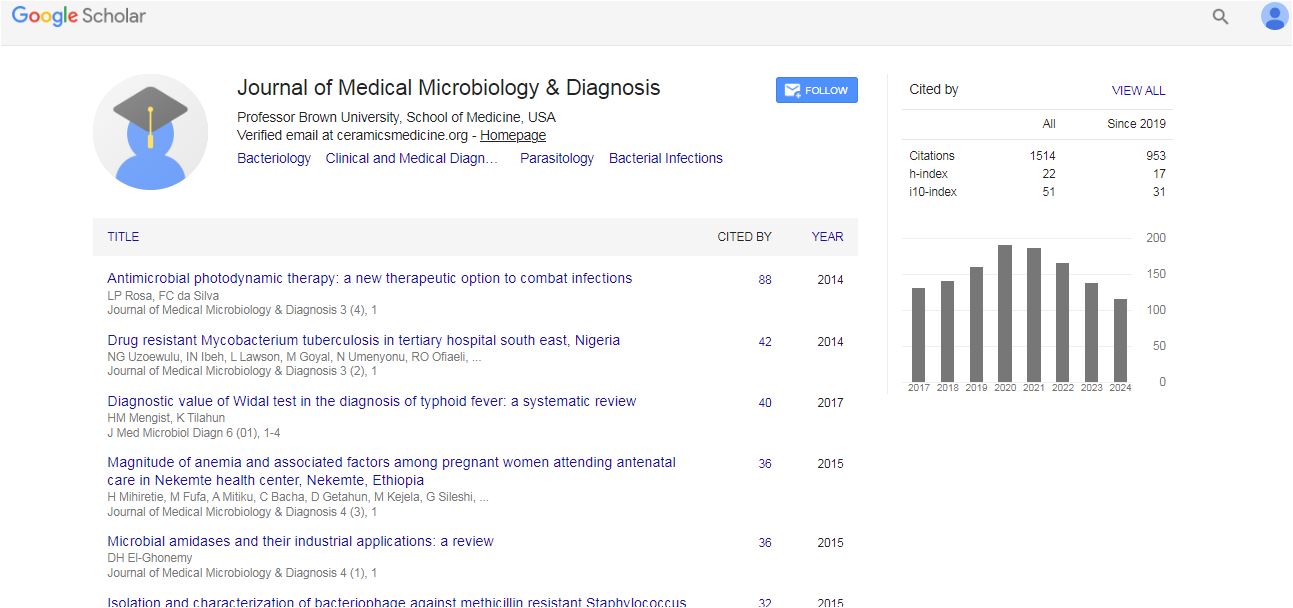
Medical Microbiology & Diagnosis received 14 citations as per Google Scholar report