Short Communication - (2025) Volume 9, Issue 5
Received: 01-Oct-2025, Manuscript No. jid-26-188349;
Editor assigned: 03-Oct-2025, Pre QC No. P-188349;
Reviewed: 17-Oct-2025, QC No. Q-188349;
Revised: 22-Oct-2025, Manuscript No. R-188349;
Published:
29-Oct-2025
, DOI: 10.37421/2684-4559.2025.9.352
Citation: Wojcik, Tomasz. "Liposomal Amphotericin B: Pediatric Fungal Infections, Renal Toxicity." Clin Infect Dis 13 (2025):352.
Copyright: © 2025 Wojcik T. This is an open-access article distributed under the terms of the Creative Commons Attribution License, which permits unrestricted use, distribution and reproduction in any medium, provided the original author and source are credited.
Liposomal amphotericin B (L-AmB) has emerged as a critical therapeutic agent for a spectrum of pediatric invasive fungal infections (IFIs), demonstrating significant efficacy and an acceptable safety profile across various pathogens including aspergillosis, candidiasis, and mucormycosis. Treatment success in immunocompromised children is often contingent upon early diagnosis, appropriate dosing, and prompt initiation of therapy. Despite its general tolerability, renal toxicity remains a significant concern, necessitating diligent monitoring and judicious dose adjustments to optimize patient outcomes.
The evolving landscape of antifungal therapy in pediatric populations underscores the pivotal role of L-AmB as a first-line agent for severe IFIs. Challenges related to drug administration, pharmacokinetic variability in children, and the imperative for therapeutic drug monitoring are paramount to achieving optimal outcomes and mitigating toxicities, particularly nephrotoxicity. Studies have evaluated the effectiveness and safety of L-AmB in the youngest and most vulnerable patient groups, including neonates and infants, with presumed or proven IFIs. These investigations often focus on specific pathogens such as Candida species, indicating favorable response rates and manageable toxicity profiles, while emphasizing the necessity of prolonged treatment courses and vigilant renal function monitoring. The impact of L-AmB on clinical outcomes and renal function has been prospectively assessed in pediatric patients with hematologic malignancies and IFIs. These studies consistently demonstrate good antifungal efficacy, reinforcing the need for proactive strategies to mitigate nephrotoxicity, including ensuring adequate hydration and maintaining electrolyte balance. Optimizing L-AmB dosing strategies in critically ill children with IFIs is a subject of considerable research. Analyses explore both weight-based and body surface area-based approaches, underscoring the importance of individualized dosing to achieve therapeutic concentrations while simultaneously minimizing the risk of adverse events, especially renal impairment. Comparative analyses examining the efficacy and safety of L-AmB against conventional amphotericin B deoxycholate in pediatric IFIs suggest that L-AmB offers a superior safety profile. This improved tolerability, particularly reduced nephrotoxicity, is associated with better treatment adherence and potentially superior clinical outcomes. The management of invasive candidiasis in immunocompromised children frequently relies on L-AmB as a cornerstone of therapy. Detailed treatment protocols, response rates, and the critical importance of multidisciplinary care are highlighted to optimize patient outcomes and effectively address potential complications. Case series have reported on the successful application of L-AmB in pediatric patients afflicted with rare invasive mold infections, such as fusariosis and scedosporiosis. These reports underscore the drug's broad-spectrum activity and its potential utility as a salvage therapy when conventional antifungal agents prove ineffective, emphasizing the continuous need for careful toxicity monitoring. In the context of pediatric hematopoietic stem cell transplant recipients, L-AmB often plays a vital role in managing invasive aspergillosis. Discussions encompass treatment algorithms, challenges in achieving optimal drug exposure, and the management of treatment-related toxicities, reflecting the complex nature of antifungal therapy in this high-risk population. Retrospective analyses of L-AmB in pediatric mucormycosis, a life-threatening fungal infection, highlight its critical role in combined therapy. These studies emphasize the importance of early diagnosis, surgical debridement, and L-AmB, while also noting the incidence of renal adverse events, underscoring the ongoing need for careful monitoring and management.Liposomal amphotericin B (L-AmB) exhibits substantial efficacy and an acceptable safety profile in treating a variety of pediatric invasive fungal infections (IFIs), including aspergillosis, candidiasis, and mucormycosis. Factors contributing to successful treatment often involve early diagnosis, precise dosing, and prompt initiation of therapy, particularly in immunocompromised pediatric patients. While L-AmB is generally well-tolerated, the risk of renal toxicity remains a significant consideration, necessitating vigilant monitoring and appropriate dose adjustments.
This review emphasizes the dynamic nature of antifungal therapy for pediatric patients, highlighting L-AmB's crucial role as a primary treatment for severe IFIs. It delves into the complexities of drug administration, the variability in pharmacokinetic profiles among children, and the significance of therapeutic drug monitoring to enhance treatment outcomes and minimize adverse effects, especially nephrotoxicity. A single-center experience evaluating L-AmB for invasive fungal infections in neonates and infants demonstrated its effectiveness and safety. The study focused on specific pathogens like Candida species and reported a favorable response rate with manageable toxicity, emphasizing the need for extended treatment durations and meticulous monitoring of renal function. A prospective study investigated the influence of L-AmB on clinical outcomes and renal function in pediatric patients undergoing treatment for hematologic malignancies complicated by IFIs. The findings confirmed good antifungal efficacy but also stressed the necessity of implementing strategies to reduce nephrotoxicity, such as maintaining adequate hydration and electrolyte balance. Research into optimizing liposomal amphotericin B dosing in critically ill children with invasive fungal infections has explored various strategies. These investigations highlight the importance of tailoring dosages based on individual patient characteristics to achieve therapeutic drug levels while mitigating the risk of adverse events, particularly renal impairment. A systematic review and meta-analysis comparing L-AmB with conventional amphotericin B deoxycholate for pediatric IFIs revealed that L-AmB possesses a superior safety profile, characterized by lower nephrotoxicity. This enhanced tolerability contributes to improved patient adherence and potentially better treatment outcomes. The management of invasive candidiasis in immunocompromised children critically involves L-AmB. Treatment protocols, assessment of response rates, and the indispensable role of multidisciplinary care are detailed, aiming to optimize patient recovery and effectively manage potential complications. A case series documented the successful use of L-AmB in pediatric patients diagnosed with uncommon invasive mold infections, including fusariosis and scedosporiosis. This highlights the broad antifungal spectrum of L-AmB and its potential as a salvage therapy option when other antifungals are ineffective, emphasizing the ongoing importance of close toxicity monitoring. In pediatric hematopoietic stem cell transplant recipients battling invasive aspergillosis, L-AmB frequently serves as a key therapeutic agent. The discussion includes established treatment algorithms, obstacles in achieving adequate drug exposure, and strategies for managing treatment-related toxicities, reflecting the intricate therapeutic landscape. A retrospective analysis focused on the safety and efficacy of L-AmB in pediatric patients with mucormycosis, a life-threatening fungal infection. The study underscored the significance of early diagnosis, surgical intervention, and L-AmB as essential components of combination therapy, noting the occurrence of renal adverse events.Liposomal amphotericin B (L-AmB) is a highly effective treatment for various pediatric invasive fungal infections (IFIs), including aspergillosis, candidiasis, and mucormycosis. While generally well-tolerated, renal toxicity is a key concern requiring careful monitoring and dose adjustments. Optimal treatment outcomes are linked to early diagnosis, appropriate dosing, and prompt therapy initiation, especially in immunocompromised children. L-AmB is considered a first-line agent for severe IFIs, with ongoing research focusing on optimizing dosing strategies, understanding pharmacokinetic variability, and managing nephrotoxicity. Comparative studies indicate L-AmB offers a better safety profile than conventional amphotericin B deoxycholate, leading to improved adherence and potentially better outcomes. Its use in neonates, infants, and patients with rare mold infections and mucormycosis has been reported, emphasizing its broad spectrum and role in salvage therapy. Multidisciplinary care and proactive management of toxicities are crucial for successful treatment.
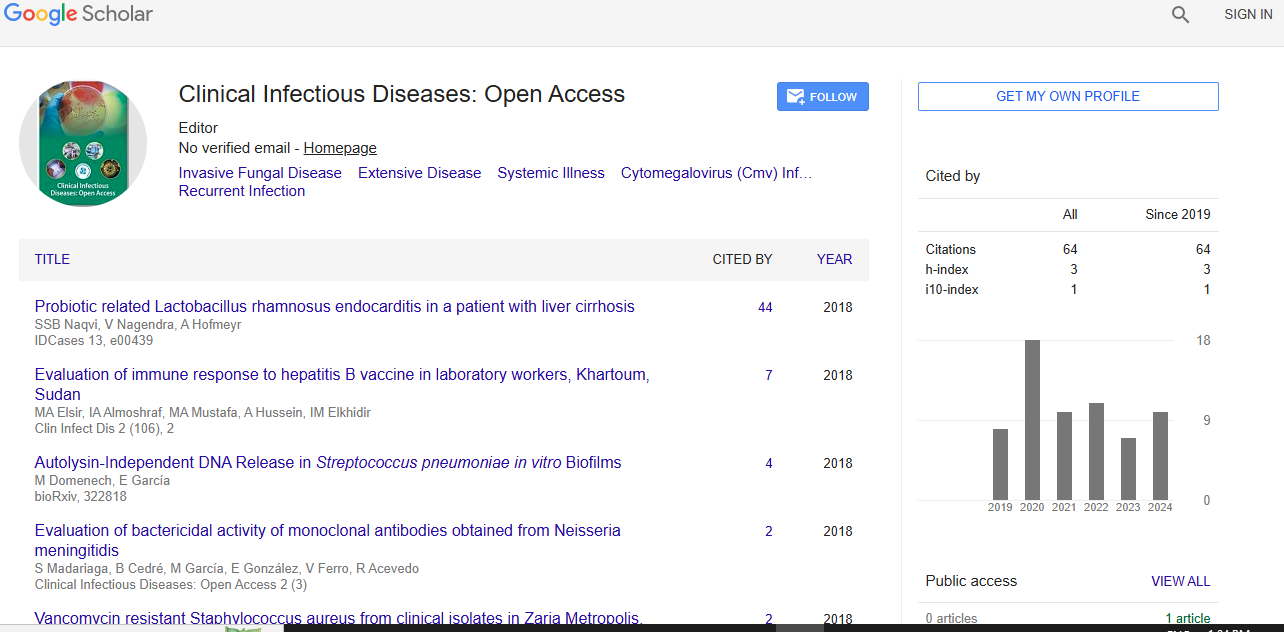
Clinical Infectious Diseases: Open Access received 1149 citations as per Google Scholar report