Short Communication - (2025) Volume 9, Issue 5
Received: 01-Oct-2025, Manuscript No. jid-26-188351;
Editor assigned: 03-Oct-2025, Pre QC No. P-188351;
Reviewed: 17-Oct-2025, QC No. Q-188351;
Revised: 22-Oct-2025, Manuscript No. R-188351;
Published:
29-Oct-2025
, DOI: 10.37421/2684-4559.2025.9.353
Citation: Schmidt, Hannah. "Leishmaniasis Mortality: Factors, Predictors, and Interventions." Clin Infect Dis 13 (2025):353.
Copyright: © 2025 Schmidt H. This is an open-access article distributed under the terms of the Creative Commons Attribution License, which permits unrestricted use, distribution and reproduction in any medium, provided the original author and source are credited.
Severe leishmaniasis presents a significant global health challenge, particularly in rural and resource-limited settings where diagnostic and treatment capabilities are often strained. Understanding the multifaceted determinants of mortality in these severe cases is paramount for developing effective public health interventions and improving patient outcomes. This introduction aims to synthesize the current understanding of these determinants, drawing upon recent research that has illuminated various contributing factors, from clinical manifestations to socioeconomic influences. The identification of key predictors is a crucial first step in stratifying risk and allocating resources efficiently. Advanced age, the presence of co-infections such as HIV, and specific clinical signs like mucosal involvement and cachexia have been consistently identified as indicators of poor prognosis in severe leishmaniasis encountered in rural hospital environments [1].
The delay in diagnosis further exacerbates these risks, underscoring the urgent need for timely and accurate diagnostic tools in remote areas. Beyond clinical and demographic factors, the host's immune response plays a pivotal role in determining the severity of leishmaniasis and its ultimate outcome. Research has shown that a dysregulated immune system, characterized by an imbalance in pro-inflammatory cytokines and compromised T-cell function, is strongly associated with increased mortality rates in visceral leishmaniasis [2].
This immunological profiling offers potential avenues for early risk stratification and the development of targeted immunomodulatory therapies. Furthermore, the effectiveness of treatment regimens in severe leishmaniasis is heavily influenced by the context in which care is delivered, particularly in resource-limited settings. Comparative studies have highlighted the superiority of combination therapies, especially those incorporating liposomal amphotericin B where accessible, over monotherapies in reducing mortality and improving clinical response. Crucially, adherence to treatment protocols and diligent management of adverse effects are indispensable for achieving successful therapeutic outcomes [3].
The profound impact of socioeconomic determinants on leishmaniasis outcomes cannot be overstated. Poverty, restricted access to healthcare services, and inadequate nutritional status are significant contributors to higher mortality rates among individuals suffering from severe leishmaniasis. Therefore, a comprehensive approach to disease control must actively address these social determinants of health to effectively mitigate mortality [4].
Emerging research is also delving into the genetic underpinnings of leishmaniasis severity and prognosis. Specific human leukocyte antigen (HLA) genotypes and variations within immune response genes have been linked to a poorer disease course, suggesting that genetic predisposition may play a role in determining an individual's susceptibility to severe disease and their likelihood of survival [5].
The diagnostic landscape for severe leishmaniasis, especially in rural areas, presents substantial challenges. Limited laboratory infrastructure and a scarcity of trained personnel contribute to delays in diagnosis, which in turn negatively impact patient prognosis. The exploration of point-of-care diagnostic tests holds significant promise for improving early detection and facilitating prompt management in these underserved regions [6].
While vector control strategies are essential for reducing the overall incidence of leishmaniasis, their direct impact on mortality in already severe cases is indirect. Nevertheless, effective vector control remains a cornerstone of disease prevention, preventing new infections and thereby alleviating the burden on healthcare systems and reducing the number of individuals who might progress to severe disease [7].
The growing challenge of drug resistance in leishmaniasis poses a serious threat to effective treatment and patient outcomes. The emergence of resistance to standard first-line drugs necessitates the use of more toxic, expensive, and often less readily available alternative treatments, complicating patient management and potentially increasing mortality, particularly in settings with limited resources [8].
Nutrition plays an integral role in the prognosis of severe leishmaniasis. Malnutrition is frequently observed as a comorbidity and is a significant predictor of mortality. The provision of nutritional support and supplementation, alongside appropriate anti-leishmanial therapy, can substantially improve survival rates and facilitate recovery [9].
In an effort to overcome geographical and infrastructural barriers, mobile health (mHealth) interventions are demonstrating considerable promise in enhancing leishmaniasis management in rural areas. These platforms, which facilitate medication reminders, patient education, and remote monitoring, can significantly improve patient adherence to treatment and ultimately reduce mortality [10].
The study conducted in rural hospital settings provides critical insights into the primary predictors of mortality in severe leishmaniasis, identifying advanced age, the presence of co-infections, especially HIV, and specific clinical manifestations such as mucosal involvement and cachexia as significant factors influencing survival. The delay in diagnosis is also highlighted as a major contributor to poorer outcomes [1].
The research underscores the importance of early identification and prompt, aggressive treatment for improving survival rates in vulnerable populations affected by this disease. Investigating the intricate role of specific immune markers, another study highlights that a dysregulated immune response, characterized by elevated pro-inflammatory cytokines and impaired T-cell function, is directly associated with higher mortality in severe leishmaniasis. Understanding these complex immunological profiles is crucial for developing more accurate risk stratification tools and implementing precisely targeted therapeutic interventions [2].
The comparative effectiveness of different treatment regimens for severe leishmaniasis in resource-limited settings is examined, revealing that combination therapies, particularly those employing liposomal amphotericin B when feasible, demonstrate superior efficacy and a reduction in mortality when contrasted with monotherapies. Adherence to prescribed treatment protocols and the effective management of any adverse effects are identified as critical elements for successful treatment outcomes [3].
The profound influence of socioeconomic factors on leishmaniasis outcomes is explored, with poverty, limited access to healthcare, and poor nutritional status identified as significant contributors to increased mortality rates in severe cases. This research emphasizes that addressing these social determinants of health is an essential component of a comprehensive strategy for effective disease control [4].
Furthermore, the study delves into the genetic predisposition to severe leishmaniasis and its correlation with mortality. Certain human leukocyte antigen (HLA) genotypes and variations within genes involved in immune response have been found to be linked to a worse prognosis, suggesting that genetic screening could potentially assist in identifying individuals at higher risk [5].
The diagnostic challenges inherent in managing severe leishmaniasis in rural settings are a focal point of another investigation, emphasizing the critical need for accessible and accurate diagnostic tools. Delays in diagnosis, often stemming from limited laboratory infrastructure and expertise, directly contribute to poorer patient outcomes. The study advocates for the implementation of point-of-care tests as a means to significantly enhance early detection and management strategies [6].
While vector control strategies are vital for reducing leishmaniasis transmission and its subsequent severity in endemic rural areas, their direct impact on mortality in individuals already experiencing severe disease is acknowledged as limited. However, the study affirms that effective vector control is indispensable for preventing new infections and diminishing the overall disease burden [7].
The pervasive issue of drug resistance in leishmaniasis presents a major hurdle for patient outcomes, as investigated in a dedicated study. The emergence of resistance to first-line treatments necessitates the utilization of drugs that are often more toxic, more expensive, and less accessible, thereby complicating patient management and potentially elevating mortality, particularly in resource-constrained environments [8].
The critical role of nutrition in the prognosis of severe leishmaniasis is examined, identifying malnutrition as a common comorbidity and a significant predictor of mortality. The research highlights that nutritional supplementation and support, integrated with specific anti-leishmanial treatment, can lead to improved survival rates and enhance the recovery process [9].
Finally, the effectiveness of mobile health (mHealth) interventions in improving treatment adherence and reducing mortality among leishmaniasis patients in rural areas is evaluated. The findings suggest that mHealth platforms, utilized for medication reminders, patient education, and remote monitoring, show considerable promise in fostering greater patient engagement and ultimately leading to better health outcomes [10].
Severe leishmaniasis poses a significant threat, with mortality influenced by a complex interplay of factors. Advanced age, co-infections like HIV, mucosal involvement, and cachexia are key clinical predictors of poor outcomes, exacerbated by delayed diagnosis. Host immune responses, characterized by dysregulated cytokine profiles and impaired T-cell function, are strongly linked to increased mortality. Treatment effectiveness varies, with combination therapies showing superiority, and adherence is crucial. Socioeconomic determinants such as poverty and malnutrition significantly contribute to higher mortality rates. Genetic predispositions may also influence disease severity. Diagnostic challenges in rural settings necessitate accessible tools, while vector control remains vital for prevention. Drug resistance complicates treatment, leading to the use of more toxic alternatives. Nutritional support alongside anti-leishmanial therapy improves survival. Mobile health interventions show promise in enhancing treatment adherence and reducing mortality.
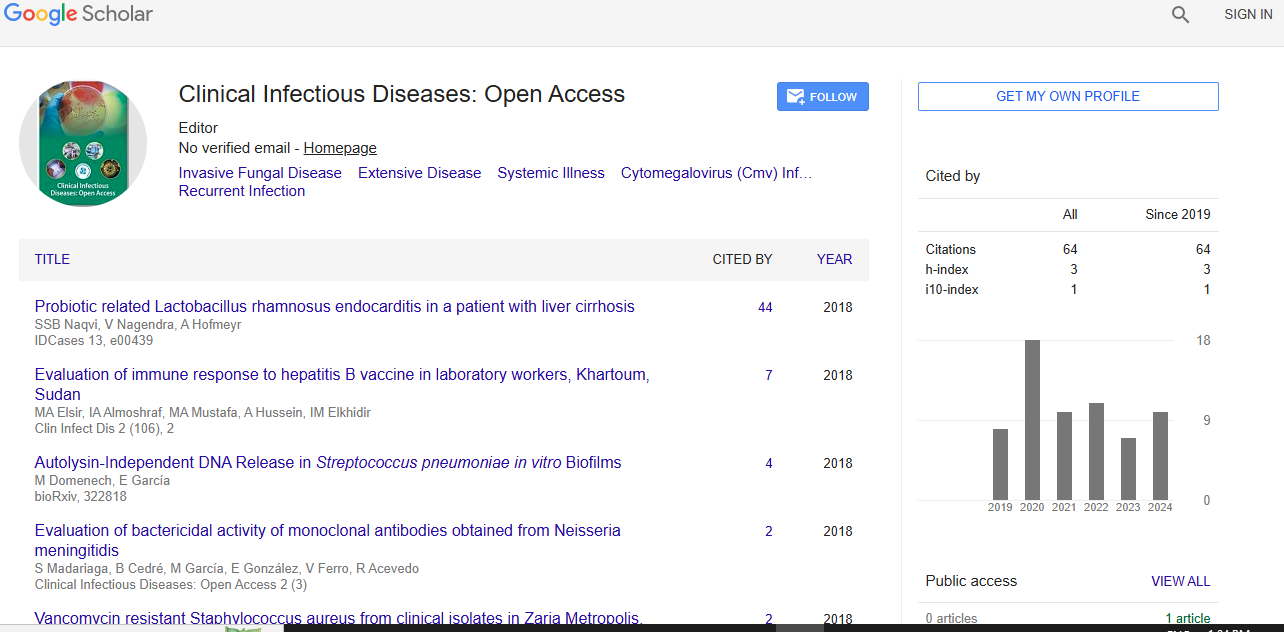
Clinical Infectious Diseases: Open Access received 1149 citations as per Google Scholar report