Review Article - (2024) Volume 14, Issue 6
Received: 13-May-2024, Manuscript No. JMCJ-24-134741 ;
Editor assigned: 16-May-2024, Pre QC No. JMCJ-24-134741 (PQ);
Reviewed: 30-May-2024, QC No. JMCJ-24-134741 ;
Revised: 03-Mar-2025, Manuscript No. JMCJ-24-134741 (R);
Published:
10-Mar-2025
, DOI: 10.37421/2165-7912.2025.15.599
Citation: Santosa, Afrina Catursari Ady, Rozlaili Bin Ahmad and
Dzulkarnain Mazlan. "Knowledges Sharing Behaviours in Facebook among
Malaysians." J Mass Communicat Journalism 15 (2025): 599.
Copyright: © 2025 Santosa ACA, et al. This is an open-access article distributed under the terms of the creative commons attribution license which permits unrestricted use, distribution and reproduction in any medium, provided the original author and source are credited.
Knowledge sharing behaviour is a collection of individual behaviours involving sharing any information and experience with others on social media and this action can be influenced by their characteristics or influences as it gives signal to make those decisions. In knowledge sharing behaviours there are several characteristics under it and one of them is knowledge creation and these behaviours would not happen by itself as there are other factors that give individuals the impulse to act upon it. This study aims to explore the factors that will affect knowledge creation and they are influences from others, motivation (extrinsic/intrinsic) and social media reputation. This study will be mainly focused on Facebook applications users to see the user’s knowledge sharing behaviours. The pilot test was conducted among Malaysian users from age 15 to 60-year-old who use Facebook or had any experience using it. The findings suggested that no matter the factors that may contribute towards these behaviours, the results show that it will not affect their behaviours entirely in terms of knowledge creation, however, it still has some significant effect on knowledge sharing behaviours.
Communication • E-word of mouth • Word-of-mouth • Extrinsic/intrinsic
According to the communication and multimedia secretarygeneral, Datuk Seri Muhammad Mentek says, “there are approximately 28 million users of social media in Malaysia as of January 2021. The figures showed that Malaysian were among the most active in social media and the use of the internet has been on the rise since we faced the MCO and the country’s social media users made up 86% of the total population in January 2021” The Star (2021). Meanwhile, 75% of Malaysian use the internet regularly to read news and keep up to date with current events and 72% use is to keep in touch with friends via social media [1].
In this modernized era, social networking sites make it simple and easy to build virtual communities of interest, with an almost unlimited number of topics to choose from. Social networking sites are valuable vehicles for exchanging and disseminating news, feelings and viewpoints, as well as for engaging and collaborating with real or imagined viewers.
However, in the physical space, interpersonal communication is directed at a specific audience to accomplish a goal. However, conversation on social media sites is referred to either actual, imaginary or unknown viewers, with no particular motive other than to indicate a desire to communicate or share pieces of information with the audiences. In these platforms, reusing and disseminating previously generated material from other individuals or organizations is the standard rather than the exception. In addition, the social media sites include features like data diffusion that work as content production or reuse, content indexing and content marketing affordances. The application Facebook featured content sharing innovation by using the button "share" or allowed users to use the hashtags (#) key and tagging people by their username (@) to diffuse their shared knowledge to a particular group of people. Information sharing activities or knowledge sharing behaviours is a collection of individual behaviours involving sharing any information and experience with others on social media and this action can be influenced by their characteristics or influences as it gives signal to make those decisions. We want to observe whether consumer traits like social media use intensity, sharing plans and social media network choices affect these awareness habits. Social media sharing or posting can be divided into three types of content sharing: Either they create their content (knowledge creation) or reuse that information they found and position their wall with their close friend (knowledge targeting) and how those behaviours can affect other people's perception of certain issues (knowledge framing). And all of this effect by one's characteristics or influence. However, for this research we will look into knowledge creation and dive deep into it [2].
Influence from others impact user’s knowledge sharing behaviors
Users do not spontaneously do knowledge-sharing behaviours as certain factors cause them to make the decision to share the content with their friends and followers. Influence from others is one of the significant parts that causes them to act upon the information they received and share this knowledge with others. Influence is the ability to have a direct impact on someone else's behaviours, decisions, opinions or thoughts. Influence, in the end, permits you to get things done and achieve your goals. Influence can come in many forms and channels, either from friends, family and even social media influencers. The more convincing it is, the more one's confidence to share it with others, which will lead to a chain reaction. In this context, there are two main influences from other channels related to the roles of influencers and e-Word of Mouth (WOM). Firstly, is e- Words of Mouth (WOM). Generally, Word-of-Mouth (WOM) has been defined as dynamic and continuous knowledge about the ownership, impressions or recommendations of certain products and services delivered via direct person-to-person encounter. A scholar, Barreto, stated that WOM is a “verbally or nonverbally communication process, on an informal level, between a sender and an individual or group of receivers, regardless of whether they have the same social network.” WOM has been used as a marketing tool to spread and diffuse information about its products or services [3].
With the rapid rise of the internet, e-commerce has progressively become a strategic focus for businesses and consumers and interest in WOM phenomena has been reinterpreted as electronic Word-of- Mouth (eWOM). e-WOM refers to any continuous and regular evaluations of products or marketers made by potential, actual or prior customers access to a wide range of individuals and organizations over the internet. WOM is considered a continuous chain reaction phenomenon as people will more likely influence or motivate sharing that knowledge as in usual occurrence, the ones who started this reaction and share that knowledge are their trusted sources like their family and friends. Consumers can now get information from friends and friends of friends via social networks thanks to Web 2.0. Due to this, knowledge-sharing behaviours can happen as more people talk about it especially when it is a topic of discussion of people around us, the impulse and influence to share that knowledge is getting higher. Influencers are on the rise as more and more people proclaim as influencers do the job to diffuse information and knowledge to their followers with the intention to influence their behaviours to act in a certain favourable way. The concept of using influencers as part of marketing tactics is not new. Instead, the growth of the social web and the internet, in general, has allowed the users to become influencers, often in tiny areas of a large online community [4].
According to Dean, their role as social media influencers links their followers to content and items, they already know will be valuable and relevant because they know who their audience is and what they want. Influencers on social media are an essential aspect of these information channels. They keep their followers up to date with new items, advancements and even breaking news. Individual influencers' information is organic and reliable, unlike commercials that are supposed to inform. According to a recent study, bloggers are the most reliable source of information and the most impactful in the decision-making procedure among B2B decision-makers, even more so than trade exhibitions or word-of-mouth recommendations. Hence the rise of blogging and vlogging through several social media applications as nowadays we see influencers do reviews and blog posts about new knowledge that they think can be useful for their users. Due to their reliability, knowledge sharing behaviours may happen as their followers will use them as a source of new information and share it with others [5].
Motivation influence knowledge sharing behaviours
Sharing knowledge not only needs persuasion and influence, but it also requires self-motivation to accept those impulses and share that knowledge online. Sharing is the fundamental yet unprecedented social media behaviour that is likely driven by distinct consumer motivations due to its social and voluntary nature. Motivations are the kinds of perceived incentives or rewards that can motivate an individual to take measures and participate in media use. Thus, human perceptions, behaviours, emotions and wants are among the motivating elements utilized to predict behavioural, developmental and experiential results in learning, work performance, experience and emotional wellbeing. There have been several kinds of research conducted on user's motivation, particularly on using Facebook as mock investigated user motivations for using particular Facebook features. This study stated how users develop various motivations for general Facebook use, which can be categorized as either extrinsic motivation or intrinsic motivation. For example, Voorveld claims that Facebook allows people to communicate with one another, share information and stay informed and updated. Although Facebook content made users sad or distressed, according to the authors, 15% of the time, it also provided them with delight, contentment or relaxation, which can be rewarding to some as they use this platform to fill empty bits. This can relate to motivation to engage and share knowledge on Facebook for personal enjoyment and satisfaction. The outcome of your goal will satisfy your basic psychological needs for relatedness. Motivation to share knowledge can be related to the self determination theory which will be divided into extrinsic and intrinsic motivation as there have been many scholarly kinds of research that use self-determination theory to define social media sharing behaviors which we will unravel later [6].
Social media reputation impact user’s knowledge sharing behaviors
Social media reputation is also one of the critical elements to the high tendency of knowledge sharing behaviours. Their followers have high expectations of their involvement in the latest topics to indicate them being aware of it as it is part of their roles when they hit tons of followers on their social media. This mainly can be related to the functions of influencers on social media. As expected, the more followers one has, the more expectation for them to share more knowledge with their users as they are perceived as the opinion leaders in social media. Users with a high level of social capital (particularly those with a large number of followers) are more likely to assist emergency response services in disseminating situational (informative) information. These users act as thought leaders to encourage donations during their rehabilitation. They are the ones who will be sharing their bits of knowledge on the disaster as a way to inform and diffuse that information to their followers. They are expected to develop high knowledge-sharing behaviours in social media due to their expected roles as content creators and influencers. According to recent studies, authorities frequently take advantage of individuals with high social capital to broadcast actionable information following disasters. This shows that even organizations use them to disseminate the latest information as they are considered to have high knowledge sharing behaviours. Hence, social media reputation really does impact the users' knowledge sharing behaviours due to their roles and expectations to adopt this tendency (Figure 1) [7].
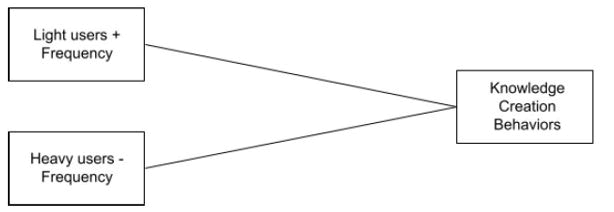
Figure 1. Theoretical framework and methodology.
Self-determination theory
Self determination theory can be defined as a motivational idea that asserts that an individual's actions, outcome or success outcomes are influenced or hindered by extrinsic or intrinsic selfdetermination and autonomy. Self-determination theory has been used in much academic research to understand social network networking habits better. According to the SDT, a self-determination spectrum affects one's behaviour, ranging from a lack of individual intent, inspiration or control to taking little action at all. There are two types of motivation: Intrinsic motivation causes an individual to do an activity for their own satisfaction. Meanwhile, extrinsic motivation is motivated by external incentives or requests, personal values or significance. Human beliefs, cognitions, emotions and needs are among the motivation variables that can be used to forecast physiological, developmental and experiential learning outcomes, work success, experience and psychological wellbeing. Previous research focused on determining why different groups of consumers use the same SM resources in different ways. For example, other user groups can use various content-sharing strategies. This research is critical for service providers like the government because customer segmentation allows them to approach different audiences of different services based on their characteristics, allowing for better attention to each group's needs. Based on previous research, knowledge-based behaviour models are the best model to evaluate these behaviours. On the above principles, hypothesizing that different consumer groups display other SM content techniques and behaviours. We distributed the users into two groups based on how often they posted: Individual users (light users) and heavy users (organization or marketers or automated programs). This theory will be used on different groups of users who have other connectivity objectives and would use different SM networking methods to meet those goals. For this study, we will be focusing on content creation. In the present research, we exam additional user characteristics and how these user characteristics affect the social media knowledge behaviours [8].
This study aims to identify the factors that contributed to knowledge sharing behaviours. And in these terms, we will be testing one of the aspects, which is knowledge creation. Getting feedback from each of Facebook users will be challenging as there are more than millions of Facebook users in Malaysia alone. Hence, we will be testing several Facebook users to be the sample of the whole population. We will be conducting a quantitative method to examine the population as the result will give an entire view on the population about knowledge sharing behaviours since it was based on objectivity [9].
Replicating the methods of collecting data from the previous study, the quantitative method is the perfect measurement to test the hypotheses to better understand how the independent variable will impact dependent variables. In these terms, the experimental research design is being used as it was designed to provide a connection between a situation's cause and consequence. It is a causal design in which the impact of the independent variable on the dependent variable is observed. Therefore, we are replicating the method and looking into Malaysian perspectives instead. The study will be done through an online survey using random samplings method via Google Forms. Random samplings are an effective tool to get equal feedback from all different types of demographics. Meanwhile, by using Google forms platform, the surveys most likely easy to reach by the mass audience as it is considering a wide used survey platform that most demographic familiar with Tables 1-5 [10].
|
|
|
Frequency |
Percent |
|
Gender |
Male |
28 |
38.9 |
|
Female |
44 |
61.1 |
|
|
Total |
72 |
100 |
|
|
Age |
24 and below |
38 |
52.8 |
|
25-40 |
26 |
36.1 |
|
|
41-56 |
7 |
9.7 |
|
|
57-66 |
1 |
1.4 |
|
|
Total |
72 |
100 |
|
|
Race |
Malay |
55 |
76.4 |
|
Chinese |
7 |
9.7 |
|
|
Indian |
10 |
13.9 |
|
|
Total |
72 |
100 |
|
|
Highest academic |
Certificate/Diploma |
18 |
25 |
|
Bachelor’s degree |
47 |
65.3 |
|
|
Master’s degree/PHD |
7 |
9.7 |
|
|
Total |
72 |
100 |
Table 1. Data analysis for despondence demography.
|
|
|
Frequency |
Percent |
|
How often you post or share something on your Facebook? |
Never |
3 |
4.2 |
|
Rarely |
15 |
20.8 |
|
|
Sometimes |
22 |
30.6 |
|
|
Often |
25 |
34.7 |
|
|
Always |
7 |
9.7 |
|
|
Total |
72 |
100 |
|
|
How often do you "like" (or give other reaction) on other's post? |
Never |
2 |
2.8 |
|
Rarely |
4 |
5.6 |
|
|
Sometimes |
18 |
25 |
|
|
Often |
40 |
55.6 |
|
|
Always |
8 |
11.1 |
|
|
Total |
72 |
100 |
|
|
How often do you share other's content? |
Never |
2 |
2.8 |
|
Rarely |
13 |
18.1 |
|
|
Sometimes |
21 |
29.2 |
|
|
Often |
31 |
43.1 |
|
|
Always |
5 |
6.9 |
|
|
Total |
72 |
100 |
|
|
How often do you comment on someone else’s post? |
Never |
1 |
1.4 |
|
Rarely |
15 |
20.8 |
|
|
Sometimes |
25 |
34.7 |
|
|
Often |
28 |
38.9 |
|
|
Always |
3 |
4.2 |
|
|
Total |
72 |
100 |
Table 2. Data analysis for respondence knowledge creation.
|
|
Frequency |
Percent |
I use Facebook as one of the main sources of information/knowledge |
Strongly disagree |
3 |
4.2 |
Disagree |
4 |
5.6 |
|
Somewhat agree |
20 |
27.8 |
|
Agree |
31 |
43.1 |
|
Strongly agree |
14 |
19.4 |
|
Total |
72 |
100 |
|
I share/seek any information or latest updates with peers and family |
Strongly disagree |
1 |
1.4 |
Disagree |
1 |
1.4 |
|
Somewhat agree |
14 |
19.4 |
|
Agree |
38 |
52.8 |
|
Strongly agree |
18 |
25 |
|
Total |
72 |
100 |
|
I share/repost any information from my family and peers on my feed |
Strongly disagree |
2 |
2.8 |
Disagree |
6 |
8.3 |
|
Somewhat agree |
14 |
19.4 |
|
Agree |
35 |
48.6 |
|
Strongly agree |
15 |
20.8 |
|
Total |
72 |
100 |
|
I rely on a particular public figure from Facebook as one of a main source of information on certain topic |
Strongly disagree |
9 |
12.5 |
Disagree |
10 |
13.9 |
|
Somewhat agree |
24 |
33.3 |
|
Agree |
27 |
37.5 |
|
Strongly agree |
2 |
2.8 |
|
Total |
72 |
100 |
|
I always share/repost latest information from the public figures on my Facebook |
Strongly disagree |
11 |
15.3 |
Disagree |
13 |
18.1 |
|
Somewhat agree |
24 |
33.3 |
|
Agree |
23 |
31.9 |
|
Strongly agree |
1 |
1.4 |
|
Total |
72 |
100 |
Table 3. Data analysis for respondence influence from others.
|
Frequency |
Percent |
|
I feel motivated to share information for my own satisfaction |
Strongly disagree |
2 |
2.8 |
Disagree |
5 |
6.9 |
|
Somewhat agree |
5 |
6.9 |
|
Agree |
43 |
59.7 |
|
Strongly agree |
17 |
23.6 |
|
Total |
72 |
100 |
|
I like to share my thought on certain issue on Facebook |
Strongly disagree |
4 |
5.6 |
Disagree |
6 |
8.3 |
|
Somewhat agree |
17 |
23.6 |
|
Agree |
28 |
38.9 |
|
Strongly agree |
17 |
23.6 |
|
Total |
72 |
100 |
|
I want to prevent others from experiencing similar issues/receiving false informations |
Srongly disagree |
1 |
1.4 |
Disagree |
1 |
1.4 |
|
Somewhat agree |
4 |
5.6 |
|
Agree |
33 |
45.8 |
|
Strongly agree |
33 |
45.8 |
|
Total |
72 |
100 |
|
I want to share information just to let others know |
Disagree |
2 |
2.8 |
Somewhat agree |
7 |
9.7 |
|
Agree |
34 |
47.2 |
|
Strongly agree |
29 |
40.3 |
|
Total |
72 |
100 |
|
I will be rewarded for sharing information |
Strongly disagree |
55 |
76.4 |
Disagree |
11 |
15.3 |
|
Somewhat agree |
4 |
5.6 |
|
Agree |
2 |
2.8 |
|
Total |
72 |
100 |
|
I want to be better known for sharing information |
Strongly disagree |
55 |
76.4 |
Disagree |
9 |
12.5 |
|
Somewhat agree |
3 |
4.2 |
|
Agree |
2 |
2.8 |
|
Strongly agree |
3 |
4.2 |
|
Total |
72 |
100 |
|
I was forced to share something on Facebook |
Strongly disagree |
61 |
84.7 |
Disagree |
4 |
5.6 |
|
Somewhat agree |
5 |
6.9 |
|
Agree |
2 |
2.8 |
|
Total |
72 |
100 |
|
I don't like to share information on Facebook |
Srongly disagree |
46 |
63.9 |
Disagree |
14 |
19.4 |
|
Somewhat agree |
9 |
12.5 |
|
Agree |
3 |
4.2 |
|
Total |
72 |
100 |
|
I rarely involve myself with any discussion on Facebook |
Srongly disagree |
15 |
20.8 |
Disagree |
23 |
31.9 |
|
Somewhat agree |
23 |
31.9 |
|
Agree |
8 |
11.1 |
|
Strongly agree |
3 |
4.2 |
|
Total |
72 |
100 |
Table 4. Data analysis for respondence motivation.
|
|
Frequency |
Percent |
Anything that I post on Facebook will impact my social media reputation |
Strongly disagree |
10 |
13.9 |
Disagree |
7 |
9.7 |
|
Somewhat agree |
29 |
40.3 |
|
Agree |
25 |
34.7 |
|
Strongly agree |
1 |
1.4 |
|
Total |
72 |
100 |
|
The numbers of followers is important to me |
Strongly disagree |
58 |
80.6 |
Disagree |
8 |
11.1 |
|
Somewhat agree |
2 |
2.8 |
|
Agree |
3 |
4.2 |
|
Strongly agree |
1 |
1.4 |
|
Total |
72 |
100 |
|
I concern for my social media reputation |
Strongly disagree |
51 |
70.8 |
Disagree |
12 |
16.7 |
|
Somewhat agree |
6 |
8.3 |
|
Agree |
2 |
2.8 |
|
Strongly agree |
1 |
1.4 |
|
Total |
72 |
100 |
|
My engagement with my followers is important to me |
Strongly disagree |
50 |
69.4 |
Disagree |
10 |
13.9 |
|
Somewhat agree |
7 |
9.7 |
|
Agree |
4 |
5.6 |
|
Strongly agree |
1 |
1.4 |
|
Total |
72 |
100 |
|
I feel it is my responsibility to keep my followers updated on certain information |
Strongly disagree |
53 |
73.6 |
Disagree |
12 |
16.7 |
|
Somewhat agree |
1 |
1.4 |
|
Agree |
5 |
6.9 |
|
Strongly agree |
1 |
1.4 |
|
Total |
72 |
100 |
Table 5. Data analysis for respondence SM reputation.
Respondents knowledge creation (DV)
What can be observed from the data analysis that collects relevant data for all the hypotheses is that most of the respondents that answered the questionnaires are actively using Facebook. The percentage of those who are often engaged in any sort of activities is higher than those who are rarely engage in Facebook. For example, questions 2 and 4 show that most of them are avid Facebook users. And this is expected as Facebook application is still relevant among middle age society. However, we can see from the data extracted that those who answered sometimes or ‘rarely’ mostly among youth. According to Pew Research Centre, Other social media networks, such as Snapchat and Instagram, have surpassed Facebook as a favourite among youth these days. And from the data, we can see that the percentage of those who are actively reusing the existing content is higher than those who are willing to create new knowledge on Facebook. Therefore, based on the result they use Facebook to share existing knowledge rather than creating new one as frequency on the use of shared features is higher than creating new post features as this can be related with theory of self-determination. Although they still determined and the factors has some significant impact on the knowledge sharing behaviours, but their determination only limit on sharing instead of creating. They would rather share existing content than creating a new one. In these findings, three sections that will be discussed after this are the findings on those three factors contributing to this engagement of knowledge sharing behaviours on Facebook [11].
Influence from others
In this section, what can be seen is that there is some aspect that shows the positive relation between influence from others and knowledge creation as those who have high influence from knowledge will contribute to knowledge creation. According to Asher, When making buying decisions, consumers with a greater level of attitude are more likely to seek out relevant information and assistance from other users. Or in this term, knowledge sharing behaviours. Therefore, the decision of whether to develop those knowledge-sharing behaviours depends on the influence they received from others as those will determine whether the information is relevant enough for them to share with other people or their followers. From the second and third questions, the percentage of those who relied on and seek information from family and peers and share this information are high [12].
This can be related to EWOM as the spread of information from family and peers and their influence to share knowledge on Facebook happened. This can lead to an unbreakable link of information diffusion. However, the result of those who seek and share information from public figures are lower compared to family and peers. This is contrary to what has been stated before in the recent study as although it mentions that influencers are more impactful in user decision making. However, the statistics show that users rely more on their family and peers for new information and they have more influence in the decision-making to share that knowledge. For the knowledge creation side, the hypothesis is not correct. Although their family and peers have a high influence on them, they are still obligated to reuse content instead of creating new knowledge or posts based on the previous section. And even though the percentage between those who act like to share others' content and those who like to share knowledge on Facebook, it is clearly shown that people rather repost other's content rather than make a new one. Hence, even though influence from others has proven that it contributed to knowledge sharing behaviours, it shows negative relation with the creation of knowledge as those factors do not contribute to it after all [13].
Respondents motivation (extrinsic/intrinsic)
This section will be discussing both extrinsic and intrinsic motivation based on the relevant data that has been collected. Firstly, for intrinsic motivation, the percentage of those who share knowledge because they feel motivated to let others know is higher than for their own satisfaction. And this relates to sharing of information with family and peers as they feel motivated not only to share or easily influenced by them but also for their personal relationships with them. Relationship commitment is defined as "an individual's innate urge to remain in a relationship." Commitment to a connection is a crucial predictor of friendship and close relationships and a requirement in organizational contexts. Previous research has shown that the more robust an individual's need to preserve a relationship, the more committed that individual will be to the relationship. The individual will invest more time and effort in constant and continuous interaction with relationship partners. This shows that most users' intrinsic motivation is more leaning towards strengthening relationships than sharing knowledge just for their satisfaction [14].
And for extrinsic motivation, the purpose that has the highest percentage among others is they feel motivated due because they want to be better known for sharing. Extrinsic motivations such as rewards to information suppliers, professional affiliations, and perceived identity verification also help to increase online knowledge exchange. And in this term, it is perceived identity verification for the one who shares knowledge as their followers will look up to them for sharing latest news or knowledge. However, based on the data, intrinsic motivation has a higher vote of respondents agreeing to it than extrinsic. This result has a positive relation with previous studies as social media users use that platform to share knowledge for others' awareness on issues instead of purposely for external rewards. Even physicians with high-ranking positions are less influenced by external rewards but have an intrinsic desire to aid and impact more patients. However, even with the motivations they received, it does not contribute to knowledge creation. Based on questions 8 and 9, although the percentage of those who are rarely active on Facebook is higher, some still opt for sharing existing information rather than creating new posts to engage themselves in discussion on Facebook. To actively engage in a discussion on Facebook, knowledge creation is necessary; hence, they are against the idea instead. This shows a negative relation with motivation as a factor contributing to knowledge creation as high motivation also contributes to existing reusing knowledge than creating a new one [15].
Respondents social media reputation
What can be seen in this section, just like being stated before, the more the followers, the more responsibility they feel to create more knowledge for their followers. However, this may be contradicting based on questions 3 to 5. It shows that their social media reputation does not contribute to them having the motivation to create knowledge, although they may have high numbers of followers. Even though from question one, they agreed that what they post on Facebook may impact their social media reputation, but that does not motivate them to share or create more knowledge since they felt sharing information is not their responsibility. This contradicts L. Yan's findings as they stated that users with a high level of social capital (particularly those with many followers) are more likely to assist emergency response services in disseminating information. These findings show that social media reputation does not affect their knowledge sharing behaviours as the purpose that drives them to share knowledge is anything but social media reputations. Therefore, social media reputation does not correlate with knowledge creation, either creating new knowledge or sharing knowledge, as it does not become the sole purpose of them having the impulse to share knowledge on Facebook [16].
In this study, we distinguished two types of situations, high and low contributions, from the three factors, which are influence from others, motivation (extrinsic or intrinsic) and social media reputation. From these three factors, it will affect their knowledge creation which is part of knowledge sharing behaviours. It is either they create new knowledge or reusing existing content. And from the hypothesis that was mentioned before, high contribution leads to a tendency on creating new knowledge while low contributions lead to reusing content instead. Using the questionnaire method by doing an online survey through Google Forms, relevant data are being analysed to get the findings of the knowledge creation. The result shows that for all three factors, no matter how high or low their contributions, the users still opt to reuse existing knowledge rather than create a new one. They have a similar understanding of the features available on Facebook as they prefer the share button features than make new post features. Although all of the factors still affect their knowledge sharing behaviours, it only limits to sharing others content instead of high factors trying to influence their behaviours.
The significance of our theories are strengthened by these findings. The latest study could help service providers such as governments and corporations gain an insight into how people utilise social media. Meta-knowledge improvement can result in more innovative products and services. Decision makers can potentially facilitate strategic planning in accordance after identifying these diverse kinds of customers. Local businesses and government can take advantage of users on what can be a better factor that can contribute to them to have the motivation to share knowledge or information on Facebook or any other social media or even better create new knowledge based on the information they received in order to diffuse their innovation more widely and targeted to more users.
This research was limited because it only looks at three criteria when it comes to users (influences from others, motivations, social media reputation). Another issue is the structure of the investigation. First, we enlisted the help of participants' personal online social networks. This approach could have resulted in a sample bias. And not only that, if conducting detailed observations using a qualitative method, reasons why the opt for reusing content instead of creating one can be elaborated. Second, the study's diagnostic power is limited due to the small sample size of N=20. The SM knowledge behaviour model will be strengthened by findings from a larger sample that covers a wider dispersion of the population. Other than that, this is restricted as it is only conducted among Malaysian as wider and broader populations from different countries can bring out more meaningful and insightful findings. If other users' qualities not included in this study are examined and taken into consideration, such as demographic attributes, preferences, and more, the research variables may give more significant results. Lastly, this study is only focused on Facebook applications as other social media like Twitter or Instagram may have different results from this study. Overall, this study gives a bigger picture as to why a certain user has the impulse to share knowledge on social media as there are factors that contribute to it as it is a matter of finding the accurate factors of what truly motivates them to act upon their knowledge sharing behaviours.
[Crossref] [Google Scholar] [PubMed]
Journal of Mass Communication & Journalism received 205 citations as per Google Scholar report